

Over 150 Medical Aesthetic Institutions Join Xinyang's Public Welfare Rescue Initiative to Harness the Benevolent Power of Aesthetics
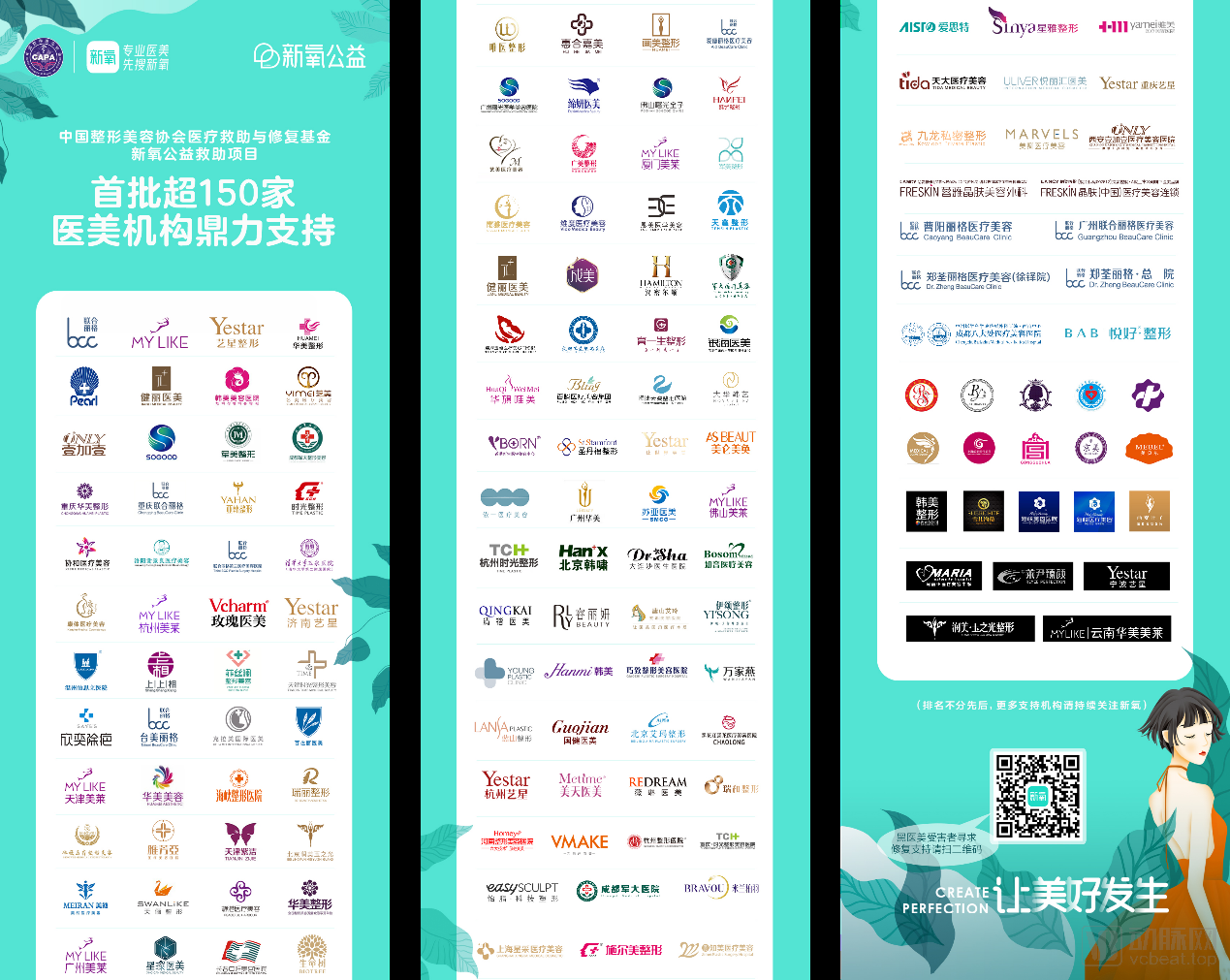
Recently, over 150 medical aesthetic institutions across China, including Union Lige, Mylike, and Yestar, have prominently displayed registration channels for the So-Young Public Welfare Assistance Program, officially joining China’s first public welfare initiative dedicated to repairing damages caused by illegal medical aesthetic practices. This program provides free corrective aesthetic treatments to victims of illegal procedures, as well as to patients with facial deformities resulting from congenital conditions or accidental injuries. Covering common corrective procedures such as eye, nose, breast, and scar revisions, the initiative aims to harness the positive power of medical aesthetics and help more “ordinary people” in need return to normal lives.
“The So-Young Public Welfare Assistance Program provides the most direct support to beauty seekers who have been harmed by illegal medical aesthetic practices,” said Li Datie, Dean of the Dermatology Department at Yunnan Huamei Mylike Medical Beauty Hospital. He noted that the program aligns perfectly with Yunnan Huamei Mylike’s core philosophy of “always putting medical quality first.” “As a builder of China’s medical aesthetics industry, we hope to help more beauty seekers pursue beauty scientifically and safely. We are delighted to participate in this meaningful initiative.”
On May 29 this year, So-Young announced an initial donation of RMB 10 million to jointly launch the So-Young Public Welfare Assistance Program under the Medical Aid and Reconstruction Fund of the Chinese Association of Plastics and Aesthetics (CAPA). In collaboration with leading domestic plastic surgery experts, the initiative aims to provide professional reconstructive support to individuals harmed by illegal medical aesthetic practices, such as those conducted by unlicensed practitioners and illegitimate institutions.
“Three-fifths of my annual surgical caseload consists of reconstructive procedures.” According to Jiang Hua, President of the Aesthetic and Plastic Surgery Branch of the Chinese Medical Doctor Association, reconstructive surgery is also a “centerpiece” of plastic surgery. However, such procedures impose higher demands on surgeons, generally requiring the expertise of top-tier specialists in the field. Consequently, the complexity and cost of reconstructive surgeries are significantly higher than those of routine aesthetic medical treatments, which is a key reason why many individuals who have experienced unsuccessful aesthetic procedures struggle to afford corrective interventions; in severe cases, this can even impair their normal daily lives. Data from the Chinese Association of Plastics and Aesthetics shows that there were 20,000 complaints related to disfigurement alone in 2019, most of which occurred at unlicensed, illegal aesthetic medical institutions. According to the White Paper on Insights into China’s Medical Aesthetics Industry (2020), adverse events are highly prevalent in the illegal aesthetic medical sector, with an estimated average of 100,000 people suffering injuries or disabilities each year due to these illicit practices. The majority of consumers find it extremely difficult to file complaints or seek legal recourse, making rights protection exceptionally challenging.
“Our customer service and new media teams often serve as a confidant for these individuals, with many sharing their disappointment over feeling unable to fit in.” Jin Xing, Chairman and CEO of So-Young Technology, has publicly stated that the So-Young platform receives hundreds of requests for assistance daily. “Medical aesthetics is not just an industry focused on beauty; it should also strive for goodness and beauty. So-Young is committed to leveraging its expertise in facial reconstruction to help those in need.” Notably, applicants for So-Young’s public welfare aid program are not required to advance any costs for medical aesthetic restorative procedures. This means that once an application is approved, the program’s fund initiates either a one-time lump-sum payment or installment payments, thereby alleviating the urgent financial burden of raising upfront capital and the hassle of submitting receipts for reimbursement.
Since its launch, the project has received widespread recognition from all sectors of society, attracting numerous individuals seeking reconstructive treatment to register. According to reports, within one week of the registration portal going live, 420,000 people had taken notice of the charitable aid initiative, over 3,000 individuals accessed the registration platform, and 76 applicants underwent preliminary screening and document verification. To date, the project has successfully provided treatment to a female patient who lost her nasal bridge and alae nasi due to an accidental fall at the age of three, enabling her to remove the face mask she had worn for more than 40 years and fulfill her dream of becoming an “ordinary person.”
“Creating beauty and safeguarding beauty” should be the original aspiration of every medical aesthetics practitioner. Dr. Liu Fei, from the Department of Plastic and Reconstructive Surgery at Shanghai Ninth People’s Hospital, Shanghai Jiao Tong University School of Medicine, stated, “As a member of the legitimate medical community, I have the obligation and responsibility to participate in the So-Young Public Welfare Assistance Program. My goal is to provide a ‘remedy for regret’ to those who have been harmed by illegal medical aesthetics practices while pursuing their aesthetic goals, using my expertise to help them regain their confidence and return to a normal life trajectory.”