

Top-Tier Physicians Partner with So Young to Advance Online Aesthetic Medicine Services and Address Scarcity of Medical Resources
The sudden onset of the COVID-19 pandemic has exposed urgent issues such as “inconvenient offline medical visits for patients” and “insufficient doctor resources.” On the other hand, this public health emergency has accelerated the adoption of “online” healthcare services, meeting the demand for diagnosis and treatment under the new circumstances and opening up broader possibilities for medical service delivery.
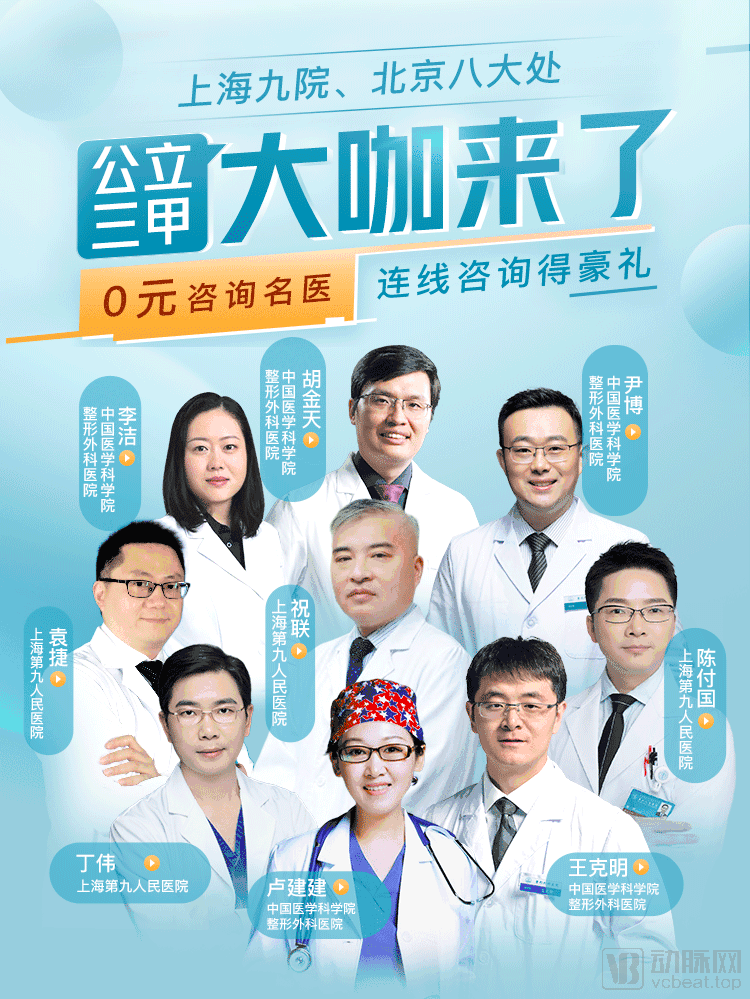
Recently, New Oxygen partnered with leading plastic surgeons from multiple public Grade 3A hospitals to launch a special “Video Consultation with Experts Festival” campaign. The nine featured experts include Dr. Hu Jintian, Dr. Li Jie, Dr. Yin Bo, Dr. Wang Keming, and Dr. Lu Jianjian from Beijing Plastic Surgery Hospital (also known as Beijing Ba Da Chu Plastic Surgery Hospital), as well as Dr. Zhu Lian, Dr. Yuan Jie, Dr. Chen Fuguo, and Dr. Ding Wei from Shanghai Ninth People’s Hospital.
Anyone with even a basic understanding of the medical aesthetics industry is surely familiar with their names. For instance, Professor Zhu Lian from Shanghai Ninth People’s Hospital has been engaged in clinical surgical practice for 28 years, specializing in cosmetic and plastic surgery. He has amassed extensive clinical experience in the fields of cosmetic surgery and reconstructive surgery. Professor Zhu has published more than 30 papers in professional journals both domestically and internationally, undertaken multiple research projects including those funded by the National Natural Science Foundation, and participated in various industry association activities.
Field visits revealed that the average wait time for an appointment with each of these physicians is approximately two months, totaling a year and a half for all nine doctors combined. Now, these renowned industry experts, whose offline appointments are notoriously difficult to secure, have joined forces on medical aesthetics platforms to offer video consultations, saving beauty seekers considerable time. This can be described as a “date” that bridges a year-and-a-half gap, representing a significant benefit for beauty enthusiasts whose plans were hindered by the pandemic. Consumers who have previously sought in-person consultations at two different hospitals may particularly appreciate the strong appeal of such a concentrated pool of scarce, top-tier medical expertise.
According to official data from the medical aesthetics platform New Oxygen, user demand for video consultations surged in February following the onset of the pandemic, with the actual number of completed consultations increasing by 134% compared to January. In the first quarter, the cumulative number of user consultations reached 88,000, with a peak daily user count of 4,000. This demonstrates that the video consultation model has bucked the trend and is becoming an indispensable tool for efficient communication. As epidemic prevention and control enter a new normal, video consultations continue to play a vital role in laying the groundwork for aesthetic seekers.
Meanwhile, this trend is also driving more high-quality medical resources “online.” Reporters found that among the doctors from public Grade A tertiary hospitals registered on the New Oxygen app, an increasing number have launched appointment-based video consultation services. Examples include Professor Jiang Hua, President of the Aesthetic and Reconstructive Surgery Branch of the Chinese Medical Doctor Association and Director of the Department of Plastic Surgery at Shanghai East Hospital affiliated with Tongji University; and Professor Fu Qiutao, a leading domestic expert in laser anti-aging research, certified “Chief Executive Instructor” for Ultherapy and Thermage in the United States, and Director of the Laser Department at the Laser Cosmetic and Plastic Surgery Center of the Air Force General Hospital.
As is well known, appointment slots in the plastic surgery departments of renowned public Grade 3A hospitals are already a scarce resource, with expert consultations being particularly rare and hard to secure. The entry and transition of these high-quality medical professionals into the sector signify that the online medical aesthetics industry is undergoing a steady upgrade from mere information digitization to comprehensive service digitalization, thereby benefiting a broader population.
So, what is the current state of the online migration of medical aesthetic services, what benefits can it still bring to beauty seekers, and what does it mean for physicians?
According to the "2020 White Paper on China's Medical Aesthetics Industry" released by iResearch, there were 13.672 million users of medical aesthetics services in China in 2019, which means that an average of 37,000 people per day had demands for such services. Roughly estimated, at the fastest pace of 15 minutes per person, doctors across the four campuses of Beijing Ba Da Chu Hospital can only consult with slightly over 1,000 patients daily. As a top-tier public tertiary hospital preferred by beauty seekers, its appointment resources are extremely scarce. Many beauty seekers struggle to secure appointments with doctors and still need to address issues related to transportation and accommodation for out-of-town consultations. For most beauty seekers, they have no choice but to settle for less, regrettably missing out on their desired doctors. This year, the outbreak of the pandemic has added another barrier to the path of consumers seeking beauty treatments, especially making it even more difficult for those from other regions to obtain consultations with renowned doctors from two public hospitals.
Compared with the arduous process of in-person consultations, online consultation services provided by physicians at public tertiary Grade A hospitals offer obvious convenience to aesthetic seekers. Taking the recent “Video Consultation with Leading Experts” special event as an example, it brought together nine renowned specialists from public tertiary Grade A hospitals to jointly provide video consultation services to a broad audience of aesthetic seekers. Previously, securing an appointment with these top-tier doctors was extremely difficult; now, aesthetic seekers can easily book consultations through simple mobile operations. Without leaving home and at minimal cost, they can obtain professional and authoritative plastic surgery advice and clearer directions for medical aesthetics, thereby avoiding missteps on their aesthetic journey. Dr. Lu Jianjian from Beijing Ba Da Chu Plastic Surgery Hospital stated, “During periods of high epidemic prevalence, we do not recommend that patients seek medical care indiscriminately. Conducting preliminary diagnoses and clarifying surgical goals through one-on-one online consultations allows patients to select hospitals and physicians more strategically. This approach both reduces risks and facilitates more effective treatment.”
For physicians, the digitization of in-person consultation services also holds significant importance. In China, against the backdrop of rapidly growing demand in the medical aesthetics market, there are only approximately 30,000 registered practicing plastic surgeons. Moreover, it takes at least eight years to train a qualified plastic surgeon for outpatient care. This highlights the scarcity of these physicians, who typically possess many years of professional experience and work in public tertiary Grade-A hospitals, within the broader medical aesthetics market. Their time represents a valuable resource; effectively leveraging their fragmented availability thus creates new market value, making online platforms an ideal implementation strategy.
Online consultation services have enabled more efficient utilization of China’s top-tier medical resources. Dr. Wang Keming, a plastic surgeon with nearly two decades of experience, enjoys considerable popularity among individuals seeking aesthetic enhancements. Dr. Wang highly endorses the model of online video consultations: “The inconveniences faced by aesthetic seekers due to the pandemic have been alleviated through online services. This approach not only benefits patients but also makes reasonable and effective use of physicians’ fragmented time, allowing doctors to engage more conveniently and directly with a larger patient base, understand their needs and aesthetic trends, and thereby enhance their professional expertise in a targeted manner.”
The Plastic and Aesthetic Surgery Center at Peking University International Hospital is one of the institution’s most distinctive departments. As a tertiary general hospital, it was among the early adopters of digital transformation. According to reports, Dr. Chen Zhi, a chief physician at the hospital, handled 423 one-on-one video consultations in June alone. Many of these aesthetic seekers subsequently visited the hospital for procedures after their initial virtual consultations, thereby generating new patient traffic and increasing the physician’s income.
The digitization of in-person consultation services not only enables aesthetic seekers across China to access guidance from renowned experts in Beijing and Shanghai, but also aligns with physicians’ pursuit of self-actualization by providing them with greater opportunities for professional visibility and development. In practice, SoYoung has made substantial efforts to encourage more high-quality physicians to transition from offline to online platforms. In 2019, SoYoung launched the “Double Hundred Physicians” initiative, supporting physicians’ professional achievement through refined physician branding strategies, increased exposure, and preferential traffic allocation.
In fact, “video consultations” have successfully broken down communication barriers between physicians and aesthetic seekers, facilitating a shift from offline to online interactive scenarios and disrupting the traditional face-to-face doctor-patient communication paradigm. Currently, the digitalization of medical aesthetic services is at a critical juncture for further upgrading. SoYoung’s launch of the “Video Consultation Expert Festival” represents both the implementation and deepening of its own online service offerings, as well as an innovative attempt with demonstrative significance for the industry. The “Video Consultation Expert Festival” effectively leverages the fragmented time of physicians from public Grade A tertiary hospitals, providing consumers with more secure and convenient services while promoting the efficient utilization of scarce medical resources. The positive implications of this initiative are self-evident.
Industry analysts have noted that the willingness of physicians from top-tier (Grade A tertiary) hospitals—who have traditionally “held their ground”—to participate in platform-led initiatives reflects not only the credibility and influence New Oxygen has built over the years, but also two emerging trends: first, their growing recognition of the value of bringing medical aesthetic services online; and second, their increasing desire to broaden avenues for monetizing their professional expertise.
In the long run, the “online” presence of renowned physicians will have a profound impact on the standardized development of the medical aesthetics industry. The participation of high-quality doctors, through the dissemination of professional medical aesthetics knowledge and multi-form interactions, further educates and regulates the market. This not only attracts greater attention from beauty seekers but also enhances physicians’ reputations and market value, thereby incentivizing more high-caliber doctors to join. Ultimately, this creates a virtuous cycle that collectively promotes the industry’s standardized development.
As China’s leading internet-based medical aesthetics platform, New Oxygen is poised to further unlock the potential of online industry transformation through various innovative approaches. By integrating more expert resources and promoting broader access to scarce medical aesthetic services, it aims to provide greater convenience to beauty seekers while fostering the optimization and healthy development of the industrial ecosystem.