

Encoded Therapeutics Advances Precision Gene Therapy Platform Targeting Root Cause of Genetic Disorders with Lead Candidate ETX101 for Dravet Syndrome
Encoded Therapeutics
Precision Gene Therapy Developer
Recently, VCBeat learned thatGene Therapy Company Encoded Therapeutics Announces Completion of $135 Million Series D Financing.Investors include GV (formerly Google Ventures), Matrix Capital Management, and ARCH Venture Partners.
The proceeds from this financing round will be used to advance Encoded Therapeutics’ precision gene therapy for Dravet syndrome, specifically including a natural history study of SCN1A-positive Dravet syndrome scheduled for the second half of 2020, a Phase 1 clinical trial planned to commence in 2021, and a series of earlier-stage gene therapy development programs targeting other pediatric central nervous system (CNS) disorders.
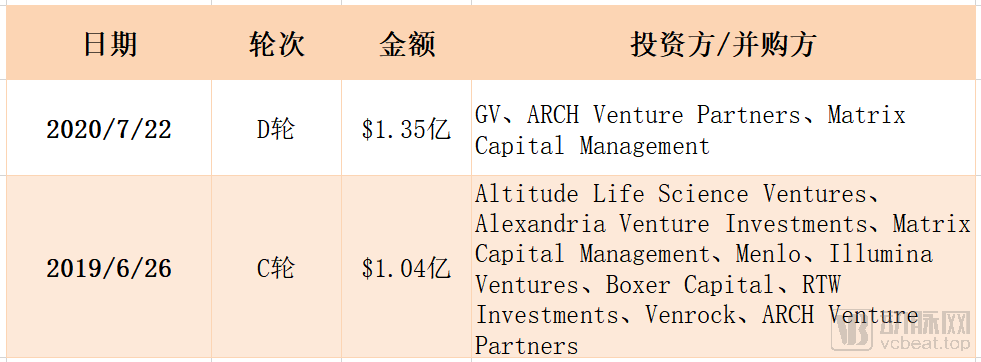
Encoded Therapeutics: Historical Financing Overview
To date, Encoded has raised $239 million in financing.
Encoded Therapeutics, founded in 2014 and headquartered in San Francisco, California, is a biotechnology company developing precision gene therapies for genetic diseases.The company is committed to overcoming the bottlenecks in viral gene therapy and unlocking the potential of genomics-driven precision medicine. Encoded Therapeutics possesses a precise gene therapy technology platform designed to develop gene therapies with higher cell selectivity and potency by modulating the expression levels of endogenous genes.
Currently, the company has established a diversified gene therapy product pipeline to address severe genetic disorders spanning multiple disease pathways, including neural circuit disorders, hepatic and metabolic diseases, neurodegenerative diseases, and cardiovascular diseases.Encoded has addressed some of the current limitations in gene therapy technologies, creating new treatment opportunities for patients.
Founding Team from MIT
Dr. Kartik Ramamoorthi and Stephanie Tagliatela are the co-founders of Encoded Therapeutics. The two met at the Massachusetts Institute of Technology (MIT), where they pursued doctoral research in molecular and cellular neuroscience. Prior to this, both majored in biology-related fields. Ramamoorthi completed his undergraduate studies at Rutgers University, majoring in cell biology and neuroscience, while Tagliatela graduated from Mount Holyoke College with a major in biological sciences.

Co-founder of Encoded Therapeutics
Left: Ramamoorthi; Right: Tagliatela
In addition to their roles as co-founders, Ramamoorthi serves as the company’s Chief Executive Officer and a member of the Board of Directors, while Tagliatela serves as the company’s Chief Scientific Officer and a member of the Board of Directors.
The two individuals have complementary areas of expertise. Ramamoorthi is more adept at corporate operations and previously co-founded Voyager Therapeutics, a gene therapy company dedicated to developing treatments for neurodegenerative diseases. Tagliatela is passionate about building and leading cross-functional teams, has helped shape Encoded’s sequencing-based technology, and strives to overcome the current technical limitations in gene therapy.
Both Ramamoorthi and Tagliatela were named by Business Insider as two of the 30 Under 40 biotech leaders seeking breakthrough treatments and shaping the future of medicine.
Overcoming Limitations to Achieve Precise Gene Regulation
Currently, Encoded Therapeutics is primarily focused on the genetic disorder Dravet syndrome.Dravet syndrome, also known as severe myoclonic epilepsy in infancy (SMEI), is a clinically rare and refractory epileptic syndrome.
Dravet syndrome can lead to severe epileptic encephalopathy. It is characterized by early onset, complex seizure types, high seizure frequency, severe intellectual impairment, low response rate to pharmacological treatment, poor prognosis, and high mortality, making it a representative form of refractory epilepsy.
The clinical manifestations of this disease include uncontrolled seizures, ataxia, and developmental delay, with a pre-adult mortality rate of 15–20%. Onset typically occurs before the age of one year, often triggered by fever-induced convulsions that are frequent and may progress to status epilepticus. Patients are particularly sensitive to temperature changes and photic stimulation, which can readily precipitate convulsions. The condition is commonly associated with cognitive impairment, behavioral disorders, motor deficits, ataxia, gait instability, and intellectual disability.
Currently, approximately 16,000 infants with Dravet syndrome are born worldwide each year. The overall incidence is about 1/40,000–1/20,000, with a male-to-female ratio of approximately 2:1. Dravet syndrome accounts for 29.5% of various types of myoclonic epilepsy in children and 7% of epilepsy cases in infants and young children under three years of age.
Most cases of Dravet syndrome are caused by loss-of-function mutations in the SCN1A gene, which reduce its function by 50%. Gene therapy may target the biological mechanisms underlying this disease, thereby modifying its course.
However, the SCN1A gene exceeds the current packaging capacity of AAV viral vectors, which is why Dravet syndrome has become a particularly challenging target in the field of gene therapy. Moreover, for certain genetic diseases, achieving the desired therapeutic efficacy requires modulating gene expression in specific cell types, improving gene delivery efficiency, or regulating the expression of large or complex genes.
For conditions such as Dravet syndrome, therapy must target specific neuronal cell types—namely, GABAergic inhibitory interneurons. However, current viral gene therapies are limited in their ability to selectively target disease-relevant cells, and widespread transgene expression may lead to adverse effects.
Encoded is dedicated to overcoming key limitations of viral gene therapy by integrating human regulatory elements into therapeutic viral vectors, selectively targeting disease-associated cells, and modulating endogenous intracellular genes to treat related diseases.This strategy precisely mimics the natural characteristics of gene expression, holding the potential to address diseases beyond the current scope of gene therapy technologies, while also significantly enhancing the efficacy of gene therapy at established targets.
Ramamoorthi, CEO of Encoded Therapeutics, stated, “We have developed a suite of technologies based on computational analysis and genomic sequencing that enable us to screen for and identify sequences controlling the location and timing of gene expression in vivo. We incorporate these sequences into gene therapies, such as adeno-associated virus (AAV) vectors, allowing us to harness AAVs for precise gene regulation.”
Encoded Therapeutics, Inc. employs a research model that integrates genomics and computational technologies to identify and screen human DNA sequences at high-throughput scale, leveraging the resulting large-scale multidimensional datasets to design optimal gene therapy expression cassettes for more precise control of gene expression.By capturing natural patterns of gene expression, Encoded’s gene therapy vectors can deliver maximal therapeutic benefit while minimizing off-target expression.
Under this research model, researchers at Encoded Therapeutics optimized DNA sequences that regulate the expression of specific genes, packaged these sequences into viral vectors for gene therapy delivery, and thereby developed ETX101, demonstrating its capacity for cell-selective targeting and upregulation of gene expression.
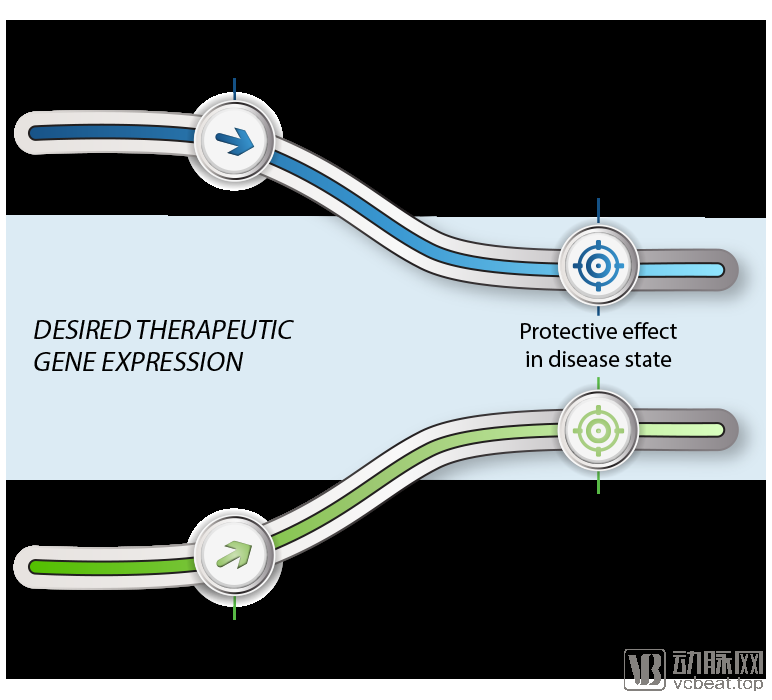
ETX101 is an adeno-associated virus (AAV) vector capable of restoring SCN1A gene expression to normal levels, even within vulnerable neuronal cell types. This technology is specifically designed to advance gene therapies for diseases involving specific cell types or target genes that exceed the packaging capacity of AAV vectors.
Initial Results Emerge from Dravet Syndrome Project
In May 2019, at the American Society of Gene & Cell Therapy (ASGCT) Annual Meeting, Encoded Therapeutics presented preclinical data on its Dravet syndrome program.These preclinical results indicate that mice receiving a single treatment exhibited increased SCN1A gene expression levels in GABAergic inhibitory neurons, along with improved susceptibility to febrile seizures.
This July, Encoded announced that ETX101 has been granted “Orphan Drug Designation (ODD)” and “Rare Pediatric Disease Designation” by the FDA for the treatment of SCN1A+ Dravet syndrome.
Nowadays,Encoded has characterized millions of human DNA sequences (regulatory elements)., these regulatory elements control gene expression through mechanisms such as transcriptional regulation, chromatin structure, and RNA processing.
Dr. Moorhead, Chief Technology Officer of Encoded, stated, “In building a technology platform that combines genomics and computational power with AAV-based gene therapies, Encoded is paving the way for the next generation of precision genetic medicine.”