

LansTech Files IPO Prospectus: Empowering Nearly 1,000 Consumer Healthcare Institutions as a Smart Operations and Marketing “Arsenal”
Since the turn of the 21st century, traditional industries have been restructured by emerging technologies, methodologies, and values, giving rise to new business models that have become the most prominent highlight and primary growth driver of China’s current economy. Compared with the mass consumer sector, internet penetration in the healthcare industry remains relatively low, with the medical and health sector having been predominantly policy- and resource-driven for a considerable period.
As healthcare reform deepens, the development of health information technology has profoundly empowered medical institutions from both technical and operational perspectives, unleashing their vitality. In particular, within the consumer healthcare segment, private medical providers exhibit stronger service-oriented characteristics and higher patient retention rates compared to public hospitals, thereby necessitating differentiated IT infrastructure solutions beyond traditional approaches. Relevant data indicate that China’s consumer healthcare industry has reached a market size of one trillion yuan, reflecting substantial market demand.
In the consumer healthcare sector, there are currently two core pain points. First, information asymmetry has led to low matching efficiency across the industry; users struggle to identify high-quality consumer healthcare institutions and physicians, and there is a lack of credible guidance and official ratings. Second, the overall level of business intelligence in the industry remains low, with both internal management and external marketing still relying on relatively traditional methods and lacking sufficiently effective digital solutions.
In response to this trend, Lanshi Technology, recently contacted by VCBeat, aims to enter this sector. Leveraging internet and artificial intelligence technologies, the company connects healthcare institutions, physicians, and consumers, providing consumer-facing healthcare providers with one-stop intelligent operations and comprehensive smart marketing solutions, including big data analytics, customer relationship management, and management consulting. To date, Lanshi has served nearly 1,000 institutions, spanning specialized fields such as obstetrics and gynecology, pediatrics, ophthalmology, dentistry, and plastic surgery, as well as general hospitals and shared day-surgery clinics.
Currently, enterprises in the healthcare IT market typically have founding teams that fall into two main categories: those with a predominant background in computer science and technology, and those with a predominant medical background. The “genetic makeup” of the founding team often determines the enterprise’s areas of expertise.
“Unlike traditional teams in healthcare IT, our core team has extensive experience in corporate marketing and operations. Therefore, we excel at helping medical institutions address marketing and operational challenges, such as improving customer acquisition efficiency,” Wu Dani, co-founder of Lanshi Technology, told VCBeat. In the consumer healthcare sector, while ensuring medical quality is a fundamental requirement, acquiring and retaining patient traffic is also a top priority for operators. Currently, most healthcare IT companies focus primarily on software and tools, lacking effective marketing solutions and operational strategies tailored for consumer healthcare institutions.
Based on this, Lanshi Technology has developed a comprehensive solution for medical institutions, focusing on traffic management. “Traffic acquisition is primarily divided into two aspects: the operation of internal traffic and the acquisition of external traffic,” stated Wu Danni. Internal traffic mainly stems from the management of existing customers, including customer segmentation and encouraging repeat purchases. “We have a suite of tools that segment and tag customers, leveraging big data technology to deliver targeted promotions of services suited to their needs.” For instance, a customer who has just received botulinum toxin injections for facial slimming would typically require a second treatment around the third month. Lanshi Technology’s system automatically sends reminders to such customers at the appropriate time, thereby achieving the goal of reactivating existing customers and driving repeat business.
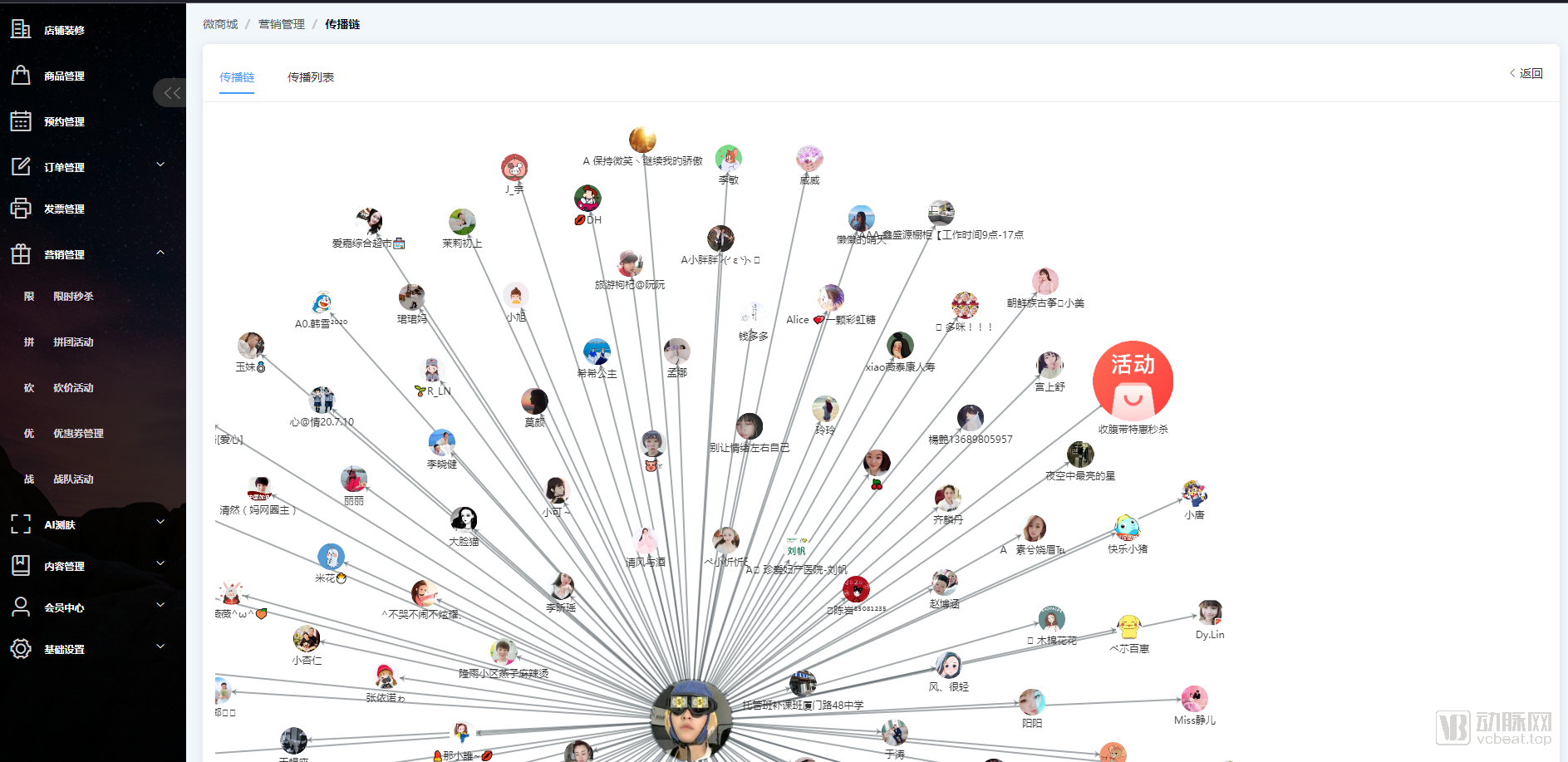
In terms of external traffic acquisition, Lanshi Technology has developed a channel management tool for tracking customer sources. This tool accurately records the origin of each customer; for instance, if A refers B, B refers C, and C refers D, the system clearly logs the entire referral trajectory and customer source. It also implements a corresponding reward mechanism: if D ultimately generates actual commercial value, the system awards points to A, B, and C, which users can then redeem for products and other rewards.
Moreover, Lanshi Technology has also developed a comprehensive membership management system. “While membership programs are already well-established in the retail sector, such a concept is still largely absent in the healthcare field. Therefore, we have introduced this suite of tools, management systems, and underlying philosophies into consumer healthcare institutions, continuously refining and adapting them to better suit the industry.”
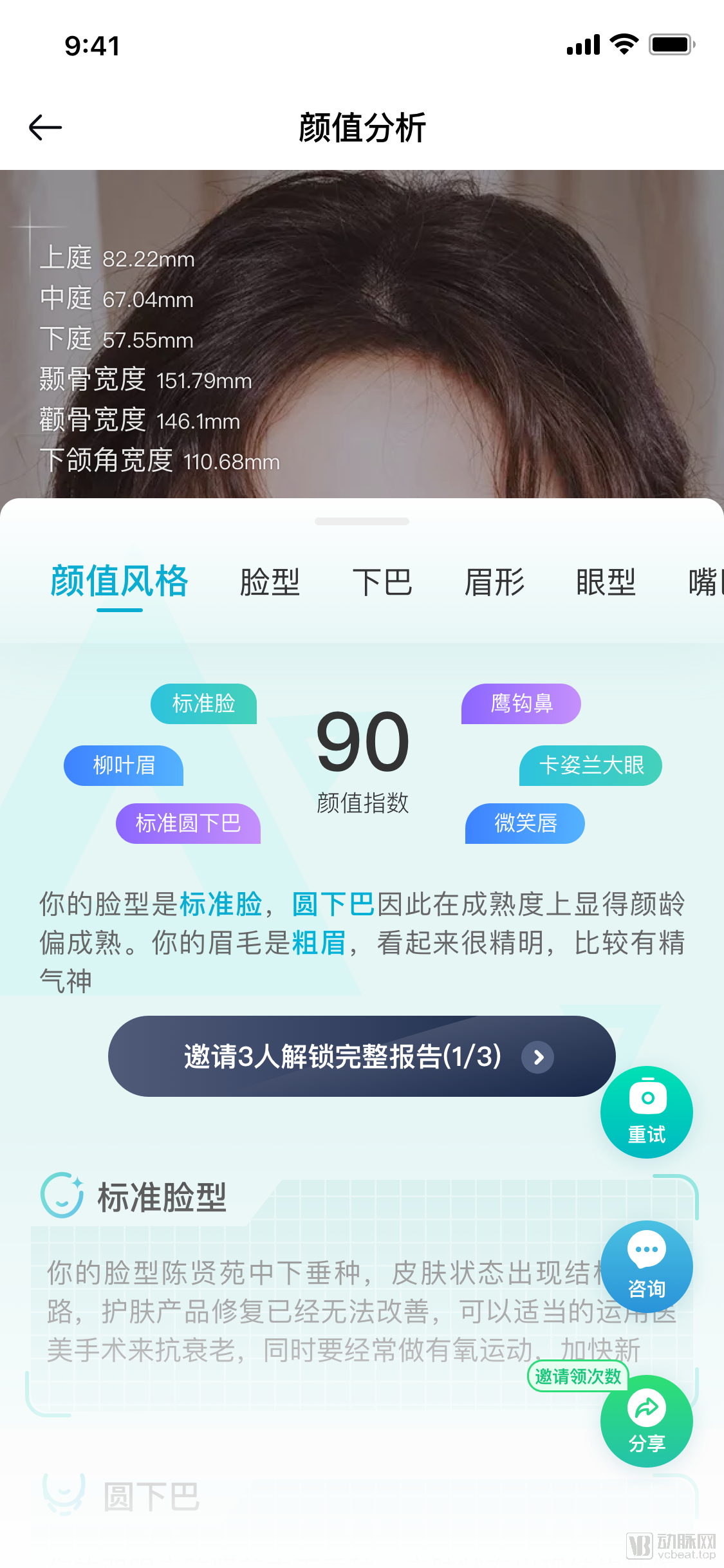
In the mobile internet era, traffic has become increasingly fragmented. To continuously help medical institutions attract patients, Lanshi Technology closely monitors marketing trends and constantly updates its marketing tools and operational models to acquire customers. For instance, Lanshi Technology introduced an AI-based facial attractiveness scoring feature, which sparked viral sharing on WeChat Moments through its novel and engaging approach, thereby driving traffic to clients. Additionally, in the realm of live video streaming, the company helps medical institutions build their own personal brand IPs to attract traffic, while integrating with Official Accounts or Enterprise WeChat accounts, or redirecting users to clients’ online stores, thus achieving end-to-end data connectivity. “We operate like an ‘arsenal,’ providing consumer healthcare institutions with ample marketing ‘ammunition’ by continuously updating plugins, helping B-side clients acquire customers with precision.”
A sound business model cannot be built without a well-structured product system.
By analyzing customer needs, Lanshi Technology has built the Lanshi Rainbow Bridge SaaS platform. The platform comprises five core business systems: Orange Tiger (Aesthetic Medicine Steward), Vulpes (Aesthetic Medicine Assistant), BodhiMouse (Marketing and Promotion), Vespa (Channel Distribution), and Blue-Eyes Dragon (Decision Support), covering nearly all actual business scenarios in the consumer healthcare industry.
Taking Orange Tiger, an aesthetic medicine management platform, as an example, this product is primarily responsible for key operational aspects within the aesthetic medicine industry. It provides comprehensive, multi-dimensional statistical data analysis and employs digital reports alongside visual graphics to ensure clear visibility into clinic operations and customer profiles. Furthermore, by leveraging RFM segmentation, customer tagging, cumulative spending data, and membership card information, it constructs relatively complete customer personas, thereby laying the foundation for refined customer operations.
The “Red-Eared Fox (Vulpes)” Aesthetic Medicine Assistant, built on the WeChat Mini Program platform, meets mobile office needs by enabling rapid customer profile creation, backup of patient data, accumulation of client leads, real-time access to appointment information, and follow-up via telephone callbacks. This product facilitates convenient access for administrators and data analysts to key operational metrics of medical institutions, including business performance, customer data, and personnel data.
“We wanted the product name to be easy for users to remember while also reflecting its functions and attributes, so we opted for a combination of animal imagery and color terms,” said Wu Danni. She noted that effective marketing requires ample creative elements, which is precisely what Beijing Lanshi Science And Technology Co., Ltd. values.
Lanshi Technology has garnered favor and investment from numerous renowned institutions, including Matrix Partners China, Source Code Capital, Puhua Capital, Plum Ventures, and Yuanjing Capital, precisely due to its high-quality product portfolio and business model.
Regarding future development, Wu Danni stated that Lanshi Technology will continue to refine its products and introduce more innovative strategies in marketing and operations, thereby providing deeper empowerment to consumer healthcare institutions and enhancing matching efficiency within the industry.