

Huami Technology Releases Cardiac Health Blue Paper Highlighting Higher Cardiovascular Risks in Men
The prevalence and mortality rates of cardiovascular disease (CVD) in China remain on the rise. According to the Report on Cardiovascular Diseases in China 2017, approximately 290 million people in China suffer from CVD, which accounts for more than 40% of all disease-related deaths among residents. This figure is significantly higher than that for cancer and other diseases, ranking CVD as the leading cause of death. Cardiovascular disease has thus become a major public health issue.
Recently, Huami Technology (NYSE: HMI), in collaboration with Peking University First Hospital, released the “2020 Blue Book on Heart Health of Wearable Devices” (hereinafter referred to as the “Blue Book”). Huami Technology is a cloud-based health service provider that boasts globally leading intelligent wearable technologies and vast amounts of health big data, driven by its mission of “Technology Connecting Health.” With a century-long history, Peking University First Hospital possesses substantial strength in cardiovascular disease research. Leveraging Huami’s health big data, the two parties conducted joint research to present, from a professional perspective, the current status of public heart health, risks of cardiovascular diseases, and future development trends.
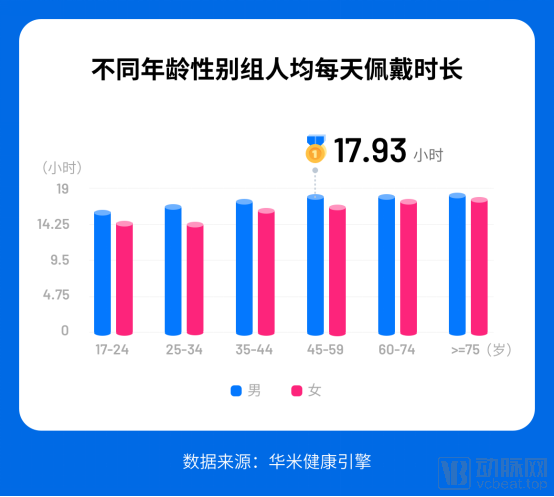
Smart wearable devices can help people continuously monitor multi-dimensional health data, such as heart rate, electrocardiogram (ECG), sleep, and physical activity, providing valuable reference for health risk assessment. Data shows that public acceptance of smart wearable devices is currently high, with active users wearing them for an average of more than 15 hours per day. The average wearing time increases with age, exceeding 17 hours among individuals aged 60 and above. Furthermore, the frequency of ECG measurements rises with age, and for some populations, using smart wearable devices to monitor cardiac health has become part of their daily routine.
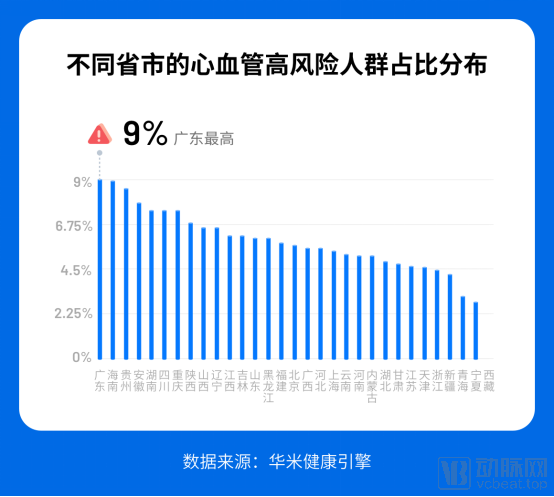
Based on the criteria outlined in the 2008 WHO Pocket Guidelines for Cardiovascular Disease Prevention: Assessment and Management of Cardiovascular Risk, the Blue Book conducted a cardiovascular disease risk assessment among users with relevant recorded data. The analysis revealed that Guangdong, Hainan, and Guizhou provinces had the highest proportions of individuals at high risk for cardiovascular disease within these populations.
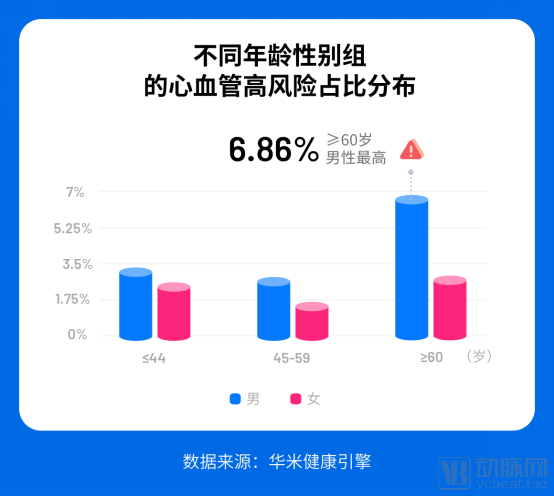
The study also found that the proportion of individuals at high cardiovascular risk gradually increases with age, and that men have a higher cardiovascular risk than women. Among men over the age of 60, the proportion at high cardiovascular risk reached as high as 6.86%.
Heart Rate Variability (HRV) refers to the variation in differences between successive heartbeat cycles; in layman's terms, it describes the fluctuation in heart rate. HRV is commonly used to predict sudden cardiac death and arrhythmias, and to assess the severity and guide the prevention of cardiovascular diseases. Heart rate variability is typically quantified using the SDNN value (i.e., the standard deviation of NN intervals). A reduced SDNN value indicates a higher cardiovascular risk.
Data collected from heart rate sensors in smart wearable devices can be used to calculate the SDNN value. Data analysis reveals that as the subjects' BMI (Body Mass Index) increases, the SDNN value of heart rate variability gradually decreases, with the lowest heart rate variability observed in obese individuals. This indicates that obesity and overweight are significant factors jeopardizing cardiac health.
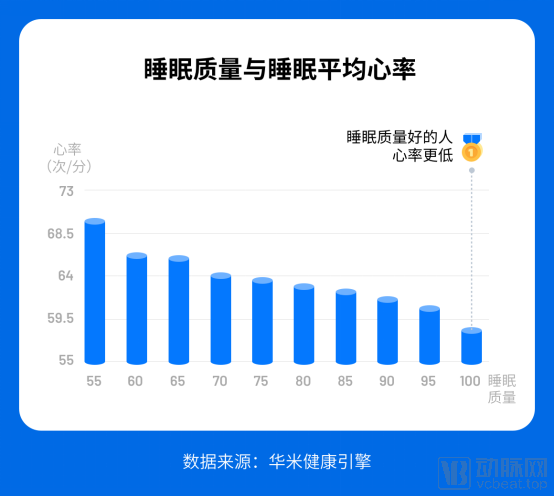
Sleep quality is also crucial for cardiovascular health. Big data analysis has revealed that individuals with higher sleep scores and better sleep quality exhibit lower average nighttime heart rates. Previous studies have also indicated that, compared to their peers, those with lower nighttime sleeping heart rates face reduced risks of cardiovascular disease and all-cause mortality. Maintaining good sleep habits is beneficial for heart health.
Atrial fibrillation is one of the most common cardiac arrhythmias. Its greatest harm lies in causing stroke and heart failure, characterized by high rates of disability and recurrence. However, early-stage atrial fibrillation is often paroxysmal or asymptomatic, making it difficult to detect. Wearable devices enable continuous heart rate monitoring and can issue alerts upon detecting abnormalities, thereby helping individuals identify atrial fibrillation at an early stage and prevent the onset of stroke or heart failure.
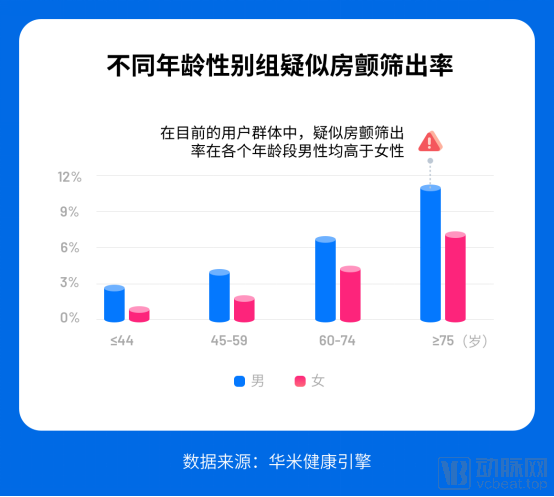
The Blue Book indicates that across all age groups, individuals with suspected atrial fibrillation (AF) exhibit longer sedentary durations than the general population. The detection rate of suspected AF is higher in men than in women across all age groups. Meanwhile, the detection rate of suspected AF increases with age, consistent with the trend of rising AF prevalence among older populations. However, even among young adults under 45 years of age, the AF detection rate remains at 3.89%, suggesting that AF risk should not be overlooked in younger populations.
It is understood that cardiac health has always been a key focus area for Huami Technology. As of March 2020, Huami’s RealBeats™ algorithm had analyzed 14.5 million electrocardiogram (ECG) records, identifying over 4,000 users with suspected atrial fibrillation. In 2019, Huami Technology launched its self-developed RealBeats™ health data engine, which enables automatic detection of arrhythmias by analyzing photoplethysmography (PPG) optical heart rate data and ECG data. Previously, Huami Technology collaborated with Peking University First Hospital to complete a clinical study on smart band monitoring for atrial fibrillation. The accuracy of atrial fibrillation detection using the PPG and ECG functions of smart bands equipped with RealBeats™ reached 93.27% and 94.76%, respectively. These research findings have been published in the renowned American cardiology journal Heart Rhythm.
In June this year, Huami Technology launched the second-generation AI bio-engine for cardiac data, RealBeats™ 2, which effectively eliminates noise interference in heart rate signals during exercise. The effective monitoring time for atrial fibrillation at night and during the day reached 1.87 times and 6.64 times that of the previous generation, respectively. Furthermore, by establishing a big data model for cardiac health, it has successfully achieved AI-based automatic identification of reentrant tachycardia and frequent supraventricular premature beats.
During the COVID-19 pandemic, Huami Technology developed an epidemiological incidence trend prediction model by leveraging health big data and incorporating factors such as seasonality, holidays, and weather conditions. This model accurately predicted the epidemic curves in countries including Spain and Italy. The findings were formally published in the SCI-indexed academic journal *Discrete Dynamics in Nature and Society*, demonstrating that the health monitoring capabilities of smart wearable devices can play a significant role in epidemic early warning and public health management.