

Adarza BioSystems Enters Commercial Production with ZIVA Platform Enabling 100+ Biomarker Tests on a Single Chip

Adarza BioSystems
Developer and Producer of Multivariate Biosensor Platforms and Testing Diagnostic Equipment
In ancient times, Shennong tasted hundreds of herbs to understand the toxicity of certain plants, observe the symptoms in humans after ingestion, and identify corresponding antidotes. Although this is a mythological tale, the underlying principle represents the most direct and effective method for testing toxicity available before the advent of bioassay technologies. Today, new technologies enable us to determine the effects of compounds—and even discover novel ones—without compromising human health.
Bioassay is the qualitative and quantitative analysis of substances based on the specific responses of certain organisms to those substances. It plays a significant role in fields such as biology, medicine, and toxicology. Bioassays help determine drug dosages, explore detoxification processes, and conduct teratogenicity testing.
Headquartered in St. Louis, USA, Adarza BioSystems is dedicated to developing a rapid, label-free bioassay platform for measuring samples required in clinical trials and point-of-care (POC) settings. In addition to performing complex clinical tests within minutes, the technology is fully arrayable, enabling hundreds of tests to be run simultaneously on a single chip.
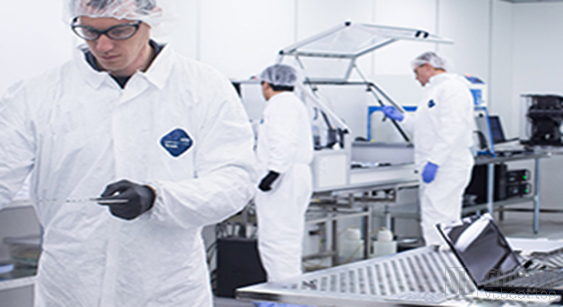
In 2008, Rand Henke founded Adarza in the United States and serves as its Chief Executive Officer. Henke is also the founder, former CEO, and current Chairman of the Board of Container Technologies Industries.
Dr. Henke holds a Bachelor’s degree and a Ph.D. in Biology from the Rochester Institute of Technology, as well as a Ph.D. in Plant Physiology and Genetics from the University of Miami. Dr. Henke has pursued a diverse career, serving in research and development at the Oak Ridge Animal Research Laboratory in Tennessee; advancing technological R&D at a Tennessee R&D center and at Hi-Tech Rochester; teaching in graduate programs at New York State institutions and the University of Tennessee; and serving as an entrepreneur-in-residence at a high-tech company in Rochester.
Henke played a pivotal role in the establishment of Adarza by successfully securing a license for Adarza’s core technology from the University Center of Rochester.
Henke has played a leadership role in the business development of Adarza, including building an experienced leadership team, commercializing products, and helping the company complete its Series A financing round.

Founder and Former CEO Rand Henke
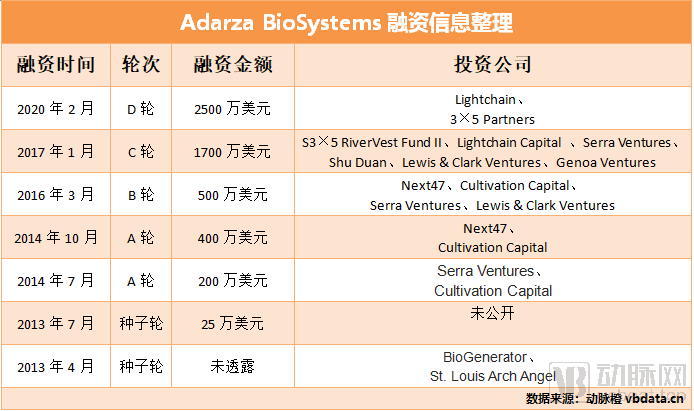
Exploring Adarza’s Financing History: In addition to the publicly disclosed investment and financing information, the company also received funding from three non-profit organizations or institutions. In 2012, MTC (The Mobility Center) invested $200,000 in Adarza through its IDEA Fund program to support the development of its first commercial product.
In 2013, Adarza received a $1.8 million Small Business Innovation Research (SBIR) grant from the National Institute of Environmental Health Sciences (NIEHS), part of the U.S. National Institutes of Health (NIH). The grant was used to support the company’s development of its Array Imaging Reflectometry (AIR) bioassay platform for detecting blood proteins. In the same year, BioGenerator, a non-profit organization, invested in Adarza to further commercialize the company’s immunoassay products.
In 2014, Adarza completed a $6 million Series A financing round. The funds raised were allocated to initiate the research and development of consumables and the instrument platform for its first 100-plex immunoassay product—the AIR platform—and to accelerate the development of higher-plex, high-sensitivity assays targeting multiple analytes. In the same year, Horizon Discovery Group plc, a provider of research tools, entered into an exclusive licensing and supply agreement with Adarza.
This agreement enables Adarza to accelerate its product launches by leveraging the sales and marketing network of Horizon Discovery Group plc. Meanwhile, Horizon Discovery Group plc has secured the rights to utilize Adarza’s multiplex immunoassay platform, providing researchers with more comprehensive tools to advance their drug development processes.
However, product development alone did not satisfy the management team’s vision for in-house manufacturing. In October 2014, Adarza entered into an agreement with SunEdison Semiconductor to establish a manufacturing site for immunoassay consumables at its St. Peters facility, enabling Adarza to develop and manufacture its own products.
In March 2016, Adarza BioSystems completed a $5 million Series B financing round. The funds raised will be used to enhance production capacity at its St. Peters manufacturing facility and to launch its first immunoassay product consumables and instrument platform—AIR. The proceeds will also accelerate the research and development of high-sensitivity assay methods for various bioanalytes, including cytokines, antigens, and small molecules.
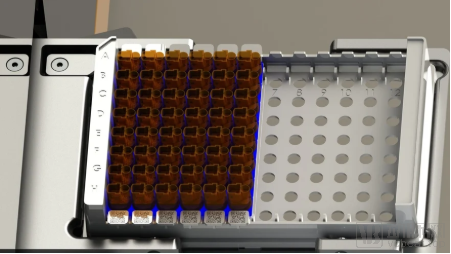
Array Imaging Reflectometer (AIR)
Array Imaging Reflectometer (AIR) is a label-free biosensor platform based on silicon chips. Its surface is distributed with highly specific probe molecules. By functionalizing the surface with these highly specific probe molecules (such as antibodies, protein kinases, microRNA, etc.), the probe molecules bind to and recognize the biomarkers to be detected.
Traditional labeling techniques require two or three additional chemical steps after target binding, often resulting in processing times exceeding two hours and increased reagent costs. Adarza’s AIR label-free technology reduces assay time and enables the simultaneous detection of hundreds of analytes in a single droplet of liquid.
The simplified operational workflow of the AIR platform saves researchers’ time and features rapid startup and automation. Meanwhile, the AIR platform is compatible with instruments of various scales; any instrument equipped with the AIR platform can perform multiplex detection of biomarkers.
Subsequently, Adarza launched a protein array assay platform targeting the niche field of proteins. This assay platform enables screening of both large-scale and small-scale proteomes, which can either consist of existing panels currently available in the medical field or be customized according to user requirements.
The flexibility of Adarza’s technology enables the detection of nucleic acids, viruses/bacteria, and allergens, which will help Adarza expand into other industries and clinical diagnostic fields.
In 2017, Adarza completed a $17 million Series C financing round and announced that Bryan Witherbee would succeed the retiring CEO, Dr. Rand Henke, as the new President. With many years of work experience, Witherbee has a proven track record in development and commercialization of new technologies. The proceeds from the financing will be used to further expand production capacity at its manufacturing facility in St. Peters, and to fund the final development and commercialization of Adarza’s first immunoassay product consumables and instrument platform.
In February this year, Adarza completed a $25 million Series D financing round. The funds will support the full commercialization of ZIVA, an automated bioassay platform for academic and clinical research.
Adarza’s ZIVA platform is designed to provide a better user interface for clinical researchers, academic medical centers, pharmaceutical companies, government scientists, and clinical laboratories.
Ziva is a platform based on AIR technology that can simultaneously detect hundreds of proteins, antibodies, or human chemical compounds from a single drop of blood, plasma, or serum, thereby enabling the observation of an individual's immune response.
Unlike other technologies on the market, ZIVA allows:
1. Capable of measuring 1 to up to 200 biomarkers from a single sample in less than 25 minutes;
2. Capable of testing a variety of biological targets, including proteins, autoantibodies, DNA/RNA, viruses, and bacteria;
3. Label-free assays offer greater flexibility, streamline workflows, and reduce reagent consumption and costs;
4. Rapidly customize and create effective new biosensors, or add new recognition capabilities to existing biosensors (enabling them to recognize new biomarkers).
The ZIVA platform is scheduled for commercial launch in June, enabling researchers to rapidly identify protein biomarkers in inflammation, cardiovascular disease, and oncology, analyze disease profiles, and accelerate drug development.
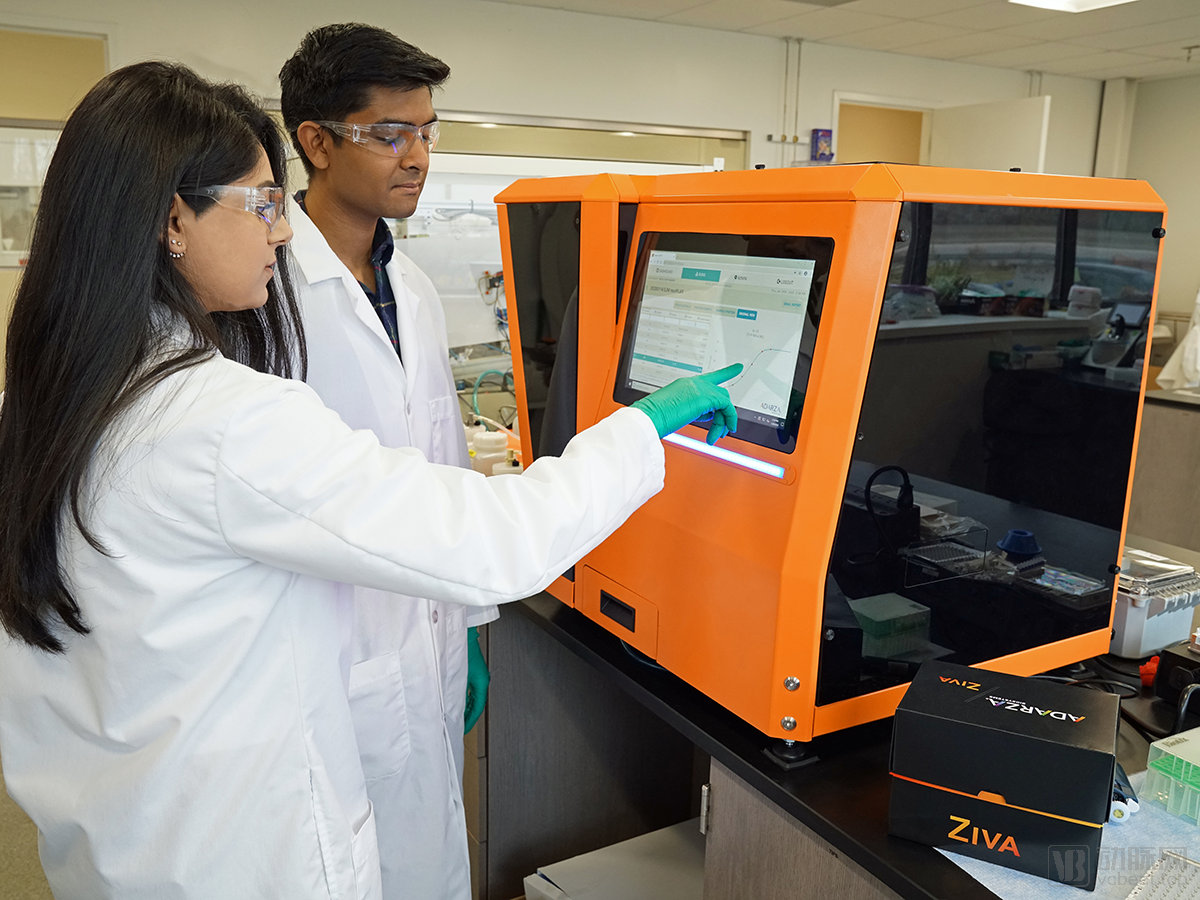
ZIVA Platform
With the advancement of technology, medical technologies have undergone generational innovations. Doctors and nurses now have access to superior medical devices and novel pharmaceuticals to help patients alleviate or even eliminate the suffering caused by diseases. More biomarkers have been discovered and are being utilized in the treatment of cancer, early screening for cancer, and the management of depression, among other conditions.
For example, biotechnology company Axim Biotech announced that its oncology-focused subsidiary, Sapphire Biotech, has filed a utility patent for a novel biomarker capable of detecting cancer in serum and urine.
Signum Biosciences Announces Discovery of DGM4, a Novel Biomarker for Its Investigational Antidepressant DB104 (Liafensine), Using Its Reverse Genomics PlatformSignum Biosciences has announced the successful identification of a novel biomarker, designated DGM4, for its investigational new drug DB104 (Liafensine) in the treatment of depression, leveraging its proprietary reverse genomics platform. This represents a breakthrough discovery by Signum Biosciences in the field of mental health disorders using this platform, following its prior success in identifying biomarkers for two oncology therapeutics.
It is foreseeable that more biomarkers will be discovered, and simpler, faster technologies for biomarker detection will be developed and validated. Although newly identified biomarkers may not yet have sufficient clinical trial data, it is believed that with the passage of time, the prevention and cure of cancer will become possible in the future.