

Zhenzhi Medical: Empowering Regenerative Medicine with Synthetic Biology for Clinical Translation in Neurodegenerative and Degenerative Diseases
Regarding his participation in the Fosun Star Future Entrepreneurship Camp, Yu Yin, founder of Zhenzhi Medical, humbly remarked, “Compared to the broader medical R&D industry, our team is still relatively young and has much to learn. This includes gaining insights into corporate operations and industry knowledge from successful entrepreneurs within the Fosun Star Future Entrepreneurship Camp. Having such a platform that enables us to engage with industry professionals is truly invaluable.”
Zhenzhi Medical, or Shenzhen Zhenzhi Medical Technology Co., Ltd., is a company dedicated to developing regenerative medicine drugs and therapies using synthetic biology technologies. It was established in 2018. However, the team was originally formed in the United States as early as 2016. Its core members primarily hail from internationally renowned institutions such as Harvard University, the Massachusetts Institute of Technology (MIT), and Massachusetts General Hospital, boasting strong academic backgrounds and extensive clinical experience. Additionally, some team members have many years of work experience at GlaxoSmithKline, a leading global pharmaceutical company.
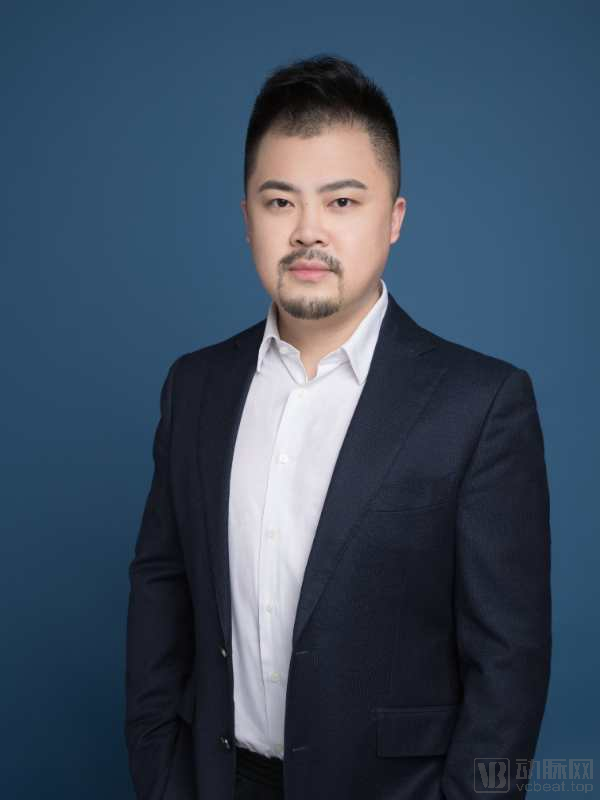
Founder of Zhenzhi Medical, Yu Yin
Zhenzhi Medical’s founder, Yu Yin, has a background in clinical medicine and worked as an orthopedic surgeon for one year. He later pursued advanced studies at the University of Iowa and Harvard University, focusing primarily on research in tissue engineering and regenerative medicine. During his time in the United States, he co-founded a biotechnology company that was successfully acquired by Pfizer in 2015. Leveraging his research achievements in regenerative medicine alongside his practical experience in clinical orthopedics, Yu Yin has developed deep insights into translating medical technologies into clinical applications. “I approach new drug development from the perspective of a clinician. Zhenzhi Medical is positioned to maximize the translational value of its products by mastering core advanced technologies, thereby accelerating their clinical application,” said Yu Yin.
Dr. Wang Gang, another co-founder of the company, previously served as a surgeon and has extensive experience in organ transplantation. He conducted multi-year research in genetic engineering, stem cell therapy, and mRNA drug development at the University of Edinburgh and Harvard University. His research achievements were recognized as one of the Top 10 Scientific Advances of 2014 by the American Heart Association, and he has accumulated many years of work experience at U.S. biotechnology unicorn companies. In late 2019, the company recruited Dr. Jeff Wang, who brought over a decade of new drug R&D experience from GlaxoSmithKline (China), to serve as the Head of Preclinical New Drug R&D, overseeing the advancement of the company’s entire R&D pipeline. Furthermore, the company has appointed Professor Robert Langer from the Massachusetts Institute of Technology (MIT) as Chairman of its Scientific Advisory Board, providing comprehensive guidance and fostering collaboration in areas such as regenerative medicine and drug delivery systems.
Synthetic biology is an emerging, rapidly evolving interdisciplinary field that has arisen in the 21st century. By integrating engineering, computer science, chemistry, and molecular biology, it employs genetic engineering techniques to precisely modify organisms, such as cells, endowing them with novel capabilities to address major diseases.
In the first half of 2019, 65 synthetic biology companies raised a total of $1.9 billion, indicating rapid growth in the field of synthetic biology. In recent years, China has witnessed swift momentum in the development of synthetic biology. The Greater Bay Area in the Pearl River Delta is emerging as a national hub for synthetic biology. The Shenzhen Municipal Government and the National Development and Reform Commission plan to invest tens of billions of RMB in building major synthetic biology infrastructure in the Guangming New District of Shenzhen, which will further empower the research and development as well as industrial translation of synthetic biology technologies.
Zhenzhi Medical primarily focuses on the niche sectors of gene therapy and regenerative medicine within the field of synthetic biology. Leveraging its three proprietary technology platforms and innovative drug targets, the company is developing a product pipeline aimed at a range of clinical indications, including degenerative diseases, tissue injuries, and rare diseases.
The company’s independently developed first platform is the Nucleic Acid Drug Molecular Design and In Vitro Transcription Synthesis Platform (GenR). On the GenR platform, Zhenzhi Medical can perform encoding design for target nucleic acid drug molecules, conduct chemical modifications of nucleic acid molecules, and complete the in vitro transcription and synthesis of nucleic acids (mRNA). Chemical modification of mRNA is critical in the overall drug molecule design process. By leveraging computer-aided design, Zhenzhi Medical can enhance the efficiency of synthetic modifications while reducing production costs.
Complementing the GenR platform is the company’s high-throughput drug carrier design and screening platform, GenM. This platform is primarily used to identify the most suitable drug carriers for mRNA therapeutics synthesized by GenR. By establishing a library of nanoparticle lipid components and employing high-throughput screening methods, Zhenzhi Medical can identify optimal carriers that offer the highest delivery efficiency, maximal protein translation efficiency, and low toxicity for mRNA molecules encoding specific proteins, while also enabling cell-specific targeting.
Finally, there is GenX, the company’s gene editing and cell reprogramming platform, which is primarily responsible for cellular gene editing and the development of genetically engineered animal models. This platform was independently developed by Zhuangzao Biotechnology Co., Ltd., a wholly-owned subsidiary of Zhenzhi Medical. It focuses on developing disease-model animals and humanized genetically engineered animals for drug testing and for providing humanized donors for tissue and organ repair.
Supported by its three major technology platforms, Zhenzhi Medical positions itself at the intersection of synthetic biology and regenerative medicine, focusing on degenerative diseases, trauma repair, and rare diseases. Regarding this strategic focus, Yu Yin responded, “This decision is primarily based on two considerations: First, as living standards improve and the population engaged in sports continues to expand, there is a surging annual demand for treatment of sports-related injuries, driving increased outpatient visits in sports medicine departments. Second, population aging has led to a rise in age-related diseases, with neurodegenerative disorders and degenerative osteoarthropathies showing significant clinical growth trends.”
Yu Yin added, “Currently, drugs or therapies available on the market for these diseases primarily serve to improve and alleviate symptoms, rather than fundamentally altering the disease course. Few pharmaceutical developments specifically target the underlying etiological mechanisms. Zhenzhi Medical has identified this market demand and industry pain point, and has therefore decided to pursue development in this direction.”
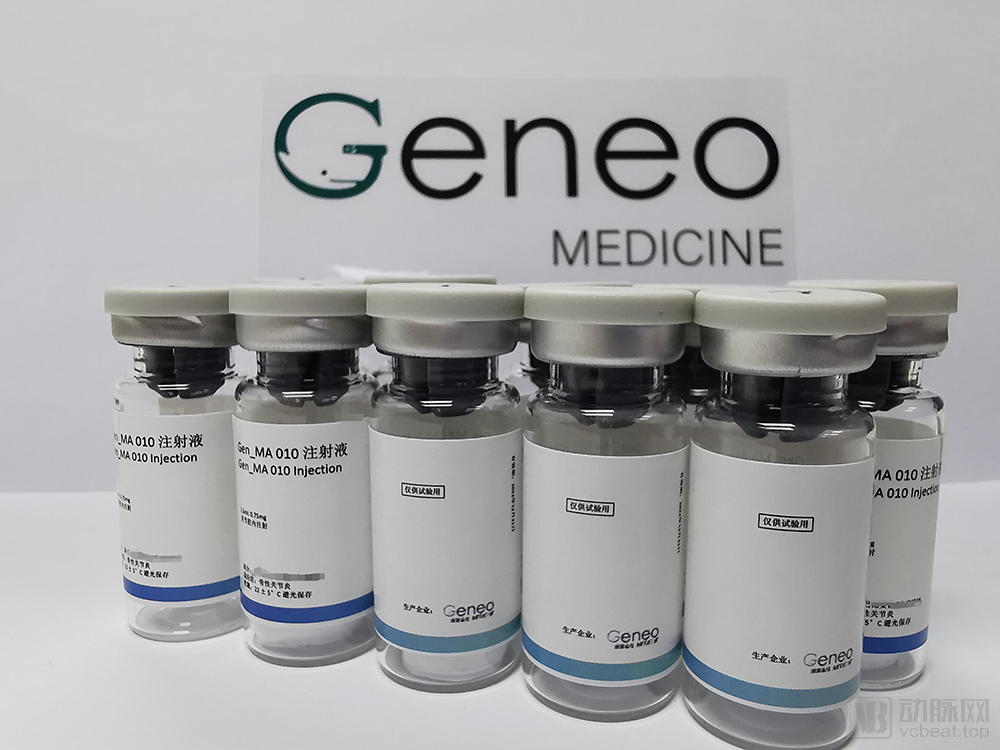
GenMA_010, Zhenzhi Medical's Core Product Pipeline, for the Treatment of Traumatic Osteoarthritis
The drug mentioned by Yu Yin, developed against targets related to the etiology of disease pathology, is the company’s GenMA_010 pipeline. This pipeline is primarily intended for the treatment of post-traumatic osteoarthritis and centers on a unique target independently discovered by Zhenzhi Medical for degenerative diseases, which acts on mitochondrial metabolic abnormalities. In recent years, drug development targeting mitochondria has become a focal point for numerous pharmaceutical giants and investors, with extensive pipelines under investigation in areas such as neurodegenerative diseases, oncology, and heart failure. Zhenzhi Medical has screened and designed drug molecules targeting upstream and downstream pathways of this target, while also achieving significant innovations in formulation and administration routes—a distinctive feature of the company’s development of this pipeline. Furthermore, leveraging its GenM platform, the company has developed a targeted gene-editing complex directed at mitochondrial-related targets, enabling precise gene editing of mitochondrial DNA (mtDNA).
It is reported that Zhenzhi Medical has submitted an Investigational New Drug (IND) application to the U.S. Food and Drug Administration (FDA) for its GenMA_010 pipeline. Yu Yin told VCBeat that, due to the high safety profile demonstrated by GenMA_010 in preclinical trials, the FDA has approved the concurrent conduct of Phase I and Phase IIa clinical trials. The first multicenter clinical trial is expected to enroll 66 patients. In China, Zhenzhi Medical is preparing the necessary documentation for clinical trial approval and is currently getting ready to submit its application to the National Medical Products Administration (NMPA). The company has also initiated collaborative R&D efforts with Shanghai Pharmaceuticals New Asia Pharmaceutical Co., Ltd. Leveraging their respective strengths, both parties are efficiently advancing the late-stage clinical trials, regulatory approvals, and commercialization of this pipeline, thereby laying the foundation for deeper cooperation on future pipelines.
In addition, another pipeline with relatively rapid progress at Zhenzhi Medical is GenXD_010, a therapy for burn and traumatic skin injuries. It has completed all primate studies, obtained ethical approval for clinical trials, and recently initiated an investigator-initiated trial (IIT) at relevant hospitals.
Furthermore, Zhenzhi Medical has currently engaged in multiple research and clinical collaborations with several renowned medical and scientific institutions, including the Shenzhen Institutes of Advanced Technology of the Chinese Academy of Sciences, Karolinska Institutet’s Hong Kong branch, the Jiangxi Provincial Trauma Center, the First Affiliated Hospital of Sun Yat-sen University, and Shenzhen University. It has also established strategic partnerships with listed pharmaceutical companies such as Shanghai Pharmaceuticals Holding Co., Ltd., to jointly advance new drug development.
It is reported that Zhenzhi Medical completed its angel round of financing in 2019 and has currently initiated its Pre-A round. The proceeds will be primarily used to advance the GenMA_01 pipeline into clinical trials, as well as to support the development of subsequent pipelines and expand the R&D team.
Fosun·Xingweilai Institute is an incubation and investment platform focused on the big health sector, established by Xingweilai Capital in reliance on Fosun and Fosun Pharma. Adopting a “community + incubation + investment” model, it explores frontier innovation fields, focuses on entrepreneurial talent, and secures and invests in future unicorns at an early stage.
In 2020, the Grand Health Entrepreneurship Camp launched its second cohort, targeting entrepreneurs in the medical and healthcare sector as well as aspiring innovators. It invited top-tier global mentors and introduced six core incubation modules, offering entrepreneurship courses with the most robust industrial background and practical experience in China.