

Bigfoot Biomedical Files for IPO: Pioneering AI-Driven Automated Insulin Delivery Systems for Diabetes Management

Bigfoot Biomedical
Diabetes Management System and Medical Device Developer
“Can we still sleep peacefully?” This question is a significant concern for patients with diabetes. Relevant surveys indicate that sleep disorders are highly prevalent among this population; approximately one-quarter of diabetic patients suffer from sleep disorders, and 77% experience some degree of sleep problems.
For family members of patients with diabetes, caregiving is an extremely demanding task. They are required to monitor the patient’s blood glucose levels at regular intervals during the night and manage their daily care, while also attending to their own work commitments during the day. This significantly disrupts their sleep, thereby substantially compromising their quality of life.
A Father Who Developed an Automated Insulin Delivery System for His Child
Bryan Mazlish is the founder of a fully automated trading firm. His wife has type 1 diabetes (T1D), and in 2011, his five-year-old son, Sam, was also diagnosed with T1D. In the absence of a complete cure, this meant that both his wife and son would need regular insulin injections, strict control of carbohydrate intake at every meal, and routine blood glucose monitoring in the years to come, significantly impacting their family’s quality of life.
Through years of experience in the financial industry, Bryan Mazlish realized that in certain situations, machines can make better decisions than humans when provided with the right information and instructions, and they never get tired or distracted.
Consequently, Bryan Mazlish began self-studying insulin and carbohydrate management, integrated a blood glucose monitor with an insulin pump, and developed an algorithm to ensure accurate insulin dosing. He then consolidated these components into a single application, creating an automated insulin delivery system (also known as an artificial pancreas).
Since 2013, Bryan Mazlish’s son and wife have been using this automated insulin delivery system for diabetes management. Since then, their daily lives have been just like those of any healthy individual, with no sense of the various burdens typically associated with diabetes.
In 2014, Bryan Mazlish decided to found his own company and met Jeffrey Brewer, a like-minded partner who was then the CEO of JDRF. In a sense, Jeffrey Brewer and Bryan Mazlish had remarkably similar backgrounds.
Jeffrey Brewer is an internet entrepreneur and philanthropist who successfully founded two internet companies, Citysearch and Yahoo! Search Marketing Solutions. In 2002, his son was diagnosed with type 1 diabetes (T1D), which gradually shifted his focus to the field of diabetes treatment.
In 2010, Jeffrey Brewer joined JDRF as CEO. JDRF is a global organization that invests in the research and development of technologies for diabetes treatment. During his tenure at JDRF, Brewer established financial partnerships with multiple companies in the field of diabetes care, advanced the R&D of insulin delivery devices and blood glucose monitoring technologies, and participated in regulatory reforms in the United States related to automated insulin delivery.
Jeffrey Brewer, a seasoned industry veteran, eventually connected with Bryan Mazlish. United by a shared vision for diabetes management and Mazlish’s ambition to launch a startup, they co-founded SmartLoop Labs in November 2014, with Mazlish serving as CTO and Brewer as CEO.
Just one month after the company’s founding, Wired Magazine published an article detailing how Bryan Mazlish transitioned from the financial sector to the field of automated insulin delivery. In the piece, the author referred to Mazlish as “Bigfoot,” likening him to a mysterious figure in New York City who quietly developed an artificial pancreas for his family.
The term “Bigfoot” garnered significant attention following the article’s publication, and Bryan Mazlish and others expressed their strong appreciation for the name. Consequently, in February 2015, they renamed SmartLoop Labs to Bigfoot Biomedical.
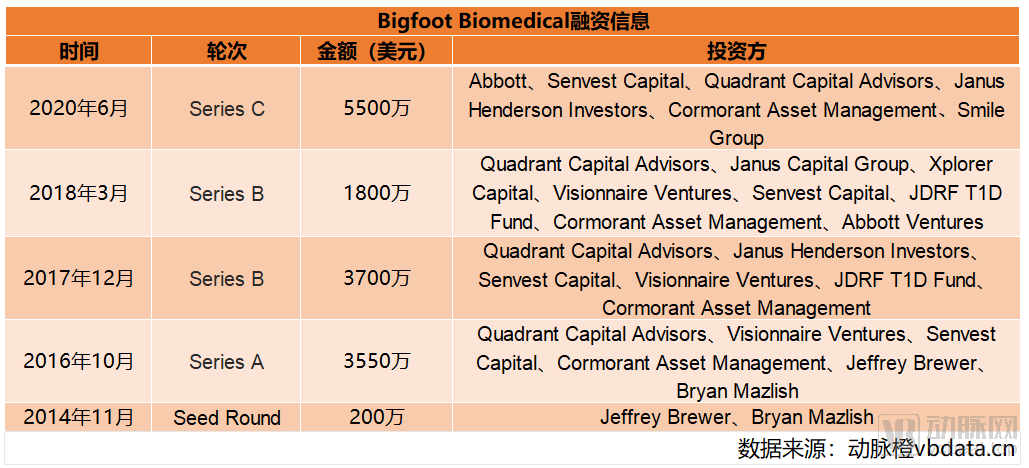
Recently, Bigfoot Biomedical announced the completion of a $55 million Series C financing round, led by Abbott, with participation from Quadrant Capital Advisors, Senvest Capital, Janus Henderson, Cormorant Asset Management, and Smile Group. The proceeds will be used to finalize product development and secure pre-market regulatory approvals for the Bigfoot Unity system.
Acquire to Rapidly Master Automated Insulin Delivery System Technology
Bigfoot Biomedical’s product portfolio primarily includes Bigfoot Autonomy (also known as Bigfoot Loop) and Bigfoot Unity (Bigfoot Inject). Bigfoot Autonomy is an automated closed-loop insulin delivery system based on an infusion pump, which connects a continuous glucose monitoring device to an insulin pump to administer appropriate doses of insulin to patients in a timely manner when needed. Bigfoot Unity is an AI-enabled device that connects an automated dose titration system to an insulin pen.
The primary distinction between closed-loop and open-loop insulin delivery systems is the incorporation of a glucose-sensing component, which continuously and automatically measures blood glucose concentrations and converts the measurements into electrical pulse signals. These signals are then processed and computed by an electronic computer system to adjust the timing and rate of insulin delivery from the infusion pump, ultimately enabling the insulin pump to administer insulin according to the generated commands.
As a company founded by professionals from diverse fields, Bigfoot Biomedical may have lacked sufficient expertise in the research and development of relevant technologies. To rapidly acquire more advanced technologies for insulin delivery systems, Bigfoot Biomedical decided to pursue external acquisitions.
In May 2015, Bigfoot Biomedical acquired Asante Solutions, a medical device R&D company specializing in diabetes management. Through this acquisition, Bigfoot Biomedical obtained the Snap insulin pump development technology from Asante Solutions and developed the Bigfoot Autonomy insulin pump based on the Snap platform.
Bigfoot Unity is based on the design of the Timesulin smart insulin pen cap, which was originally developed by Patient Pending, a London-based biotechnology company acquired by Bigfoot Biomedical in 2017.
Currently, Bigfoot Biomedical plans to develop two different versions of the Bigfoot Unity system: a long-acting (basal) version and a rapid-acting version. Most importantly, Bigfoot Unity is compatible with any type of insulin, and its smart pen caps are suitable for all models of insulin pens.
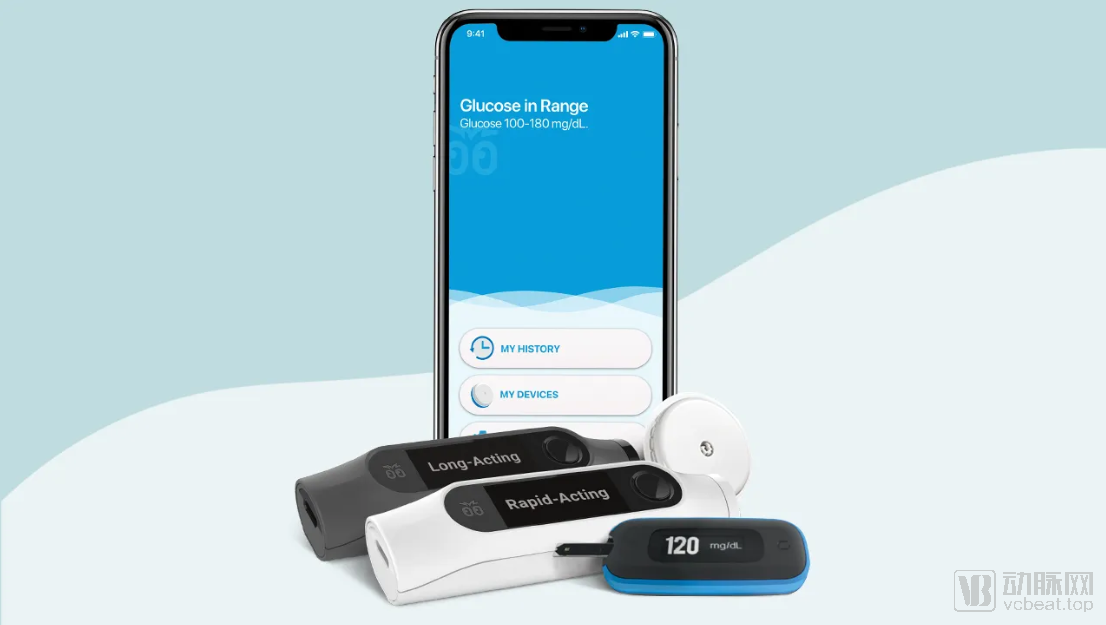
Bigfoot Unity is a real-time dose integration system designed for diabetes patients requiring insulin injections, and it also incorporates Abbott’s FreeStyle Libre technology. The unpredictability of blood glucose fluctuations poses significant challenges to diabetes management. Bigfoot Biomedical has targeted this pain point in developing its AI-driven insulin delivery system.
Bigfoot Unity can connect to smartphones and other management devices, leveraging big data algorithms, artificial intelligence, and automation technologies to optimize insulin therapy regimens for patients with diabetes. The Bigfoot Unity system includes the Abbott continuous glucose monitor and Bigfoot products (including insulin pen caps, backup blood glucose meters, pen needles, glucose test strips, and a mobile application).
When using the Bigfoot Unity™ system with FreeStyle Libre technology, patients and clinicians can view real-time glucose levels without fingerstick blood sampling and receive recommended insulin doses accordingly, thereby improving patient health outcomes. Upon purchase, users receive the complete suite of products included in the system, eliminating the need to separately acquire individual components.
How to Address the Challenge of High Costs
Raj Denhoy, an analyst at Jefferies, speculates based on information from an industry research report that Bigfoot Biomedical is poised to become a competitor to well-established industry leaders such as Medtronic, Dexcom, and Insulet in the near future. Raj Denhoy stated that Bigfoot Biomedical’s potential market in the United States alone amounts to $21 billion, a figure that can even rival those of the largest pharmaceutical companies.
However, automated insulin delivery systems currently face an unresolved issue—high cost. The prohibitive price of these systems deters many patients, as most devices now cost tens of thousands of yuan. When the cost of the device itself is combined with the expense of insulin required during use, few patients are able to sustain long-term adoption.
To capture the insulin delivery market and encourage patients to adopt automated insulin delivery devices, major companies have deployed various innovative strategies. In 2018, Medtronic announced a partnership with UnitedHealthcare, under which the insurer would provide compensation of up to $25,000 to patients who were hospitalized for diabetes-related issues despite using the MiniMed 670G insulin pump.
Meanwhile, Abbott also launched the FreeStyle Libre glucose monitor, which ensures accurate results without the need for fingerstick blood calibration and is more affordable.
To reduce the financial burden on customers, Bigfoot Biomedical has adjusted its payment options. Customers can pay for products in installments through a “monthly payment” plan, with the monthly fee adjustable based on the patient’s usage each month.
Bigfoot Biomedical and Abbott: A Match Made in Heaven?
In 2017, Bigfoot Biomedical entered into a collaboration agreement with Abbott, allowing Bigfoot Biomedical to integrate Abbott’s FreeStyle Libre technology into its own products. The announcement came as a shock to many, as Bigfoot Biomedical had previously been partnering with DexCom, the leader in the continuous glucose monitoring (CGM) space. Moreover, the device used by Bigfoot Biomedical in its initial safety studies was DexCom’s G5 CGM.
Regarding the collaboration with Abbott, some observers believe that Bigfoot Biomedical missed a significant opportunity, while others consider it the right move.
For Bigfoot Biomedical, the partnership with Abbott eliminated the need for finger-prick blood tests to monitor glucose levels, marking a significant step forward for the company. For Abbott, this collaboration served as validation and recognition of its FreeStyle Libre technology, substantially boosting sales of the FreeStyle Libre glucose monitoring system in the market.
Reflections on the Domestic Market
Currently, China’s involvement in the field of automated insulin delivery systems remains limited, primarily due to high technical requirements and substantial product development costs. Furthermore, as many foreign insulin delivery systems have not yet been launched in the Chinese market, there is significant potential for domestic market growth.
However, companies developing such products must exercise caution, as any error in the control process of an automated insulin delivery system could pose immeasurable risks to patients. Therefore, preventing hypoglycemia and enhancing safety control constraints are critical issues that must be addressed to transition glucose control algorithms from research to practical clinical application.