

Traditional Chinese Medicine Meets Internet Healthcare: Seizing Dual Opportunities Amid Challenges in Diagnosis, Herb Quality, and Market Education
As a gem of traditional Chinese culture, Traditional Chinese Medicine (TCM) has, through millennia of development and validation, established a unique medical system. In recent years, the state has vigorously promoted the inheritance and innovation of TCM, fostering complementary and coordinated development between TCM and Western medicine, thereby bringing immense opportunities to the TCM industry. Amidst the pandemic this year, the government has strengthened its support for internet healthcare, leading major internet healthcare platforms to achieve remarkable results. Leveraging this momentum, the previously relatively reserved sector of “TCM + Internet Healthcare” has also begun to enter the market at an accelerated pace this year.
However, traditional Chinese medicine (TCM) diagnosis relies on the four methods of “inspection, listening and smelling, inquiry, and pulse-taking.” When integrated with the internet, TCM still faces numerous challenges. For instance, how can the four diagnostic methods be effectively conducted online? How can the quality of TCM herbal medicines be ensured through internet channels? Are TCM practitioners and patients receptive to internet-based TCM services? In response, VCBeat attempts to analyze these issues from multiple dimensions, including policy, types of internet-based TCM consultations, market pain points, and development trends, with the aim of providing insights for industry participants.
In May 2015, with the approval of the State Council, the Chinese government website released the Development Plan for Traditional Chinese Medicine (TCM) Health Services (2015–2020). The document specifically highlighted the development of intelligent TCM health service products by leveraging information technologies such as cloud computing, mobile internet, and the Internet of Things (IoT). As the first national-level development plan in this field, it serves as a guiding framework for the development of China’s TCM health service industry over the subsequent five years.
Since then, the state’s strong push to develop traditional Chinese medicine (TCM) has been evident, with a surge in favorable policies for TCM. According to incomplete statistics from VCBeat, 30 TCM-related policies were issued at the national level alone between 2015 and the end of 2019.
From strategic top-level design to legal safeguards and practical implementation guidelines; from the training of TCM practitioners and the encouragement and requirement for establishing TCM hospitals to support through medical insurance payment, the core objective of this series of policies is to “revitalize the cause of Traditional Chinese Medicine.”
December 4, 2017, marked a significant milestone in the history of traditional Chinese medicine (TCM) development. On this day, the National Administration of Traditional Chinese Medicine released the Guiding Opinions on Promoting the Integrated Development of TCM Health Services and the Internet, which pointed out that TCM would integrate with internet technologies in areas such as medical care, health preservation and wellness, elderly health services, cultural tourism, service trade, and big data applications. This document outlined the development path for “Internet + TCM” in China by deepening the integration of TCM medical services with the internet and developing online TCM health preservation and wellness services.
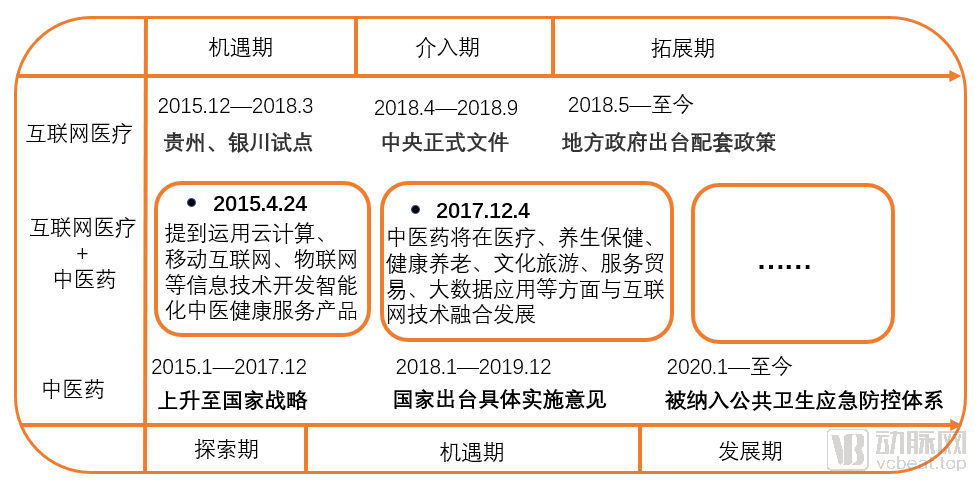
In April 2018, the General Office of the State Council issued the “Opinions on Promoting the Development of ‘Internet + Healthcare’,” setting the tone for government support of internet hospital development. Traditional Chinese Medicine (TCM) internet hospitals also advanced with this trend. Although new policies on internet hospitals were introduced, they imposed requirements on their construction and approval, particularly mandating that provinces establish provincial-level internet healthcare regulatory platforms before approving any internet hospitals. As most provinces had not yet completed such platforms that year, only two TCM internet hospitals were established.
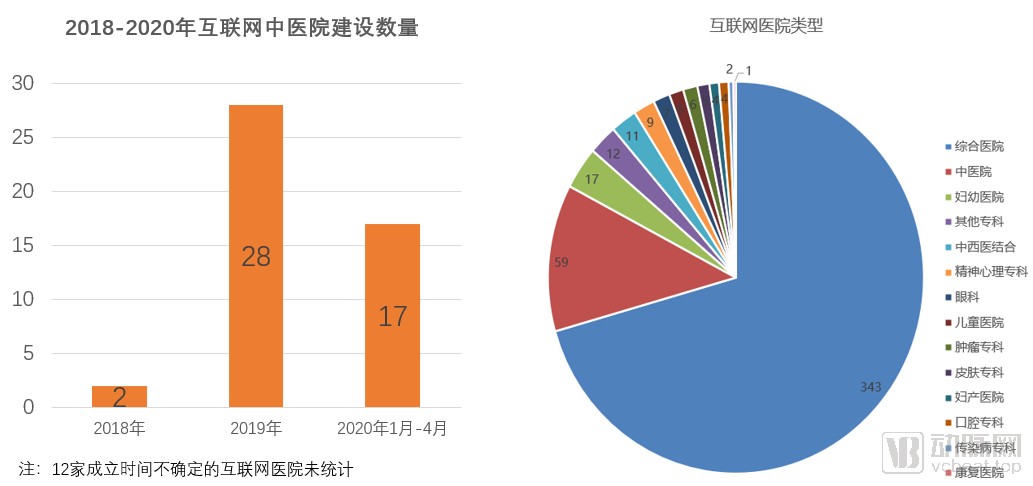
Since 2019, regulatory platforms have been established in various regions, accelerating the approval process for internet hospitals and leading to a surge in their numbers. By 2020, driven by the needs of epidemic prevention and control, the development of internet hospitals accelerated further; the number of new TCM (Traditional Chinese Medicine) internet hospitals added from January to April exceeded half of the total for all of 2019, with continued growth expected in the second half of the year. In addition to public TCM hospitals building their own internet hospital platforms, a large number of online TCM medical service platforms have also emerged.
According to statistics from VCBeat, general hospitals currently dominate the landscape of internet hospitals, while among specialized institutions, traditional Chinese medicine (TCM) hospitals have launched the highest number of internet hospital projects. Although online pulse diagnosis is not feasible, TCM internet hospitals can still facilitate online follow-up consultations, offering significant potential for growth. Particularly driven by the pandemic, “contactless consultations” in digital healthcare have experienced explosive growth, and it has become a consensus that the digital healthcare market boasts a valuation in the hundreds of billions. With the support of digital healthcare, the value of traditional Chinese medicine within China’s healthcare system will become even more pronounced.
With the continuous advancement of internet healthcare policies, applications of “Internet + Traditional Chinese Medicine (TCM)” have become widespread. Currently, there are two prevalent models: one is the self-built internet platform combined with offline clinics; the other is public TCM internet hospitals primarily based on physical hospitals.
Self-Built Internet Platform + Offline Medical Clinic
By establishing an online diagnosis and treatment platform and setting up offline physical TCM clinics, and achieving interconnectivity through systems such as the Hospital Information System (HIS), a closed-loop TCM service covering consultation, prescription, dispensing, and patient education is realized. National policies supporting socially invested healthcare and multi-site physician practice have also facilitated the development of this model. “To forge iron, one must be strong oneself”; enterprises need substantial financial resources or mature business models, as well as robust resource integration capabilities, to bear the operational costs of dual online and offline operations.
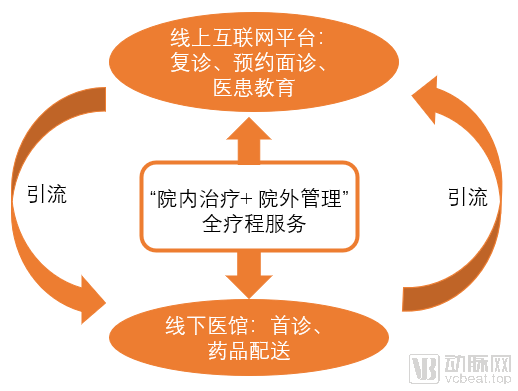
Internet Platform + Offline TCM Clinics: The TCM Internet Healthcare Model. Graphic by VCBeat
Shangyi Renjia is one of the representative enterprises adopting the “self-built internet platform + offline clinics” model. According to Cao Xueli, CEO of Shangyi Renjia, the platform currently has over 40,000 registered TCM practitioners, more than 90% of whom are from Grade A tertiary TCM hospitals, and over 60% hold the title of associate chief physician or above. To date, the platform has cumulatively served millions of patients. As of May 2020, Shangyi Renjia operated 15 offline clinics, with a target of establishing 100 clinics in the future.
Shangyi Renjia boasts its own proprietary supply chain for medicinal herbs, a network of offline clinics, and an independent online platform. This integrated approach enables seamless coordination between online and offline scenarios, enhancing the immediacy of medical services. It extends healthcare delivery from in-clinic diagnosis and treatment to out-of-hospital health management, thereby broadening the scope of medical services. The Shangyi Renjia internet platform operates online through its WeChat Service Account and mobile app, while its offline presence is supported by “Yizhentang,” a chain of 100 self-owned clinics. Additionally, the company maintains a proprietary medicinal herb supply chain that covers the entire circulation process, from cultivation to drug distribution.
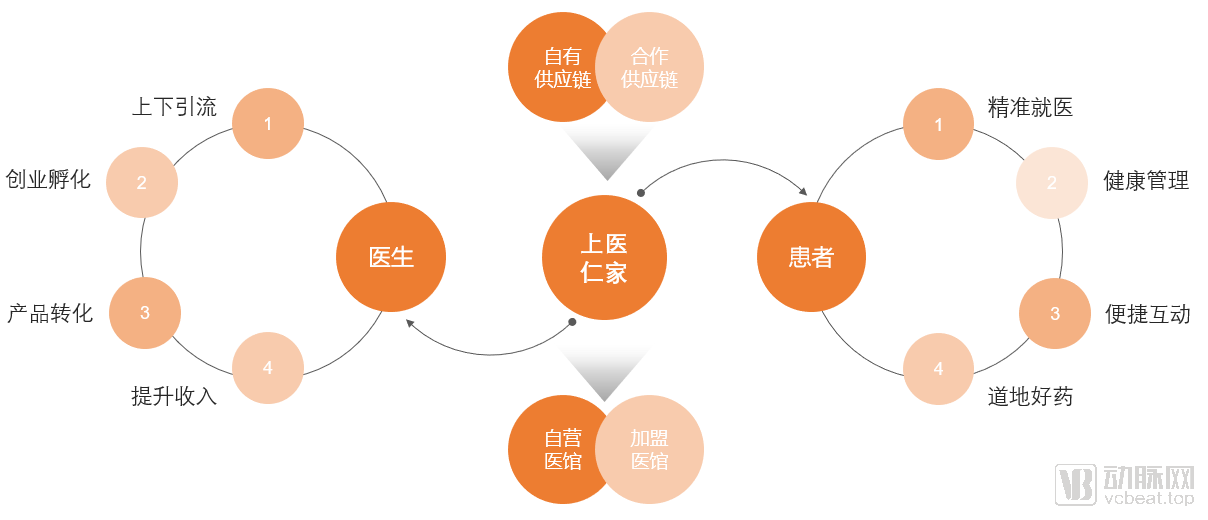 Shangyi Renjia’s Full-Chain, Multi-Dimensional TCM Internet Platform | Graphic by VCBeat
Patients may choose to seek care at Yizhentang, a nearby medical facility. Yizhentang adopts a “One Chief Expert + One Private Physician” consultation model, wherein the expert conducts precise diagnosis and treatment from superficial symptoms to underlying causes, while the private physician continuously monitors the patient’s health status. This approach provides users with comprehensive, full-course therapeutic services encompassing medication, diet, exercise, mental well-being, lifestyle cultivation, and health education. The online internet platform facilitates offline appointment scheduling for in-person consultations, timely follow-up visits, doctor-patient education, and out-of-hospital health management. Additionally, the platform features a “Shangyi Select” section, offering an e-commerce marketplace, popularization of Traditional Chinese Medicine (TCM) culture, and professional clinical learning resources.
The proprietary herbal medicine supply chain covers all stages of herbal medicine circulation, including cultivation, processing, dispensing, and distribution. This approach not only ensures quality control at the source but also effectively manages operational costs. Furthermore, the “Air Pharmacy” within this proprietary supply chain system has generated capital to support the rapid expansion of offline medical clinics.
Shangyi Renjia leverages its online platform and offline clinics to generate demand for its self-built supply chain. As the supply chain continues to improve, it feeds back into the platform and clinics, further strengthening the ecosystem and creating a closed-loop business model. The advantage of this model lies in its ability to extend the service radius of TCM practitioners from within the clinic to patients’ homes, transforming low-frequency diagnostic and treatment interactions into high-frequency health needs such as health management.
Public Traditional Chinese Medicine Internet Hospital
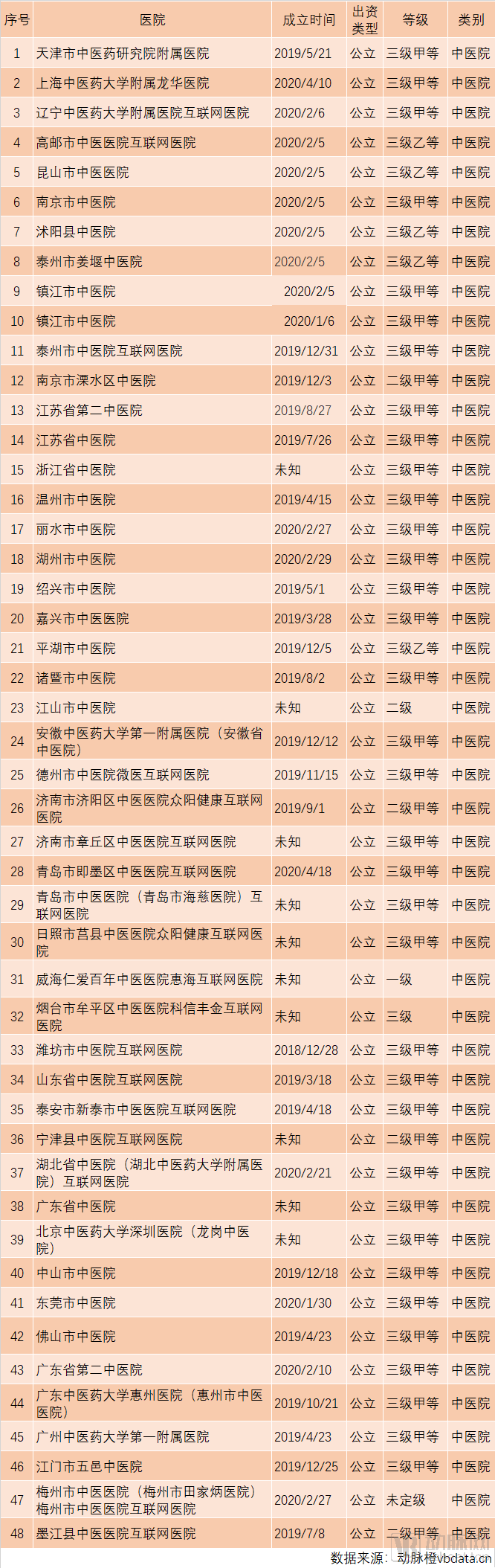
TCM practitioners are the most critical resource for TCM internet hospitals. Public hospitals hold a natural advantage in this regard, and with their richer medical resources and high market recognition, they can rapidly invest in the development of TCM internet hospitals.
Public traditional Chinese medicine (TCM) hospitals possess advantages in offline resources, and their internet hospital services are primarily concentrated on core medical activities, such as pre-consultation inquiries and consultations; during-consultation diagnoses and prescription issuance; and post-consultation medication delivery. However, in the process of building internet hospitals, public TCM hospitals can migrate offline medical resources to online platforms, improve the efficiency of follow-up visits for common and chronic diseases, promote the decentralization of high-quality resources through remote consultations and medical consortiums, facilitate the implementation of tiered diagnosis and treatment, and alleviate the problem of uneven distribution of medical resources.
Although the development of the traditional Chinese medicine (TCM) industry is thriving, the practical implementation of Internet-based TCM still faces several challenges, primarily concentrated in four areas:
In-Person Consultation Is the Biggest Bottleneck in Internet-Based Traditional Chinese Medicine Healthcare
“Inspection, Auscultation and Olfaction, Inquiry, and Palpation” are the defining characteristics of Traditional Chinese Medicine (TCM), which have also become its primary bottleneck in the internet era. In 2018, three national-level policy documents on internet healthcare explicitly stipulated that internet hospitals must be affiliated with physical medical institutions. The role of internet hospitals is to extend hospital services forward to patients, through online consultations and triage, and backward to chronic disease management and health management.
Currently, patients seeking consultations via internet hospitals are predominantly follow-up cases with stable conditions, while initial consultations and patients with unstable conditions still opt for offline medical institutions. Therefore, initial diagnoses and the traditional Chinese medicine (TCM) diagnostic methods of “inspection, auscultation and olfaction, inquiry, and pulse-taking” continue to require the support of offline TCM healthcare facilities. Both regulatory requirements and the inherent nature of medical practice underscore the necessity and importance of offline settings in actual clinical diagnosis and treatment.
However, due to the uneven distribution of medical resources, the already scarce pool of high-quality Traditional Chinese Medicine (TCM) practitioners is concentrated in first-tier cities, while second- and third-tier cities suffer from a shortage of such expertise, making in-person consultations difficult. Furthermore, the development of offline physical medical institutions remains a significant challenge.
Establishing offline physical facilities requires substantial upfront investment of capital and resources. Without a clear business model, growth tends to be slow, and achieving profitability becomes challenging. How should offline medical institutions define their market positioning? How can outpatient clinics be managed effectively? How can a profitable business model be structured to cover the high costs associated with offline operations? These are among the critical challenges that internet companies must address when expanding into offline physical healthcare services.
To address the challenge of providing in-person consultations for patients across different regions, Shangyi Renjia has introduced a dual strategy of “self-operated + franchised” clinics, offering stable offline physical clinic support to its online platform.
Regarding self-operated operations, outstanding TCM practitioners on the Shangyi Renjia online internet platform can acquire equity stakes in offline clinics after building a substantial patient base, thereby becoming clinic shareholders and entrepreneurs. Benefiting from favorable policies for the filing and approval of TCM clinics, as well as support from Shangyi Renjia’s proprietary supply chain, each clinic can be established within just three to four months, with controllable capital investment. Currently, Shangyi Renjia categorizes its clinics into provincial-capital-level, prefecture-level, and county-level stores, with approximate sizes of 500 square meters, 200 square meters, and 100 square meters, respectively.
In terms of franchising, Shangyi Renjia has introduced the “Shangyi 100+” new ecosystem solution for TCM clinics. By adopting a franchise model centered on “lightweight clinics,” it enables rapid and scalable expansion, meeting patients’ needs for in-person consultations across different regions while facilitating the digital transformation of TCM clinics. Furthermore, this business model addresses many pain points faced by existing clinics, such as scarcity of expert practitioners, low profit margins, difficulties in customer acquisition, and limited scale.
How to Maintain Consistent Quality Standards for Chinese Herbal Medicines Online
Currently, traditional Chinese medicine (TCM) faces significant challenges, including outdated distribution methods, low efficiency, and the lack of mutually recognized uniform quality standards. Furthermore, non-compliant practices—such as ecological degradation, irrational use of pesticides and fertilizers, and excessive sulfur fumigation—have led to inferior herbal quality, compromising both safety and efficacy. These issues constrain the modernization and industrialization of TCM.
Chinese herbal medicines must be procured from cultivation sites and undergo processing and preparation before they can be sold to medical institutions and pharmaceutical wholesalers, passing through multiple market entities along the way. In contrast to the increasingly efficient procurement of Western medicines in recent years, the distribution chain for traditional Chinese medicine (TCM) is long, inefficient, and relies on traditional transaction methods. The traditional TCM supply chain flows from suppliers to medical institutions, then to decoction and dispensing centers, and finally to patients. For TCM suppliers, customers are fragmented, resulting in high management costs. For medical institutions, the procurement and management of herbal materials are costly, as is the customization required for individualized prescriptions. For decoction and dispensing centers, quality control is inconsistent, personalized service capabilities are weak, and the level of scale and brand development is low. For patients, collecting and decocting herbal medicines is time-consuming and labor-intensive.
On July 7, 2020, the first national alliance for the procurement of traditional Chinese medicinal (TCM) materials, jointly established by 12 provinces, was launched in Jinan, Shandong. Concurrently, a series of supporting platforms and projects were initiated, including the Shandong Internet TCM Materials Trading Platform and the Shandong Provincial TCM Quality Testing Platform. As the largest innovation consortium in China’s TCM industry to date, this initiative facilitates centralized, volume-based procurement of TCM materials, helps alleviate the financial burden on patients, and signals that the development of TCM is entering an era of standardized compliance.
Leveraging its core resources, Shangyi Renjia has also built a fully proprietary supply chain for traditional Chinese medicinal materials, covering all stages of circulation including cultivation, processing, dispensing, and distribution.
In terms of medicinal herb cultivation, Shangyi Renjia relies on over 100 authentic medicinal herb planting bases to independently cultivate and harvest all its herbs. Strict requirements are imposed on origin, seed sources, growth duration, harvesting seasons, and techniques to ensure drug quality from the source. Regarding the quality of herbal processing, Shangyi Renjia selects the industry’s only national-level intangible cultural heritage inheritance base for traditional Chinese medicine (TCM) processing to guarantee the quality of TCM products. In prescription dispensing, the offline medical clinic Yizhentang operates its own dispensing center equipped with nearly 100 intelligent devices for automated dispensing. Quality control is conducted using infrared fingerprint spectral databases, and prescriptions are reviewed by hundreds of professional licensed pharmacists nationwide to achieve zero error in medication preparation. For drug delivery, patients place orders via the Shangyi Renjia WeChat service account; the platform ships orders locally on the same day, achieving next-day delivery in 80% of cities across China, thereby resolving difficulties patients face in obtaining their medications.
Unclear Career Paths for TCM Practitioners and Weak Affiliation with TCM Clinics
Most Traditional Chinese Medicine (TCM) clinics have a singular profit model, primarily derived from physician consultations and herbal decoctions. Physicians hold an inherent advantage in the “physician-driven patient acquisition” model, fostering stronger doctor-patient interactions. However, the relationship between clinics and physicians is merely contractual, lacking stability; this makes clinics vulnerable to being held hostage by TCM practitioners. Once physician resources drain away, clinic operations are significantly impacted.
To address these issues, Shangyi Renjia supports TCM practitioners through a combination of online platforms, offline clinics, and prescription services, thereby ensuring the quality of TCM consultations, increasing physicians’ income, and overcoming the weak ties typically seen between general platforms and doctors.
Shangyi Renjia has established its own TCM inheritance system, evaluating licensed TCM practitioners based on medical quality, heritage education, brand image, and product conversion, while enhancing their market competitiveness through systematic on-the-job training and market operations. In addition to implementing mentorship programs such as "master-apprentice" and "senior-junior" pairing, the company specially invites renowned senior TCM experts to conduct highly targeted training on therapeutic methods and medical techniques, helping clinical doctors within the system improve their professional standards. Shangyi Renjia has also created the largest appointment database of famous TCM doctors to date, which includes several National Medical Masters such as Jin Shiyuan and Chao Enxiang. The database alone features 500 experts in the Beijing region, all of whom are associate chief physicians or above at Grade A tertiary hospitals.
A clear career growth path can also help “retain” physicians. Shangyi Renjia has built a dual-innovation platform that encourages and supports physicians in “innovation” and “entrepreneurship.” Once physicians on the internet platform have accumulated a certain patient base, they can acquire equity stakes in offline medical clinics, thereby establishing their personal brands and facilitating the conversion of their clinical skills, knowledge, products, and experience into tangible outcomes.
Throughout this process, Shangyi Renjia provides TCM physicians with support in areas such as site selection, renovation, preparatory work, and negotiations. According to Cao Xueli, the TCM inheritance system established by Shangyi Renjia facilitates better integration between online consultation platforms and offline TCM clinics. Renowned TCM practitioners can impart their clinical skills to train TCM professionals and preserve TCM culture, thereby enhancing the quality of medical services and supporting nationwide expansion.
Market Education Challenges and the Dilemma of Cultural Heritage
Misunderstandings abound due to a lack of understanding. The notion that “Traditional Chinese Medicine (TCM) is only suitable for treating chronic diseases” is widespread, but this is not the case. TCM is not exclusively linked to chronic conditions; it demonstrates significant efficacy in emergency care, critical care, post-treatment rehabilitation, and sub-health management.
In the "Diagnosis and Treatment Protocol for Novel Coronavirus-Infected Pneumonia (Trial Version 3)," the traditional Chinese medicine (TCM) treatment protocol, based on a summary and analysis of TCM treatment protocols from across China and a systematic review and selection of local TCM treatment experiences and effective formulas and remedies, categorizes the clinical treatment phase into mild, ordinary, severe, critical, and recovery stages, and adds three general-purpose formulas (No. 1, No. 2, and No. 3).
Therefore, to enhance public recognition of Traditional Chinese Medicine (TCM), greater emphasis should be placed on interpreting its therapeutic principles in modern terminology. By using simple language and accessible expressions, we can ensure that the general public not only understands but is also willing to engage with this knowledge.
As the traditional Chinese medicine (TCM) industry carries China’s long history, there is ongoing debate within the sector regarding how to balance innovation with preservation. Cao Xueli, CEO of Shangyi Renjia, concluded by stating that the development of TCM must adhere to the principle of “honoring tradition without being bound by antiquity, and pursuing innovation without deviating from its roots.” Since TCM practices and herbal medicines constitute the core of the TCM industry, innovating these core elements risks undermining the essence of TCM. Therefore, innovation in TCM should focus on areas such as service models and business models.
Meanwhile, the scope of Traditional Chinese Medicine (TCM) extends far beyond the clinical consultation phase. The high compatibility between the internet and TCM enables its flexible expansion across the entire health and wellness industry, covering pre-diagnostic disease prevention, in-diagnostic treatment, and post-diagnostic rehabilitation. From pre-illness to post-recovery, from offline to online, from within hospitals to outside settings, and from single visits to cyclical care, TCM’s holistic health model encompasses all aspects of daily life, including clothing, food, housing, and transportation. This emerging internet-based TCM model is transforming the traditional healthcare landscape, which has historically been limited to providing patients with only episodic and ad-hoc diagnostic and therapeutic services.
In the broader layout of the health and wellness industry, TCM internet healthcare can also connect multiple stakeholders across the industrial chain, such as pharmaceutical retail, pharmaceutical and medical device companies, and commercial insurance providers. This integration bridges the entire healthcare value chain, consolidates diverse medical resources, and delivers Traditional Chinese Medicine (TCM) products and services that span the full life cycle and cover all health scenarios for users. In summary, there remains significant room for development and expansion in the blueprint for TCM internet healthcare.