

Junhui Bio Secures China's First Class II Certification for Clinical-Grade Single-Cell Imaging and Automated Sorting Instrument
On May 21, 2020, the NMPA website indicated that JUN HEALTH’s automated single-cell image analysis separator had been approved by the Hunan Provincial Medical Products Administration and officially obtained a Class II medical device registration certificate.
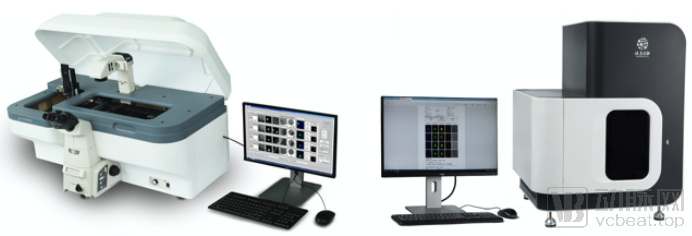
Automated Single-Cell Image Analysis Separator
This is the first single-cell image sorting device approved for clinical-grade applications in China to date. Previously, neither domestically produced nor imported products of this kind had received approval from the National Medical Products Administration (NMPA) for clinical use, signifying that single-cell sequencing has now opened the door to the clinical market.
What should have been a landmark event shaking the liquid biopsy industry was met with surprising restraint by JUN HEALTH, the party directly involved. Perhaps from their perspective, securing final regulatory approval for the product was simply the natural culmination of four years of dedicated R&D efforts. On another note, JUN HEALTH may also be keeping a low profile because several other major milestones are imminent this year.
Circulating tumor cells (CTCs) and circulating tumor DNA (ctDNA) are the two primary focuses of liquid biopsy in oncology. Over the past two years, ctDNA has gradually overshadowed CTCs in terms of research momentum. Theoretically, however, CTCs encompass comprehensive information across the tumor genome, transcriptome, and proteome, and should therefore offer richer content than ctDNA. The fact that ctDNA has gained more prominence indirectly suggests that the full value of CTCs has yet to be fully realized.
In recent years, the academic community has come to regard single-cell sequencing as a key technology capable of breaking through the bottlenecks in circulating tumor cell (CTC) research, thereby facilitating its broad clinical application. Professor Klaus Pantel of the University of Hamburg in Germany, known as the “father of CTCs,” also asserted in his August 2019 review article published in Nature Reviews Cancer, titled “Uncovering tumour heterogeneity through single-cell analysis of circulating tumour cells,” that single-cell technologies can enable comprehensive detection of CTCs and ultimately elucidate the mechanisms underlying metastasis and therapeutic resistance in cancer treatment.
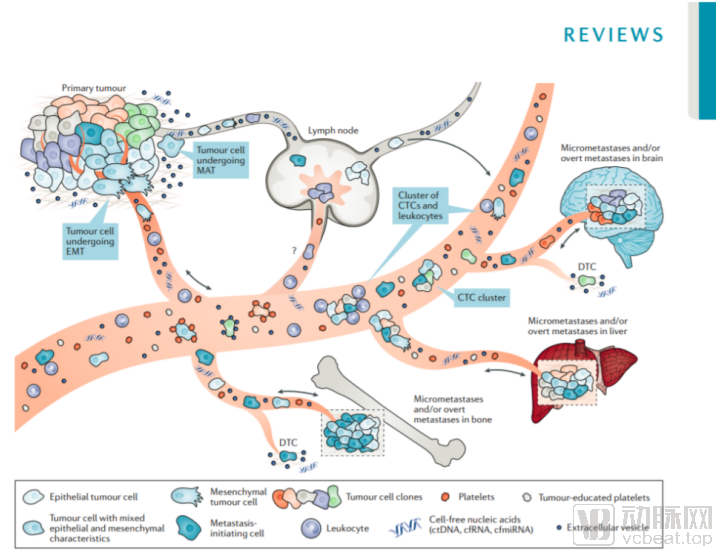
Schematic Diagram of Research Findings Related to CTCs
However, the application of single-cell sequencing in the field of circulating tumor cells (CTCs) faces critical technical bottlenecks that hinder its clinical translation.
“The field of circulating tumor cells (CTCs) has long faced two major technical bottlenecks: first, the lack of effective biomarkers; and second, the need to employ single-cell sequencing to obtain genetic information due to the extremely low cell counts, a approach that has yet to be realized at the clinical level,” Yan Zhuohui, founder of JUN HEALTH, told VCBeat.
There are already several CTC-related detection platforms available globally. Among them, the most well-known is undoubtedly CellSearch.
In 2011, CellSearch obtained a Class III medical device registration certificate from the CFDA (now the NMPA), formally entering the Chinese clinical market. Its corresponding test kits and quality control products also successfully secured Class III certifications. However, when the registration expired in 2015, Johnson & Johnson chose not to renew it and later sold CellSearch to the Italian pharmaceutical company Menarini, strategically abandoning the product.
Strategically abandoned, the root of the problem must still be sought within the system itself. The epithelial cell markers used by the CellSearch System perform well in breast cancer but yield suboptimal results in many other cancer types. Furthermore, its clinical application is limited to circulating tumor cell (CTC) counting, excluding isolation and sequencing, and a significant proportion of cells identified as positive are not actually tumor cells. In other words, the CellSearch System has failed to adequately address the two major bottlenecks in the CTC field mentioned at the beginning of this paragraph.
Bottlenecks are pain points, but they also represent opportunities. JUN HEALTH has seized this opportunity.
In 2017, Dr. Shi Qihui, Chief Scientific Advisor at JUN HEALTH and a researcher at the Institute of Biomedical Sciences, Fudan University, published a paper in PNAS (Proceedings of the National Academy of Sciences of the United States of America). She proposed that glucose metabolism markers, based on the same detection principle as PET-CT, could effectively identify circulating tumor cells (CTCs), thereby overcoming the longstanding bottleneck of lacking specific markers for CTC detection.
This research and its associated patents have directly established the technological foundation of JUN HEALTH. Given that glucose metabolism markers have been successfully applied in clinical PET-CT imaging, and leveraging its single-cell sequencing capabilities, JUN HEALTH has named its product platform “Single-Cell seq-PET.”
Building on this foundation, JUN HEALTH summarized the clinical application of CTC single-cell sequencing by late 2015 during the process of translating this achievement into clinical practice.Three Major Product Bottlenecks。
First is the issue of efficiency., each cell sample requires one person to spend two days manually isolating individual circulating tumor cells (CTCs), followed by single-cell library preparation and sequencing; the entire testing process is very lengthy;Second is the issue of costThe high labor costs associated with the lengthy process, combined with the already expensive single-cell genome sequencing at the time, placed a significant strain on JUN HEALTH, which was still in its early stages of development;Third, the issue of biomarkers, at that time, the detection of glucose analogs required a cell culture process, which imposed high demands on cell viability; inevitably, cell viability declined after sample collection and transportation.
Consequently, over the next four-plus years, JUN HEALTH focused on addressing these three issues while simultaneously preparing to advance the regulatory approval process for its products.
To address efficiency challenges, JUN HEALTH established its own software team and developed an automated cell identification system. The system can now complete the identification of a single sample in just five minutes, a significant improvement over the previous two-day turnaround time. Furthermore, automated single-cell isolation has increased efficiency by hundreds of times, reducing the process from manually sorting approximately 20 cells per day to isolating one cell in mere seconds.
To address cost concerns, JUN HEALTH has achieved high-efficiency targeted amplification of single-cell gene fragments and optimized its whole-genome amplification (WGA) reagents for single cells. This advancement enables the detection of targeted gene mutations and copy number variations (CNVs) using only a few cells, significantly reducing costs.
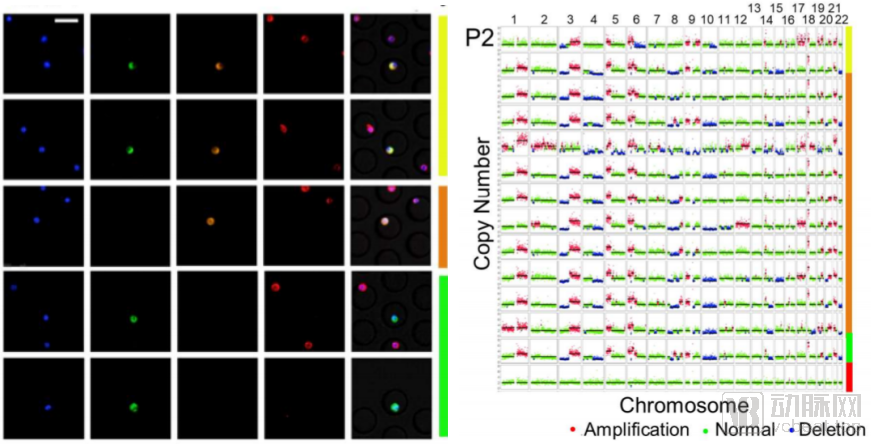
JUN HEALTH's Single-Cell "seq-PET" Assay
To address the challenges associated with biomarkers, JUN HEALTH has identified novel specific markers involved in glucose metabolism. This advancement eliminates the need for a culture process prior to cell sorting. The new method enables subsequent detection procedures using fixed samples. This novel molecular biomarker has undergone extensive clinical validation; studies focused on urological tumors alone included over 800 healthy individuals and more than 700 patients with bladder cancer, demonstrating a concordance rate of nearly 90% between test results and clinical diagnoses. It has shown particularly high clinical value in the definitive diagnosis of complex and challenging cases.
Thus, in 2017, JUN HEALTH, fully prepared, launched its bid for regulatory approval.
“As we are the first to venture into uncharted territory, with no existing standards to rely on, we inevitably encounter certain difficulties during the certification process,” said Yan Zhuohui.
During the regulatory submission phase, as the first product for single-cell image analysis and automated isolation, JUN HEALTH underwent classification and definition by both the Provincial Medical Products Administration and the National Medical Products Administration in 2018 to determine the product category and name. In 2019, a multi-center clinical trial involving more than 240 participants was conducted. The primary results of this trial demonstrated that the interpretation of stained positive single cells achieved a concordance rate of 98.1% with manual microscopic observation. Furthermore, the performance in isolating and recovering target single cells was highly satisfactory, with an isolation success rate of 98.2%.
In 2020, amid the pandemic, the Hunan Provincial Medical Products Administration and its Evaluation Center convened online expert meetings to support innovation in medical devices. Under the premises of strict regulatory review, maintaining standards, and implementing the Marketing Authorization Holder (MAH) system, the approval process for JUN HEALTH’s “Single-Cell Image Analysis Automatic Separator” was completed within five months. Consequently, during the COVID-19 outbreak in 2020, JUN HEALTH obtained the first Class II medical device registration certificate for a single-cell automatic separator intended for clinical use.
In July 2017, Nature published a special issue on single-cell analysis, in which a review article made a bold prediction: within ten years, single-cell testing of blood samples or other biopsy specimens will become the norm.
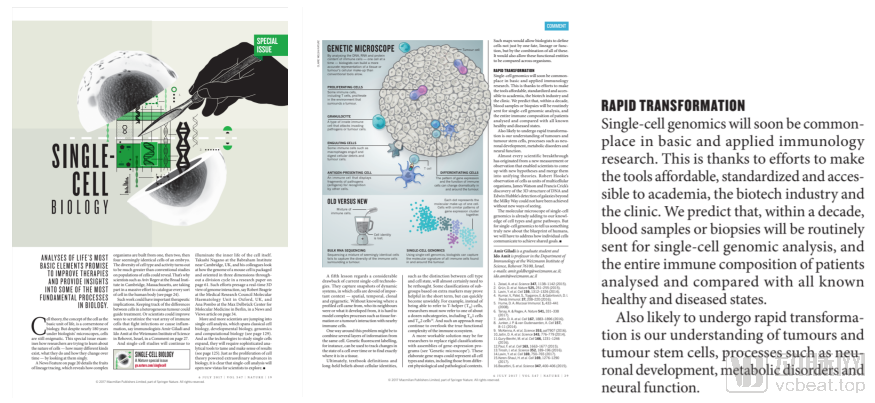
“Nature” Single-Cell Special Issue
Currently, single-cell sequencing is still widely regarded as a research-grade technology, far from clinical application. However, the team at JUN HEALTH believes that clinical application is just around the corner: “The integration of liquid biopsy and single-cell sequencing into clinical practice is a breakthrough that can inevitably be achieved in the near term.”
Bullish on the immense potential of single-cell sequencing in clinical applications and on the growth trajectory of JUN HEALTH, Fan Zhiqiang, co-founder of Beikeshe—a venture firm focused on entrepreneurship and incubation in the healthcare sector and an early investor in JUN HEALTH—joined the company full-time in late 2019 to oversee product marketing and clinical promotion.
Fan Zhiqiang noted that an increasing number of companies worldwide are intensifying their efforts in the clinical application of single-cell sequencing for oncology: “For instance, Epic Sciences’ AR-V7 companion diagnostic for prostate cancer circulating tumor cells (CTCs) can be integrated with single-cell picking to perform single-cell sequencing on clinical samples. Another company, RareCyte, has developed an automated rare single-cell isolation system for CTC single-cell sequencing and has participated in companion diagnostics for Eli Lilly’s new drug development. JUN HEALTH is starting on equal footing with the world’s most advanced enterprises in tumor single-cell sequencing. We hope to accelerate our development and take a global leadership position.”
The single-cell isolation platform for which JUN HEALTH is currently seeking regulatory certification serves as a critical foundation for the company’s clinical applications of single-cell technology. In the area of auxiliary diagnosis alone, according toUrine, various body fluids, blood, and cervical mucusFour different types of samples have already formed the platform’sFour Major Application Scenarios。
uro-PET Product for Bladder Cancer Detection via Urine TestingThe optimization process has been substantially refined. Tumor cells are first identified and isolated, followed by further sequencing of the isolated single tumor cells. The supporting reagents for the first bladder tumor cell detection assay have also obtained relevant registration certificates, laying the clinical foundation for subsequent applications involving various body fluid samples and multi-type single-tumor-cell detection.
Currently, the diagnosis of bladder cancer mainly relies on cystoscopy, which is invasive, painful, and associated with poor patient compliance. JUN HEALTH’s product demonstrates nearly 90% concordance with the clinically used cystoscopic diagnostic method. In the future, it has the potential to provide bladder cancer screening for a broader healthy population, ushering in a new era of “urine-based cancer testing.”
In April 2020, JUN HEALTH assisted in diagnosing a difficult case in Fujian Province. Fan Zhiqiang obtained a urine sample from the hospital and submitted it to the laboratory for testing. Within a very short period, the test enabled a definitive diagnosis for a patient who had remained undiagnosed for nine months. Clinicians expressed strong approval and surprise at the application of uro-PET single-cell technology. In another instance at a hospital in Jiangsu Province, three cases that were undiagnosed by conventional clinical methods but tested positive via uro-PET single-cell assay were identified within one month. Among these, one cancer case was confirmed two months earlier than with routine testing, while the other two patients remain under ongoing follow-up. “In 2020, we will promote the JUN HEALTH seq-PET system to more hospitals, increasing the acceptance of this original Chinese new technology among doctors and patients,” said Fan Zhiqiang with confidence.
Body Fluid TestingJUN HEALTH’s test kits have also completed the filing for in vitro diagnostic reagents. Covering multiple cancer types, these kits are primarily designed for samples such as pleural effusion, ascites, and cerebrospinal fluid (CSF), enabling detection across various cancers including lung cancer, breast cancer, colorectal cancer, and lymphoma. They significantly enhance the sensitivity with which cytopathologists identify tumor cells in body fluids like pleural effusion, ascites, and CSF. JUN HEALTH’s PET-CT-like markers and single-cell image analysis instruments do not rely on morphological identification of tumor cells and achieve full automation throughout the testing process. This innovation addresses the current limitations in cytological examination, namely limited sensitivity and shortage of specialized personnel, representing a significant technological advancement that resolves critical clinical pain points.
Blood CTC TestingIt is primarily used for the early monitoring of tumor metastasis, enabling targeted treatment and control based on the molecular and biological characteristics of tumor cells, thereby significantly reducing mortality caused by tumor metastasis. From Yan Zhuohui’s perspective, the research and development of multi-cancer blood-based circulating tumor cell (CTC) single-cell detection products has entered its final stage: “The platform, which has already obtained registration certification, can be readily applied to blood testing. Our main task moving forward is to complete the development of CTC detection reagents and submit them for regulatory approval through further clinical validation. Once approved, the product can be introduced into clinical practice to serve patients.”
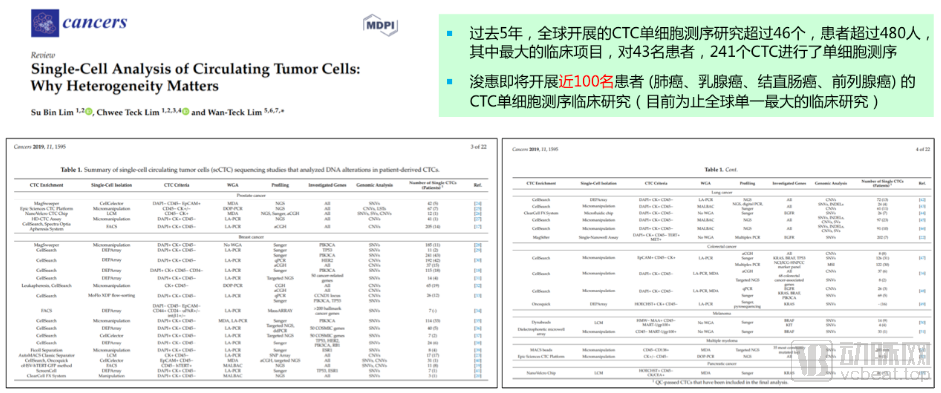
Upcoming Single-Cell CTC Research in Blood May Become the World’s Largest Single Clinical Study
Related research on blood-based testing will also be launched soon. JUN HEALTH expects to initiate a pilot study with approximately 100 participants within this year to validate its blood detection product. While a trial size of 100 subjects may not be considered large in most fields, it represents nearly the largest clinical trial scale achieved to date in the field of single-cell sequencing of circulating tumor cells (CTCs).
JUN HEALTH’s single-cell diagnostic platform can alsoCapture of Fetal Single Cells in Female Cervical Mucus, undergo non-invasive prenatal testing (NIPT). Currently, blood-based NIPT products are limited to the detection of a few chromosomal genetic disorders. In contrast, fetal single cells carry all genetic information, enabling screening for thousands of genetic diseases. Therefore, upgrading existing NIPT to single-cell cell-based NIPT holds significant clinical importance.
In addition to aiding diagnosis, the platform’s value will continue to expand into new drug development and companion diagnostics.
In 2019, the research group led by Shi Qihui collaborated with two other teams to publish a paper in Nature Communications, further extending these research findings. The new study developed a method for single-cell metabolic profiling of tumors based on liquid biopsy, capable of predicting patients who are resistant to targeted therapy or chemotherapy, or who derive only short-term benefit from such treatments.
Currently, JUN HEALTH has initiated research on companion diagnostics and efficacy monitoring based on CTC single-cell sequencing for PD-L1/PD-1 drugs targeting lung cancer.
JUN HEALTH will gradually prioritize initiatives such as monitoring the efficacy of innovative drugs post-diagnosis, developing novel companion diagnostic biomarkers in collaboration with pharmaceutical companies, and submitting registration applications to the U.S. FDA. The company aims to leverage the value of liquid biopsy and single-cell sequencing to help address more clinical challenges.
In addition to product development, JUN HEALTH has also facilitated academic exchanges with many world-class international experts. Thanks to the team’s tireless efforts, the International Liquid Biopsy Conference was introduced to China and held in Shanghai in 2020, with JUN HEALTH honored as its inaugural Diamond Sponsor. Although the originally planned in-person event was shifted online due to the pandemic, this did not diminish the conference’s prestige. Prominent figures such as Professor Klaus Pantel, known as the “father of CTCs”; Professor Howard Scher from Memorial Sloan Kettering Cancer Center (MSKCC); Professor Dennis Lo, regarded as the “father of NIPT”; Professor Lu Shun; Professor Wu Yilong; and Professor Tang Fuchou have all confirmed their attendance at this year’s conference. Each of these experts is a luminary in the global liquid biopsy field. “We are deeply honored that JUN HEALTH can support such exchanges between global key opinion leaders (KOLs) and China’s clinical, research, and industrial communities,” said Fan Zhiqiang.
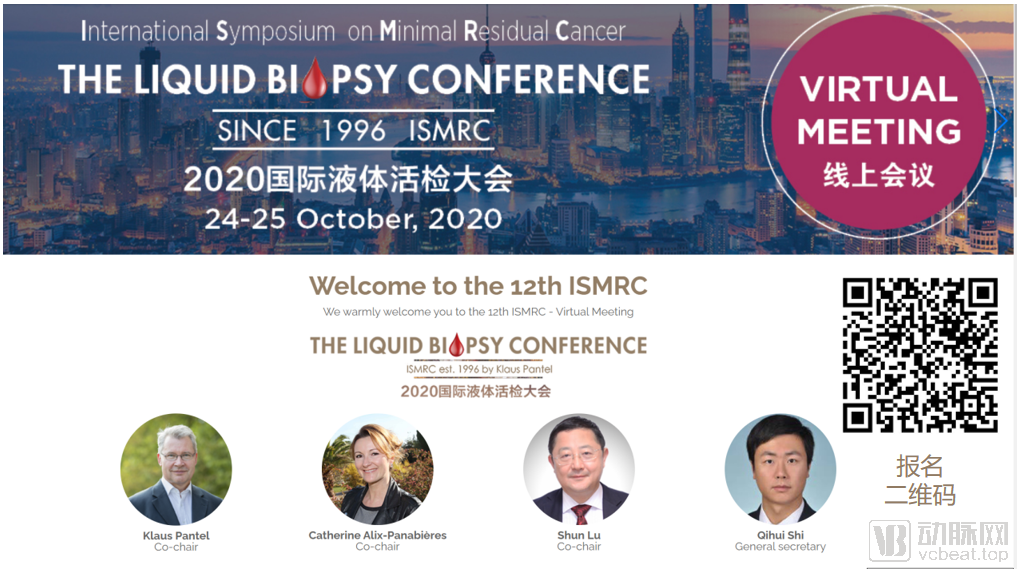
2020 International Liquid Biopsy Conference
“Before embarking on my entrepreneurial journey, I worked on a project aimed at transferring technology from a UK-based company to China. However, the progress was far from smooth, and we encountered numerous challenges during implementation. Through that project, I realized that although global technology integration is a major trend, the fundamental issue lies in the insufficient innovation and technological capabilities of domestic enterprises, which hinders the effective translation of promising concepts into practical applications. Without independent innovation, it is impossible to integrate leading-edge technologies or earn the respect of international partners,” said Yan Zhuohui.
This has also become JUN HEALTH’s steadfast commitment to innovative technology research and clinical translation. Over the past few years, JUN HEALTH has focused on the research and development of its proprietary technologies, maintained continuous dialogue with the clinical and academic communities, continually refined its products, and ultimately succeeded in bringing them to market.
Amidst a series of major upcoming developments, JUN HEALTH, having just completed its regulatory certification, has had no time to celebrate. The field of CTC single-cell sequencing is experiencing an optimal period for growth, and JUN HEALTH is in the best possible position to advance its tumor single-cell sequencing platform, seq-PET, into clinical application.