

Three Key Trends Driving China's Domestic Innovative Drug Industry Amid Strong H1 Funding of RMB 24.7 Billion
“The outbreak of the COVID-19 pandemic this year has drawn significant public attention to the progress of new drug development in China, sparking keen interest in the processes and technologies involved.” In July 2020, at the Second Global Conference on Frontier Biopharmaceutical Technologies and Policy & Regulations hosted by Tongxieyi, Dr. Xu Ting, Founder of Alphamab Oncology and Vice Chairman of the Tongxieyi New Drug Talent Club, told attendees that beneath the market’s fervor lay decades of continuous reflection, breakthroughs, and action by industry professionals.
Looking back 35 years, China defined “new drugs” as “pharmaceuticals not previously manufactured in China.” This definition reflected the reality of scarce medical resources and limited drug availability in the country at that time. In line with the national conditions then, a series of policies were introduced successively, driving the rapid development of China’s generic drug industry and making significant contributions to safeguarding the health of the general population.
Over the past 35 years, amid industry transformation and multiple revisions to the definition of new drugs—ranging from “drugs not previously marketed in China” in 2002 to “drugs not previously marketed anywhere in the world” in 2015—China’s concept of new drugs has undergone a profound shift from “new to China” to “globally novel.”
From a focus on generics to a combination of imitation and innovation, China’s new drug development has progressed from “nothing” to “something.” This achievement is the result of substantial progress in policies such as consistency evaluations, national drug price negotiations, and accelerated access for anticancer drugs.
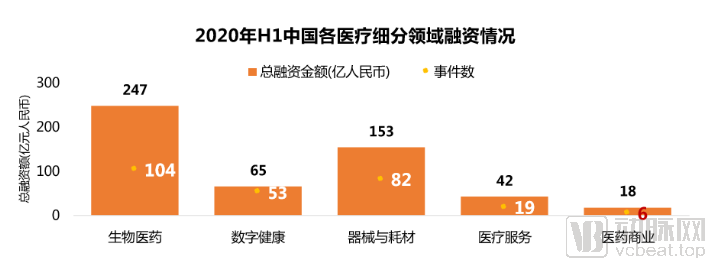
At the market level, this is reflected in the strong capital-raising capabilities demonstrated by biopharmaceutical companies. According to the “Global Healthcare Industry Capital Report for H1 2020” released by VCBeat’s Orange Data, the total financing amount in China’s biopharmaceutical sector on the primary market reached RMB 24.7 billion in the first half of the year, with 104 financing deals, making it the most popular sector for capital investment. In terms of IPOs, a total of 31 healthcare projects entered the capital markets, among which innovative drug projects accounted for the largest number, with 12 listings.
As is well known, the workload involved in new drug development is akin to finding a needle in a haystack: two thousand molecules generate thirty-six thousand data points, and a single round of screening against a set of targets requires three hundred thousand experiments. The process is time-consuming and highly challenging; the slightest misstep can undo years of effort, making the path to new drug development exceptionally arduous.
At the Dawn of a New Decade in the 21st Century, Which Direction Will Domestic New Drug R&D Take? What Are the Current Industry Perspectives? By compiling speeches from conference guests and gathering insights from industry professionals and investment firms, VCBeat has identified the following three trends.
1. Joint China-foreign promotion of FIC new drug R&D has become a trend;
2. Clinical Trials of New Drugs Are Moving Toward Digitalization;
3. Financing and R&D hold equal importance for innovative pharmaceutical companies.
1. Joint China-foreign promotion of FIC new drug R&D has become a trend.
New drug development encompasses three approaches: the First-in-Class (FIC) model, the Fast-Follow model, and the Me-Only model. Among these, the FIC model represents the most advanced paradigm in new drug development. It is rooted in original innovation derived from years of basic research, characterized by genuine multidisciplinary integration, high investment, long development cycles, and substantial risk.
According to the FDA definition, a drug granted First-in-class status is one that employs a novel and unique mechanism of action to treat a specific disease. This requires pharmaceutical companies to expedite research efforts following target identification, validation, and compound optimization, while continuously exploring product potential and evaluating products from a broader and more comprehensive perspective.
According to incomplete statistics, over the 20-year period from 1999 to 2018, the FDA approved a total of 620 new drugs, among which only 194 were granted First-in-Class status, accounting for 31.3%. Furthermore, capital requirements and development timelines have become significant influencing factors. In the field of pharmaceutical innovation, there is a well-known “double ten” rule, which states that the successful development of an innovative drug requires an investment of $1 billion and a timeframe of 10 years.
Drug R&D is inherently challenging, and external pressures are substantial. Relevant data indicate that before a first-in-class drug reaches the market, a large number of similar studies are already underway. Therefore, launching a first-in-class drug requires not only the technical expertise of the R&D team but also favorable market opportunities.
Despite numerous uncertainties, the first-in-class (FIC) market is becoming increasingly active, as evidenced by recent trends. Data show that from 2009 to 2018, an average of 12.7 FIC new drugs were approved annually, significantly higher than the annual average of 6.8 FIC new drugs approved from 1999 to 2008. This growth is driven by the development and application of novel targets and technologies. Advances in basic scientific research—ranging from cell therapies and RNA therapies to CRISPR gene editing, KRAS inhibitors, PROTACs, and AI technologies—are fueling the emergence of more first-in-class innovative drugs.
“China still lags behind developed countries in terms of technology, talent, and capital. Therefore, the development of new drugs in China cannot directly enter a stage dominated by technology-led innovation; it must first go through a stage of imitative innovation,” Chen Xing, Business Development Director of CDMO at Yi’an Jishi Biopharma, told VCBeat at the Second Tongxieyi Frontier Technology Conference, noting that there are still many challenges on China’s path to developing First-in-Class (FIC) drugs.
How to Address This Challenge? Experts at the conference recommended advancing the development of first-in-class (FIC) new drugs from a global perspective. Specifically, regarding technology, the greatest challenge in FIC drug development lies in identifying the correct targets, which requires robust basic scientific research capabilities as support. Adopting a collaborative approach between Chinese and foreign partners can help address this issue. In terms of reimbursement, payment capacity in international markets largely depends on health insurance systems. Constrained by pressures such as cost containment measures, more mature commercial insurance systems in international markets may provide FIC new drugs with greater room for negotiation and viable pathways forward.
“First-in-class (FIC) new drugs can help capable and promising pharmaceutical companies grow stronger and larger, creating space for their survival and development. Although challenges abound, it is undeniable that the research and development of FIC new drugs will become a key focus, or even a major area of investment, for domestic pharmaceutical companies in the near future,” stated Chen Xing. According to statistics from Nature Reviews Drug Discovery in 2014, the fourth me-too drug to reach the market captures only about 10% of the market value of the FIC product.
Certainly, given the immense challenges inherent in First-in-class drug development, Fast follow has become a key strategic direction for pharmaceutical companies. The Fast follow model represents imitative innovation, involving the development of new drugs that track First-in-class agents. This approach encompasses four categories: Me-too, Me-better, Me-worse, and Me-best. A common feature across all Fast follow strategies is that pharmaceutical companies, while ensuring non-infringement of existing patents, conduct substantial molecular structural modifications or optimizations based on established targets. By targeting the same or similar mechanisms of action, these efforts aim to develop novel therapeutics with improved clinical efficacy.
“Me-only” is a special type of First-in-class drug. Unlike traditional First-in-class drugs, Me-only drugs are difficult to replicate as “Me-too” products due to their unique structure-activity relationships and mechanisms of action, thereby ensuring long-term profitability. However, the downside is that they require more extensive project initiation in the early stages, entailing higher upfront risks.
2. Clinical Trials of New Drugs Are Moving Toward Digitalization
The outbreak of the novel coronavirus disease (COVID-19) this year has had a significant impact on and posed substantial challenges to the entire clinical trial industry, with the progress of numerous trials being affected. Due to restrictions on social distancing, communication and other aspects of the clinical trial process have moved online. As a result, digital transformation in the clinical trial industry has once again become a key focus for the pharmaceutical sector.
From clinical trial protocol design, site selection and initiation, to subject recruitment and data analysis, digital technologies have played a role during the current pandemic. Taking subject recruitment as an example, subjects participate in clinical trials using wearable devices, while researchers can communicate with them via mobile internet.
“In digital applications, the patient-centric principle must remain unchanged; all applications must ensure the physical safety and privacy of participants,” stated Dr. Long Jianjing, Head of Clinical Operations Medicine at Taimei Medical Technology, at Sub-forum 4, “Innovative Clinical R&D – Accelerating New Drug Launches,” of the 2nd Tongxieyi Frontier Technology Conference. He emphasized that the digitization of clinical trials will inevitably become the new normal, bringing greater possibilities to the industry. For instance, special populations who were previously unable to participate in clinical trials under traditional conditions may now have the opportunity to enroll, while informatization and technological advancements can enhance trial efficiency.
Digital clinical trials have numerous application scenarios. Two specific examples are provided below. The first is electronic statistical execution. Due to the impact of the pandemic, a large number of participants were unable to visit research sites on schedule, preventing statisticians from performing data analysis and forcing delays in the initiation of many clinical trials. In such circumstances, electronic statistical execution enables remote statistical processing.
Second is risk monitoring. By standardizing data from different sources through digital means, risks can be controlled and the quality of clinical trials ensured. For example, patients with diabetes wear wearable glucose monitors on their arms or backs to detect changes in blood sugar levels in real time. Given the rigor required in clinical trials, there are very strict requirements for data collection and data quality.
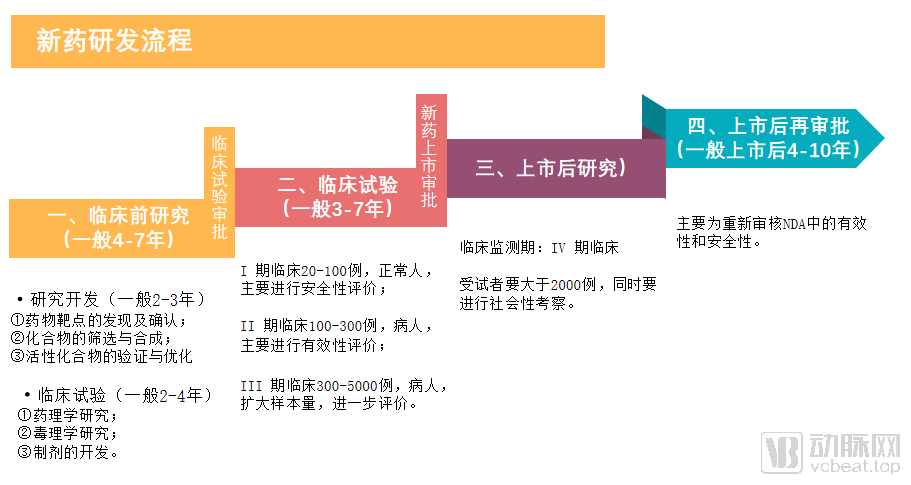
Typically, clinical trials for new drug development are divided into three phases. Randomized controlled trials involving more than 1,000 participants usually take 3 to 7 years to complete. The large scale of participation also entails high uncontrollable risks. In the United States, less than 5% of the population participates in clinical trials, and these participants often struggle with long-term adherence, resulting in an average dropout rate as high as 30%. According to a 2015 analysis, nearly one-fifth of trials were prematurely terminated due to insufficient enrollment, and many trials ultimately took two to three times longer than originally planned. The primary reason for withdrawal from trials is the requirement for participants to travel to specific sites for in-person visits.
The potential additional costs of drug development are exorbitant due to this situation. Therefore, if it can be ensured that volunteers participating in clinical trials complete the studies, it is possible to significantly reduce both the time and financial costs associated with drug development. Dr. Long Jianjing believes that decentralized clinical trials can enable greater participant enrollment, expand the geographic distribution of subjects, and foster a more diverse patient population.
However, every innovative application brings new challenges. The challenges facing digital clinical trials primarily include issues related to clinical institutions and regulatory authorization. “Traditional clinical trials operate within a relatively closed-loop system. How to achieve data collection, patient management, and remote monitoring in a more open system requires joint exploration by regulatory authorities, industry stakeholders, and researchers,” said Dr. Long Jianjing.
3. Financing and R&D hold equal importance for innovative pharmaceutical companies.
Generally, it takes about five years to develop a generic drug, whereas developing a new drug requires at least ten years and can take several decades. Innovative pharmaceutical companies face challenges such as high R&D costs, significant risks, and long payback periods.
Taking Hengrui Medicine as an example, the pharmaceutical company had 3,100 R&D personnel in 2018, with R&D expenditures reaching RMB 2.67 billion. Its annual R&D investment accounted for 8% to 10% of its revenue. This demonstrates that without sufficient capital, pharmaceutical companies may struggle to sustain their new drug development efforts.
“Most pharmaceutical companies in China are small and medium-sized enterprises (SMEs), facing significant challenges in R&D investment. If a substantial amount of capital is invested and the project fails, the losses can be devastating.” Dr. Huang Yi, Investment Manager at Qiming Venture Partners, stated this at Sub-forum 7, “Financing and Transaction Cooperation for New Drug Projects,” of the 2nd Tongxieyi Frontier Technology Conference. He emphasized that for innovative pharmaceutical companies, financing is just as critical as R&D. “However, many scientists tend to focus on the early stages while neglecting and lacking understanding of the later stages.”
When should pharmaceutical companies initiate fundraising? Generally, the average interval between funding rounds for biopharmaceutical companies is approximately 15 to 20 months (with some variation between large pharmaceutical firms and small-to-medium-sized enterprises; this timeframe represents the general case). Therefore, when formulating a financing plan, innovative drug companies should assess their cash flow status 9 to 12 months in advance to estimate the required funding scale and determine how long their cash reserves can sustain operations before and after the financing.
Once a financing plan is in place, the next step is to identify suitable investment institutions. Most innovative pharmaceutical companies tend to be overly reserved, largely because scientists are accustomed to focusing intently on their projects. They often assume that investors or institutions will naturally come forward once the project has generated sufficient data. In reality, however, most investment firms review at least several hundred deals each year and carefully select only the most promising ones. Furthermore, by the time formal fundraising begins, founders of pharmaceutical startups are often meeting investors for the first time, leaving insufficient opportunity for in-depth communication. As a result, neither party can gain a thorough understanding of each other’s teams and project experience.
Therefore, innovative pharmaceutical companies should maintain a certain level of visibility in appropriate contexts. First, their official websites or official social media accounts should provide basic company information and be updated regularly, enabling potential investors interested in the company to quickly understand its status. Second, they should actively participate in academic exchange activities, including industry conferences and business meetings, engage appropriately with industry professionals to leave a positive impression, and gain more insights into industry trends. Third, they can monitor industry media to track the activities of investment institutions and establish connections; they may also take opportunities to visit investors or publish professional insights on industry media platforms.
“The primary market is akin to dating, where compatibility in status and background matters,” said Dr. Huang Yi. Pharmaceutical companies should increase their daily interactions with and understanding of investment firms. They need to know which development stages the interested investors primarily target and what preferences they have for specific healthcare subsectors—for instance, some investors focus exclusively on pharmaceutical companies and do not invest in medical device or healthcare service providers. “Founders of pharmaceutical companies must be clear about whether the funds are RMB- or USD-denominated, whether the investor’s practice is to lead or co-invest, the typical investment size, and the decision-making process.” Moreover, founders of innovative drug companies must also have a clear understanding of the landscape of their specific niche. Beyond technology, clinical needs and company weaknesses are core issues that investors closely scrutinize.
During the fundraising process, fundraising materials are indispensable. As the cornerstone of a company’s presentation, the Business Plan (BP) must clearly articulate what the company does, how it operates, and why it pursues its mission. Throughout communications, founders of pharmaceutical companies must also concisely present their post-financing plans to instill sufficient confidence in investment institutions.
It is undeniable that for investment institutions, achieving excess returns is the essence of investing. However, in the face of long-term cash burn and high risks associated with new drug development, the power of capital cannot be underestimated. For investors, behind technological inflection points such as cell and gene therapy, single-cell analysis, “antibody + platform” technologies, targeted RNA therapies, and PROTACs, lie explosive market growth opportunities. In other words, whether a new drug can be successfully developed and launched ultimately tests the ability to integrate various elements, including technology and capital. It is also a collaborative game in which enterprises and investors share risks and achieve mutual benefits.
# Final Thoughts
According to data from the CDE (Center for Drug Evaluation, National Medical Products Administration), in the first half of 2020, the NMPA (National Medical Products Administration) approved a total of 31 new drugs, including both imported and domestically produced ones. This figure was compiled based on Class 1 registration classifications, imported drugs approved for the first time in China, new traditional Chinese medicine drugs, and biologics submitted under new drug application procedures (Classes 2 and 15). Among these, 15 new drugs were included in the priority review and approval program, thereby accelerating their market approval.
In the second half of this year, domestically developed innovative drugs are poised to enter a period of intensive market launches. According to forecasts from the DXY Insight database, 11 blockbuster new drugs are expected to receive approval, including seven domestically developed innovative drugs. We have every reason to firmly believe that, through the joint efforts of regulatory authorities, industry professionals, and investment institutions, domestically developed innovative drugs are stepping into a “golden decade.”