

Jieyi Biotechnology Secures Series A Funding from Chende Capital to Advance Fully Automated mNGS Solutions for Infectious Disease Diagnostics

Matridx Biotechnology
In Vitro Molecular Diagnostic Reagents and Medical Device Developer
VCBeat (WeChat ID: vcbeat) has learned that Hangzhou Matridx Biotechnology Co., Ltd. (“Matridx Biotechnology”) recently announced the completion of its Series A financing, securing a multi-million RMB investment from Chende Capital. Previously, Matridx Biotechnology had secured Pre-Series A funding from a consortium including Lincstar Ventures, Puhua Capital, and senior industry experts in in vitro diagnostics.
Matridx Biotechnology was co-founded by Dr. Wang Jun, a founding team member of Berry Genomics (SZ:000710), China’s first publicly listed gene sequencing company, and Mr. Zhong Jie, former head of strategic investment at Dian Diagnostics (SZ:300244), China’s first publicly listed independent medical laboratory, and a partner at the Zhejiang Grand Health Industry Fund. Leveraging next-generation sequencing (NGS) and CRISPR/Cas gene editing as its core technological platforms, Matridx Biotechnology is an innovative technology company dedicated to revolutionizing the future of infectious disease diagnostics. As a strategic partner of Alibaba Cloud in AI applications for infectious diseases, it is the only company in China providing fully automated solutions for pathogen metagenomic next-generation sequencing (mNGS) testing.
Metagenomic Next-Generation Sequencing (mNGS) refers to a technique that bypasses traditional microbial culture by directly performing high-throughput sequencing on nucleic acids from clinical samples. The resulting sequences are aligned and analyzed against databases to identify the types of pathogenic microorganisms present in the sample, enabling rapid detection of a wide range of pathogens (including viruses, bacteria, fungi, and parasites) in clinical specimens.
During the global COVID-19 pandemic, metagenomic next-generation sequencing (mNGS) played a crucial role in the rapid analysis and identification of the novel coronavirus. From suspecting an untyped virus in clinical specimens to determining the complete sequence of SARS-CoV-2, mNGS compressed the timeframe to just two weeks, whereas the identification of the SARS virus in 2003 took more than four months. This technology bought precious time for epidemic prevention and control, while also guiding subsequent clinical diagnosis, treatment, and drug development.
mNGS technology is not only significant in public health prevention and control but is also gradually becoming a first-line approach for clinical infection diagnosis globally. In recent years, due to the emergence of novel microorganisms, the rise of drug-resistant pathogens, population aging, and the increasing number of immunocompromised or immunosuppressed individuals, the incidence and mortality rates of infections have remained high. Traditional pathogen detection methods—including morphological examination, culture and isolation, biochemical testing, immunological assays, and PCR-based nucleic acid testing—have limitations in sensitivity, specificity, turnaround time, and information yield, and struggle to identify unknown or rare pathogens. mNGS technology can effectively address these shortcomings, demonstrating substantial potential. In 2019, the number of mNGS tests performed in China exceeded 100,000, with a compound annual growth rate surpassing 100% in recent years.
Although mNGS offers significant advantages over traditional infectious disease diagnostic approaches, its widespread adoption is currently constrained by several technical challenges. These primarily include the difficulty of pathogen enrichment, interference from high levels of human host background noise, cumbersome experimental workflows, complex bioinformatic analysis and interpretation, and susceptibility to cross-contamination in the laboratory environment. Consequently, mNGS testing is predominantly conducted through a central laboratory model involving sample shipment, which leads to prolonged turnaround time (TAT). In the differential diagnosis of emerging infectious diseases, the timeliness of test results is critical for guiding clinical treatment decisions.
Matridx Biotechnology’s mission and value proposition lie in leveraging technological innovation to significantly improve the turnaround time of testing, substantially lower the barrier to adopting mNGS technology, and transform mNGS from a central laboratory technique into a routine solution for infection diagnosis in clinical settings, thereby saving more lives of patients with infections. Matridx has independently developed NGSmaster, an innovative, fully automated library preparation system for pathogen metagenomic next-generation sequencing (mNGS), which greatly reduces the operational complexity of mNGS assays through full automation of library preparation and accelerates detection speed by 8 hours compared to existing solutions. Furthermore, in collaboration with Alibaba Cloud’s DAMO Academy, Matridx has enabled intelligent, cloud-based bioinformatics analysis for mNGS, facilitating data interpretation for laboratory personnel.
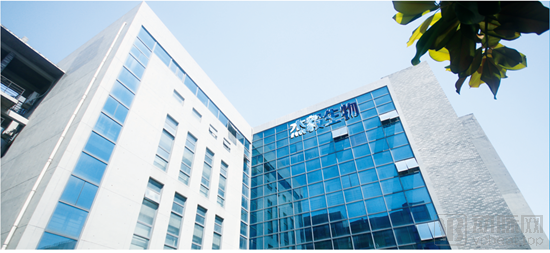
During the COVID-19 pandemic, Matridx Biotechnology’s fully automated mNGS solutions for pathogenic microorganisms facilitated joint prevention and control efforts across CDCs in Hubei, Zhejiang, Jiangsu, and other regions. Meanwhile, a localized pathogen metagenomic sequencing center was rapidly established at Wuhan Jinyintan Hospital—the epicenter of China’s battle against the epidemic—providing precise diagnosis and treatment for over 300 critically ill patients with COVID-19.
Currently, Matridx Biotechnology has formally signed a commercial cooperation agreement with Illumina, the global leader in gene sequencing, to apply high-throughput sequencing (NGS) technology in the field of pathogenic microorganism diagnosis. The company has also established in-depth scientific research collaborations with renowned domestic clinical institutions, including Peking Union Medical College Hospital of the Chinese Academy of Medical Sciences, Huashan Hospital Affiliated to Fudan University, and Sir Run Run Shaw Hospital Affiliated to Zhejiang University. Furthermore, Matridx is actively collaborating with leading experts in the field of infectious diseases across China to promote the clinical application of mNGS technology. Meanwhile, the NMPA registration application for its products is being actively advanced.
Dr. Wang Jun, CEO of Matridx Biotechnology, stated, “We sincerely appreciate Chende Capital’s recognition of Matridx Biotechnology. As an investment firm focused on the healthcare sector, Chende Capital possesses a profound understanding of industry dynamics and extensive experience in the management and operation of medical enterprises. Their insights into target markets and strategic recommendations will be invaluable to our future development. This financing round will also help us advance product regulatory submissions and bring our fully automated metagenomic next-generation sequencing (mNGS) pathogen detection solution to clinical practice.”
Tan Qing, Founding Partner of Chende Capital, stated, “We believe that metagenomic next-generation sequencing (mNGS) for pathogenic microorganisms represents another major application of high-throughput sequencing technology, following its use in reproductive genetics and tumor testing. It is poised to become a first-line diagnostic and therapeutic approach for critical care and complex infectious diseases in the future. We are highly optimistic about Matridx Biotechnology’s innovative R&D capabilities and industrialization experience in the field of high-throughput sequencing. We are confident that Matridx Biotechnology will emerge as a leader in technological innovation and diagnostic applications within the infectious disease diagnostics sector, leveraging its distinctive product solutions and forward-looking industrial strategy.”

Chende Capital is an investment firm specializing in the life sciences and medical technology sectors. It manages multiple USD and RMB funds, with total assets under management exceeding RMB 4 billion. Led by a professional team with extensive experience in the healthcare industry, Chende Capital is committed to building top-tier companies in the medical field and delivering optimal returns to its investors.

Headquartered in Hangzhou, Zhejiang, Matridx Biotechnology was co-founded by Dr. Wang Jun, a founding team member of Berry Genomics (SZ: 000710), and Mr. Zhong Jie, former head of the strategic investment division at Dian Diagnostics (SZ: 300244) and partner of the Zhejiang Big Health Industry Fund. Leveraging next-generation sequencing (NGS) and CRISPR/Cas gene editing as its technological platforms, and combining product innovation with data-driven approaches, the company is committed to providing comprehensive molecular diagnostic solutions for infectious diseases to clinical patients.
Matridx Biotechnology is Alibaba Cloud’s strategic partner in AI applications for infectious diseases and the only company in China offering a fully automated solution for pathogen metagenomic next-generation sequencing (mNGS). It was recognized by the industry as one of the “Top 5 Metagenomics Companies on the 2019 Future Healthcare 100·China List.” Upholding the philosophy of “Innovating Diagnostics for the Future,” the company is poised to lead molecular diagnostics into a new era.