

Siemens Healthineers Completes $16.4 Billion Acquisition of Varian Medical Systems to Forge Global Oncology Leader

Siemens Healthineers
Integrated Healthcare Service Provider
On August 2, 2020, Siemens Healthineers confirmed its acquisition of Varian Medical Systems, a U.S. manufacturer of cancer care technology, in an all-cash transaction valued at $16.4 billion on a fully diluted basis. Under the terms of the agreement, which was unanimously approved by Varian’s Board of Directors, Siemens Healthineers will acquire all outstanding shares of Varian for $177.50 per share in cash. This represents a premium of approximately 42% over the 30-day volume-weighted average closing price of Varian’s common stock as of July 31, 2020, and a premium of approximately 24% over the closing price of its common stock on the last trading day prior to the announcement of the transaction on July 31, 2020.
Siemens is one of the “big three” in the medical imaging industry. Varian, the global leader in oncology radiation therapy, has installed more than 8,000 radiotherapy systems worldwide, capturing over 50% of the global radiotherapy market share.This acquisition signifies Siemens’ entry into the oncology radiotherapy market. The two parties will forge a powerful alliance in diagnostic imaging, in vitro diagnostics, and interventional therapy, emerging as a new powerhouse in the healthcare sector.
As the dominant player in the radiotherapy equipment market, Varian boasts a 72-year history. It is the world’s largest company for digital X-ray imaging and a leading manufacturer of products such as linear accelerators and Gamma Knife systems. The global radiotherapy equipment market is primarily dominated by Varian from the United States and Elekta from Sweden. In fiscal year 2019, Varian reported revenue of $3.225 billion, far surpassing that of Elekta, the second-largest player in the radiotherapy market. Which products have enabled Varian to lead the radiotherapy market for many years? What strategic value did Siemens see in this acquisition? VCBeat (WeChat ID: vcbeat) has conducted a comprehensive analysis to address these questions.
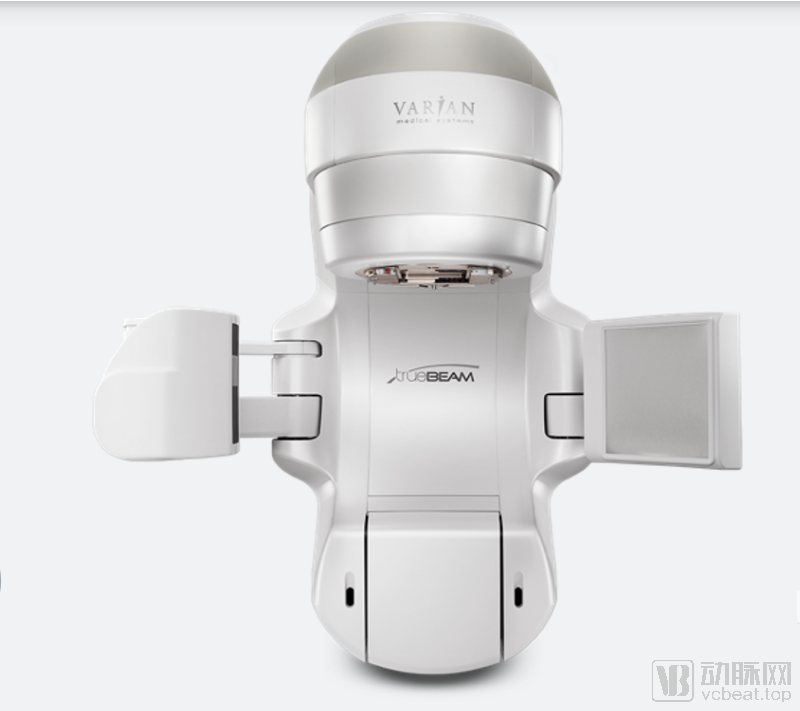
Varian Products
Varian was the first technology company in Silicon Valley, founded by American physicist Russel H. Varian and pilot Sigurd F. Varian. The Varian brothers invented the klystron accelerator. Although initially used for aviation radar, Varian’s founding team later recognized its potential in the medical field and developed the world’s first prototype of a high-energy linear accelerator.
Varian’s business lines are currently divided into three major categories: Oncology Systems, Proton Solutions, and Interventional Solutions. In fiscal year 2019, Varian’s radiation oncology business generated approximately $3 billion in sales revenue, while its proton therapy business contributed $150 million in revenue.
Varian’s oncology radiotherapy business encompasses hardware and software products for radiation therapy, covering the entire workflow from treatment planning and delivery to post-treatment care. Its main products include linear accelerators, afterloaders, treatment accessories, AI-powered radiotherapy software, and radiation oncology information systems. Varian’s leadership in the field of radiation therapy is attributed to the growing installed base of linear accelerators, which currently stands at 8,496 units—an increase of 439 units, or 5%, in fiscal year 2019.
The radiotherapy market has witnessed rapid technological advancements, evolving from early two-dimensional (2D) techniques to current three-dimensional (3D) and four-dimensional (4D) approaches. These developments have significantly improved positioning accuracy, reduced radiation doses, accelerated dose fall-off outside the target volume, and minimized impact on surrounding tissues. In terms of product innovation, Varian has integrated artificial intelligence (AI) technologies to enhance the efficiency and precision of radiotherapy. Varian’s AI solutions represent one of the few successful clinical applications of such technology. For instance, in the radiotherapy of nasopharyngeal carcinoma—a process that typically requires over ten working days to complete tasks ranging from contouring of the target volume and organs at risk to treatment plan design—AI modules such as RapidPlan can reduce this timeframe to just a few hours. Moreover, the quality of these AI-generated plans exceeds the average level achieved by more than 80% of hospitals, thereby substantially improving the overall efficiency and quality of radiotherapy workflows.
Varian built its foundation on tumor radiotherapy, while entering the proton therapy and oncology intervention sectors through mergers and acquisitions.Previously, Varian announced its strategic transformation, aiming to evolve from merely a linear accelerator vendor into a comprehensive platform for cancer therapy. Varian began pioneering the world’s first integrated care platform for cancer survivors. To this end, Varian acquired multiple oncology treatment companies and invested in GRAIL, a liquid biopsy enterprise.
In 2007, Varian entered the proton therapy market through acquisitions and launched the ProBeam proton therapy system. Proton solutions primarily refer to proton therapy, which utilizes a device weighing approximately 200 tons to accelerate high-energy particles to 70% of the speed of light to destroy tumor cells. Due to its efficacy and minimal toxic side effects, proton therapy is the preferred treatment option for certain cancers, particularly tumors located near critical structures such as the skull base, spine, and optic nerve, as well as for most pediatric cancers. However, proton therapy is costly; a single proton and heavy ion therapy system exceeds RMB 1 billion in price. Currently, there are more than 70 operational proton therapy centers worldwide, predominantly concentrated in the United States and Japan.
Proton therapy is a blue-ocean market characterized by rapid technological advancement, high costs, and intense competition. In addition to Varian, major manufacturers include Hitachi, Ion Beam Applications S.A., and Mevion Medical Systems.
At this stage, Varian aims to reduce the price of proton therapy equipment and leverage its experience in conventional radiation therapy to promote proton therapy. In fiscal years 2017, 2018, and 2019, Varian sold 4, 2, and 6 proton therapy systems, respectively. As of the end of fiscal year 2019, Varian’s proton therapy systems were in use at 11 proton therapy centers worldwide.
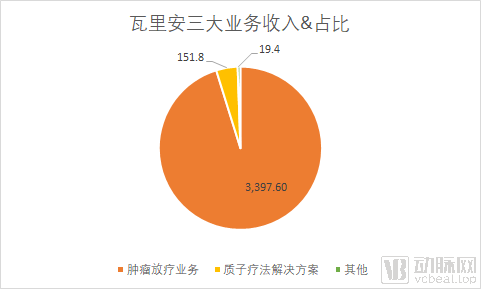
Data source: Varian’s fiscal year 2019 financial report; unit: USD
In the field of interventional oncology treatment solutions, Varian entered the market in 2019 through the acquisition of Endocare and Alicon. Headquartered in Austin, Texas, USA, Endocare is a leading provider of hardware and software solutions for cryoablation and microwave ablation. Alicon (Hangzhou Alicon Pharmaceutical Technology Co., Ltd.), based in Hangzhou, China, is a leading industry player in embolization therapy for liver cancer in China.
Interventional oncology primarily includes vascular minimally invasive therapies (such as intravascular drug infusion, intravascular embolization, and transarterial chemoembolization) and non-vascular minimally invasive therapies: radiofrequency ablation, microwave ablation, laser ablation, high-intensity focused ultrasound (HIFU) ablation, cryoablation, chemical ablation, radioactive seed implantation, and endoscopic/laparoscopic treatments. Among minimally invasive ablation techniques, radiofrequency ablation is the most widely used, followed by ultrasound ablation and microwave ablation; both are thermal ablation methods and currently dominate the market in China. The interventional oncology sector features intense competition, with major players in the minimally invasive therapy field—including Boston Scientific, Medtronic, Johnson & Johnson, and Cook Medical—having launched their respective products.
The combination of its three core businesses has enabled Varian to establish a diversified product portfolio in the field of oncology treatment, securing a leadership position in the high-growth sectors of radiation oncology and interventional therapy.
Siemens’ acquisition of Varian reflects its confidence in Varian’s strengths in oncology care. The combination of the two companies will create a truly fully integrated platform covering the entire cancer care continuum, from diagnosis to treatment and follow-up care. By integrating their highly complementary capabilities in diagnostic tools, imaging, radiation therapy, and artificial intelligence, Varian and Siemens Healthineers will lead the digital transformation of oncology care, enabling more efficient diagnostics, higher-quality treatments, broader accessibility, and more personalized, precise cancer care.
In fact, Siemens and Varian have a long-standing partnership, having collaborated for over a decade, which has laid a certain foundation for this acquisition.
Previously, Varian and Siemens entered into a partnership whereby Varian could market Siemens’ diagnostic imaging products to its radiotherapy customers in the United States and other agreed-upon regions, while Siemens could also sell Varian’s radiotherapy systems to its own customers. Furthermore, Varian and Siemens collaborated on developing interfaces that enable Varian’s ARIA (Radiation Oncology Information System) and Eclipse (Radiation Therapy Planning Software) to integrate with Siemens’ linear accelerators and imaging systems. The two companies have also been exploring opportunities for joint development of new imaging and therapeutic solutions.
Dow Wilson, President and Chief Executive Officer of Varian, stated: “Varian’s relentless innovation and patient-centric corporate culture have established us as an iconic leader in radiation therapy and multidisciplinary cancer care. We boast a trusted global brand that has earned the high confidence of our customers. Siemens Healthineers values our talented and dedicated employees and recognizes the strength of the Varian brand, our cutting-edge product portfolio, and the connections we have forged. We are delighted to join forces with Siemens to further expand our leading customer service, benefiting more patients worldwide. Together with Siemens Healthineers, we will accelerate the realization of our vision, meaningfully enhancing our impact on patients while providing our employees with greater opportunities within a larger, more diverse organization.”
Siemens Healthineers Acquires Varian: Enhancing Influence and Competitiveness, and Betting on the Tumor Radiotherapy Market
In the oncology market, valued at hundreds of billions of dollars, the treatment landscape can be initially segmented into three major modalities: surgery, radiation therapy, and chemotherapy (i.e., pharmacological treatment). Among these, pharmacological treatment commands the largest share, accounting for approximately 50% of the market. According to a report by Business Wire, the global radiation therapy market was valued at USD 4.723 billion in 2016 and is projected to reach USD 7.222 billion by 2023, representing a compound annual growth rate (CAGR) of 6.2% from 2017 to 2023. As the leader in the radiation therapy sector, acquiring Varian would effectively secure half of the global radiation therapy market.
Radiotherapy is a critical modality in cancer treatment, applicable to nearly all types of cancer. It employs high-energy photons, electrons, or protons to target tumor tissue, damaging the DNA of cancer cells to achieve therapeutic control or eradication of the tumor. In many clinical regimens, radiotherapy is integrated with surgery and pharmacological interventions. Preoperative radiotherapy is used to downstage tumors, while postoperative radiotherapy aims to suppress residual cancer cells. When combined with chemotherapy, this multimodal approach helps improve patients' quality of life.
According to ASCO reports, radiotherapy contributes to cancer cure rates at a level comparable to surgery, with a penetration rate of 60%–70% in developed countries. Radiotherapy accounts for a 40% contribution to the five-year survival rate of cancer patients in the United States. However, in China, radiotherapy has only experienced rapid development since the beginning of the 21st century, with a penetration rate of approximately 30%.
The main radiotherapy products include X-knife, Gamma Knife, CyberKnife, linear accelerators, and proton therapy systems. Radiation therapy primarily relies on Gamma Knife and linear accelerators, while proton and heavy-ion therapy is still in its early stages. Investment and operational costs are extremely high (the investment for a proton and heavy-ion hospital exceeds RMB 1.5 billion).
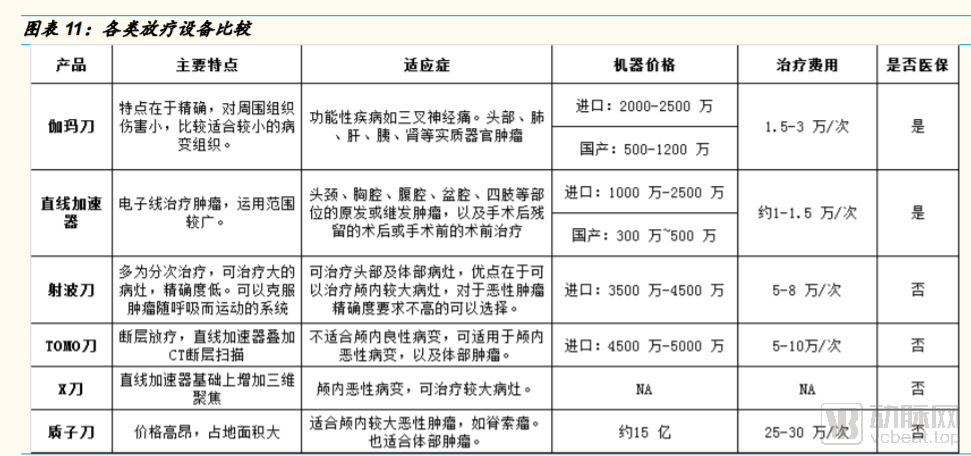
Data source: Guojin Securities
From the perspective of the global market structure for radiotherapy, China is the second-largest market in the radiotherapy industry, trailing only the United States. Moreover, the Chinese market is far from saturated, and the penetration rate of radiotherapy equipment remains to be increased.
A Severe Shortage of Advanced Radiotherapy Equipment in China—Medical Linear AcceleratorsThe World Health Organization recommends a configuration of 3–4 linear accelerators per million people. In China, only Beijing, Shanghai, and Jiangsu Province have reached a level of 2 units per million people, while most provinces fall below 1.6 units per million people.
According to market research data from the globally authoritative consulting firm Frost & Sullivan, China’s radiotherapy market grew from RMB 5.83 billion in 2008 to RMB 26.9 billion in 2015, representing a compound annual growth rate (CAGR) of 24.42%.
Currently, 90% of China's large-scale radiological diagnostic and therapeutic equipment relies on imports. The domestic market for high-energy linear accelerators used in radiation therapy is nearly monopolized by two foreign medical device giants: Varian from the United States and Elekta from Sweden, with each unit priced at over RMB 10 million.
In the Chinese market, Varian’s formidable rival, Elekta, is growing rapidly. Among radiotherapy equipment in China’s top 50 hospitals, Elekta holds a market share of over 50%. In the high-end brachytherapy system segment in China, Elekta’s market share exceeds 70%.
Varian also places significant emphasis on the Chinese market. From a market perspective, Varian’s oncology radiotherapy systems have achieved growth in multiple regions. Revenue from its oncology systems in the Americas increased by 7%. In Europe, the Middle East, India, and Africa, revenue from oncology systems grew by 13% for the full year. In the Asia-Pacific region, driven by strong growth in the Chinese market, revenue from oncology systems rose by 14% in fiscal year 2019. Varian believes that with the relaxation of domestic configuration licenses, the Chinese market will continue to maintain robust growth.
To address the shortage of radiotherapy equipment and specialized physicians in China’s primary healthcare sector, Varian has launched an intelligent solution (including its Smart•Cloud 4.0 platform). This solution provides comprehensive technical support for radiotherapy-specific medical consortia, with features such as remote contouring, remote treatment planning, remote quality control, and standardized radiotherapy clinical pathways, thereby fully facilitating the implementation and promotion of medical consortia across China.
For Siemens Healthineers, the acquisition of Varian not only marks its entry into the oncology treatment market but also strengthens the competitiveness of its various business segments, helping to widen the gap with competitors.
Siemens Healthineers' three major business segments are Diagnostic Imaging, Laboratory Diagnostics, and Advanced Therapies.
In the field of medical imaging diagnostics, Siemens has consistently remained one of the top three global leaders. Its most popular products are molecular diagnostics and MRI systems, both of which are currently primarily used for cancer diagnosis. The integration with Varian has enabled its business to extend from diagnosis to treatment, forming a complete closed-loop ecosystem.
Siemens Healthineers’ leading therapies primarily focus on minimally invasive, image-guided interventions in the fields of cardiology, interventional radiology, and radiation therapy—a business line that is experiencing rapid growth. Interventional therapy is also one of Varian’s three core business segments, allowing for strong synergies that enhance overall product competitiveness. This integration will further strengthen Siemens Healthineers’ influence in the healthcare sector.
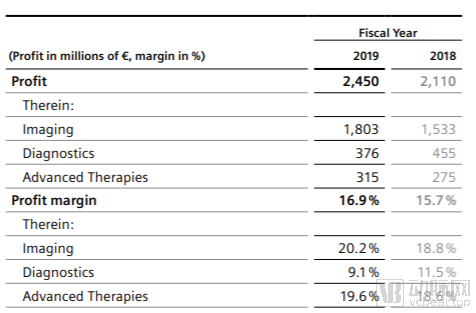
Data source: Siemens 2019 Annual Report
Dr. Bernd Montag, CEO of Siemens Healthineers, stated: “The powerful combination of two industry-leading companies enables us to achieve a double leap forward in one step: on the one hand, propelling a leap in our oncology business, and on the other, enhancing our overall influence in the healthcare industry. Making this decision at such a pivotal historical juncture demonstrates our confidence in the company’s development and our commitment to becoming a stronger partner while delivering more valuable and efficient healthcare services to society. Together with Varian’s outstanding and passionate employees, we will move forward with greater determination than ever before to jointly shape the future of the healthcare industry.”
References:
Radiotherapy Industry Chain in Oncology Treatment: From Equipment to Services — Sinolink Securities