2020 Internet Hospital Report: 577 Hospitals Across 26 Provinces Highlight Progress and Persistent Challenges in Insurance Reimbursement and Physician Practice
Following the outbreak of the COVID-19 pandemic in 2020, offline diagnosis and treatment channels were disrupted and resources became scarce. Internet hospitals responded swiftly, achieving rapid growth in both construction and operational metrics. As epidemic prevention and control measures became normalized, the development of internet hospitals also entered a steady state. The General Office of the State Council has issued documents supporting the inclusion of internet-based medical services in the national medical insurance system.
Specifically, what developments and breakthroughs did internet hospitals achieve during the pandemic? What innovations have emerged in their service models? What are the future development trends? To address these questions, VCBeat is now releasing the “2020 Internet Hospital Report.” This report surveyed 20 digital health companies and collected information on 577 internet hospitals. Focusing on the industry opportunities brought about by epidemic prevention and control as well as new infrastructure initiatives, it examines the current service models and construction characteristics of internet hospitals, aiming to provide reference insights for the industry.
1. During the pandemic, operational data for internet hospitals surged significantly, and internet medical services underwent a broad phase of user education and market penetration. Following the transition to normalized pandemic prevention and control, policies have continued to encourage industry development.
2. Since the beginning of this year, there has been a substantial increase in both the number of internet hospitals established and the demand among physical hospitals to build their own internet hospital platforms. Internet hospitals have become the foundational infrastructure for “Internet + Healthcare.”
3. With regard to key issues such as the definition of follow-up visits and the balance between physicians’ online and offline practice, internet hospital policies are evolving from establishing a basic framework to refining detailed provisions, thereby promoting further standardization of the industry.
4. With the integration of medical insurance payment into internet hospitals, the diversification of service types, and the extensive consolidation of resources, there has been an increase in models for restructuring online-offline and intra-hospital–extra-hospital service workflows, thereby enhancing the innovation capabilities of digital health enterprises.
5. The application for internet hospital licenses exhibits strong regional characteristics. Ningxia and Hainan are more open to enterprise-led applications, while Beijing, Shanghai, Guangzhou, and other regions are more open to hospital-led applications.
6. Entity-led and enterprise-led internet hospitals exhibit distinct advantages and disadvantages in terms of medical resources and operational capabilities; only through deep collaboration can both parties achieve cost reduction and efficiency improvement.
The first batch of internet hospitals in China emerged between 2014 and 2015. According to CCTV News, by the end of June 2020, nearly 600 internet hospitals had been approved and established across various regions. Over the past five years, internet hospitals have progressed through different stages in terms of policy environment, construction entities, and other aspects.
Policy Evolution: From Framework Establishment to Detailed Design
According to statistics from the Artery Orange database, a total of 126 policies related to internet hospitals were issued at both national and local levels from 2015 to June 30, 2020. These policies have covered three major systems: guidance, regulation, and payment. The epidemic prevention and control measures in 2020 accelerated the improvement of the policy system for internet hospitals, which is currently gradually transitioning from framework establishment to detailed design.
Especially in key areas such as defining follow-up visits and balancing physicians’ online and offline practice relationships, the National Health Commission provided only framework-level statements in the “Administrative Measures for Internet Hospitals (Trial).” Subsequently, local health commissions proposed more specific approaches in their corresponding administrative measures and implementation rules. Hainan Province stipulated six conditions for follow-up visits, meeting any one of which is sufficient. Jiangsu Province has adopted the most open stance toward physicians’ online practice: as long as physicians do not disrupt the normal operations of offline medical institutions, they may provide online consultations both within and outside their affiliated institutions, during working hours or after hours.
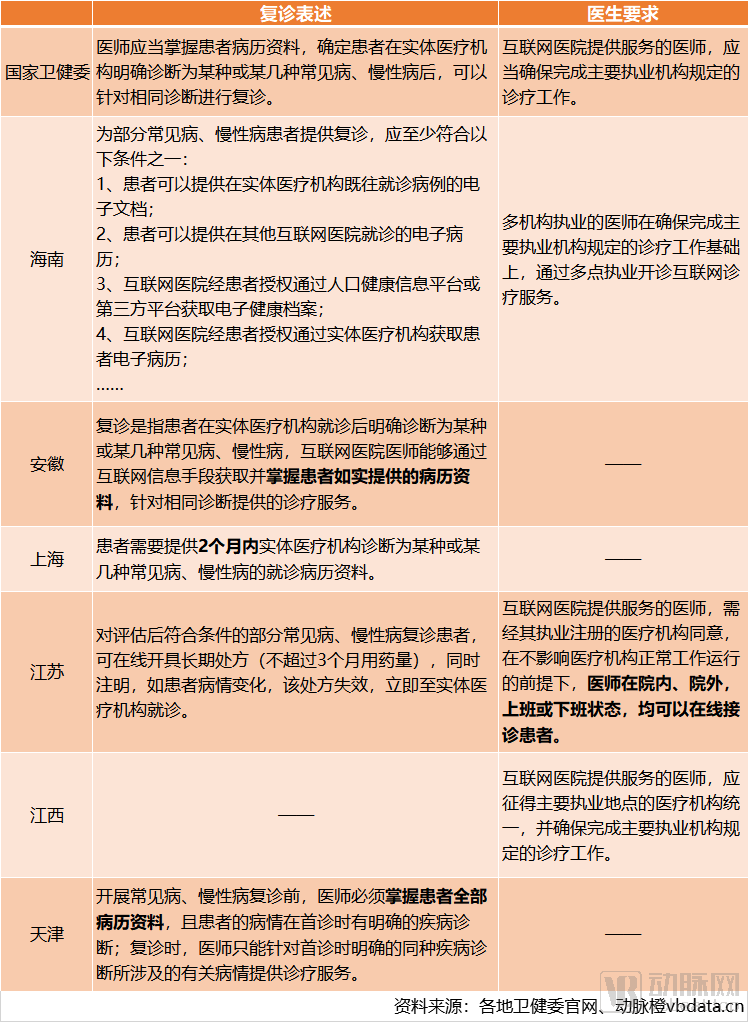
Policies on Follow-up Visits and Physician Requirements Issued by the National Health Commission and Local Health Commissions, Chart by VCBeat
Construction Progress: From Coastal to Inland, from Points to Areas
An analysis of the development of internet hospitals reveals that their expansion is extending from coastal cities to inland ones, and growing from a few provinces to a nationwide scale across China.
We compiled data on 577 internet hospitals from multiple public sources following the implementation of the new policy (as of June 30, 2020). Data sources included: public announcements from health commissions at all levels, reports by mainstream media, and information from hospital websites and official social media accounts. Hospitals that had been approved but were not yet operational were included; entities whose company names merely contained the term “Internet Hospital” were excluded.
Based on the situation of internet hospitals before and after the introduction of the new policies, their overall number and dominant stakeholders have exhibited the following trends:
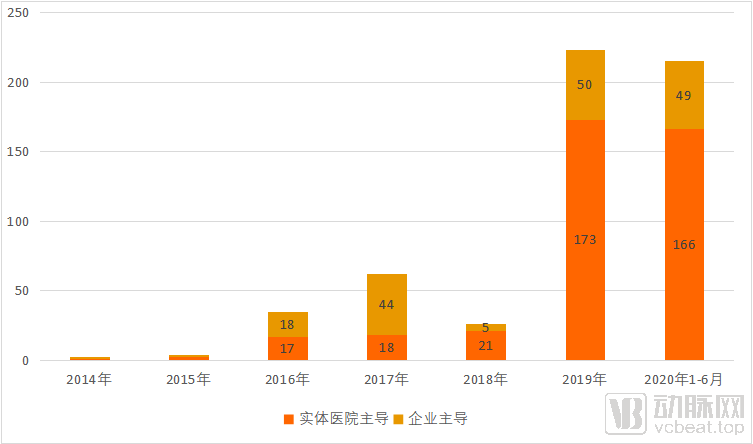
Changes in the Leading Parties of Internet Hospitals Across Different Periods. Source: Local Health Commissions, Official Websites and WeChat Accounts of Hospitals; Chart by VCBeat.
Note: Internet hospitals with unclear establishment dates are not included in the chart.
It is worth noting that due to variations in medical resources, healthcare standards, and levels of health informatization across China, the development of internet hospitals differs significantly from region to region. Taking 577 internet hospitals as an example, their overall distribution and the proportion of leading entities exhibit the following characteristics:
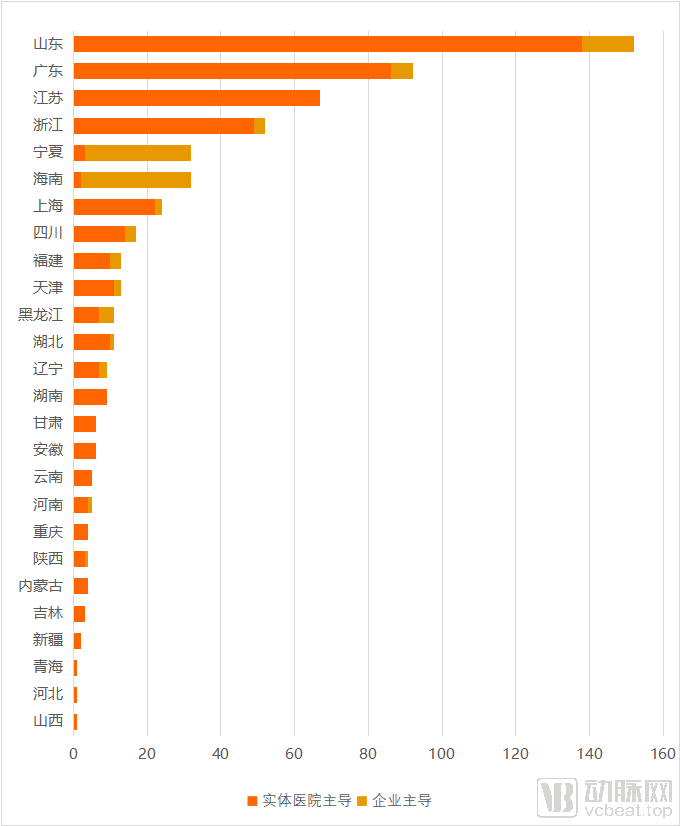
Regional Distribution of Internet Hospitals by Leading Entity. Source: Local Health Commissions, Official Websites and WeChat Accounts of Hospitals; Chart by VCBeat.
Note: Shandong Internet Hospitals include those that have been granted qualifications and those that have passed the review by the regulatory platform.
An analysis of the proportion of the two leading entities in internet hospitals across provinces reveals that physical hospitals are the dominant force in the vast majority of regions. Only Ningxia and Hainan are primarily led by enterprises.
From an overall distribution perspective, internet hospitals are primarily concentrated in the eastern and southern coastal provinces as well as Ningxia, a pattern closely linked to the foundational groundwork laid by early explorations in these regions. However, internet hospitals are no longer confined to these pioneer areas; they have now been established in 26 provinces across China. Notably, Hunan, Chongqing, Jilin, and Shanxi launched their first or initial batches of internet hospitals in 2020, reflecting a gradual expansion from coastal cities to inland regions and a progressive diffusion from isolated pilots to broader coverage.
Internet Hospitals Become the “Internet+” Healthcare Infrastructure
Over the past two years, “new infrastructure” has become a buzzword across various industries. This year, the concept was included in the Government Work Report for the first time, elevating new infrastructure to the level of national strategy. Leveraging the momentum of new infrastructure development, internet hospitals have ushered in a new round of growth opportunities, with continuous improvements in both coverage breadth and industry standardization.
Currently, provinces and municipalities such as Jiangsu, Shanghai, and Beijing have incorporated internet hospitals into their local new infrastructure development plans, primarily focusing on two aspects: expanding coverage and promoting standardization.
An analysis of the winning bid data for internet hospitals since the introduction of new policies in April 2018 also illustrates the trend of physical hospitals establishing internet hospitals as part of their infrastructure.
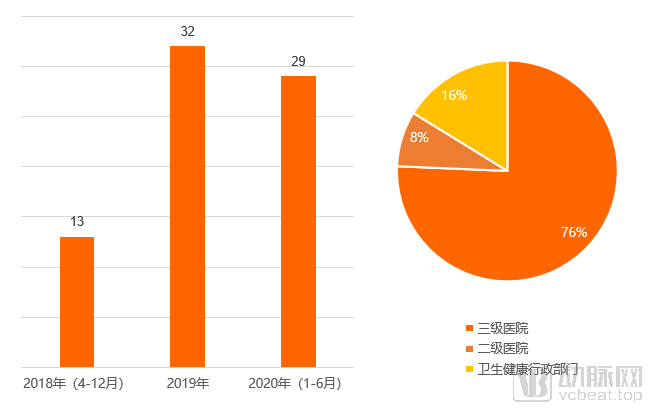
Changes in the Number of Winning Bids for Internet Hospital-Related Projects and the Proportion of Purchasers Since April 2018
Source: China Government Procurement Network, provincial government procurement networks; chart by VCBeat.
In 2018, new policies for internet healthcare and internet hospitals were introduced, resulting in a relatively low number of awarded projects that year. In 2019, the establishment of internet hospitals by physical hospitals gradually peaked, with 32 publicly announced awarded projects throughout the year.
From January to June 2020, there were already 29 winning bid projects in China, a figure approaching the total for the entire year of 2019, and the growth trend is expected to continue in the second half of the year.
Among the purchasers for the above-mentioned projects, tertiary hospitals account for 76%. These hospitals handle high outpatient volumes, possess advanced technical capabilities, and offer diverse and complex services, with intricate business process requirements. Independently building an internet hospital system can meet their needs for personalized development. Health administrative authorities are also promoting the construction of internet hospitals. In the future, internet hospitals will become a standard component of offline physical medical institutions.
Given that public medical institutions can establish internet hospital platforms through various methods, some of which do not require public tendering, and considering the limited channels for collecting bid award information, the data presented herein serves only as a sample to observe trends and does not represent the actual number of internet hospital projects.
Since 2020, the catalytic effect of the pandemic on the internet hospital industry has been evident, ushering in significant development opportunities for internet hospitals.
Multi-Departmental Promotion and Breakthroughs in Medical Insurance Payment: Internet Hospitals Become the Norm
In response to pandemic prevention and control needs, the National Health Commission, the National Healthcare Security Administration, and other departments have intensively rolled out a series of policies to vigorously promote the development of internet hospitals. In light of the pandemic situation and the role that internet hospitals can play, these policies can be broadly categorized into three phases. Although each phase adopts a different policy perspective, overall, the policy impetus driven by the pandemic is not temporary; rather, it encourages normalized development and emphasizes the accumulation of technical capabilities and capacity reserves for both routine medical services and public health emergency response systems.
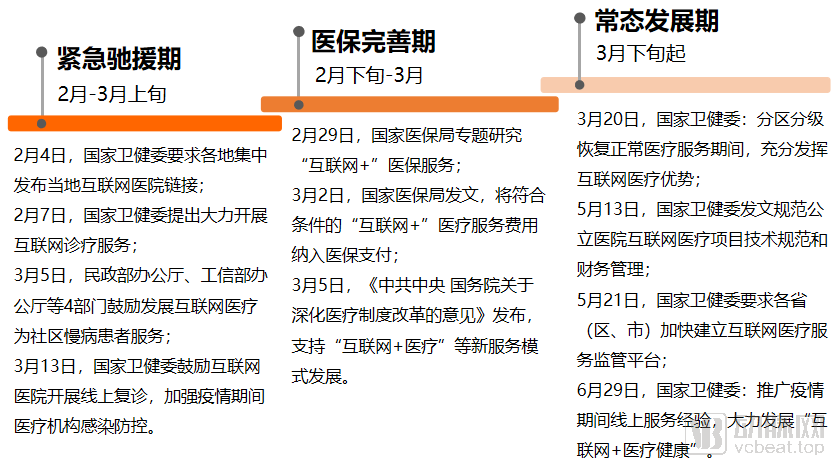
Policies Promoting Internet Hospitals During the Epidemic, Source: National Health Commission, Chart by VCBeat
It is worth emphasizing that, according to incomplete statistics, as of June 30, 71 internet hospitals had connected to the national medical insurance system during the pandemic. These were predominantly internet hospitals affiliated with public hospitals, although enterprise-led platforms such as WeDoctor, Ping An Good Doctor, and Medlinker also emerged.
Over the past few months, medical insurance payment has achieved substantial breakthroughs in internet hospitals. With the integration of medical insurance, the service loop—comprising online consultations, prescription issuance, settlement, and drug delivery—has become more complete.
Multi-Scenario Penetration, Dimensional Growth, and Cultivation of User Habits
The COVID-19 pandemic is the most widespread epidemic humanity has encountered in nearly a century, with its evolving situation drawing global attention. The rise of online consultations has also heightened public awareness of internet hospitals and, to some extent, fostered habitual usage. This habit formation is primarily reflected in the comprehensive, multi-dimensional growth of data associated with internet hospitals.
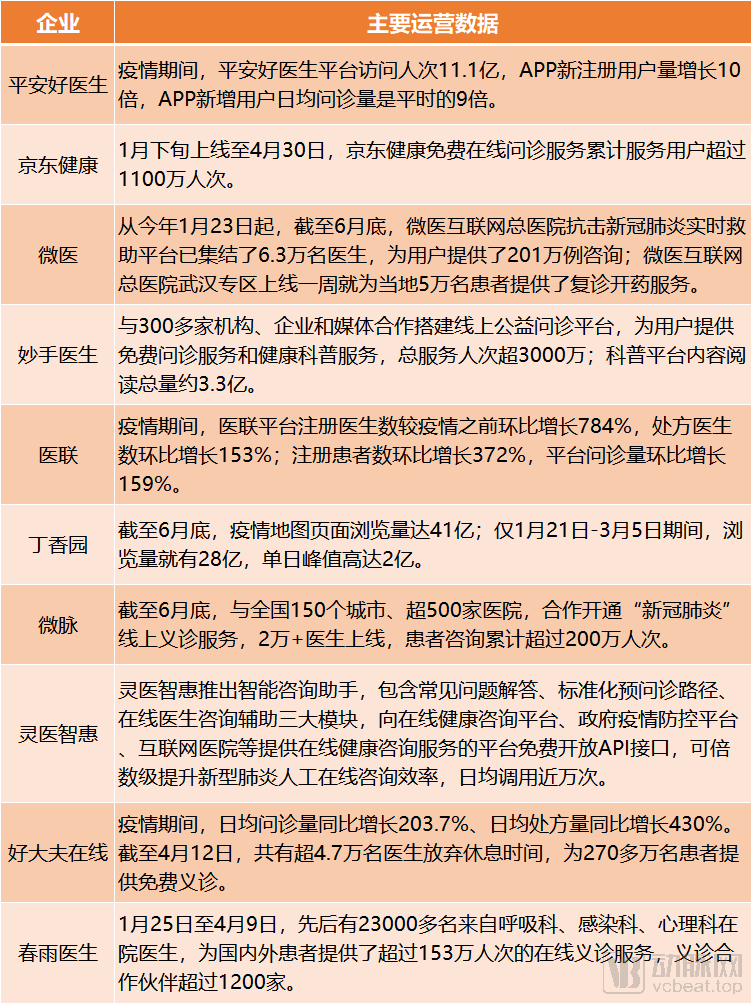
Key Operational Data of Select Internet Healthcare Companies or Projects Since the Outbreak; Source: Corporate Disclosures and Public Reports, Compiled by VCBeat
Based on the operational data from multiple companies, it is evident that while each enterprise has distinct service priorities and consequently reflects different types of data, their overall operations center around key areas such as online consultations and triage, prescription issuance, medical science popularization, user acquisition, and external partnerships.
Due to a surge in online consultations, doctors’ workloads have increased significantly compared to normal levels. While most physicians on internet healthcare platforms provide services during their spare time, Ping An Good Doctor leverages its own full-time medical team (comprising 1,409 professionals) and its self-developed AI-assisted consultation system to efficiently deliver healthcare services to users, including 24/7 online consultations and online medication purchases.
Although a portion of users who sought online consultations during the early stages of the pandemic were driven by panic and irrationality, the pandemic overall facilitated user accumulation and habit formation, particularly as evidenced by the growth in actual demand such as prescription services.
Meanwhile, most internet healthcare platforms have opened their consultation interfaces to third-party entities such as news and information outlets, lifestyle and entertainment providers, and social networking services, thereby accelerating the penetration of internet healthcare into various scenarios. For instance, during this period, Chunyu Doctor made its online free clinic services available to more than 1,200 institutions across sectors including government agencies, mainstream media, insurance, and real estate. This initiative not only drove rapid growth in consultation volume but also expanded the reach and adoption of online consultations among users.
End-to-End Integration, Service Model Upgrade
During the pandemic, internet hospitals expanded their service scope by continuously extending online consultation and diagnostic services to meet epidemic prevention and control needs. Meanwhile, the entire diagnosis and treatment process was integrated, further enriching the service offerings of internet hospitals and upgrading their operational models.

Major Service Types of Internet Hospitals During the Epidemic, Source: Chart by VCBeat
As shown in the figure above, internet hospitals developed five major service segments during the pandemic. Among them, items marked in red denote services primarily targeting epidemic prevention and control, or those that achieved significant breakthroughs during this period, while items in black represent routine services. As workflows across these segments become more streamlined, enterprises can efficiently integrate service and technical resources to optimize or reengineer their processes.
WeDoctor’s Digital Health Community Promotes the “Three-Medical” Coordination
WeDoctor’s Digital Health Community model is a quintessential example of integrating online and offline channels to restructure the service workflows for healthcare, pharmaceuticals, and health insurance.
In 2019, WeDoctor officially launched its Digital Health Community strategy. Primarily delineated by administrative regions and centered on population health, this initiative integrates diverse stakeholders—including local governments, medical insurance agencies, healthcare institutions, elderly care service providers, commercial insurance companies, and pharmaceutical manufacturers and retailers—to build a digital healthcare service system that spans both online and offline channels. This system facilitates the “Four-Medical Linkage” of medical care, pharmaceuticals, medical insurance, and integrated medical-elderly care, with the ultimate goals of enhancing regional healthcare standards, improving public health indices, and curbing the growth rate of medical insurance expenditures.
Currently, the Digital Health Community has been gradually implemented in multiple regions, including Longyan (Fujian), Tai’an and Dezhou (Shandong), Huanggang (Hubei), Yinchuan (Ningxia), and Tianjin. In Tai’an, Shandong, the Taishan Internet Hospital for Chronic Diseases has nearly 7,000 local physicians practicing online, having served over 320,000 patient visits to date. Within just 14 months, the Health Community helped Tai’an achieve a cumulative 10.2% reduction in medical insurance expenditures.
Baidu Lingyi Zhihui AI and Smart Hardware Empower Chronic Disease Management
AI and smart hardware strengthen interpersonal connections in internet-based scenarios, enabling deeper human-computer interaction.
Lingyi Zhihui, Baidu’s smart healthcare brand, has developed an AI-powered home-based chronic disease management solution. Using smart speakers as the primary interface, it helps patients customize and implement a comprehensive chronic disease management plan that includes dietary and exercise guidance, medication management, regular health monitoring, follow-up consultations and prescription renewals, and video consultations. The solution features a “one-body, two-end” architecture: it integrates in-hospital clinical data with out-of-hospital health data to provide patients with “integrated management services” based on full-lifecycle data, while offering two interactive interfaces—one for physicians and one for patients.
At the end of 2019, the “Xiaodu Ai Jiankang Chronic Disease Management Service Solution,” jointly developed by Lingyi Zhihui and Inspur, received strong support from the Jinan Municipal Health Commission and was piloted in Huaiyin District, Jinan, to assist family doctors in managing patients with chronic diseases. Since its implementation, the solution has helped increase the blood glucose control rate among diabetic patients using Xiaodu by 19% and the hypertension control rate among hypertensive patients by 24%.
Jiahe Meikang’s Integrated Platform Bridges In-Hospital and Out-of-Hospital Services
Service integration and model upgrading are inseparable from corresponding technical support.
Jiahe Meikang’s Internet Hospital solution leverages medical institutions at all levels to integrate in-hospital business systems and clinical data, creating an internet-based diagnosis and treatment platform that unifies in-hospital and out-of-hospital care as well as online and offline services. The platform offers a comprehensive suite of services, including online follow-up consultations, prescription renewals for chronic diseases, medical insurance payments, medication delivery, and examination appointments. This approach positions the Internet Hospital as an extension and supplement to the informatization and digitalization of physical hospitals, achieving organic integration and seamless interoperability.
In March this year, Beijing Shijitan Hospital was approved for internet diagnosis and treatment service qualifications in Beijing (subsequently becoming a pilot internet hospital). With technical support from Jiahe Meikang, Beijing Shijitan Hospital has successively launched online consultation services for nursing clinics, internet-based diagnosis and treatment services covering pre-, during-, and post-consultation phases, as well as medical insurance payment options for internet-based diagnosis and treatment.
Currently, Jiahe Meikang has provided relevant technical services to hospitals such as Beijing Chaoyang Hospital, Peking University Cancer Hospital, Beijing Shijitan Hospital, and Foshan First People's Hospital.
Further Upgrade of Medlinker's Closed-Loop Chronic Disease Management
Founded in 2014, Medlinker began its strategic expansion into chronic disease management in early 2018. After two years of development, the Medlinker platform has covered multiple therapeutic areas, including liver disease, diabetes, HIV, oncology, nephrology, cardiovascular and cerebrovascular diseases, pediatrics, mental health, respiratory conditions such as asthma, and traditional Chinese medicine. It has established a comprehensive closed-loop system encompassing patient screening, follow-up consultations and prescription renewals, home medication delivery, insurance payment, and out-of-hospital health management. During the pandemic, Medlinker Chengdu High-Tech Haier Sen Internet Hospital enabled online payments using personal medical insurance accounts.
Since the beginning of this year, Medlinker has introduced physician assistants and patient health managers, building upon its existing service loop to further enhance the efficiency and quality of chronic disease management. Physician assistants can leverage technologies such as AI and big data to help physicians improve patient management efficiency. Patient health managers provide timely medication reminders, as well as scientific regulation and management of psychological and dietary aspects, thereby improving the quality of life for patients living with chronic conditions.
In the future, YiLian will continue to upgrade and iterate, expand its range of covered conditions, and provide smarter, higher-quality, and more comprehensive chronic disease management services.
Driven by user demand and supportive policies, a new wave of internet hospital development is sweeping the industry. How can one apply to establish an internet hospital? Which regions offer a more favorable application process? We have compiled the application policies and current status of internet hospitals across various regions in China, aiming to provide valuable references for industry professionals.
Distinct Regional Characteristics: Dominated by Enterprises in Hainan and Ningxia, and by Physical Entities in Beijing, Shanghai, Guangzhou, and Other Regions
Due to significant disparities in medical resources, the level of healthcare informatization, and the extent of exploration into internet-based healthcare across different regions, the application processes for establishing internet hospitals exhibit distinct local characteristics. Which locations offer easier approval for internet hospitals? This question cannot be simply answered by naming a specific province, as the stringency of regulatory approval varies by province for both entity-hospital-led and enterprise-led internet hospitals.
Publicly available data indicate that 26 provinces have disclosed the establishment of internet hospitals (built after the implementation of new internet hospital policies in 2018), implying that these provinces have already established provincial-level regulatory platforms for internet medical services. As Beijing had not yet completed its regulatory platform, it had previously only approved internet diagnosis and treatment qualifications for a subset of hospitals. However, the Beijing Municipal Health Commission recently issued the "Notice on Launching Pilot Programs for Internet Hospitals," marking the initiation of internet hospital pilot programs in the city.
We examine the application characteristics of internet hospitals in each of the aforementioned 27 provinces, autonomous regions, and municipalities across multiple dimensions, including their respective policies, current implementation status, and the openness and restrictive conditions governing applications.
Based on the current status of established internet hospitals, 27 provinces, autonomous regions, and municipalities can be categorized into three types of regions.
Enterprise-led regions include Hainan and Ningxia, both of which maintain a relatively open attitude toward enterprises establishing internet hospitals.
Regions with an integrated development model include Shandong and Fujian. Although these provinces are dominated by internet hospitals led by physical hospitals, they also accommodate enterprise-led internet hospitals.
Regions dominated by brick-and-mortar hospitals mainly include Beijing, Shanghai, and Guangzhou, as well as coastal provinces such as Jiangsu and Zhejiang. These areas boast high-quality medical resources, strong economic development, and a solid foundation for healthcare informatization, leading to high enthusiasm among brick-and-mortar hospitals in establishing internet hospitals.
Among the three aforementioned types of regions, policies governing internet hospitals, as well as the openness and restrictive conditions for their establishment, vary. We employ a star-rating system to comprehensively assess the difficulty of establishing internet hospitals in each region. Due to space constraints, detailed scoring information is presented in the full report, which can be downloaded by scanning the mini-program QR code at the end of this article.
Case Study on the Application for an Internet Hospital: Independent Establishment by a Physical Hospital
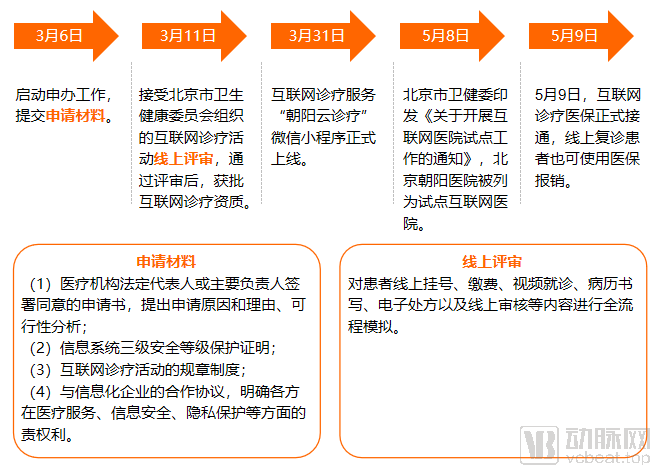
Application and Service Improvement Process for the Beijing Chaoyang Hospital Internet Hospital (Pilot)
Source: Beijing Municipal Health Commission, Beijing Chaoyang Hospital, enterprises; graphic by VCBeat
As a hospital ranked among the top 100 in the Fudan University Hospital Rankings Comprehensive List and among the top 10 in the Respiratory Medicine Reputation Rankings, Beijing Chaoyang Hospital handles over 3.8 million outpatient and emergency visits annually. Offline outpatient appointments are in high demand, with a booking window extending up to 84 days; slots for the 84th day are released at fixed times each day. Appointments for popular departments, such as Respiratory Medicine, Occupational Disease, and Cardiovascular Medicine, are often fully booked within this 84-day period.
Following the launch of internet-based medical consultations, the shortage of offline appointment slots can be alleviated to some extent. To ensure medical quality, the hospital requires attending physicians and those with higher titles to provide online follow-up consultations, a standard that exceeds the requirements set by the National Health Commission.
For public Grade A tertiary hospitals, the most direct impact of internet hospitals lies in diverting follow-up patients to online platforms and improving healthcare efficiency. However, there are concerns within the industry that this may further exacerbate the “siphon effect” of large hospitals, contradicting the principles of tiered diagnosis and treatment. In practice, however, hospitals typically require that follow-up patients have initially received their first offline consultation at the same institution, meaning patients cannot arbitrarily choose to have follow-ups at major hospitals at any time. Moreover, internet hospitals affiliated with Grade A tertiary institutions often provide not only prescription refills for follow-up cases but also a range of telemedicine services that guide lower-tier hospitals. Therefore, internet hospitals at large hospitals do not necessarily “siphon” patients.
Case Study of Internet Hospital Application: Co-Construction of an Internet Hospital
Application Process for an Internet Hospital by Qingdao New Sunshine Maternity and Obstetrics Hospital in Shandong
Source: Shandong Provincial Health Commission, publicly available corporate data; chart by VCBeat.
For regional small and medium-sized hospitals, facilities with low outpatient volumes, or those with limited construction and operational capabilities, joining a regional internet hospital platform or a third-party digital healthcare platform is a preferable option. This approach allows them to leverage the platform’s advantages in system development, patient aggregation and operations, and partner integration, thereby reducing investment costs. Meanwhile, the platform can consolidate physicians from these physical hospitals, making them core resources for patient care. This creates a complementary and mutually beneficial relationship between the hospitals and the platform.
Case Study on Internet Hospital Application: Third-Party Application for an Internet Hospital Based on a Physical Hospital
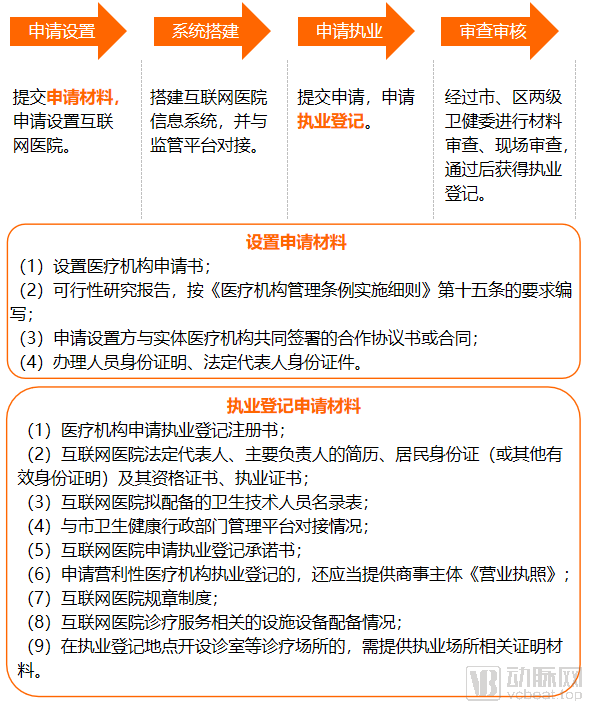
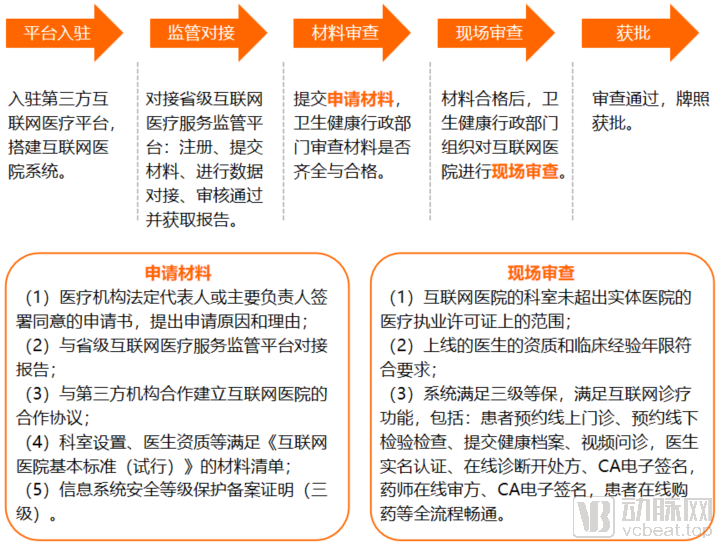
Application Process for Shanghai Tongzhou Gongji Internet Hospital, Source: Enterprise, Chart by VCBeat
When establishing an internet hospital, enterprises must ensure that its scope of diagnostic and treatment specialties aligns with that of the affiliated physical hospital. In 2019, Shanghai Shangying Hospital Management established the Shanghai Shangying Internet Hospital in affiliation with the Obstetrics and Gynecology Hospital of Fudan University. As the scope of diagnostic and treatment specialties cannot exceed that of the offline hospital, it operates as a specialized obstetrics and gynecology hospital. In 2020, the Shanghai Tongzhou Gongji Internet Hospital was launched in affiliation with Shanghai Tongji Hospital, a general hospital with a broad range of diagnostic and treatment specialties, thereby enabling the provision of online services across these corresponding specialties.
Furthermore, when enterprises rely on physical hospitals, particularly public hospitals, extensive communication and coordination are required despite the existence of cooperation agreements. This process can become a hidden factor affecting the progress of regulatory submissions.
Although it is clear that internet hospitals have experienced rapid development since 2020, the industry still faces a series of challenges, particularly those requiring breakthroughs at the policy level. We have systematically reviewed these issues and provided an outlook on future industry trends.
Core Definitions Require Further Clarification
The scope of diagnosis and treatment provided by internet hospitals is limited to common diseases and follow-up visits for chronic conditions; however, the current definition of this concept remains insufficiently clear, necessitating more detailed regulatory specifications at the policy level.
The very definition of a follow-up visit can be viewed from multiple perspectives, with common and chronic disease follow-ups offering broader descriptive scope. The restriction of internet-based medical consultations to follow-up visits is primarily driven by considerations of medical safety. Without detailed and uniform regulations, the long-term standardized development of the industry could be adversely affected.

Defining the Concept of Follow-up Visits for Common and Chronic Diseases, Image Source: Chart by VCBeat
Therefore, the core concept of follow-up visits for common and chronic diseases requires further clarification of its scope. First, the specific types of common and chronic diseases must be defined. Second, several limiting criteria for “follow-up visits” must be established, such as: What medical record documentation is required? Within what timeframe must these records have been generated? Which sources of medical records are considered acceptable? Once these issues are clarified, physicians can practice in a more standardized manner, and patients can receive safer diagnosis and treatment.
Doctors Need More Support to Join Third-Party Platforms
Although the policy allowing physicians to practice at multiple locations has been in place for years, most physical hospitals remain reluctant to permit their doctors to provide services on third-party platforms. This trend has become even more pronounced this year as physical hospitals accelerate the development of their own internet hospitals. Detailed management guidelines are urgently needed to better balance physicians’ practice across both hospital-owned and third-party platforms.
Physicians have demanding schedules and limited energy. Whether practicing on third-party online platforms affects their work at their primary practice institutions is difficult to define with a uniform standard, and most hospitals are reluctant to allow their physicians to provide services on such platforms. Moreover, since the outbreak of the pandemic, an increasing number of physical hospitals have launched their own internet hospitals, further reinforcing hospitals’ preference for physicians to practice exclusively on their proprietary platforms.
Therefore, the stringent management of physical hospitals imposes certain restrictions on physicians joining third-party platforms. As most physicians are “institutional employees” with public sector staffing status, they cannot disregard hospital regulations, even if policy support exists for providing services on third-party platforms.
If third-party platforms experience significant physician attrition, the industry’s innovative development may be adversely affected. Therefore, regulatory authorities need to formulate detailed rules to further balance the distribution of physicians across practice platforms.
"Internet + Medical Insurance Becomes New Momentum for Internet Hospitals"
It has become a major trend for internet hospitals to integrate with medical insurance payment systems. However, existing data indicate that these are predominantly public hospital-led internet hospitals, while enterprise-led ones remain in the minority. Furthermore, as the overarching principle for incorporating internet hospitals into medical insurance reimbursement is “cost reduction and efficiency improvement,” it is unlikely that internet hospitals of either type will derive direct financial benefits from the medical insurance fund.
However, internet hospitals that accept medical insurance payments find it easier to acquire patients, thereby creating opportunities to convert these patients into users of follow-up health management services.
Meanwhile, during the integration with the national health insurance system, the National Healthcare Security Administration imposed stringent requirements on the information system upgrades of healthcare institutions. These requirements include establishing and properly maintaining electronic medical records, online electronic prescriptions, and medication purchase records for patients, thereby ensuring full traceability across the entire process of diagnosis and treatment, prescription issuance, transactions, and delivery, and achieving comprehensive monitoring of information flows, fund flows, and logistics.
The integration of medical insurance has facilitated the improvement of internet hospital infrastructure. Once internet hospitals have established complete diagnosis and treatment processes along with oversight mechanisms, commercial insurance gains favorable conditions for integration. With basic medical needs met by public medical insurance and diverse healthcare demands addressed by commercial insurance, internet hospitals can offer more comprehensive services, thereby creating greater potential for profitability.
However, from an overall perspective, the proportion of medical insurance payment integration remains low, and the pace of implementation needs to be accelerated.
According to statistics from publicly available data, only 71 of the 577 internet hospitals nationwide currently accept medical insurance payments, accounting for 11%. These are primarily concentrated in provinces and municipalities such as Shanghai, Zhejiang, Jiangsu, and Beijing, and are predominantly led by public hospitals.
Although policies have clearly stated that internet hospitals can be included in medical insurance payments, the actual implementation progress varies across regions due to factors such as medical insurance funds, the formulation of detailed implementation rules, and innovation awareness.
The pace of health insurance reimbursement implementation directly impacts the completeness of the closed-loop system for internet-based medical services and the industry’s ability to sustain rapid development; therefore, its rollout must be accelerated.
Physical Hospitals and Enterprises Will Collaborate to Reduce Costs and Increase Efficiency for Both Parties
Entity-led and enterprise-led internet hospitals exhibit distinct advantages and disadvantages in terms of medical resources and operational capabilities; only through deep collaboration can they drive sustained innovation in the industry.
An increasing number of physical hospitals are launching online hospital platforms, resulting in a proliferation of standalone internet hospitals. However, given the limited operational capacity of physical hospitals, substantial investments in manpower, resources, and capital do not necessarily yield commensurate benefits.
Meanwhile, enterprise-led internet hospitals may lead to physician attrition as a large number of physical hospitals launch their own internet hospital platforms.
Therefore, both parties need to integrate resources from all sides and reconstruct the medical service process on the basis of mutual cooperation, so as to achieve a state of sustainable development for participants and the industry. At present, Haodf Online's collaboration with physical hospitals for free clinics, Weimai's partnership with physical hospitals to upgrade specialized innovative services, and Shangying Hospital Management's full-course service cooperation with physical hospitals are all models of in-depth collaboration between enterprises and hospitals.
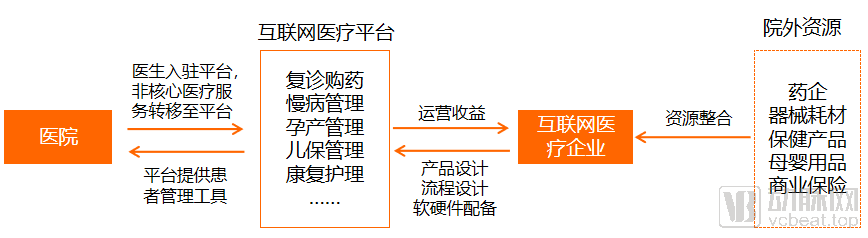
Collaboration between physical hospitals and internet healthcare companies. Image source: VCBeat.
Hospital-enterprise collaboration aims to leverage the respective strengths of both parties by integrating products, services, and hardware around patients or users, thereby creating mutual benefits. However, the key to achieving deep collaboration lies in public hospitals, particularly state-owned ones, adopting a more open attitude.
The above constitutes the main content of the report. The table of contents is as follows. Scan the mini-program at the end of the article to read the full report for free:
I. Insights into the Development of Internet Hospitals in 2020
1.1 Evolution of Internet Hospital Policies: From Framework Establishment to Detailed Design
1.2 Progress in the Development of Internet Hospitals: From Coastal to Inland Regions, from Pilot Points to Comprehensive Coverage
1.3 Internet Hospitals Become the “Internet+” Healthcare Infrastructure
II. Opportunities for Internet Hospitals Amid the Pandemic
2.1 Multi-Department Promotion and Breakthroughs in Medical Insurance Payment Make Internet Hospitals the Norm
2.2 Multi-dimensional Growth, Full-scenario Penetration, and Cultivation of User Habits
2.3 End-to-End Process Integration, Robust Support Systems, and Continuous Service Model Upgrades
III. Guide to Applying for an Internet Hospital License
3.1 Distinctive Characteristics of Participating Enterprises: Primarily Focused on Internet Healthcare and Healthcare Informatics
3.2 Distinct Regional Characteristics: Dominated by Enterprises in Hainan and Ningxia, and by Physical Entities in Beijing, Shanghai, Guangzhou, and Other Regions
3.3 Case Study of Applying for an Internet Hospital License
IV. Outlook on Internet Hospital Trends
4.1 Core Definitions, Controversies over Physicians’ Multi-Site Practice, and Other Issues Remain Unresolved
4.2 Trend Outlook: Deep Collaboration Between Hospitals and Enterprises Is Key to Driving Cost Reduction and Efficiency Gains for Both Parties