

Dawei Microbiology Files IPO Prospectus: Revolutionizing Pathogen Detection with Proprietary Droplet Microfluidics and Fully Automated Digital PCR Platform
The market for pathogenic microorganism detection is vast.
Data show that the number of patients with infectious diseases in China reaches up to 1 billion cases annually. Taking notifiable infectious diseases as an example, the number of reported cases in China exceeded 7.77 million in 2018, with an incidence rate of 559.41 per 100,000 population and a mortality rate of 1.68 per 100,000 population, representing year-on-year increases of 9.79% and 14.8%, respectively, compared with 2017. In 2017, the global market for microbiological diagnostics was valued at USD 16.161 billion, while the domestic market in China was approximately RMB 10 billion.
Amid the vast market potential, the urgent need to improve infectious disease diagnostic capabilities has drawn significant attention.
Novel coronavirus pneumonia, Zika virus, human infections with H5N6 avian influenza, human infections with H7N9 avian influenza, Middle East Respiratory Syndrome (MERS)... Emerging infectious diseases have become a global public health concern, and the rapid identification of pathogens is fundamental to effective infection control. Meanwhile, among patients with infectious diseases in China each year, over 300 million require pathogen testing to further aid diagnosis. More than one-third of patients with complex infectious diseases do not receive timely and effective treatment because traditional detection methods fail to identify the causative pathogens.
Frequent outbreaks of major emerging infectious diseases and the diagnostic challenges posed by complex infectious diseases using conventional techniques have led to a growing clinical demand for rapid and accurate novel testing technologies. Beyond clinical settings, the demand for microbial detection technologies is also rising rapidly in non-clinical sectors such as food safety and environmental monitoring.
Digital PCR is an emerging technology for microbial detection. Leveraging its core droplet microfluidics technology, DAWEI BIO is dedicated to the independent research and development of innovative life science instruments, medical devices, and reagents, providing next-generation automated, integrated, miniaturized, and high-throughput biomedical testing instruments and application solutions for fields such as microbial detection.
The company has developedFully Automated, Integrated Digital PCR Platform. This platform featuresFully Automated, Low-Cost, High-ThroughputFeatures: Lower instrument and consumable costs, capable of analyzing up to 96 samples within 3 hours, significantly improving the efficiency and sensitivity of pathogenic microorganism detection, accurately detecting pathogen load, and driving innovation in microbial detection technology in China.
DAPCO®(Interfacial Vibration Droplet Array) is DAWEI BIO’s patented core droplet technology, based on DAPCO®Leveraging its technology, DAWEI BIO has developed a range of products, including the OsciDrop, a fully automated, integrated digital PCR instrument.®is one of them.
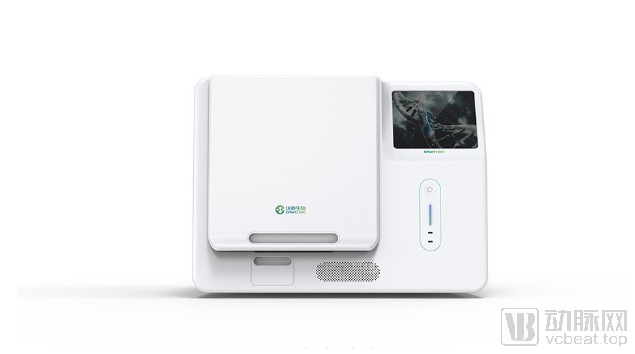
OsciDrop: Fully Automated, Integrated Digital PCR Instrument®
Traditional microbiological detection methods suffer from long turnaround times, complex procedures, and limited sensitivity and specificity. With technological advancements, digital PCR, as an emerging absolute quantification technique, has demonstrated significant potential in the detection of pathogenic microorganisms.
However, existing digital PCR technologies still suffer from issues such as operational complexity and high detection costs. OsciDrop®Effectively addresses the limitations of existing digital PCR instruments.
The high cost of microfluidic consumables for existing digital PCR instruments leads to elevated testing costs; OsciDrop®Globally Pioneering Chip-Free Digital PCR: Significantly Reduces the Cost of Digital PCR Usage, Enriching and Expanding Its Application Scope. To address the issue of cumbersome operations, this digital PCR instrument employs an automated system for droplet generation, allowing users to simply place the sample tube into the instrument to achieveBatch Generation of Droplet Arrays. This not only enhances user convenience but also mitigates risks and errors arising from manual operational mistakes, thereby improving the reliability and accuracy of testing.
OsciDrop®Another significant advantage isScalable. Dr. Du Wenbin, Chief Scientist at DAWEI BIO, stated: “OsciDrop®It operates in a workstation-like mode; currently, this instrumentEnables parallel testing of 96 samples within 3 hours (including PCR amplification time),In later stages, detection throughput can be increased by expanding consumables, adding sample pre-processing functional units, and evolving toward higher-throughput, fully integrated nucleic acid testing workflows.
It is understood that OsciDrop®Benchmarked against mainstream international digital PCR instruments, DAWEI BIO’s OsciDrop excels in specific digital PCR applications, including absolute nucleic acid quantification, copy number variation analysis, and rare mutation detection.®All have reached an internationally leading level.
Dr. Du stated, “Currently, the company is primarily focused on microbial testing, with application scenarios including clinical infections, bacterial culture and antimicrobial resistance management, and industrial microbial testing.” However, as a platform technology, digital PCR has far broader application prospects beyond microbial testing. Promising applications include liquid biopsy for tumors, tumor mutation detection, companion diagnostics, and non-invasive prenatal testing, all of which present significant market potential.
Most entrepreneurial ventures are closely tied to the founders’ early-life experiences, and DAWEI BIO is no exception.
Dr. Du Wenbin, the company’s Chief Scientist, is a Research Fellow and Doctoral Supervisor at the Institute of Microbiology, Chinese Academy of Sciences (CAS), as well as a Chair Professor at the Cunji School of Medicine, University of Chinese Academy of Sciences. He studied under Academician Fang Zhaolun, the pioneer of microfluidics in China; Professor Fang Qun, Director of the Institute of Microanalytical Systems at Zhejiang University; and Professor R. F. Ismagilov, an international pioneer in droplet microfluidics.With nearly 20 years of experience in microfluidics technology innovation and an international technical reserve, it pioneered technologies such as vibrational droplet generation, sliding chips, and microwell plate-based single-cell culture using microdroplets. The entity has filed over 40 invention patents in China and the United States, with more than 20 granted, and has achieved over 20 patent transfers and commercializations both domestically and internationally.
Dr. Du hopes to achieve continuous technological innovation and breakthroughs,“Transform more innovative technologies into socially valuable products, contributing our modest efforts to the Healthy China initiative.”
In less than two years since its establishment, DAWEI BIO has achieved numerous remarkable accomplishments. It has been successfully recognized as a High-Tech Enterprise in Zhongguancun and an “Embryo” Enterprise in Haidian District, received the “Beijing New Technology and New Product” certification, and secured third place in the medical device category of the 2020 Zhongguancun International Frontier Competition. Additionally, in response to the pandemic, the company’s diagnostic solution for novel coronavirus infection was included in the “First Batch of New Technologies, Products, and Services for Pandemic Control in Zhongguancun.”
It is impossible to ignore that this epidemic has brought more development opportunities to the microbial testing market. "Molecular diagnostics will play an increasingly important role in the emergency response to emerging infectious diseases." DAWEI BIO will develop more diagnostic reagent products to address the urgent clinical need for highly sensitive pathogen detection. Meanwhile, leveraging microfluidics technology, the company will launch a series of innovative R&D initiatives, such as POCT nucleic acid testing, microbial culture and drug susceptibility screening, and ultra-high-throughput microbial functional modification and sorting. "Innovating precision medicine to serve human health" is the corporate mission of DAWEI BIO. Looking ahead, DAWEI BIO aims to cover all aspects of microbial testing, provide comprehensive microbial testing solutions, and become a leading international company in microbial in vitro diagnostics.