

Wesmile Aims to Become the 'Industry Brain' for Orthodontics with Digital Invisible Aligner Solutions Powered by Top-Tier Doctors
Nan Zhe is a person who "loves to stir things up."
From a dentist with over 15 years of study and practice at a top-tier (Grade 3A) hospital to a hands-on entrepreneur, he successively founded “Mint Dentist,” a platform for dental practitioner brokerage, and “wesmile,” a digital brand for clear aligner orthodontics. Each transformation of identity has been a testament to his refusal to settle for the status quo and his courage to break through personal limits.
“Bohe Dental was established to improve the allocation efficiency of resources within the industry, enabling more efficient connectivity among ‘people, services, and facilities’; whereas wesmile was founded to leverage digital clear aligner therapy, aiming to reduce the financial burden on patients while ensuring treatment quality, thereby providing them with a cost-effective alternative,” said Nan Zhe.
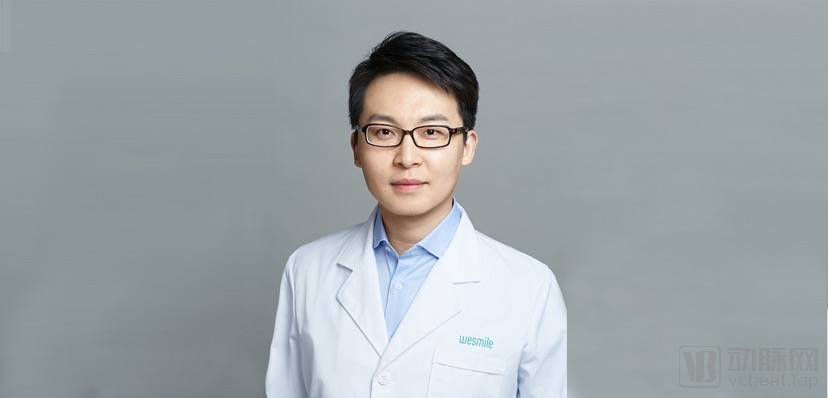
Nan Zhe, Founder of wesmile
In November 2019, wesmile was established in Beijing. Prior to its founding, founder Nan Zhe and his team spent over a year in preparation. wesmile is positioned to provide users with comprehensive digital orthodontic solutions. Its core advantage lies in connecting users with high-quality orthodontists from top-tier (Grade 3A) hospitals for treatment planning and remote follow-up consultations. For aligner materials, its inaugural product utilizes SmartTrack material, widely recognized within the industry as Invisalign’s proprietary material. In terms of pricing, the overall service cost is more than 50% lower than the market average.
The dental care industry is a highly specialized medical sector characterized by a high degree of marketization yet a low level of market maturity. The landscape of non-public dental care services has long been dynamic and rapidly evolving. According to incomplete statistics, the total number of dental care institutions in China—including dental departments in general hospitals, specialized dental hospitals, and private dental clinics—approaches 100,000. Among these, private dental institutions dominate, accounting for approximately 80% of the total.
In recent years, as public awareness of oral health has increased, the pursuit of "aesthetics" has become a new driver for dental consumption, propelling the dental industry onto a "fast track." The nearly RMB 100 billion market size of dental healthcare is supported not by traditional services such as extractions, dentures, and fillings, but by high-value procedures like dental implants and orthodontics. Ping An Securities pointed out in a research report that, under the trend of consumption upgrading, dental implants and orthodontics are two "gold mines" in the dental industry, each with a potential market size of approximately RMB 200 billion.
After two decades of development, orthodontic treatments have become highly mature. Among various orthodontic methods, clear aligner therapy has gained significant popularity due to its advantages over traditional metal or ceramic braces, including transparency, thinness, removability, ease of cleaning, and minimal impact on daily life.
In foreign countries, clear aligner orthodontics is very common, with a high market penetration rate. In China, the market penetration rate of clear aligner orthodontics is less than 1/40 of that in Europe and the United States, far below the global average. It is reported that in 2019, the number of patients receiving orthodontic treatment in China reached 3 million, among whom 2.8 million used bracket-based appliances, while only 200,000 opted for clear aligner orthodontics.
The market penetration of clear aligner orthodontics in China is low, primarily due to high costs. Treatment with top-tier clinicians and premium materials typically ranges from RMB 50,000 to 60,000, imposing a significant financial burden on most patients.
Across China’s orthodontic industry, a severe shortage of orthodontists, uneven medical expertise with subpar outcomes, intense brand competition leading to high decision-making costs, and complex processes with opaque pricing are also key factors contributing to the low penetration rate of the clear aligner market.
“Clear aligner therapy will undoubtedly become the mainstream in the future, as it offers significant advantages in freeing up dentists’ time and reducing labor intensity,” pointed out Nan Zhe.
So, is there a new invisible orthodontic service model that can ensure orthodontic effectiveness while reducing the burden on patients? Nan Zhe believes that the emergence of wesmile will realize this vision.
wesmile’s core team comprises dental professionals and internet technology experts. Among the founding team, in addition to Nan Zhe, who holds a Ph.D. in Stomatology from Peking University and has experience as a dentist at a Grade 3A hospital, co-founder Ye Yaojian previously worked at Xiaomi for eight years, where he developed multiple internet products and gained deep expertise in internet product operation strategies.
With a physician background and internet DNA, wesmile’s product model is highly practical.
“Three Simple Steps for Easy Alignment.” At wesmile, users can achieve teeth alignment through just three stages: online data collection, online treatment planning, and remote follow-up management. First, dental data is collected: users can either choose a nearby clinic for professional data capture after an online assessment or take impressions at home using a DIY kit. Next, orthodontic specialists from top-tier (Grade 3A) hospitals design a personalized treatment plan. Finally, upon receiving their custom-made Invisalign aligners, users begin wearing them with dedicated concierge support throughout the entire process.
“During orthodontic treatment, the core user experience hinges on the professionalism of the dentist, the reliability of the materials, and the precision of patient management. These are precisely the strengths of wesmile,” pointed out Nan Zhe.
He explained that, in simple terms, wesmile’s model leverages telemedicine to reduce the costs associated with follow-up visits, while ensuring professional orthodontic treatment by qualified doctors and the use of high-quality materials, thereby lowering overall costs without compromising user experience.
The orthodontist’s expertise is the key determinant of treatment outcomes. Throughout the entire orthodontic process, the greatest value lies in the treatment plan designed by the orthodontist, with aligners serving merely as tools. In terms of provider selection, leveraging Mint Dental’s physician network, wesmile has contracted with over 100 orthodontic specialists from top-tier (Grade A tertiary) hospitals, and this number continues to grow.
In terms of materials, wesmile’s inaugural product utilizes Invisalign’s SmartTrack material, whose quality is widely recognized within the industry, ensuring orthodontic efficacy with top-tier quality. Nan Zhe introduced that striving for excellence in quality is one of wesmile’s core strategies. Meanwhile, to pursue more cost-effective materials and further reduce the financial burden on patients, wesmile is currently engaging with leading domestic manufacturers, aiming to provide users with aligners that offer both superior quality and high cost-performance ratio.
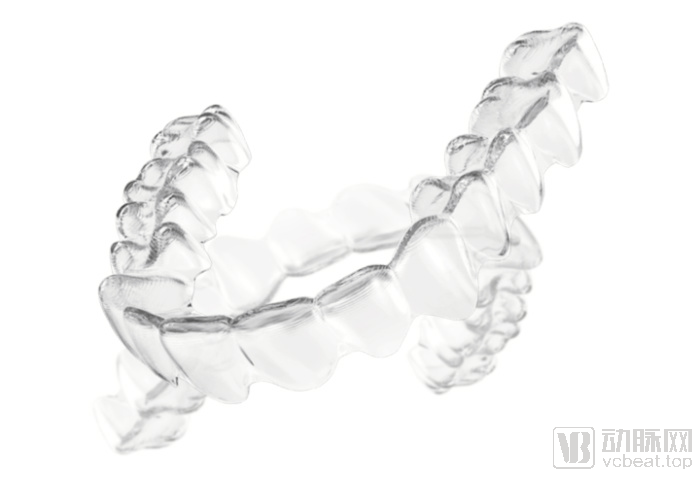
wesmile's Debut Product
Furthermore, digital solutions represent a key differentiator for wesmile in the orthodontic market. In the cost structure of orthodontic treatment, follow-up visit fees constitute a significant proportion. By leveraging digital solutions, wesmile collaborates with offline clinics to collect baseline data, while its operations team conducts follow-up consultations online. This approach not only frees doctors from repetitive and inefficient in-person visits, enabling them to serve more patients, but also helps users overcome time and geographic constraints by allowing remote follow-ups. As a result, wesmile significantly reduces treatment costs while ensuring effective orthodontic outcomes.
According to him, wesmile’s products are priced at 28,800 yuan, significantly lower than the cost of clear aligner orthodontic treatment on the market. Currently, nearly 100 direct-to-consumer (C-end) users are using wesmile’s products, with very positive feedback. Additionally, six offline dental clinics have partnered with wesmile on the business-to-business (B-end) side, and a new batch of clinics in Shanghai, Hangzhou, Suzhou, Guangzhou, and other cities is scheduled to complete signing agreements in August.
“By integrating online and offline services with a user-centric approach, we connect dentists, clinics, manufacturers, and other stakeholders to build an industry value chain. ‘We hope that in the near future, wesmile will become the industry brain for orthodontics, continuously connecting and empowering the sector,’ said Nan Zhe.”
Regarding future plans, Nan Zhe pointed out that over the next three to five years, in addition to its presence in North China, wesmile will significantly expand its coverage in East and South China. Furthermore, as an orthodontic service provider, wesmile is currently participating in the mixed-ownership reform of primary healthcare institutions. Leveraging its explorations in telemedicine, the company aims to support the development of primary healthcare services and contribute to the decentralization of national medical resources.