

Sino Canbridge MedTech Files IPO Prospectus: Leveraging Tactile Imaging and Over One Million Data Points to Build a Breast Cancer Screening Ecosystem Targeting China's Underserved Markets
In 1974, at a time when many women were reluctant to confront breast cancer, U.S. First Lady Betty Ford courageously announced her diagnosis, dispelling the stigma that had long shrouded the disease. Her actions raised public awareness of the importance of breast cancer screening, prompting millions of women to undergo screening. As a result, breast cancer detection rates in the United States have risen significantly, while mortality rates have declined year by year.
According to the "Chinese Guidelines for Breast Cancer Screening, Early Diagnosis, and Early Treatment,"IIn China, dense breast tissue in women lacks effective technical detection methods, and awareness of screening is weak. Screening methods, standards, and standardized pathways are somewhat deficient, resulting in an early detection rate for breast cancer of less than 20%, with less than 5% of cases identified through screening.
In 2018, China placed the standardization of early breast cancer screening on its agenda. Under the guidance of the National Health Commission, leading national experts in breast oncology authored the Guidelines for Breast Cancer Screening and Early Diagnosis and Treatment in China to standardize breast cancer screening and early diagnosis and treatment practices across the country, thereby improving early diagnosis rates and reducing breast cancer mortality.
For early breast cancer screening, Beijing Sino Can Bridge Med Tech Co., Ltd. has developed a breast palpation diagnostic device based on traditional palpation techniques. This innovation overcomes the limitations of mammography, breast MRI, and ultrasound, providing a new screening method for early breast cancer detection.
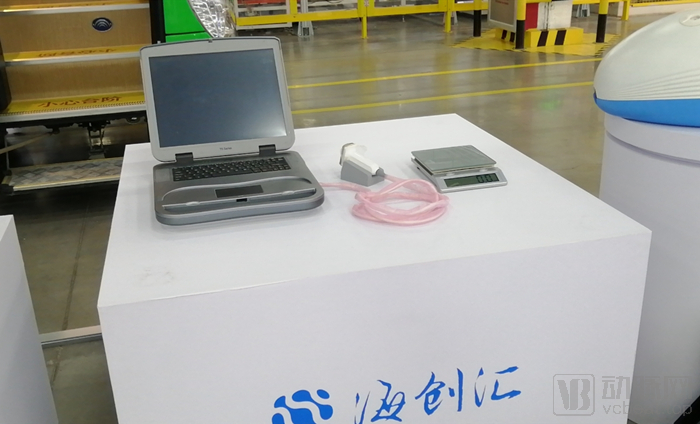
Product Schematic of the BT10 Breast Palpation Diagnostic Device
Song Chunfang, founder of Sino Can Bridge, told VCBeat,The breast palpation diagnostic device is inspired by the bionic simulation of physicians' manual palpation techniques. This diagnostic device offers detection capabilities comparable to those of magnetic resonance imaging (MRI), mammography, and ultrasound, enabling the identification of solid breast masses as small as 2 mm. Moreover, compared with other screening methods, the breast palpation diagnostic device is more cost-effective, easier to use (by simply applying pressure with the probe to the breast), and more efficient (completing an examination in three minutes per patient). These advantages make it well-suited for large-scale screening and deployment in lower-tier markets, thereby allowing it to serve a broad population.
Sensor array manufacturing, weak signal acquisition, and algorithms constitute the three core technologies of Beijing Sino Can Bridge Med Tech Co., Ltd. Among these, weak signal acquisition and sensor array manufacturing are key to enabling the breast palpation diagnostic device to sensitively detect small lumps.
So, what exactly is the underlying operational logic of the breast palpation diagnostic device?
The breast palpation diagnostic instrument applies pressure to the breast using a probe equipped with pressure array sensor technology, simulating Meissner's corpuscles in the finger skin to collect pressure signals. After collecting these signals, the device performs data analysis based on physician diagnostic logic and the difference in elastic modulus between tumor tissue and normal breast tissue. It then generates real-time images depicting the size, shape, hardness, and mobility of breast masses and lesions, produces corresponding reports, and obtains structured data on pathological features.
Breast Palpation Imaging System
Building on the established database, Beijing Sino Can Bridge Med Tech Co., Ltd. has first equipped its breast palpation diagnostic device with an intelligent auxiliary diagnosis system for breast palpation. By integrating data synchronization and service updates with a cloud-based service platform, this system enables online consultations, risk assessment, and breast health management.
The construction of a standardized structured database supports Beijing Sino Can Bridge Med Tech Co., Ltd. in achieving precise analysis of breast cancer-related data, introducing precise risk assessment into breast health management, and providing better services for early breast cancer screening.
“iTouch Zhen Ai Kang Qiao Ba” is the application service platform established by Beijing Sino Can Bridge Med Tech Co., Ltd.
“Hardware is merely the entry point for breast cancer screening; the true objectives are risk assessment and intervention. Our genuine need lies in penetrating lower-tier markets and reaching grassroots levels to acquire more extensive epidemiological data,” said Song Chunfang. “Only by investigating the epidemiological factors of breast cancer, analyzing its underlying causes, and implementing targeted interventions can we truly reduce both incidence and mortality rates, achieving a dual decline.”
In response to market pain points associated with traditional breast cancer screening technologies—such as complex procedures, high costs, and low efficiency—Beijing Sino Can Bridge Med Tech Co., Ltd. has decided to leverage its competitive advantagesStarting from the grassroots level, we will target the lower-tier markets to accelerate the deployment of breast palpation imaging technology at the primary care level, thereby collecting relevant epidemiological data and benefiting more women.
Another strategic initiative of Beijing Sino Can Bridge Med Tech Co., Ltd. is to engage medical experts as providers of follow-up professional services, thereby empowering breast cancer prevention and diagnosis through data and online services.
Leveraging the “iTouch Zhen Ai Kang Qiao Bar,” Beijing Sino Can Bridge Med Tech Co., Ltd. has connected three groups—“Ai Ru Experts,” “Kang Qiao Angels,” and “Zhen Ai Specialists”—to create a breast health management service ecosystem serving over one million individuals, based on tactile imaging technology, thereby accumulating real-world data. The platform offers professional services such as technical exchanges on tactile imaging, follow-up care, and multidisciplinary consultations, bringing greater possibilities to early breast cancer screening and health management services.
It is not difficult to find that,While developing a breast cancer diagnostic instrument that combines precision, efficiency, affordability, and ease of use, Beijing Sino Can Bridge Med Tech Co., Ltd. is undergoing digital transformation to equip the device with data acquisition capabilities and establish a breast cancer database, thereby empowering early screening, prevention, and treatment of breast cancer.
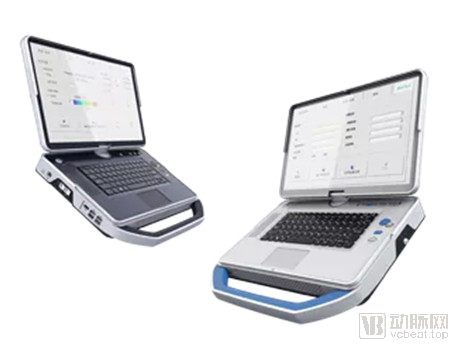
Schematic Diagram of the T10 Breast Palpation Diagnostic Device
When it comes to future business models, Song Chunfang said: “AI + Services.”
Beijing Sino Can Bridge Med Tech Co., Ltd. will establish an AI-powered breast cancer screening service platform, building a new service model centered on data and users. By leveraging data acquisition, the company will collaborate with insurance providers and oncology pharmaceutical manufacturers through innovative operational models to create a closed-loop business ecosystem. This approach will drive a new flywheel effect, forming a user-centric service ecosystem.
The establishment of such a platform signifies that Beijing Sino Can Bridge Med Tech Co., Ltd. has acquiredConduct patient follow-up and risk assessment, and perform data analysis on relevant companies.capabilities. The barriers established in data acquisition have enabled it to bring all technology companies related to breast cancer prevention and treatment onto its platform,Building the Capability to Create a Closed-Loop Service Ecosystem for Breast Cancer. The formation of a full-ecosystem service chain for breast cancer also lays the foundation for providing better early screening services.
Beijing Sino Can Bridge Med Tech Co., Ltd. has secured over 60 patents and filed for multiple medical device registration certificates with the National Medical Products Administration (NMPA). The company has accumulated more than 4 million sets of client-side data, established collaborations with nearly 500 hospitals, published the monograph *Diagnostic Imaging of Breast Palpation*, participated in two major national special projects under the Ministry of Science and Technology, and been admitted into the Haichuanghui Dual-Mode Accelerator.
Beijing Sino Can Bridge Med Tech Co., Ltd. is currently undergoing a new round of financing. Driven by accelerated technological iteration and AI optimization, the company will have a solid foundation for rapid development in the future.
In the field of early breast cancer screening, Beijing Sino Can Bridge Med Tech Co., Ltd. is making a major strategic move.
The reason why it is said that Sino Can Bridge is playing a big game is that in the early screening of breast cancer, it stands high enough, sees far enough, and has a clear vision. As Song Chunfang said, only by being willing to solve grassroots problems and explore the underlying causes of breast cancer can we truly rely on data to reduce the incidence and mortality rates of breast cancer in the future.
Faced with relentlessly rising figures—such as breast cancer ranking first in incidence among women, 280,000 new cases annually, and 70,000 deaths—and the substantial unmet treatment needs of breast cancer patients, Beijing Sino Can Bridge Med Tech Co., Ltd. has focused more on exploring superior breast cancer screening solutions to enable earlier intervention for patients. This is precisely why the company chose to fundamentally transform its business model.
“Only by combining robust technology with a sound business model can we better serve more women. Truly delivering these elements is what creates value, ultimately contributing to a dual reduction in both breast cancer mortality and incidence rates,” said Song Chunfang.
In the future, Beijing Sino Can Bridge Med Tech Co., Ltd. will continue to accelerate its digital transformation, collaborate with leading universities to drive technological upgrades, and expand the market potential of its products.

Beijing Chaoshan Capital Investment Management Co., Ltd. operates “Jianyi Club,” China’s most active investor community, which was founded in 2011. The company positions itself as a service platform leveraging its investor community. Its shareholders include prominent angel investor Wu Shichun, Jia Hongbo, former Secretary-General of the Asset Management Association of China, Wang Zhimin, Chairman of Baodao Optical, and Jiu Wan, one of China’s first-generation angel investors. Through various activities organized by Jianyi Club, the company identifies high-quality projects for early-stage investment or services, and has invited Professor Sun Liying, former Director of the U.S. FDA Review Division, to serve as Chief Medical Officer and project evaluator.
As of June 1, 2020, Jianyihui had hosted over 300 events, assisted more than 50 enterprises in securing financing, and built a pipeline of over 300 high-quality companies post-Series A (primarily distributed across healthcare, cloud computing, big data, Internet of Things, artificial intelligence, and high-end equipment manufacturing sectors). It has also established collaborative ties with nearly 20 local governments. Its currently operational and profitable business lines include co-investment funds for projects, financial advisory services, and government relocation advisory services.