

Microbiome-Based Therapeutics for Chronic Disease Prevention: A Side-Effect-Free Approach with Proven Market Traction
As residents’ living standards continue to rise, there is growing attention paid to chronic diseases that affect quality of life. In fact, chronic diseases not only impair residents’ quality of life, but China’s large population of individuals with chronic conditions also places a substantial burden on medical insurance expenditures. Consequently, national policies are increasingly focusing on treatment strategies for chronic diseases.
According to publicly available data, in 2019, China had approximately 245 million patients with hypertension, about 120 million with diabetes, around 130 million with chronic kidney disease (CKD), over 180 million with hyperuricemia, and more than 80 million with gout. More concerningly, patients with chronic diseases in China often suffer from multiple comorbidities. For instance, among patients with hyperuricemia, 27% also have diabetes, 30% have gout, 71% have chronic kidney disease, and 78% have hypertension.
Therefore, how to treat patients with chronic diseases has become an urgent issue.
Currently, the primary approaches to managing chronic diseases are pharmacological therapy and health management; however, both methods have limitations. For instance, the treatment of hyperuricemia mainly relies on chemical drugs such as allopurinol, febuxostat, and benzbromarone. These agents only temporarily lower uric acid levels, necessitating long-term medication adherence by patients. Furthermore, these chemical drugs are associated with adverse reactions and side effects.
Another therapeutic approach is health management, which requires patient self-discipline and lifestyle control. In fact, most chronic diseases are caused by unhealthy lifestyles, making self-management of lifestyle factors particularly challenging for patients. On the other hand, health management services provided by institutions or enterprises currently lack a viable business model, serve a limited population, and will require time to develop.
So, is there a product with no side effects available for patients with chronic diseases? The answer is yes.
The microbiome-based drug developed by Dr. Li Qingshan’s team is a product for the prevention and management of chronic diseases, featuring no side effects, convenient oral administration, and suitability for long-term use. In 2020, this project stood out among more than 100 entries in the Biopharmaceutical Special Competition of “Maker Guangdong,” achieving outstanding results.
The 2020 “Maker Guangdong” Biopharmaceutical Themed Competition was organized by Guangdong Medical Valley, which provided entrepreneurs with abundant scientific and technological innovation resources and high-quality innovation services. Follow-up services, including implementation support, investment and financing matchmaking, and partnership facilitation with enterprises, will further promote the development of startups.
The award-winning project by Dr. Li Qingshan’s team focuses on microbiome-based products. Dr. Li Qingshan stated, “We are dedicated to the research and development of oral microbiome products for the prevention and treatment of chronic diseases, such as gout, obesity, diabetes, and depression. Among these, a composite probiotic food product designed to lower uric acid levels and prevent gout is already commercially available.”
Over the past decade, Dr. Li Qingshan’s team has drawn upon extensive literature reporting on the associations between gut microbiota and various chronic diseases. Leveraging their high-efficiency gut bacterial culture platform technology, they have cultured, isolated, and screened more than 300 bacterial strains. Each of these strains possesses unique functional properties, and their strategic combination can yield a variety of products for the prevention and treatment of multiple chronic diseases.
What are the characteristics of the microbiome-based drug developed by Dr. Li Qingshan’s team?
Compared with pharmaceuticals for chronic diseases currently on the market, microbiome-based drugs are composed of probiotic strains that are safe and free from toxic side effects. These probiotics naturally reside in the human intestinal tract, where they perform functions such as promoting digestion and absorption, enhancing immune function, and maintaining the structural balance of the gut microbiota. Patients with chronic diseases often lose the conditions necessary for probiotic proliferation and growth due to years of unhealthy lifestyle and dietary habits, ultimately leading to the development of chronic conditions.
The concept of microbiome-based therapeutics involves screening safe, non-toxic probiotic strains with significant efficacy against chronic diseases, combining them into multi-strain consortia, and formulating them as food products or pharmaceuticals. Upon administration, these products restore “missing” gut microbiota, allowing the probiotics to exert their effects in the intestine, thereby maintaining physiological homeostasis and potentially curing chronic diseases.
Taking hyperuricemia as an example, this condition is primarily caused by disorders in purine metabolism. Therefore, Dr. Li Qingshan’s team screened for probiotics effective against purines and combined them to create the product “Shilike.” This product can rapidly degrade dietary purine nucleosides and uric acid, reduce systemic inflammation, protect the mesentery, and enhance immunity. Furthermore, after identifying highly efficient bacterial strains, Dr. Li Qingshan’s team formulated a composite probiotic blend and added prebiotics to facilitate the colonization and proliferation of these bacteria in the intestine, offering hope for restoring health in patients with hyperuricemia.
In addition to “Shi Li Ke,” Dr. Li Qingshan’s team has launched several other products this year, including “Mei Hua Shi” for kidney stones, “Yun Chu Tai” for obesity, and “Chang Sen Tai” for boosting immunity. The large population of patients with related chronic diseases in China has created a substantial market, offering significant growth opportunities for products such as Shi Li Ke, Mei Hua Shi, Yun Chu Tai, and Chang Sen Tai. Dr. Li Qingshan stated, “In May 2019, we assigned a sales representative to conduct trial sales of Shi Li Ke Compound Probiotic Powder in Huizhou, Guangdong. Within just seven months, end-user sales exceeded RMB 10 million.”
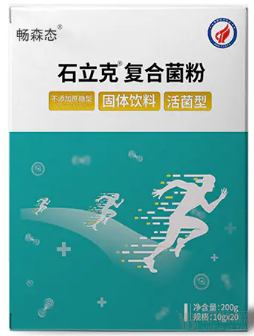
(Shilike Product Image)
Dr. Li Qingshan stated, “Microbiome-based products have no side effects and possess strong competitiveness in the market. Furthermore, our developed products are oral formulations that do not require injection, offering convenience and lower costs, which makes patients more willing to use them long-term.” Therefore, Dr. Li Qingshan’s team plans to launch products targeting chronic diseases and sub-health conditions such as diabetes, depression and anxiety, and chronic kidney disease, each of which represents a market worth billions or even tens of billions.
It is worth noting that the R&D pathway for microbiome-based pharmaceutical projects is also unique. Dr. Li Qingshan’s team screened various bacterial strains with significant efficacy against chronic diseases from probiotics that are safe and free of toxic side effects, combining them into composite probiotic formulations. These were initially developed and marketed as foods, health supplements, or foods for special medical purposes (FSMP), while simultaneously monitoring therapeutic outcomes and making continuous improvements. Once the efficacy reached pharmaceutical standards, a new drug application was submitted.
Dr. Li Qingshan revealed, “To date, Shilike Compound Probiotic Powder has been administered to over 20,000 patients, with significant efficacy demonstrated. The next step is for this product to enter the new drug clinical trial phase in China. Additionally, an enzymatic stone-dissolving product for kidney stones has already submitted an Investigational New Drug (IND) application to the U.S. FDA, and other products will follow this pathway to sequentially file for new drug approvals and enter the market.”
This also highlights another characteristic of microbiome-based therapeutics: the risk associated with further development into new drugs is low. Dr. Li Qingshan explained, “The safety and efficacy of the product have already been demonstrated before it enters the clinical trial phase for new drug approval. Therefore, the failure rate in developing the product into a pharmaceutical drug is relatively low.”
Another core strength of Dr. Li Qingshan’s team is its elite R&D and management roster. Dr. Li Qingshan stated, “Our team members have been partners for many years. We share common goals and maintain close, stable collaborative relationships. Our respective areas of expertise are both complementary and partially overlapping, enabling us to work together to achieve comprehensive coverage spanning R&D, production, marketing, corporate operations, and management. Currently, our team has evolved into a cohesive unit, characterized by deep integration and mutual support.”
Dr. Li Qingshan, the visionary leader of the team, is a nationally recognized high-level talent in China and a former postdoctoral fellow supported by the Japan Society for the Promotion of Science (JSPS) and the Alexander von Humboldt Foundation. He possesses over 20 years of experience in the research and development of microbiome-based therapeutics. In the United States, he founded Captozyme, which established the world’s most advanced production technology for gut microbiota-derived drugs, generating a total revenue of $15.5 million. The company was acquired by the international giant Fisher Scientific in 2019. In China, Dr. Li founded Kangfude Biopharma, a high-tech enterprise dedicated to the R&D and industrialization of oral protein therapeutics and microbiome-based drugs. Kangfude Biopharma secured RMB 64 million in Series A financing and has successfully developed and licensed out two early-stage orphan drug candidates. Additionally, Dr. Li has been honored as a High-Level Talent in Hubei Province, an Innovative and Entrepreneurial Talent by the Ministry of Science and Technology, and a member of an Overseas Chinese Entrepreneurship Team recognized by the State Council.
The core R&D team comprises over a dozen PhDs and Master’s degree holders with extensive expertise in key technical areas such as gut microbiota culture, formulation development, and big data analytics of the microecology. The core management team consists of experts specializing in production and operations, all of whom have previously served as senior executives at large enterprises and possess strong capabilities in manufacturing and management.
The core team and flagship products have long been established; the current priority is to secure complementary partners and funding, incorporate the company, and drive its growth. Ideal partners are teams with marketing resources in the broader health sector or experience in health management services.
Dr. Li Qingsheng told VCBeat, “We will first enter coastal markets such as Guangdong, given its large patient population with hyperuricemia and substantial market size. Meanwhile, residents in Guangdong place trust in dietary therapy and are more receptive to products like Shilike. Additionally, we aim to establish Guangdong as a model region to set an example for future expansion.”
“After establishing the company, we will focus on two key areas. First, we will collaborate with teams possessing market development capabilities across various regions to rapidly expand our marketing efforts and increase revenue. Second, we will intensify our research and development initiatives, particularly in the validation of clinical efficacy and the conduct of clinical trials.”
Dr. Li Qingshan concluded, “The project is currently raising funds, with a target of RMB 20–30 million, which will be used for clinical development of the product.”
The 2020 “Maker Guangdong” Biopharmaceutical SME Innovation and Entrepreneurship Competition, guided by the Guangdong Provincial Department of Industry and Information Technology and the Guangdong Provincial Department of Finance, and hosted by Guangdong Medical Valley, focused on the biopharmaceutical sector. With over 100 project registrations, the competition comprised five online preliminary rounds and one offline special final round. Twelve high-quality projects were recommended to participate in the provincial semi-finals, all of which ranked among the top 10 in their respective Enterprise and Maker categories.
Guangdong Medical Valley is a service provider for medical industry clusters, specializing in investment and incubation within the biopharmaceutical and medical device sectors. Its inaugural medical industrial park, located in Nansha, Guangzhou, is designated as a key municipal project with a total gross floor area of 180,000 square meters. Currently, the park hosts over 180 enterprises, including two founded by academicians of the Chinese Academy of Sciences or the Chinese Academy of Engineering, and 13 selected for national major engineering programs. It has attracted numerous industry leaders such as EditoGene, Genetron Health, and Tianke Ya, covering diverse sub-sectors including biopharmaceuticals, gene editing, vaccines, immunotherapy, high-end medical devices, stem cells, and medical industry funds. The valley is committed to building a world-class international innovation center for the medical industry.