

How Third-Party Service Platforms Are Capitalizing on the Nationwide Rollout of the Medical Device Marketing Authorization Holder System in China
2019Year8Month1On [date], the National Medical Products Administration issued a notice to expand the pilot program of the Marketing Authorization Holder (MAH) system for medical devices to21provinces, autonomous regions, and municipalities directly under the Central Government.2020Year7Month7Recently, the State Council issued the “Notice on Doing a Good Job in Replicating and Promoting the Sixth Batch of Reform Pilot Experiences in Free Trade Zones”, and encourage the nationwide promotion of the outsourced production model for medical device registrants.
The Medical Device Registrant System refers to a regulatory model that separates the marketing authorization for medical devices from the manufacturing license. Under this system, medical device registrants may outsource product manufacturing or research and development to different manufacturers, while the registrants remain fully responsible for the safety, efficacy, and quality of the products.
The Medical Device Registrant System helps stimulate innovation in the medical device sector and further promotes the development of medical device CRO/CDMO services. The growth of the medical device CRO/CDMO industry will improve the utilization of healthcare resources, thereby driving progress in the medical device industry.
CRO/CDMO refers to entities that primarily provide services to medical device R&D sponsors through contractual agreementsThird-Party Professional Services...enterprises, with business operations encompassing risk assessment, commissioned R&D, product testing and inspection, clinical trials, regulatory registration submissions, and contract manufacturing. Medical device CRO/CDMO services are designed to help medical device companies control project risks, reduce corporate investment costs, and accelerate time-to-market for their products.
The Medical Device Registrant System was once regarded as a disruptive initiative in the medical device industry. Experts have stated, “The promotion and implementation of this system will foster the continuous emergence of new business models and industrial forms; cultivate and incubate a cohort of third-party service enterprises in the medical device sector; enable a large number of high-tech innovative startups to achieve technological commercialization; significantly reduce costs for medical device companies and product manufacturing; and create tens of billions in industrial value for China’s medical device industry.”
It has been one year since the pilot program for the Medical Device Registrant System was expanded. How is the contract manufacturing model performing? What challenges have emerged in the development of medical device CDMO platforms? How can these challenges be avoided or resolved? What impact has this system had on medical device companies?
To explore these issues, VCBeat interviewed experts from hospital clinical translation centers, industry pioneers, and medical device companies, compiling this article in the hope of offering some insights to the industry.
Core Content:
1. Policy Overview of the Entrusted Production Model for Medical Device Registrants;
2. Detailed Explanation of the Contract Manufacturing Model for Medical Device Registrants;
3. Differences between CDMO platforms and contract manufacturers;
4. Case Studies on Entrusted Production by Medical Device Registrants;
5. Potential Issues in Contract Manufacturing and Solutions by Innovative Enterprises;
6. Latest Developments in the Medical Device Registrant System and Four Development Directions for CRO/CDMO Companies in the Medical Device Industry.
The Medical Device Registrant System is highly mature abroad. In China, the system was first proposed by the Shanghai Municipal Medical Products Administration in 2017 and piloted initially in the Shanghai Free Trade Zone. In 2018, the pilot program was expanded to cover the entire city of Shanghai. Subsequently, the Medical Device Registrant System was gradually introduced in other provinces and municipalities, including Guangdong and Tianjin. In 2019, the State Council issued a notice extending the pilot program to 21 provinces and municipalities, significantly accelerating the promotion and implementation of the system. In 2020, the State Council further issued guidelines encouraging the nationwide adoption of the outsourced production model under the Medical Device Registrant System, demonstrating the government’s strong commitment to advancing this regulatory framework.
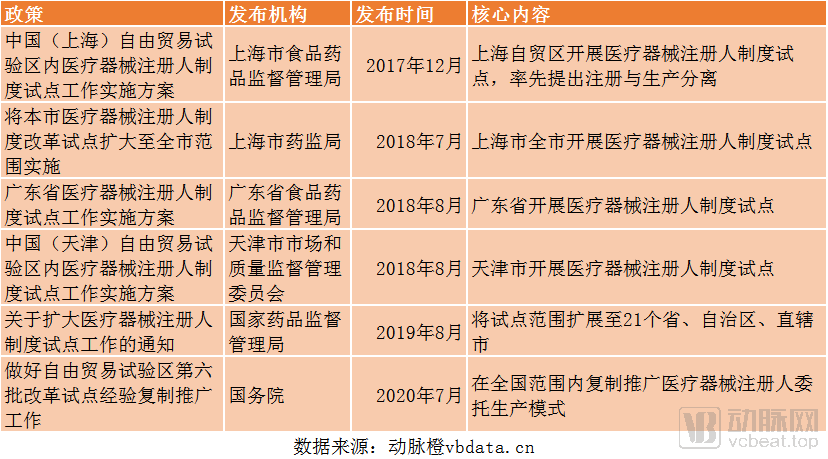
From 2017 to the present, in just three years, the Marketing Authorization Holder (MAH) system for medical devices has been promoted nationwide. This demonstrates the promising results of the pilot programs and underscores the government’s determination to advance this system. The nationwide implementation of the MAH system for medical devices will have a significant impact on the medical device industry.
The Medical Device Registrant System Disrupts the Medical Device Industry
The medical device registrant system allows applicants for medical device registration to include entities such as medical device companies, R&D institutions, researchers, and physician experts, thereby stimulating innovation and entrepreneurial enthusiasm in the medical device industry.
This system allows medical device registrants to outsource production to multiple qualified and capable enterprises, greatly facilitating the technological transfer for researchers and institutions with R&D capabilities, and promoting the translation of scientific achievements and the market launch of innovative products.
The Medical Device Registrant System requires registrants to assume full responsibility for product quality throughout the entire lifecycle of medical devices, including design and development, clinical trials, manufacturing, and after-sales service. This system not only promotes industry development but also clarifies the rights and obligations of registrants, thereby facilitating effective oversight by regulatory authorities.
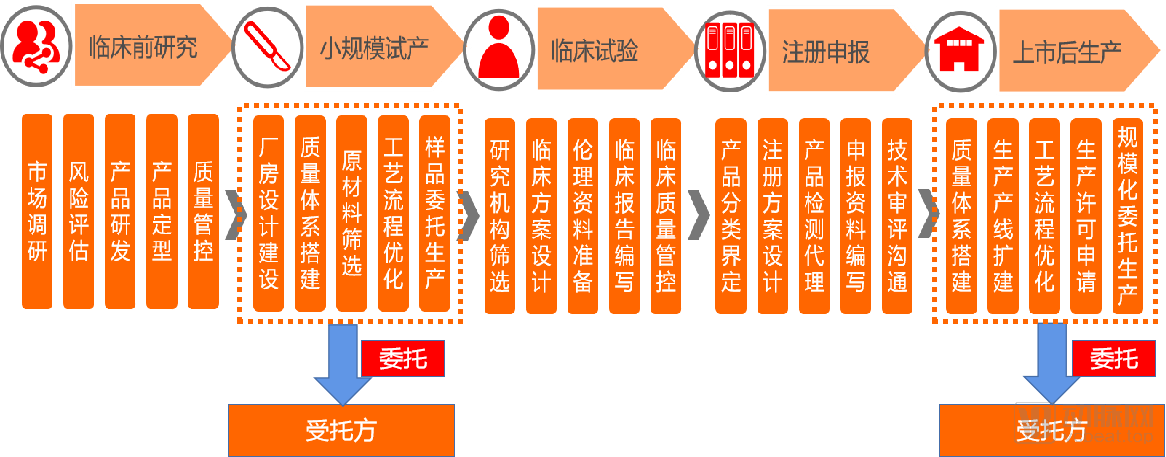
(Manufacturing Processes for Medical Devices and Intervention Points in Contract Manufacturing)
The regulations on the contract manufacturing model under the Medical Device Registrant System have promoted refined division of labor within the industry. This system allows registrants to engage multiple contract manufacturers, eliminating the necessity for enterprises to build their own production facilities. As a result, companies specializing in R&D can focus solely on research and development, while those adept at manufacturing can concentrate on production, significantly improving the utilization efficiency of industry resources and providing substantial support for corporate innovation and industrial upgrading. Furthermore, the contract manufacturing model will foster more refined division of labor and collaboration between medical device R&D institutions and manufacturing enterprises in certain niche sectors, thereby optimizing the allocation of industry resources.
“Unbundling” Medical Device Registration from Production Lowers Industry Entry Barriers. Under the Marketing Authorization Holder (MAH) system for medical devices, capital, entrepreneurs, and social resources can enter the medical device industry more easily. This not only expands the market size of the medical device industry but also improves resource utilization efficiency.
A Detailed Explanation of the Contract Manufacturing Model for Medical Device Registrants
Prior to the implementation of the Medical Device Registrant System, the contract manufacturing model required both the entrusting party and the entrusted party to hold production licenses for similar products. As shown in the figure below, the entrusting party must engage an enterprise that possesses both the registration certificate and the production license for similar products. However, enterprises capable of manufacturing similar products are generally competitors. Furthermore, since both parties already hold production licenses for similar medical devices, their hardware and software resource allocations tend to be similar, thereby reducing the necessity and feasibility of contract manufacturing arrangements.
Under the Medical Device Registrant System, medical device registrants may either manufacture products themselves or entrust production to one or more enterprises. In entrusted production, qualified contract manufacturers may directly commence manufacturing, or they may apply for a Medical Device Production License based on the letter of authorization from the registrant, thereby engaging in contracted manufacturing. As a result, contract manufacturers are not required to hold a Medical Device Registration Certificate to engage in production, truly achieving the separation of the Registration Certificate from the Production License. This facilitates optimal allocation of industry resources and enables enterprises to focus on their core competencies.
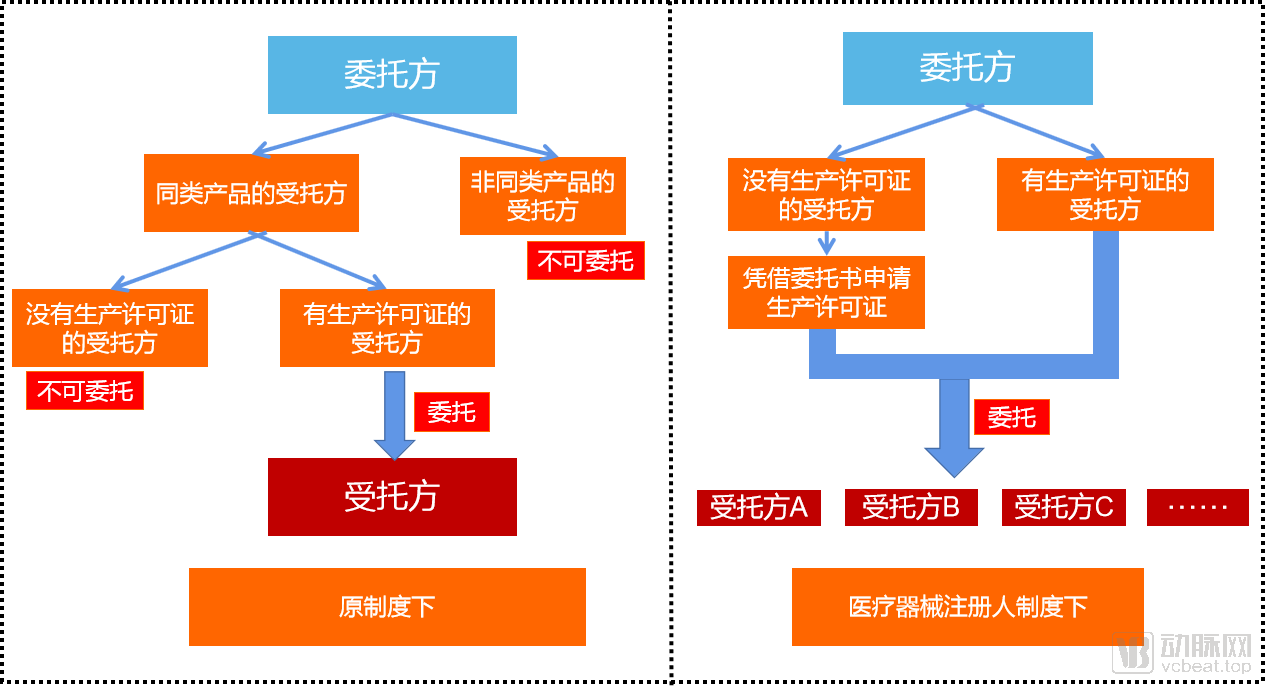
(Comparison of Entrusted Production Models Before and After the Implementation of the Medical Device Registrant System)
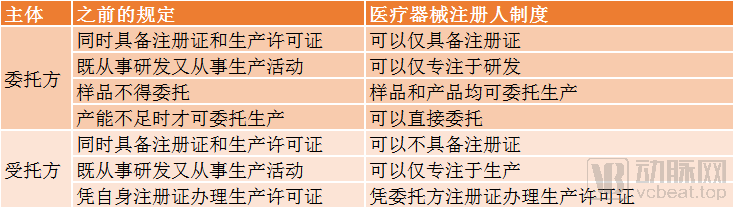
Under the Medical Device Registrant System, the entrusted production model has undergone significant changes. A comparison of the entrusted production model before and after the implementation of the Medical Device Registrant System is as follows:
With the nationwide promotion of the outsourced production model for medical device registrants, industry attention has gradually shifted to the Regulations on the Supervision and Administration of Medical Devices. The Regulations are currently undergoing revision and are highly likely to be released in the second half of this year. The primary objective of this revision is to incorporate the Medical Device Registrant System into the Regulations, thereby establishing its legal status. Once the system is codified in the Regulations and officially promulgated, the Medical Device Registrant System will have legal backing, facilitating its smoother implementation across China.
Over the past year, numerous cases of contract manufacturing have emerged in the market. VCBeat has collected relevant news and found that contract manufacturing services are primarily provided by three types of enterprises: first, production subsidiaries within corporate groups; second, third-party medical device service providers exploring CDMO (Contract Development and Manufacturing Organization) businesses; and third, existing original equipment manufacturers (OEMs) in the market.
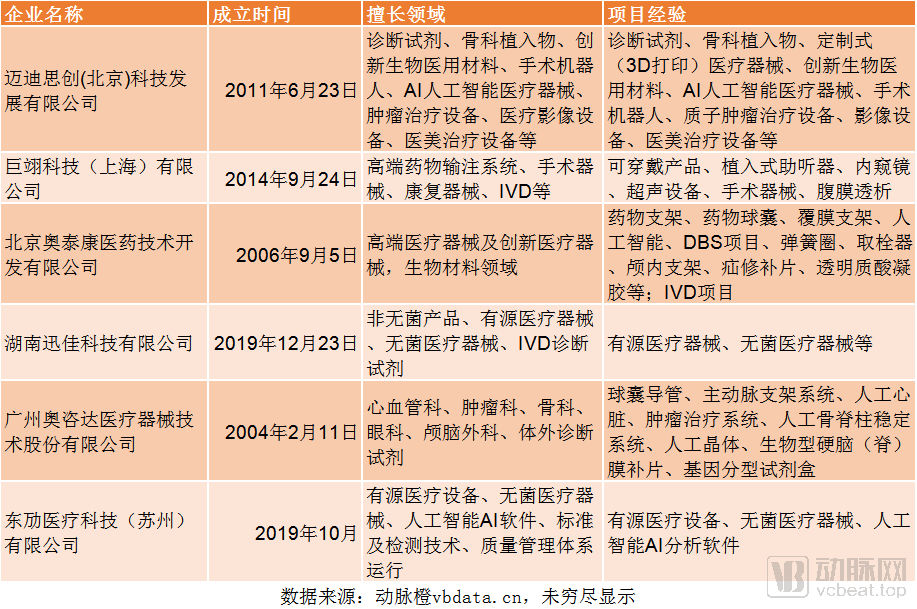
Intra-group contract manufacturing typically does not accept commissions from other external enterprises; therefore, it is not compared with CDMO platforms or contract manufacturers. WhereasCDMO Platforms vs. Contract Manufacturers: Distinct Advantages and Differences
Zhao Kangxi, Executive General Manager of Qingtong Capital, stated: “A CDMO platform is not merely a contract manufacturing concept; it also provides services such as R&D support, clinical trial design, regulatory submissions, and compliance consulting. While contract manufacturers excel in cost control, the advantage of a CDMO platform lies in its ability to deliver professional services throughout the entire lifecycle of medical devices.”
Hu Hongping, co-founder of Xunjia Technology, also agrees with this view. “The difference between a CDMO platform and a contract manufacturer lies in the ‘D,’ which stands for development. CDMO platforms typically also provide CRO services, while placing greater emphasis on customized manufacturing, thereby enhancing their competitiveness. The Xunjia Technology CDMO platform focuses more on helping companies obtain regulatory approvals in a compliant and expedited manner, shortening the time required to bring products from concept and R&D design to market launch. It provides enterprises with full-lifecycle services covering products, corporate operations, and capital.”
Cao Changqing, General Manager of Juyi Technology, added, “The relationship between a CDMO platform and its clients is not merely one of simple outsourcing; rather, it is a partnership characterized by complementary strengths, in-depth collaboration, mutual binding, and transparent communication throughout the product’s entire lifecycle.”

(Differences Between CDMO Platforms and Contract Manufacturers; table by VCBeat)
For example, as an industrial solution provider equipped with big data on the medical device industry and a 3C industrial platform, Ozda’s service case for Kaiyao Biotech intuitively demonstrates the advantages and focus of its CDMO platform. Kaiyao Biotech is a medical device developer specializing in neonatal jaundice treatment, with its core product being the neonatal blue light phototherapy unit. After gaining a thorough understanding of the 3C R&D and Intelligent Manufacturing Center under Ozda Medical Device Services Group, Kaiyao Biotech decided to establish its operations at the Ozda CDMO platform located in the Shenzhen Yinxing Industrial Park. Furthermore, Kaiyao Biotech relocated its R&D personnel from Hong Kong to the Ozda CDMO platform and entrusted the entire process of R&D translation, regulatory submission, and mass production to the Ozda CDMO platform.
On May 14, 2020, Ozda secured the registration certificate for Kaiyao Biotechnology’s neonatal blue light phototherapy device. Within the following month, it obtained the Medical Device Production License and commenced large-scale production. This marks another registration certificate achieved by Ozda’s 3C Industry Platform under the Marketing Authorization Holder (MAH) system.
Under the Medical Device Registrant System, Kaiyao Biotech is no longer burdened with the operational pressures of managing assets such as production equipment, personnel, and facilities, allowing it to focus on product R&D and significantly reduce costs. Meanwhile, Kaiyao Biotech has outsourced all activities—including laboratory R&D, small-scale pilot production, mass production finalization, quality control, product testing, clinical evaluation, product registration, and large-scale manufacturing—to the Allmed Shenzhen CDMO platform, thereby accelerating time-to-market and saving substantial time.
Intra-group Contract Manufacturing
Based on cases from the past year, contract manufacturing within corporate groups has accounted for a significant proportion, with large medical device enterprises being the first to benefit from policy dividends.
For example, Gage Biotechnology (Shanghai) Co., Ltd. intends to entrust Gage Biotechnology (Suzhou) Co., Ltd. with the production of intracranial coils; Suzhou MicroPort Spinal Trauma Medical Technology Co., Ltd. intends to entrust Suzhou MicroPort Joint Medical Technology Co., Ltd. with the production of percutaneous vertebroplasty systems; Suzhou Weikang Medical Device Co., Ltd. has entrusted all 36 of its products to Jiangsu Weikang Jiejing Medical Device Co., Ltd. for production; and Jiangsu Blumsense Medical Device Co., Ltd. has accepted commissioned production orders from four subsidiaries for a total of 76 stapler products.
These are all cases of intra-group contract manufacturing. Intra-group contracting can reduce internal resource waste, improve utilization rates, minimize unnecessary corporate expenditures, and enable more rational allocation of resources and talent within the group.
In late July, Nanjing Daily reported that as of July 20, 2020, the Jiangsu Provincial Medical Products Administration had completed 38 filings for contracted manufacturing under the pilot program for the Marketing Authorization Holder (MAH) system for medical devices, with a total of 57 enterprises participating in the pilot. The majority of these arrangements involved intra-group contracted manufacturing, primarily because this approach mitigates the risk of core technology leakage and facilitates the implementation of contracted production.
In fact, since the pilot program for the Medical Device Registrant System was expanded, intra-group contract manufacturing has gained increasing recognition, benefiting large medical device enterprises. By helping these companies reduce costs, the Medical Device Registrant System will enable them to allocate more resources to research and development, brand building, and marketing, thereby driving the development of the medical industry.
Contract Manufacturing for Third-Party Service Providers of Medical Devices
The Medical Device Registrant System inherently promotes the development of medical device CROs/CDMOs; its contract manufacturing model expands the business scope of the medical device CRO industry, thereby indirectly enlarging the market size of the sector.
Compared with in-house manufacturing, contract manufacturing can help companies reduce costs, mitigate risks, and accelerate time-to-market. Cao Changqing, General Manager of Juyi Technology, stated, “On one hand, CDMO platforms possess relative advantages in integration and scale, granting them strong negotiating power, which helps lower material and production costs through enhanced supply chain management. On the other hand, CDMO platforms can help companies manage supply chain risks, avoiding disruptions to product launches and delivery schedules caused by issues such as raw material procurement failures or end-of-life (EOL) components.” Therefore, to better compete in the market, an increasing number of medical device companies are adopting contract manufacturing as a strategic choice.
Since the expansion of the pilot program for the Medical Device Registrant System, multiple medical device CRO companies have explored CDMO services, evolving into medical device CDMO platforms. Currently, all CDMO platforms provide contracted manufacturing services; some focus on pre-market sample production, others on large-scale post-market production, while some offer end-to-end support throughout the entire market launch process for medical devices.
For example, Medisino’s current CDMO model focuses on pre-market sample production. Founded in 2011, Medisino has accumulated a decade of experience in the CRO sector, providing one-stop pre-market services for medical device products, including testing agency services, regulatory submission, and clinical trial research. In 2018, Medisino expanded into the CDMO business, offering medical device companies services such as R&D translation, pre-registration manufacturing, and the establishment and guidance of quality management systems.
Recently, Medisun was commissioned by a medical device company in East China to provide R&D guidance, sample production, quality management system establishment, and CRO services for the “Pepsin Detection Kit” CDMO project. Dong Binzhe, Chairman of Medisun, stated, “With our support, the medical device company does not need to build its own factory during the registration application phase, nor does it need to purchase all R&D, production, and testing equipment. It also avoids the need to assemble large teams for procurement, R&D, production, quality control, and regulatory submission at the early stage of the project, significantly reducing its capital investment. Meanwhile, the company directly produces samples on Medisun’s CDMO platform, which has a comprehensive quality management system. This eliminates the need to apply for a manufacturing license for a self-built factory and shortens the time-to-market, thereby helping the company save costs while achieving and expanding revenue sooner.”
Juyi Technology focuses on providing pre-market R&D and post-market large-scale compliant manufacturing services. Cao Changqing, General Manager of Juyi Technology, stated, “We have a client that engages in cross-provincial contracted manufacturing. Initially, the client maintained a small factory at a high cost but lacked experienced engineering management talent, leading to issues with its quality management system. After entrusting production to Juyi Technology’s CDMO platform, the client ensured product manufacturing quality without increasing costs, reduced compliance and product quality risks, and received support for the R&D and upgrading of next-generation products. This is because Juyi Technology’s CDMO platform boasts a mature management system, as well as seasoned professionals in R&D, engineering management, and quality management system oversight.”
The case of Monit Medical entrusting production to the Xunjia Technology CDMO platform further illustrates the benefits that the contract manufacturing model brings to medical device companies. Monit Medical is a medical device developer specializing in hemodynamics, with its core product being a non-invasive continuous blood pressure monitoring system; its parent company is based in Zhejiang Province. After learning about Hunan Province’s regulations on the Marketing Authorization Holder (MAH) system for medical devices, the company decided to establish its operations in Hunan. Previously, Monit Medical would have needed to build its own production facility. However, under the MAH system, it can directly outsource production to the Xunjia Technology CDMO platform. This approach allows Monit Medical to avoid the costs associated with constructing a factory and assembling a related management team, while also saving time on facility construction. With production handled directly by the Xunjia Technology CDMO platform, the product can reach the market earlier, enabling faster revenue generation.
Du Xiaodong, Chairman of Monite Medical, stated, “Establishing our own factory and building a team would require an investment of at least RMB 4 million. The funds saved can now be allocated to product research and development as well as market expansion, which is of significant benefit to us as an early-stage enterprise. In terms of time savings, constructing our own facility involves both construction time and the time required for regulatory on-site inspections, with the entire process expected to take at least six months. In contrast, contract manufacturing allows production to commence immediately, or the CDMO platform can begin production within one month after obtaining the necessary production license.”
Thus, it is evident that engaging CDMO platforms for contract manufacturing will facilitate smoother and more rapid development for domestic start-up medical device companies.
Contract Manufacturing for Medical Device OEMs
Contract manufacturers of medical devices can be described as the earliest entities to accept commissioned production. Today, under the Medical Device Registrant system, their customer base is expected to gradually expand due to the absence of a requirement for holding a medical device registration certificate.
In 2019, Bobang Fangzhou signed a contract manufacturing agreement with Yizhuang Futaijing Precision Electronics (Beijing) Co., Ltd., a wholly-owned subsidiary of Foxconn Group, under which the latter would be responsible for raw material inspection, production process control, and batch release for Bobang Fangzhou. Bobang Fangzhou is a national high-tech enterprise that has developed a non-invasive glucose monitor capable of estimating blood glucose levels in adults without breaking the skin. It is reported that Bobang Fangzhou is striving to include its collaboration with Foxconn in the first pilot batch of the Medical Device Registrant System administered by the Beijing Medical Products Administration.
From Bobang Fangzhou’s perspective, the contract manufacturing model facilitates capacity expansion while keeping costs under control. Furthermore, entrusting production to renowned medical device contract manufacturers ensures product quality and mitigates risks. The robust supply chain capabilities of these established contract manufacturers can also help reduce the company’s product costs.
On the other hand, the core of Bobang Fangzhou’s products lies in its algorithms. The assembly of hardware products is outsourced to contract manufacturers, which saves significant human, material, and financial resources. In terms of intellectual property, Bobang Fangzhou only needs to ensure the security of its algorithms, thereby eliminating concerns about plagiarism or imitation by other companies.
Despite the popularity of the outsourced manufacturing model for medical device registrants and the growing number of cases, it is undeniable that certain pain points still exist in conducting outsourced manufacturing operations at the current stage.
From a policy perspective, the Medical Device Registrant System does not explicitly stipulate requirements for researchers and clinicians to directly hold registration certificates, which has prevented a large-scale surge in medical device innovation and constrained the scale of contracted manufacturing. Furthermore, as the Medical Device Registrant System has not yet been incorporated into the Regulations on the Supervision and Administration of Medical Devices, contracting parties remain somewhat concerned.
Dong Binzhe from Medisino stated, “With the inclusion of the Medical Device Registrant System in the Regulations, industry standards will be established through a clear and unified regulatory framework across China. This will clarify ambiguous areas in the current system regarding cross-regional entrusted manufacturing, cross-regional registration applications, and cross-regional supervision. Meanwhile, it will allow regional registrant systems to move beyond their ‘pilot’ status, effectively resolving regulatory bottlenecks in the industry and revitalizing resources across all regions of China.”
In the early stages of implementing the CDMO system, it can significantly address two key industry challenges: reducing corporate costs and increasing the success rate of product market launches. Dong Binzhe believes that confirming the Marketing Authorization Holder (MAH) system through top-level design in the form of supervisory and administrative regulations will more effectively consolidate these outcomes. As various resources across China enter the market under unified rules, a larger supply-and-demand ecosystem will emerge. Sponsors will be able to select from a broader pool of qualified contractors nationwide, while no longer needing to worry about regulatory uncertainties associated with cross-regional outsourcing. Consequently, outsourced R&D and manufacturing activities are expected to grow substantially, naturally leading to an increase in the number of successful projects. Once the number of successful projects reaches a critical mass, the CDMO model will gain widespread industry acceptance, fully demonstrating its advantages. Outsourced R&D and manufacturing will become integral components of the medical device industry’s development, generating greater economic and social benefits.
From a regulatory perspective, cross-regional supervision of medical devices remains in the pilot phase and has not yet been implemented nationwide. Notably, in 2019, Shanghai, Jiangsu, Zhejiang, and Anhui jointly explored new mechanisms for inter-provincial industrial transfer, divestiture and restructuring, innovation clustering, and information-based regulation. This initiative will foster extensive collaboration across provincial innovation and industrial chains, fostering specialized and large-scale medical device industry clusters. The cross-regional regulatory pilot in the Yangtze River Delta region is expected to be rolled out nationwide, which will significantly promote the innovative development of China’s medical device industry.
In terms of business development, medical device companies are often reluctant to engage third-party service providers due to concerns about the leakage of core technologies and intellectual property (IP), which is another reason why intra-group contracting is favored. In fact, third-party professional service institutions, such as medical device CDMO platforms, have already developed solutions to address this issue. Cao Changqing from Juyi Technology stated, “Contracting and being contracted is essentially a matter of trust. One of the core competencies of third-party professional service institutions is their credibility, derived from the comprehensive protection of the client’s rights. To address clients’ concerns, we have established a robust IP protection system that has been reviewed by the clients’ specialized patent attorneys and has currently gained recognition from multiple multinational medical device giants and domestic innovative enterprises.”
MediThink has also established an intellectual property (IP) protection system and offers additional recommendations. “Clients can sign IP protection agreements with the platform, or engage different specialized service providers for various stages of the process to reduce the risk of core technology leakage. For material-based medical device products such as diagnostic reagents and high-value consumables, in addition to formulating strict commercial agreements to define the rights, responsibilities, and interests of both parties, clients need to maintain control over the supply chain—particularly core raw material suppliers—and master the core manufacturing processes. During collaboration with the platform, clients can safeguard core technical aspects, such as product materials and composition, through measures like internal enterprise coding systems and the use of their own personnel for critical operations.”
According to CDMO platforms, many medical device companies have already engaged in contract manufacturing, and each CDMO platform currently has a sufficient client base. This indicates strong market demand for contract manufacturing services, while the limited number of CDMO platforms has yet to trigger intense competition.
It is understood that the Regulations on the Supervision and Administration of Medical Devices are currently undergoing revision, with a high probability of being promulgated in the second half of this year. A major task of this revision is to incorporate the Marketing Authorization Holder (MAH) system for medical devices into the Regulations, thereby establishing its legal status.
The Medical Device Registrant System has been incorporated into the Regulations on the Supervision and Administration of Medical Devices. Dong Binzhe, Chairman of Medisino, believes this will bring disruptive changes to the industry's development.
First, there is currently insufficient innovation in China’s medical device sector, and enterprises lack sufficient motivation for product innovation. Under the Medical Device Registrant system, innovative projects led by clinicians, experts, and researchers in medical engineering will be more readily commercialized, thereby accelerating innovation in the medical device industry.
Second, under the Medical Device Registrant System, innovative enterprises can focus on research and development by outsourcing regulatory affairs, registration, clinical trials, manufacturing, branding, and sales to corresponding third-party professional service providers within the industry. This is expected to foster a specialized outsourcing market for each stage of the medical device lifecycle, from R&D to market launch, thereby truly realizing the principle of “letting professionals handle their respective areas of expertise.”
Third, the Medical Device Registrant System has lowered the barriers to innovation and entrepreneurship. Startups are no longer required to build their own manufacturing facilities, which reduces capital investment and creates more opportunities for growth.
Fourth, the Medical Device Registrant System is expected to leverage China’s vast market, robust industrial supply chain, and progressively improving regulatory and intellectual property protection frameworks to attract more and higher-quality international R&D and manufacturing centers for innovative technologies to establish operations in China.
Cao Changqing, General Manager of Juyi Technology, added, “Establishing the Medical Device Registrant System at the legal level will provide a statutory basis for the industry, ensuring that laws are both available and strictly enforced. Incorporating the Medical Device Registrant System into the regulations will accelerate the nationwide implementation of related policies in China, thereby promoting the development of the medical device CRO sector and the broader medical device industry.”
Du Xiaodong, Chairman of Monit Medical, stated, “Incorporating the Medical Device Registrant System into the regulations will enhance resource utilization. It will become common practice for groups to entrust production internally and for device manufacturers to outsource to third-party professional service providers. This will significantly reduce resource waste within the industry, and the resulting cost reductions will further promote corporate development.”
The inclusion of the Medical Device Registrant System in the regulations will drive the development of the medical device CRO industry. So, how will medical device CRO/CDMO companies develop in the future?
First, the market size for medical device CROs/CDMOs will gradually expand, penetration rates will continue to rise, and industry requirements for these service providers will become increasingly stringent. Zhao Kangxi, Executive General Manager of Qingtong Capital, stated, “As regulatory oversight of medical devices becomes stricter, demand among medical device companies for third-party professional services is growing stronger, which will significantly boost the penetration rate of CRO/CDMO services in the medical device sector. Meanwhile, China’s medical device industry still has substantial room for development, indicating significant growth potential for the medical device CRO/CDMO industry.”
Secondly, the medical device CRO/CDMO industry will evolve toward upstream services, with expanded engagement in R&D and design. By extending services upstream and integrating CDMO with CRO capabilities, companies can broaden their business scope, enhance value influence, increase revenue, and simultaneously raise the technical barriers for medical device CRO firms.
Furthermore, medical device CRO/CDMO companies will move towards informatization to continuously improve efficiency. For example, CRO firms can leverage information technology to better conduct services such as statistical data processing and data analysis. Zhao Kangxi stated, “Informatization is a tool that can help CRO companies enhance personnel efficiency and strengthen their competitive moats.”
Finally, medical device CRO/CDMO companies will adhere to the principle of not developing their own branded products. Cao Changqing, General Manager of Juyi Technology, stated, “As a credible third-party professional service provider, one of the core values of a CDMO platform lies in its third-party status. If a CDMO platform were to launch its own branded products similar to those of its clients, it would cause irreparable damage to the entire industry. Therefore, as a CDMO platform, we should focus on providing third-party services and continuously deliver new value to our clients; otherwise, without clear boundaries, the CDMO platform would lose its ethical baseline.”
Special Acknowledgments:
Dong Binzhe, Chairman of Medisino
Zhong Zhihui, Managing Director of Ozda Medical Device Services Group
Zhao Kangxi, Executive General Manager of Qingtong Capital
Cao Changqing, General Manager of Juyi Technology
Hu Hongping, Co-founder of Xunjia Technology
Du Xiaodong, Chairman of Monit Medical
Qiu Zan, Chairman of Bobang Fangzhou
(The above ranking is in no particular order)