

Liankong Yijia Enhances Online-Offline Integration for Over 300 Hospitals with 'Smart·Online' Platform Ahead of IPO Filing
Between February and March of this year, the COVID-19 pandemic hindered the delivery of offline medical services, while epidemic prevention and control needs drove public hospitals to accelerate the establishment of internet hospitals. According to a list of internet hospitals compiled by VCBeat from publicly available sources—including information from health commissions at all levels and mainstream media reports—146 internet hospitals were established between January and April of this year, 110 of which were public hospitals.
In Shanghai, Huashan Hospital, Zhongshan Hospital, Renji Hospital, Ruijin Hospital, and other medical institutions urgently launched online hospitals in the aftermath of the outbreak. During this critical period, there was limited time available for back-end development of these online hospital platforms.

At the “Liankong Yijia 2020 Product Launch and Liankong Network’s Fifth Anniversary Celebration,” Hou Wenzhong from the Information Center of Huashan Hospital Affiliated to Fudan University stated, “Our hospital obtained the license for an internet hospital on February 27. To meet the medical consultation demands during the pandemic, the internet hospital needed to go live on March 1, leaving us only three days for launch.”
Following preliminary research, Huashan Hospital selected Liankong Network as one of its vendors for the construction of an internet hospital. Together, they explored and developed features such as online consultation and prescription, medication delivery, and online medical insurance payment. Finally,Huashan Hospital’s Internet Hospital Went Live at Record Speed After Just Three Days of Development, ranking third in the indicator rankings of internet hospitals in Shanghai.
As a provider of one-stop technology and operational solutions for “medical + internet” services to multiple hospitals in Shanghai, the Linkong Network team resumed work on the third day of the Lunar New Year during the pandemic, partnering with 16 tertiary hospitals in Shanghai, including Huashan Hospital, to facilitate the rapid launch of their internet hospitals.
The pandemic accelerated the development of internet hospitals, further validating Linkong Network’s assessment of trends in this sector.
Kuang Hua, CEO of Liankong Network, believes that industries across the board are currently undergoing a transition from traditional organizations to digital ones, and hospitals are no exception. Future hospitals will undoubtedly be characterized by the integration of online and offline services and full-scenario intelligence.
Through continuous exploration, Linkong Network has gradually developed a comprehensive solution for smart healthcare across all scenarios: leveraging its core, high-barrier intelligent payment capabilities as the entry point, it launched the Linkong Yijia series of products to provide hospitals with internet-based services such as mobile payments, process optimization, brand management, and online medical care, thereby helping hospitals improve diagnostic and treatment efficiency and optimize the allocation of medical resources.
Currently, Linkong Network collaborates with over 300 medical institutions, achieving a customer coverage rate of more than 70% in the Shanghai region. Linkong Network is a core healthcare service provider for Alipay and a key partner of WeChat, UnionPay, Industrial and Commercial Bank of China (ICBC), Agricultural Bank of China (ABC), Bank of China (BOC), China Construction Bank (CCB), China Merchants Bank (CMB), Bank of Communications, Bank of Shanghai, MYbank, Ping An Insurance, and Alibaba Cloud.
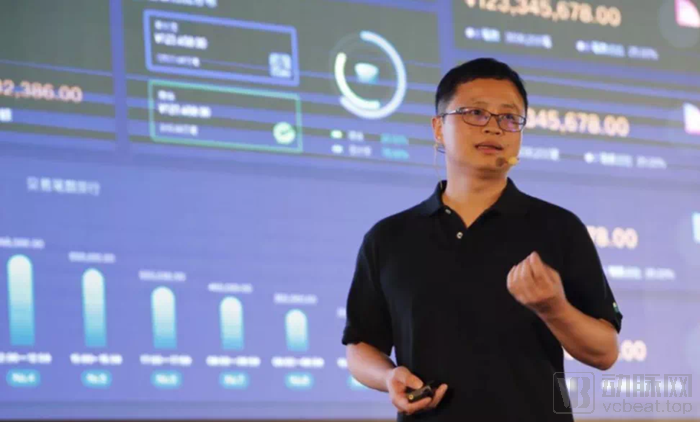
Liankong Network’s strategic roadmap for smart healthcare can be summarized as: breakthrough at a single point, coverage across three dimensions, and upgrades in two major spaces.
A breakthrough refers to VBInsight’s advancement in hospital payment scenarios., the mobilization and intelligentization of payments serve as Liankong Network’s primary stronghold. Liankong Network assists hospitals in implementing self-service settlement for both outpatient and inpatient services. Furthermore, Liankong Network’s full product line supports electronic medical insurance credentials and electronic invoices.
In the healthcare payment market, Liankong Network continues to lead, serving over 300 clients across 23 provinces in China, with more than 5 million monthly transactions and a monthly transaction volume exceeding RMB 1 billion, bringing its cumulative transaction volume to over RMB 20 billion.
Coverage of the three surfaces refers toOutpatient, Inpatient, Internet HospitalIntelligent Coverage Across Three Major Healthcare Scenarios.
In outpatient settings, leveraging “unattended” solutions, patients can use electronic medical cards to connect the entire healthcare journey online, enabling hospital-wide access with just a smartphone.
In the past, the digitalization of inpatient care has always lagged behind outpatient service development.Meanwhile, Liankong Network has expanded its unattended solutions from pilot programs to full-scale deployment, with application scenarios extending from outpatient services to inpatient care.In the inpatient setting, an unattended service model eliminates the need for patients to queue at service windows for admission procedures, inpatient account top-ups, discharge settlements, wristband printing, and report inquiries. Instead, these tasks can be easily completed through the integrated use of mobile devices and self-service kiosks.
In the internet hospital scenario, Linkspace Network helps hospitals rapidly deploy online follow-up consultations, e-prescriptions, medication delivery, and online consultation services. Building upon health advisory, online diagnosis and treatment, and e-prescription services, it enables comprehensive quality supervision and traceability certification across the entire online service workflow. By integrating with third-party medication delivery and remote medical consultation services, it streamlines the patient care journey and promotes the deep integration of healthcare services with the internet.
Kuang Hua, founder of Liankong Network, stated, “The pandemic accelerated the rapid development of the online economy. Many internet hospitals in Shanghai were launched within one to two months, and we achieved the largest market share in internet hospital construction in Shanghai. However, the pandemic also posed significant challenges. Tasks ranging from online consultation solutions and online epidemiological investigations to internet hospital development, as well as the integration of electronic medical insurance credentials and electronic invoices, all had to be completed within just two to three months. This was highly demanding and tested our team’s execution capabilities and technical strength.”
He also candidly stated:The development of internet hospitals has undergone rapid iteration and evolution in just a few years. We are still continuously exploring what can be achieved by integrating the internet with hospital services. However, our core focus remains clear: how to leverage existing medical resources to achieve online-offline synergy, optimize the allocation of medical resources, and truly enhance the operational capacity and value of hospitals through internet hospitals.
In the next phase, LinkAir Network believes that hospitals will encompass two distinct spaces: one is the intelligent transformation of traditional physical hospital spaces, and the other is the online virtual hospital space. Addressing the intelligent evolution of these two spaces, Kuang Hua also proposed LinkAir’s product development strategy for the next phase at this press conference:Intelligent · Online.
The first step in intelligent transformation is to leverage technological means to integrate the entire chain of healthcare services, launching features such as appointment scheduling, patient navigation, online payment, and post-consultation follow-up. This enables patients to benefit from message-driven and intelligent task-flow-driven interactions, thereby lowering barriers to accessing care and achieving comprehensive support for smart healthcare across all scenarios.
Taking the Tenth People’s Hospital of Shanghai, Tongji University as an example, patients can now leverage internet technology to achieve remote appointment registration. Upon arrival at the hospital, they receive real-time, mobile-based guidance through the care process. All notifications are delivered directly to users, enabling a closed-loop healthcare journey on their devices. This transforms what was once a single-purpose tool into a comprehensive service guide that covers the entire patient experience.
“Step two: Liankong aims to collaborate with more partners in the future to intelligently transform hospitals’ physical spaces, ranging from self-service kiosks and smart service areas to hospital-wide intelligent healthcare environments. This will enable patients to be perceived and reached as soon as they enter the hospital, ensuring seamless matching with existing medical services.”
In the Liankong solution, “intelligence” will be manifested in a comprehensive smart healthcare environment that spans from smart service zones to 5G-enabled smart medical spaces. Built upon handheld workstations, integrated service areas, and self-service IoT all-in-one devices, this ecosystem encompasses M:N facial recognition surveillance, AI-assisted medical care, smart healthcare applications, intelligent workstations, and digitalized operations.
In the future, Liankong Network will also explore the remote collection of patients' physiological signs by integrating technologies such as smart sensing and IoT data acquisition, further promoting the development of new models of smart medical services and building an integrated online-offline smart medical service information platform.
In addition to physical spaces, another major dimension of future hospitals will be the establishment of online virtual hospitals, also known as internet hospitals. As of June, since the outbreak of the COVID-19 pandemic, internet-based healthcare has played a unique role in epidemic prevention and control. Shanghai has cumulatively provided 30,000 internet medical consultation and treatment services, receiving positive public feedback. This demonstrates that internet hospitals will play a significant role in the overall healthcare system in the future.
Liankong Network believes that the functions of internet hospitals within medical institutions should not be limited to online consultations. The development of internet hospitals should not be isolated from physical hospitals; rather, the two should be closely integrated. “Online” signifies the comprehensive digitization of healthcare processes and services, encompassing online payments, streamlined workflows, digital service delivery, and telemedicine.
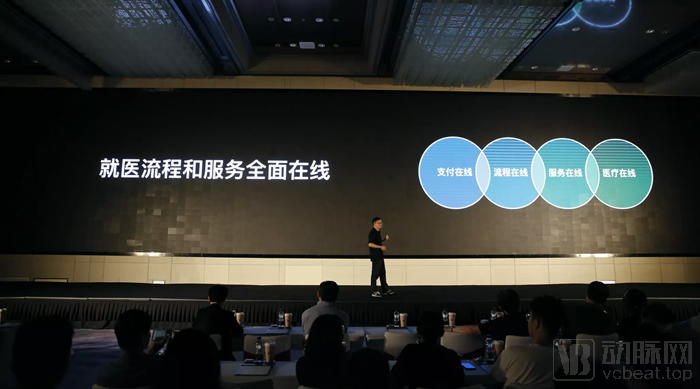
Kuang Hua stated, “In the future, hospitals’ online and offline operations should achieve full synergy and integration. When patients complete tasks online, they should be able to transition seamlessly to offline services; likewise, data generated from offline processes should flow smoothly into online systems. Therefore, we have introduced the theme of ‘online’ with the aim of enhancing the overall fluidity of hospital services through the integration of both channels. Only through comprehensive digitalization can we achieve more efficient coordination of medical resources, making it easier for patients to access healthcare services.”
With the issuance of internet hospital licenses and the inclusion of internet-based medical services in the national health insurance system, substantial policy breakthroughs have been achieved in the development of internet hospitals, ushering in a period of rapid growth. In terms of technical readiness, LinkSpace Network has established a unified user system capable of meeting hospitals’ needs for integrated online and offline infrastructure.
“Previously, the development of hospital outpatient and inpatient services, as well as internet hospitals, was carried out in silos. Patients accessed online consultations and offline services through separate channels, leaving the two systems isolated. Under our unified user system, however, patients need to register only once to seamlessly access outpatient, inpatient, and internet hospital services, achieving true integration of online and offline care.”
The pandemic not only drove a surge in traffic to internet hospitals, but as epidemic prevention and control entered a normalized phase, the development of internet hospitals has gained greater support. Policy initiatives will promote more standardized and unified construction of internet hospitals, leading to improved services and industry scale-up.
Looking ahead to the development of internet hospitals, Kuang Hua pointed out: “The starting point for building internet hospitals is individual public hospitals. In the current development process, the key issue to address is how to transition from a formalistic approach to a substantively operable model. During this transition, it is essential to fully integrate online and offline medical resources. In the future, the virtual space of internet healthcare will achieve cross-regional coordination; however, at present, internet hospitals have not yet established an operable model, and cross-regional models still face numerous bottlenecks that need to be overcome. Therefore, at this stage, it is crucial to determine how to truly realize substantively operable internet hospitals.”