

Sequoia China's Digital Health Investment Unveiled: Backing Four Unicorns in a Trillion-Yuan Market

HongShan
Business Consulting, Enterprise Management Consulting Investment Institutions
Sequoia Capital, a top-tier firm, is frequently emerging as a leader across major investment rankings.
In the recently released “2020 Hurun Global Top 100 Most Active Unicorn Investors,” Sequoia Capital once again topped the list, having invested in one-fifth of the world’s unicorns, thereby reaffirming its position as the most successful unicorn investment firm globally.
Of greater note, the recently released “2019–2020 Investment Competitiveness Rankings in the Pharmaceutical and Healthcare Sector” shows that HongShan, which has backed numerous industry leaders in the mobile internet era, has also made a strong showing in this specialized niche, underscoring the firm’s deep strategic footprint in the healthcare vertical.
In fact, Sequoia has never hidden its interest in the integrated development of digital technology and healthcare. During this year’s Two Sessions, Neil Shen, Global Executive Partner of Sequoia Capital, submitted five proposals, three of which were related to healthcare. In his proposals, he called on healthcare institutions to prioritize the application of big data and artificial intelligence, adopt a balanced approach to investing in both “hard” infrastructure and “soft” capabilities, and leverage digitalization and informatization to enhance the overall supply capacity of China’s healthcare system.
To some extent, the pandemic has thrust the interaction and integration of digital technology with the healthcare industry into the spotlight. According to Zhou Kui, Partner at HongShan, the pandemic is driving the public to “pay greater attention to health, doctors, and medical care,” while also accelerating the depth of societal reflection and the pace of industrial progress.
Of course, for HongShan, the story of digital health was not written today, as it had already built its industrial ecosystem before the industry entered the public eye.
By deconstructing the digital health portfolio of this leading investment firm, one can gain insight into the full trajectory of China’s healthcare industry development and identify potential future directions for the digital health sector.
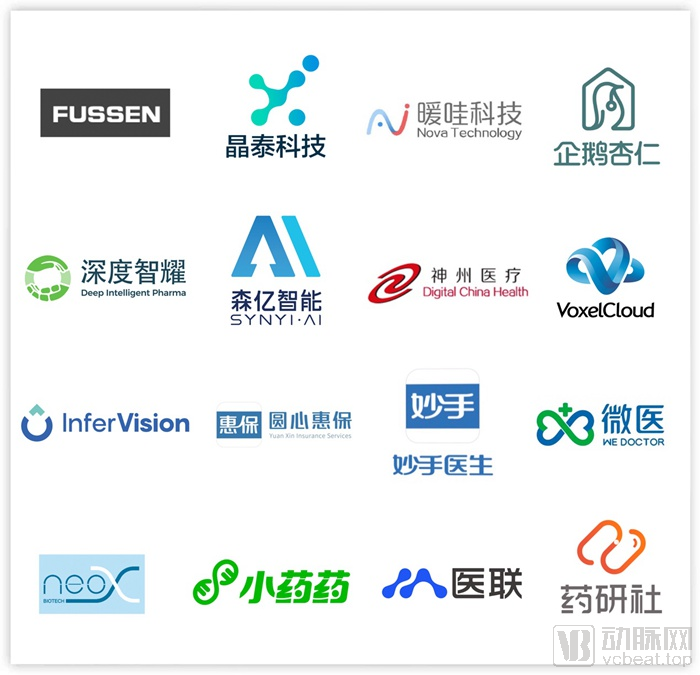
Some Companies in the Digital Health Sector Invested by HongShan
The integration of digital technology and the healthcare sector is not a recent phenomenon. Traces of medical informatization were already visible in the 1980s, but it was not until the second decade of the 21st century that new technologies saw broader application in the medical field. The release of innovative vitality has, to some extent, resulted from a “convergence” of policy and technology.
In October 2013, the State Council issued the "Several Opinions on Promoting the Development of the Health Service Industry," which clarified the connotation of the health service industry, mainly including medical services, health insurance, and supporting industries such as pharmaceuticals, medical devices, and health supplements. By 2020, a health service industry system covering the full life cycle, with rich content and a rational structure, was to be established. At that time, the total scale of the health service industry would reach over 8 trillion yuan.
HongShan began building its ecosystem in the digital health sector as early as 2013. A review of its investment trajectory reveals that this leading venture capital firm has consistently advanced along two intertwined paths: policy reform and technological innovation. Its investment strategy serves as a microcosm of China’s healthcare reforms and advancements in medical technology.
Public information shows that between 2014 and 2015, HongShan successively completed Series A investments in Medlinker, Penguin Almond, and Yuanxin Technology. Zhai Jia, Managing Director at HongShan China Capital, once remarked that “the product’s entry point was very sharp” when investing in Medlinker, a platform building an internet-based network for physicians. This statement, in fact, reflected HongShan’s key judgment on China’s mobile healthcare sector at the time: physicians are the most critical node in the entire healthcare ecosystem, and securing their engagement means capturing the most pivotal element.
Riding the tailwinds of favorable policies, these companies have rapidly grown into unicorns over the past few years. Taking WeDoctor as an example, HongShan first took notice of the company in 2007, when it was still known as “Guahaowang” (Registration Network) and its business model differed from what it is today. It was not until 2015, with HongShan’s support, that WeDoctor streamlined its business lines and established its current strategic focus. According to official data from WeDoctor, as of March this year, the company operates 12 physical medical institutions and 22 internet hospitals, has connected with more than 7,200 hospitals across China, and serves over 240,000 physicians and 200 million users.
Nevertheless, the market still holds significant growth potential for such enterprises. According to Forrester Research, visits to virtual healthcare services were projected to surge to 1 billion in 2020.
By seizing the starting point of the innovation chain—the digitalization of healthcare services—HongShan followed this trajectory upstream along the industrial chain. In the process of startups driving the digital upgrade of physical hospitals, it identified a batch of high-potential medical big data companies, including Shenzhou Medical and Senyi Intelligence. Subsequently, AI applications naturally emerged from these data platforms, as exemplified by the imaging AI services provided by Infervision and VoxelCloud.
As time has progressed, the process of pharmaceutical reform has continued to advance. In October 2017, the General Office of the Communist Party of China Central Committee and the General Office of the State Council jointly issued the “Opinions on Deepening the Reform of the Review and Approval System to Encourage Innovation in Drugs and Medical Devices,” further exploring institutional reforms such as the establishment of a drug patent linkage system.
HongShan’s pharmaceutical strategy follows two distinct paths. Upstream, its exploration of the innovation chain continues to extend into areas such as the drug supply chain, new drug regulatory submissions, and clinic operations. Among these, YaoYaoYao, which has since grown into a unicorn, effectively applies digital technologies to optimize the drug supply chain, creating positive value through enhanced efficiency and thereby earning HongShan’s favor. Also within HongShan’s purview are Yaoyanshe, which assists pharmaceutical companies with new drug registration and regulatory filings, and Fisen Technology, which improves the operational efficiency of dental clinics through its SaaS platform.
In another strategic avenue, HongShan has chosen to delve deeper into the foundational layers of drug R&D, acquiring stakes in three AI-driven pharmaceutical companies—XtalPi, DeepPharmTech, and Xingkangyuan—which can provide critical support for accelerating new drug development from the ground up.
Opportunities for renewal have emerged over the past two years. As life expectancy continues to rise, there is a rigid demand for health insurance products covering medical consultations, diagnoses, and medications. HongShan has successfully invested in tech companies in the health insurance sector, such as Nuanwa Technology and Yuanxin Huibao.
At this point, the systemic ecosystem network built by HongShan, with digital technology as its foundation and anchored by four major pillars—digital medical services, digital pharmaceutical distribution, digital health insurance, and digital health management—has begun to take shape. Throughout this process, HongShan has invested in more than ten leading companies, including four unicorns. This strategic layout has spanned over a decade, yet HongShan China still believes that the story is just beginning.
Yang Yunxia, Managing Director at HongShan China Fund, stated that precision medicine is leading the way toward the digitalization of life. Centered on genetic technologies and big data, it provides predictive capabilities, diagnostic assistance, and personalized treatment methods for traditional healthcare, representing the direction of the healthcare sector in the coming years.
In June 2020, Yuanxin Technology completed its Series D financing. HongShan has participated in every round of its financing journey, from the angel round to the present.
At the end of 2014, He Tao resigned from Jianyi.com and received a call from HongShan the very next day. At that time, he had hardly any formulated business logic, let alone a product model; all he had was his extensive resume built over more than ten years in the healthcare and pharmaceutical industries. Previously, he had progressed from pharmaceutical sales to grassroots hospital management, and then spearheaded the digital transformation of Huayuan Pharmacy, turning it into the leading enterprise in pharmaceutical e-commerce at the time. In 2015, He Tao officially founded Yuanxin Technology, with HongShan serving as its angel investor.
In fact, HongShan’s investments in the digital health sector share certain common characteristics: most begin at Series A and are followed by continuous additional funding. This pattern also applies to its investment in Wang Shirui, founder of Medlinker.
When making early-stage investments, HongShan creates a “founder profile.” Zhai Jia recalls that the core assessment of Wang Shirui at the time was that his strengths and weaknesses were both pronounced: “He has a deep medical background, strong market intuition, and accurate strategic positioning, but his shortcomings are also evident—he is very young and lacks any independent entrepreneurial experience.” Nevertheless, HongShan ultimately chose to support him.
What merits investigation is: What were the core criteria that guided HongShan in making the aforementioned decision? Zhai Jia referenced another company and its recently released data.
At the “2020 World Artificial Intelligence Health Cloud Summit,” Zhang Shaodian, founder of Synyi AI, introduced the company’s end-to-end smart hospital comprehensive solution, stating that it could help medical staff at tertiary A hospitals save 600 working hours per month, while achieving a 37% reduction in costs for the diagnosis and treatment of deep vein thrombosis.
Using Yuanxin Technology, Medlinker, and Senyi Intelligence as examples, Zhai Jia elucidated the core values underpinning HongShan’s strategic investments in the digital health sector—a domain that demands meticulous, long-term effort—namely, “doing things that create social value” and “backing founders built for the long haul.”
It is evident that most entrepreneurs chosen by HongShan possess dual backgrounds in both digital technology and healthcare, while investors also need to have a keen sense of technology alongside an in-depth understanding of the medical field. From this perspective, HongShan China’s ability to secure high-quality projects at a high density in the digital health sector is largely a victory driven by internal synergy.
“Having backed half of the internet sector,” HongShan’s investment track record in the TMT space is widely recognized, yet its healthcare investment team has remained relatively out of the public eye due to the industry’s specialized nature. In fact, over the past four years, HongShan has seen 17 of its portfolio healthcare companies go public, spanning subsectors such as immunotherapy, gene sequencing, cell therapy, in vitro diagnostics (IVD), and high-value consumables.
Drawing on investment insights from both sectors, HongShan effectively integrates the TMT team’s acute sensitivity to digital technologies with the healthcare team’s medical expertise, creating a unique investment advantage in cross-disciplinary fields that remains out of reach for many other firms. In fact, this is merely the tip of the iceberg regarding HongShan’s internal synergies. As the venture capital industry shifts toward deep value excavation, the value of its internal collaboration is demonstrating distinct competitiveness.
Today, HongShan’s digital health industry ecosystem has completed its foundational infrastructure. As Zhai Jia noted, innovation will naturally emerge from the industrial chain; what investors need to do is maintain sufficient patience.