

Oak Street Health Surges 104.14% on NYSE Debut, Betting Big on Personalized, Precision Care for High-Risk Patients

Oak Street Health
Healthcare Service Provider
VCBeat learned that healthcare company Oak Street Health listed on the New York Stock Exchange on August 6, 2020 (U.S. time). The company issued a total of 15.6 million shares at an offering price of $21 per share. The stock opened at $42.50, surging as much as 104.14%. The IPO raised a total of $328 million, valuing the company at $9.541 billion.
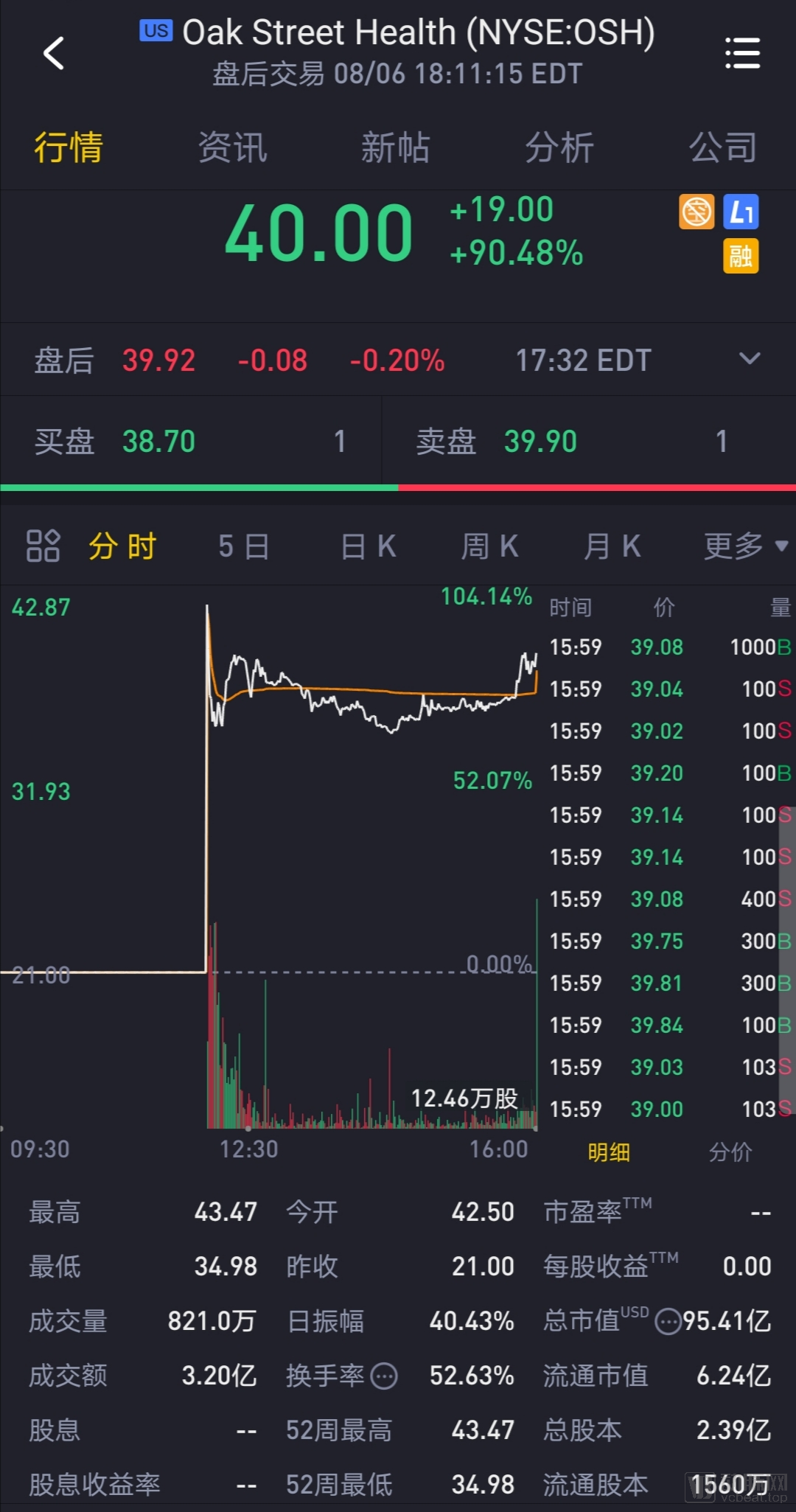
Image source: Tiger Brokers
Oak Street Health, founded in 2012 and headquartered in Chicago, Illinois, is dedicated to building personalized primary care centers. The company is driven by a mission to rebuild healthcare.Focusing on innovative healthcare delivery models, prioritizing quality of care over volume, and assuming full financial risk for patients.
As disclosed in the prospectus, Oak Street Health currently operates across 13 markets in eight U.S. states—Illinois, Michigan, Indiana, Pennsylvania, Ohio, Rhode Island, North Carolina, and Tennessee—and has established more than 50 primary care health centers.
The funds raised from this listing will be used to repay a portion of the company's borrowings, in addition to other purposes.Oak Street will primarily be used to expand the company’s operational scale, broaden its business lines, and hire more employees to grow its patient base.
As of early April this year, Oak Street Health has provided advanced medical care services to approximately 85,000 patients. Oak Street Health also plans to continue expanding its healthcare center model by the end of this year, extending into several states including Texas, New York, and Mississippi.
“Oak” Culture: Delivering Personalized Precision Medical Care Services
Oak Street Health’s care centers are located in areas that are relatively less affluent, have lower-quality medical services, suffer from unmet healthcare needs, and incur high levels of medically unnecessary spending. Its target audience primarily focuses on individuals eligible for Medicare.Medicare is a government health insurance program provided by the U.S. federal government for individuals aged 65 and older, as well as those under 65 with long-term disabilities.
At Oak Street, approximately 65% of patients are classified as critically ill and often present with multiple comorbidities. These patients require careful and precise medical care plans. Oak Street adjusts its billing based on the types of diseases, disease severity, and the specific care plans provided to these patients. For the remaining 35% of patients, whose conditions are managed through relatively conventional care approaches with less complex treatment plans, Oak Street adopts a fee-for-service payment model.
However, the company stated that although the fee-for-service population accounted for approximately 35%, its contribution to the company’s total revenue was less than 1%.Oak Street Health derives the majority of its revenue by providing personalized, precision medical care services to high-risk patients.
Mike Pykosz is the co-founder and CEO of Oak Street Health.He holds a master’s degree from Harvard University. Mike aims to transition traditional, passive, and episodic healthcare services through Oak Street Health toward proactive and comprehensive care. This model of care is built on an entirely new framework dedicated to delivering high-value services and achieving high-quality care, rather than focusing on the volume of patients served.
Mike stated that despite the United States spending more on healthcare than any other country, the quality of care for American seniors remains suboptimal to this day. Oak Street Health is rebuilding healthcare on demand, striving to deliver higher-quality care at lower costs, significantly improving patients’ physical and psychological experiences, ensuring they feel comfortable, satisfied, and happy, and enabling them to be discharged in good health.
Oak Street Health’s team has cultivated an “Oak” culture, focused on creating exceptional patient experiences, driving clinical advancement, fostering innovation, and radiating positive energy. This embodies the vision and mission of Oak Street Health.
Not yet profitable; high market satisfaction.
Oak Street Health’s operating funds are primarily derived from equity sales, service revenue from patients, and debt financing.
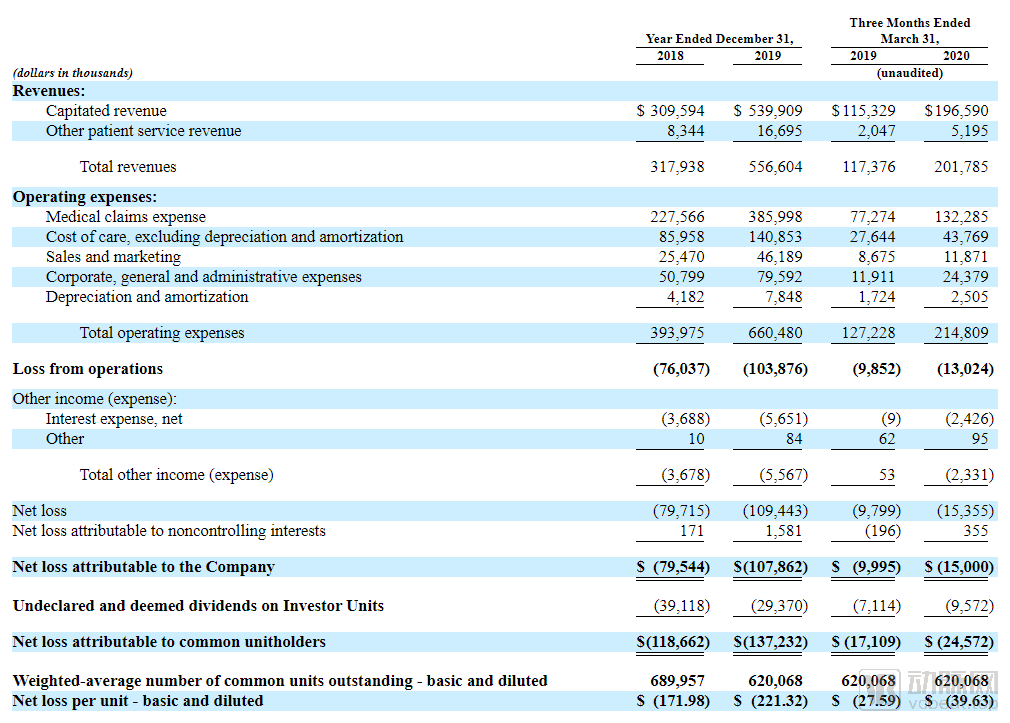
Oak Street Health IPO Prospectus Screenshot: Revenue Data for the Past Three Years
According to the prospectus, Oak Street Health’s revenues in 2018 and 2019 were $318 million and $557 million, respectively, representing a year-over-year growth of 175.2%. In the first quarter of 2020, Oak Street Health reported revenue of $200 million, compared with $117 million in the same period of the previous year, a year-over-year increase of 170.9%.
However,Oak Street Health has not achieved profitability since its inception.As of March 31, 2020, Oak Street Health had an accumulated deficit of $369.4 million.In 2018 and 2019, Oak Street Health reported operating losses of $76.04 million and $104 million, respectively; in the first quarter of 2020, Oak Street Health’s operating loss was $13.02 million, compared with an operating loss of $9.85 million in the same period of the previous year.
Oak Street Health advocates for personalized healthcare services based on service quality. Although its customer base has generally expressed high satisfaction during their experience, the model has only recently been promoted, leaving the majority of the public in a wait-and-see phase, with market acceptance yet to be improved.As Oak Street Health continues to promote this model of care and receives strong market feedback from its highly satisfied customer base, significant untapped market potential remains for the company to explore.
Currently,Oak Street Health’s business model has been recognized by multiple well-known investment firms.Numerous investment institutions have extended olive branches, hoping to secure a share of this market. As medical standards continue to improve, public expectations for the quality of healthcare services are bound to reach new heights. Personalized precision medicine is undoubtedly the major trend shaping the future development of the healthcare industry.
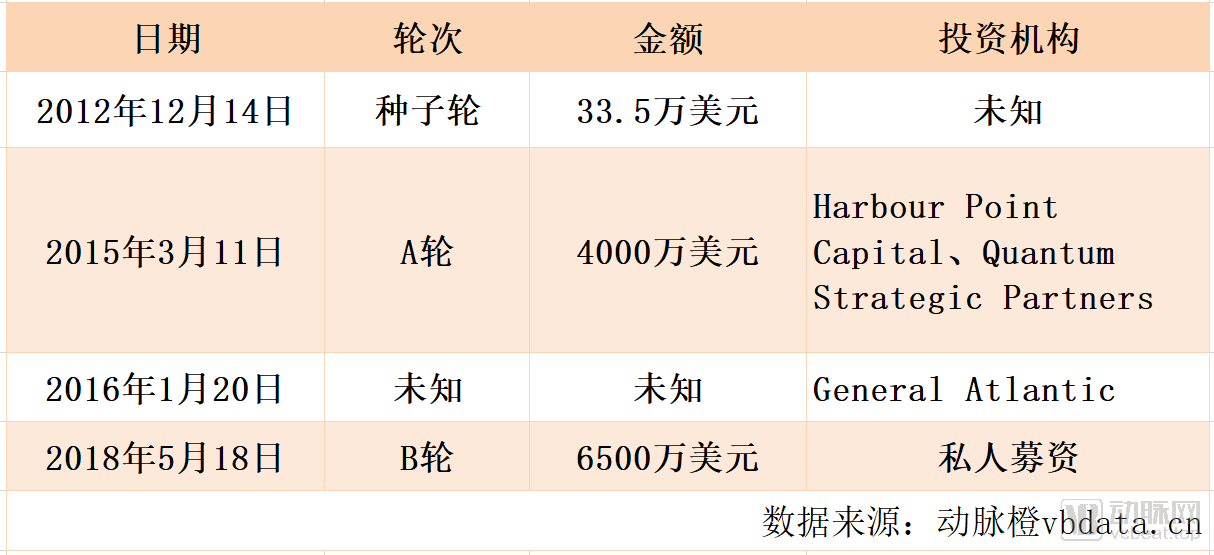
Oak Street Health’s Historical Financing
Oak Street Health stated that, as of 2018, there were approximately 60 million Medicare beneficiaries in the United States, with nearly 10,000 individuals becoming eligible for Medicare each day. This translates to a potential population of roughly 27 million Medicare-eligible patients. U.S. healthcare spending reached nearly $3.6 trillion in 2018, while Medicare expenditures exceeded $700 billion in 2019. Oak Street Health estimates that this market size could reach approximately $325 billion.
Oak Street Health’s medical centers operate somewhat like retail establishments; these community-based centers have implemented branding and consumer-centric designs to create a welcoming environment that encourages patient engagement. Leveraging their community presence, Oak Street provides comprehensive, personalized healthcare services to patients in the surrounding areas.
Located near patients’ residences with convenient transportation access, the healthcare center creates a warm and welcoming internal environment. Multilingual staff members are available to guide patients, while regular educational sessions and community activities are held to foster effective communication and mutual support among patients. Oak Street Health not only provides medical care services focused on patients’ physical health but also fully considers the beneficial impact of mental well-being on physical health.
Multidisciplinary Care Team: Providing Comprehensive Care for Every Patient
Oak Street Health’s primary care centers are staffed with robust care teams comprising clinical informaticians, clinicians, nurse practitioners, and medical assistants.
Among them, clinicians specialize in patient care models and tailor personalized precision medicine plans for patients, while a large number of nurse practitioners and medical assistants are responsible for providing comprehensive patient care and delivering various basic medical nursing services.
At Oak Street Health, the nursing team maintains a relatively high nurse-to-provider ratio. This staffing model is designed to enable nurses to assume greater responsibility for patient care, thereby allowing clinicians to focus primarily on developing and reviewing personalized precision medicine care plans, discussing care models for critically ill patients, and conducting in-depth analyses of high-risk patient populations.
The nursing team holds daily meetings to discuss the treatment plans for each patient scheduled to be seen that day, and conducts weekly and monthly planning and review sessions for the most critically ill patients to assess their clinical progress and determine the next steps to improve their health outcomes.
Each care team is assigned a limited number of patients, with the aim of ensuring optimal care quality and patient experience. Care delivery models are diverse, including in-person visits, telehealth consultations, remote patient monitoring, and home-based care.
Internally Designed Algorithms for Intelligent Analysis of Patient Risk Factors
To ensure that every patient receives attentive and high-quality care, Oak Street Health has also introduced AI technology and the Canopy software platform.Canopy utilizes an internally developed algorithm from Oak Street Health to analyze multiple patient risk factors, stratify patients based on their risk of experiencing urgent events, identify high-risk patients with special needs beyond primary care, and provide multidisciplinary interventions to improve outcomes and reduce care costs.
Building on Canopy analytics, Oak Street Health creates tailored, personalized care plans for patients., determining the ideal frequency of primary care visits and disease-specific program utilization to precisely schedule patient care plans, thereby achieving seamless integration between patients’ required care plans and the virtual and in-person care delivered by care teams. This is a key factor in the success of the Oak Street Health care model.
Oak Street Health’s care delivery model has transformed the current state of care for Medicare-eligible patients, improving health outcomes and quality of care. It realigns incentives for patients, providers, and payers, enhancing the patient experience while reducing healthcare costs.
Prevention and early intervention are the cornerstones of the Oak Street Health care model
According to statistics from a U.S. study,Of all healthcare expenditures in 2019, approximately 25% were spent on unnecessary services, excessive administrative costs, and other wasteful medical spending, amounting to an estimated $760 billion to $935 billion in annual waste.
Oak Street Health focuses on providing more affordable preventive care to patients, improving their physical health metrics, reducing the incidence of costly emergency care and hospitalizations, and thereby lowering overall healthcare costs.Oak Street Health achieved cost savings and improved profitability while ensuring patient health.
According to Oak Street Health statistics, patients served by the organization visit Oak Street Health more than twice as often as they previously visited their primary care physicians.Prevention and early intervention are the cornerstones of the Oak Street Health care model.
In efforts to provide comprehensive care and manage patient health,Compared with similar Medicare populations not enrolled in Oak Street Health, Oak Street reduced hospitalization rates by approximately 51%, 30-day readmission rates by 42%, and emergency department visits by 51%. Patients enrolled in Oak Street Health centers gave it ratings above 90 out of a possible 100 points.
Oak Street Health delivers high-quality care and a positive customer experience at lower healthcare system costs.
Dr. Griffin Myers, Co-Founder and Chief Medical Officer of Oak Street Health, stated, “Oak Street’s mission can be simply summarized as: keeping our patients happy, healthy, and out of the hospital. We measure and evaluate these three pillars to uphold our commitment. We boast industry-leading patient satisfaction scores, excel in quality metrics for prevention and chronic disease management, and our patients are hospitalized far less frequently than those of non-Oak Street peers.”