

Acutus Medical Surges Nearly 60% on Nasdaq Debut with Innovative Cardiac Imaging System Addressing Complex Arrhythmias
Acutus Medical
Intracardiac Imaging System Device Developer
VCBeat (WeChat ID: vcbeat) has learned that on August 6, 2020, Acutus Medical, a provider of arrhythmia treatment solutions, went public on the NASDAQ. The company issued a total of 7.353 million shares at an offering price of $18 per share. The stock opened at $24.11, surging by nearly 60% at its peak, raising approximately $130 million and achieving a total market capitalization of $653 million.
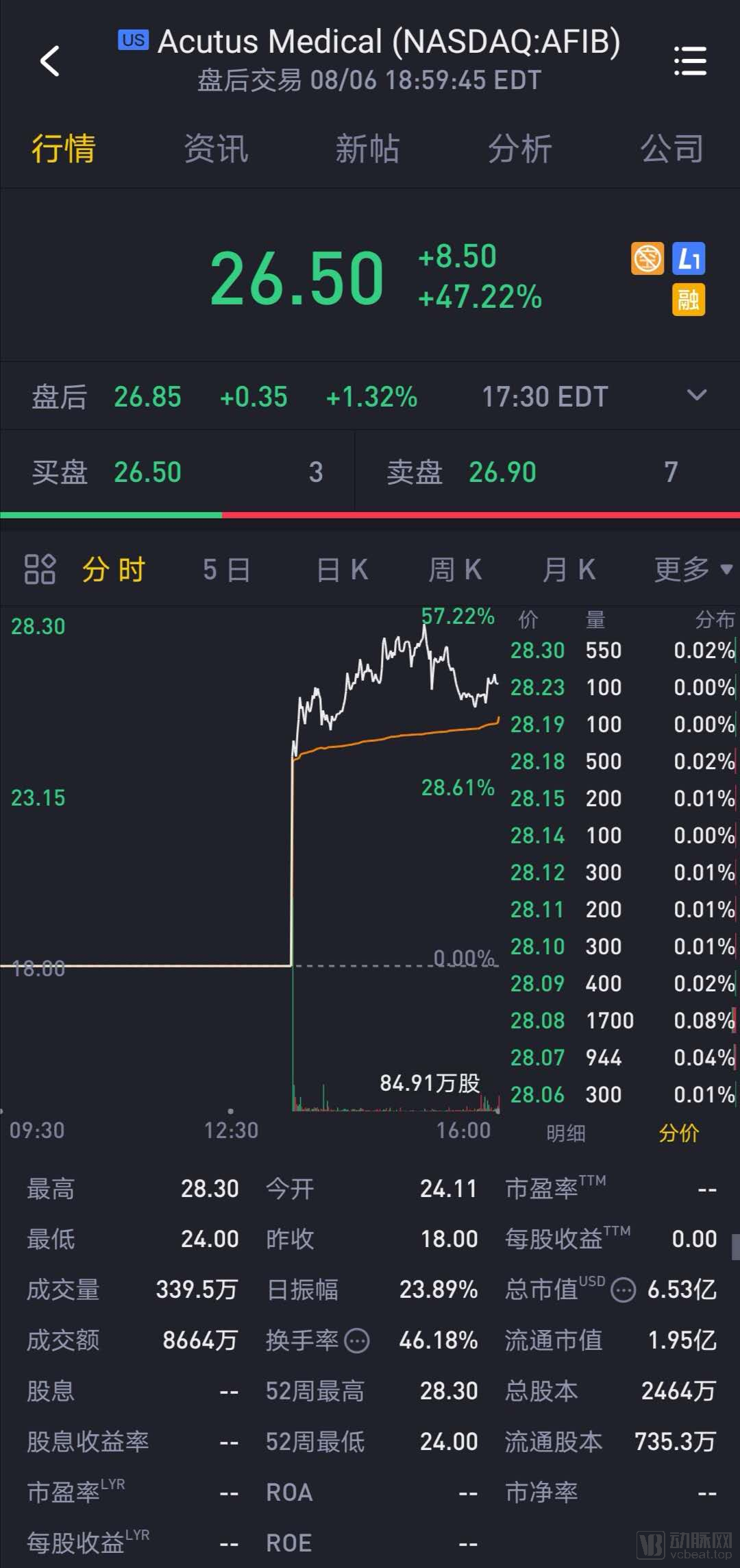
Image source: Tiger Brokers
Acutus Medical, founded in 2011 by Randy Werneth, is a medical technology company focused on developing novel therapeutic solutions for cardiac arrhythmias, with years of dedication to advancements in the field of electrophysiology. Prior to establishing Acutus Medical, Randy Werneth had founded four medical device R&D companies and held senior positions at Medtronic and Edwards Lifesciences, accumulating over 25 years of experience in the medical device industry.
Through product development, acquisitions, and global commercial partnerships, Acutus Medical has established a global sales operation and offers a highly differentiated electrophysiology product portfolio. Acutus Medical has always been committed to providing customers with a comprehensive solution.
As of March 11, 2020, Acutus Medical’s products were sold directly in the United States, Belgium, the Czech Republic, Denmark, France, Germany, the United Kingdom, Italy, the Netherlands, and Switzerland. The prospectus shows that in 2018, 2019, and January–March 2020, 79%, 74%, and 51% of Acutus Medical’s revenue, respectively, came from customers outside the United States. Although this proportion has declined, the international market will remain an important source of revenue for Acutus Medical in the future.
The proceeds from the initial public offering will be primarily used to support the company’s commercial expansion plans, expand its team, and complete all ongoing clinical trials and product research and development.
Cumulative financing exceeds $300 million, fueling product R&D
Acutus Medical’s progress to this point has been inseparable from the outstanding leadership of its management team. Vince Burgess serves as President and CEO of Acutus Medical, bringing over thirty years of experience in product operations and marketing.
Before joining Acutus Medical, Vince Burgess founded Volcano, an imaging system R&D company, and served as its President. Under his leadership, Volcano rapidly grew from an obscure startup into a global enterprise with over 1,000 employees and a market capitalization exceeding $1.2 billion. In 2014, Philips announced the acquisition of Volcano for $1.2 billion.
Dr. Graydon Beatty is the Chief Technology Officer of Acutus Medical, with over 25 years of experience in design and development in the field of cardiac electrophysiology, holding more than 50 patents, and is a recognized expert in the industry.
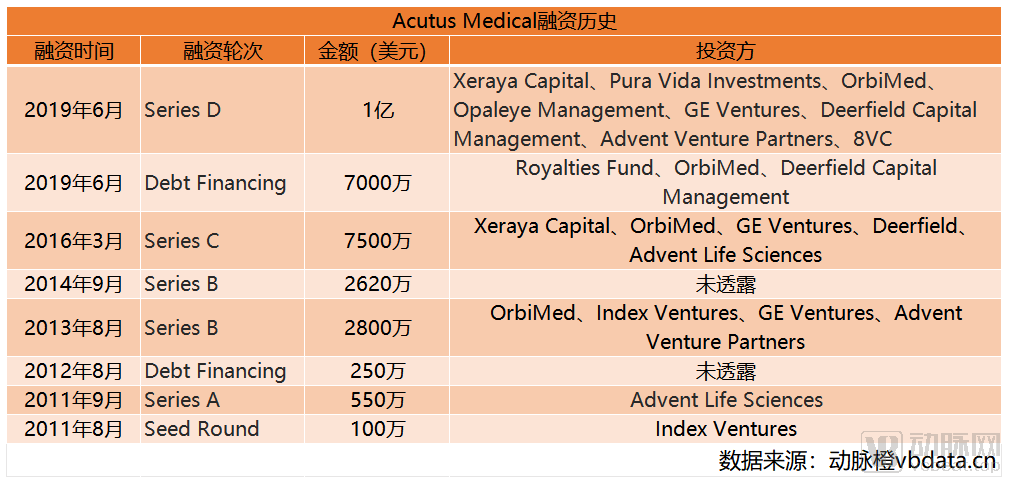
In addition to an excellent management team, ample funding sources can also support corporate development and product R&D. Since its establishment nine years ago, Acutus Medical has completed eight financing rounds, raising a total of over USD 300 million. The largest single round amounted to USD 100 million, secured through its Series D financing completed in June last year.
Addressing the Challenge of Inaccurate Imaging Results in Traditional Cardiac Imaging Systems
Arrhythmia is one of the common conditions in cardiovascular diseases. Any abnormality in the origin site of the heart rate, the heart rate itself, or impulse conduction is referred to as arrhythmia. If not treated promptly, arrhythmia may lead to heart failure and sudden cardiac death.
Relevant data indicate that the global healthcare system spends $21–61 billion annually on the treatment of arrhythmias and related conditions. For most patients with arrhythmias, radiofrequency catheter ablation is the preferred treatment for tachyarrhythmias, characterized by minimal invasiveness, high success rates, and an excellent safety profile. Statistics show that in 2019, approximately 50 million people worldwide suffered from arrhythmias, and about 1.1 million radiofrequency catheter ablation procedures were performed, representing a 13% increase compared with 2016.
Generally, if the lesion can be accurately identified, arrhythmia can be effectively treated; however, postoperative recurrence may still occur in practice. Taking atrial fibrillation (AF) as an example, relevant data indicate that 30%–50% of AF patients who undergo cardiac radiofrequency ablation experience disease recurrence within 12 months after surgery. One contributing factor is that most conventional cardiac imaging and mapping systems currently fail to clearly and accurately localize lesions in complex cases.
Addressing this pain point, Acutus Medical decided to develop its own cardiac imaging system, giving rise to the AcQMap system.
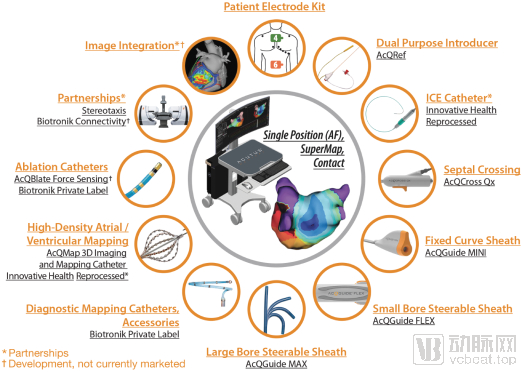
The AcQMap system comprises a single-use AcQMap mapping catheter, a console, a workstation, and proprietary algorithms. The AcQMap mapping catheter collects the required data via 48 ultrasonic transducers distributed among 48 bioelectrodes. It generates real-time 3D images of the ventricles within three minutes without contacting the cardiac chambers, delivering image resolution that is four times higher than that of currently available voltage-based cardiac imaging and mapping systems on the market.
Acutus Medical has established a comprehensive electrophysiology product portfolio, including puncture devices and a full range of products involved in the diagnosis and treatment of arrhythmias. The AcQBlate ablation catheter is scheduled to receive CE certification in the second half of this year.
Plan to cultivate the sales team; currently not yet profitable.
Although Acutus Medical’s products have gained widespread recognition in clinical trials, the company has not yet achieved profitability due to its relatively short operating history, lack of commercialization experience, and absence of a robust marketing team.
According to the prospectus, the company’s net losses after deducting R&D costs, corporate operating expenses, and other expenditures amounted to USD 47.907 million, USD 97.039 million, and USD 18.098 million in 2018, 2019, and the first three months of 2020, respectively.
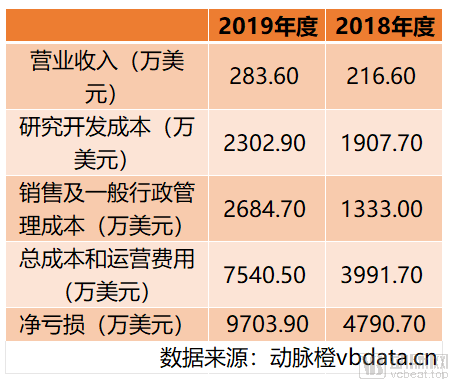
Data shows that Acutus Medical’s R&D investment increased in 2019 compared to 2018, while its sales and administrative expenses rose significantly. It is understood that Acutus Medical is currently building its own sales team, intensifying product marketing efforts, and expanding its customer base.
Currently, Acutus Medical’s primary source of revenue is the sale of disposable device components (primarily mapping catheters, ablation catheters, puncture tools, and other accessories). When the AcQMap system was first introduced to the market, Acutus Medical chose to provide customers with the AcQMap system’s console and workstation free of charge in order to increase product awareness.
Starting from late 2019, Acutus Medical gradually transitioned its promotional model from free-of-charge to fee-based. While no fees are charged for the initial use of the AcQMap system, the key difference is that upon expiration of the trial period, if customers wish to continue using the product, Acutus Medical will enter into purchase agreements with them for the console and workstation.
In May 2020, Acutus Medical entered into a bilateral distribution agreement with Biotronik, under which Biotronik would distribute Acutus Medical’s products (primarily the AcQMap System) in multiple countries and regions, including Germany, Japan, Mexico, Switzerland, and the Asia-Pacific region, to facilitate the market promotion of Acutus Medical’s products.
The development of the AcQMap system faces obstacles from multiple aspects, with the first being that acceptance among experts, hospitals, and physicians remains to be improved.If electrophysiology experts are unfamiliar with AcQMap, they may not recommend that hospitals install the AcQMap system. For most physicians, becoming proficient with a new product requires a significant time investment, and they generally do not readily alter their established diagnostic and therapeutic practices.
Secondly, from a market perspective, Acutus Medical’s products are relatively new and lack long-term data to support their quality.. Currently, Acutus Medical has conducted clinical trials only in a limited patient population. Due to the relatively short time since its market launch, long-term post-market data from customers are not yet available. As preclinical and clinical trial data are susceptible to various interpretations and analyses, clinical data alone may not fully gain recognition from professionals in real-world applications.
Some components of Acutus Medical’s products rely on third-party suppliers, with certain components sourced from a single supplier.. Acutus Medical has not entered into long-term supply agreements with certain suppliers; consequently, any disruptions in the supplier chain during product sales could result in significant losses to Acutus Medical’s business operations.
Due to the impact of the COVID-19 pandemic, certain suppliers of Acutus Medical halted factory operations during the first quarter of 2020, with some even terminating their collaboration agreements, which adversely affected Acutus Medical’s financial and operational performance.
In addition, whether Acutus Medical’s products are covered by insurance plans also affects their market development.. Currently, most products under Acutus Medical are covered by insurance plans from third-party insurers; however, Acutus Medical has not entered into long-term cooperation agreements with these third-party insurers. Acutus Medical cannot guarantee that expenses incurred by patients for surgeries using the company’s products will be reimbursed in the future.
To ensure the steady development of the company, Acutus Medical has formulated the following strategic plans:Leveraging Technology as the Entry Point, and establish cooperative relationships with more enterprises and medical institutions;Develop a Global Market Development Plan, leverage partnerships with collaborators to achieve corporate market expansion; continueExpand the Existing Product Portfolioand broaden the product's indications; continueConduct Various Clinical Trials, backed by extensive clinical data.
Large Enterprises Enter the Fray, Intensifying Industry Competition
Currently, Acutus Medical’s most significant competitors in the electrophysiology field include Abbott, Johnson & Johnson, and Boston Scientific. These companies are all well-capitalized global enterprises that can invest more heavily in product development and marketing, and they possess more robust distribution networks. Consequently, Acutus Medical will face considerable competitive pressure in its marketing efforts.
In addition, the current medical device market is characterized by extensive R&D and rapid technological change. Many medical device companies choose to merge with other enterprises in pursuit of growth. While this poses challenges for Acutus Medical, it also drives the company to strengthen its product portfolio and accelerate its corporate development.
Minimally invasive and precise approaches have always been the focal point in cardiac ablation procedures, with cardiac imaging systems serving as critical tools during surgery. The IPO of Acutus Medical not only demonstrates its capabilities to the outside world but also validates the strategic direction chosen by the company.