

Realmind Biotech Upgrades POCT Technology to Break into Tier-3 Hospitals

RealMind Biotech
Developer and Manufacturer of Innovative POCT Platforms and Specialty Reagent Products
In 2018, the global market size for POCT (Point-of-Care Testing) reached $28 billion, continuing to grow at a compound annual growth rate (CAGR) of 10%. The global POCT market was projected to reach $40 billion by 2022. Due to its later start, China’s POCT market has been growing at a CAGR of 20%, with its market size expected to exceed RMB 20 billion by 2022. In the IVD (In Vitro Diagnostics) sector, per capita spending in China was only $4.6, lower than the global average of $8.5 and significantly below the $25 per capita spending in developed countries. Within the IVD sector, POCT accounted for 13.98% of spending in China, far below the global average of 27.38%. Moreover, the high-end segment of China’s POCT market is firmly dominated by foreign companies.
Amidst changes in domestic policies, the POCT industry has ushered in new transformations.DRG payment reform, the establishment of chest pain centers, stroke centers, trauma centers, critical maternal care centers, and critical pediatric and neonatal care centers across cities and counties in China, along with the implementation of tiered diagnosis and treatment, will drive rapid growth in the POCT market and simultaneously promote the market penetration of POCT devices.
The immense potential of the POCT market, combined with years of industry experience, enabled Dr. Jin Jing to identify significant opportunities and establish Nanjing Renmai Biotechnology Co., Ltd. Dr. Jin believes that the Chinese market will drive a new wave of growth for POCT companies like Renmai, which possess core technologies and are deeply rooted in China.
Renmai Biotech has completed its strategic layout across multiple innovative technology platforms, including fully automated chemiluminescence POCT, compact chemiluminescence POCT, and droplet-controlled POCT. Among these, Renmai Biotech prioritizes the MCL60, a fully automated chemiluminescence POCT instrument, primarily targeting the high-throughput point-of-care testing market in medium-to-large hospitals.
MCL60 has obtained the medical device registration certificate and is primarily targeted at tertiary hospitals. Several tertiary hospitals have already expressed interest.Jin Jing believes that POCT devices have historically been predominantly distributed in hospitals below the tertiary level because most POCT products utilize immunochromatographic technology, which fails to meet the testing accuracy requirements for clinical use in tertiary hospitals.
Some manufacturers are seeking breakthroughs by promoting the miniaturization of chemiluminescence instruments, even launching single-test small-scale chemiluminescence platforms. However, when faced with the massive specimen volume in departments of tertiary hospitals, these single-test small-scale chemiluminescence systems often fall short. There is a greater need for a fully automated POCT solution that combines high precision, high throughput, and compact design.
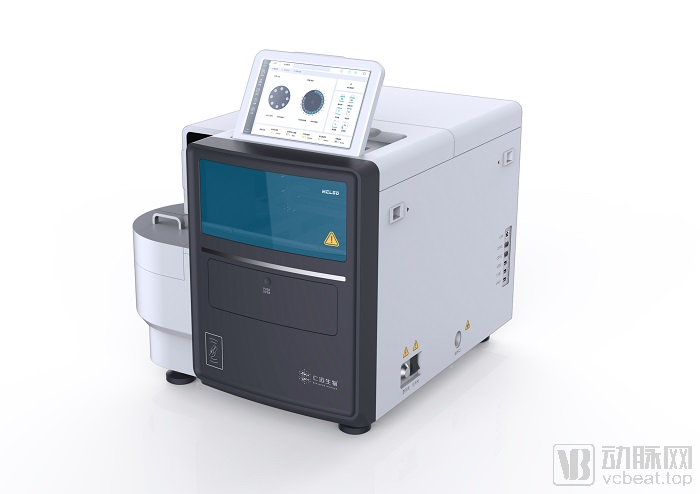
In light of this, Renmai Biotechnology has launched the MCL60 Fully Automated Chemiluminescence POCT, a point-of-care testing solution better suited for tertiary hospitals, with the following advantages:
Precision: 50-fold increase in sensitivity and 5-fold improvement in precision compared to fully automated immunochromatographic POCT.
Based on magnetic particle acridinium ester direct chemiluminescence; precision ≤3%, sensitivity up to 2 pg/mL; correlation coefficient with Roche clinical data, the gold standard, exceeds 0.99
Convenience: No manual sample loading required; no frequent manual reloading of reagents/consumables.
Footprint width of only 0.5 meters; 20 sample positions for direct loading without wait time; 50–100 test kits, with 8 refrigerated reagent positions
High Efficiency: Industry-leading efficiency per unit area.
Throughput per unit area = 433 tests/m²/hour; Testing speed: 144 tests/hour, first result in just 12 minutes; Reaction cuvettes and reagent kits support continuous, non-stop replenishment
Renmai Biotechnology’s digital droplet-controlled POCT μDC 800 adopts a new technology applied in life sciences in recent years—electrowetting technology. By employing this technology,Resolved the challenge of simultaneous detection of more than 10 indicators, which was difficult to achieve with previous microfluidic products.. In a single-test scenario, the μDC 800 can perform multiplex testing for over 20 indicators. During sample collection, the μDC 800 requires only a single peripheral blood sample of 1–2 μL.
In addition to the aforementioned features, Renmai Biotech’s digital droplet-controlled POCT μDC 800 has also achieved a significant reduction in per-test cost.Compared with traditional microfluidic products, digital droplet microfluidic products do not require fluidic pathways such as micropumps and microvalves, resulting in lower sample consumption and faster thermal transfer.
Digital microdroplet control products are also suitable for tertiary hospitals. The testing scenarios in tertiary hospitals are relatively complex; in addition to high-volume testing, there are scenarios involving small sample sizes that require urgent simultaneous multi-parameter testing, such as allergen screening.μDC 800 “MicroDrop Control” POCT enables combined multi-analyte panels for allergens, autoimmune markers, and more, delivering rapid results in clinical testing and fully meeting tertiary hospitals’ needs for point-of-care simultaneous multi-analyte testing with micro-volume samples.
Renmai Bio’s fully automated chemiluminescence immunoassay analyzer, the ACL2800, features a compact design, stability, and versatility. The device is currently deployed in numerous medium-to-large hospitals and health examination institutions, including the General Hospital of the Eastern Theater Command and Shandong Provincial Hospital.
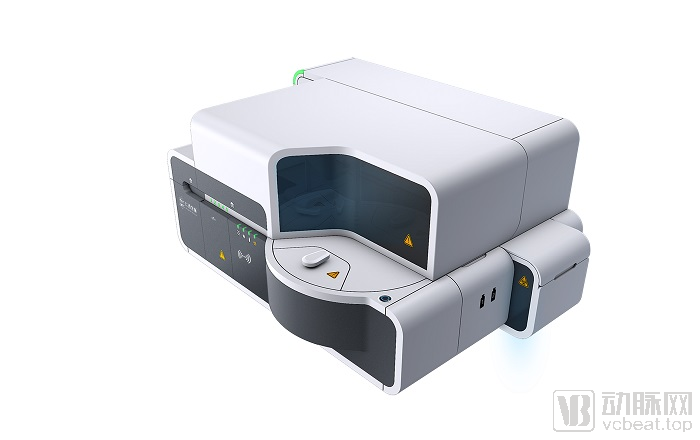
ACL2800 Upgraded Model ACL2800s
ACL2800 primarily adopts a sales model that combines “CDMO + proprietary brand.”Jin Jing stated that the CDMO business is primarily operated by the company’s wholly-owned subsidiary, Wancheng Biology. Chemiluminescence products face high barriers to entry, including significant technical challenges, long R&D cycles, and substantial capital investment. Through CDMO services, the company provides cost-effective and efficient solutions to help clients enter the chemiluminescence market, thereby reducing their R&D timelines and costs.
Behind the multiple innovative POCT technology platforms stands Renmai Biotech’s R&D team, with Renmai Biotech founder Jin Jing playing a pivotal role. Jin Jing holds a Master’s degree in Biomedical Engineering from Southeast University and completed his joint doctoral training at the University of California, Los Angeles (UCLA) and Southeast University.
During his undergraduate studies, his research focused on medical electronics and hardware/software systems; during his master’s program, it centered on analytical chemistry and immunoassay; and during his doctoral studies, his research interests shifted toward biochemistry, nanomaterials, and microfluidics.His educational background laid a solid foundation for the subsequent establishment of Renmai Bio.
Before founding Renmai Biotechnology, there was a small episode. After obtaining his Ph.D. in 2012, Dr. Jin Jing had the opportunity to teach at a prestigious Project 985 university, but he resolutely chose to join “what was then an IVD startup and is now a leading listed POCT company”—Getein Biotech. At Getein Biotech, he progressively built up the chemiluminescence R&D team, advancing from an R&D engineer to department manager and then to R&D director. Ultimately, he founded Renmai Biotechnology in 2016.
Jin Jing serves as the sub-project leader for a National Key R&D Program and as the Secretary-General of the IVD Raw Materials and Components Professional Committee under the China Medical Device Industry Association. Among the core R&D team members, there are many former colleagues from Getein Biotech.Both the R&D Director of Reagents and the R&D Director of Instruments have R&D management experience at Getein Biotech. The Operations Director previously served as Quality Director at Dongshan Precision Manufacturing Co., Ltd., while the sales team comprises former provincial managers or distributors from peer companies.The seamless collaboration among core team members has driven the thriving success of Renmai Bio.
Currently, in addition to completing the strategic layout of its innovative technology platform, Renmai Biotech focuses on the broad aging and infant/toddler markets in terms of reagent projects. Renmai Biotech has developed and launched a series of distinctive reagent projects,Including cardiac markers, inflammation monitoring, specialized tumor markers, growth and development metabolism, reproductive function, thrombosis, and brain injury, and has obtained multiple product registration certificates.
Regarding the innovative technology platform, Renmai Biologics is also undergoing further transformation and upgrades. For its flagship product, MCL60,Renmai Bio plans to implement multi-unit cascading and launch a desktop mini-laboratory automation system for outpatient and emergency departments, integrated with specific protein analyzers and hematology analyzers.Renmai Biologics is also developing an innovative point-of-care testing (POCT) technology positioned for the primary care market, capable of fully replacing immunochromatographic assays. The lack of effective nucleic acid testing methods at the frontline of epidemic prevention and control in primary care settings highlighted the absence of molecular diagnostic POCT products. Renmai Biologics plans to commence R&D on its droplet-controlled molecular diagnostic POCT product in 2021.
Jin Jing believes that Renmai Bio’s advantages are mainly reflected in its technological strength. Continuous innovation has made Renmai Bio one of the most innovative POCT companies in China. Multiple innovative POCT technology platforms developed by Renmai Bio are at the forefront domestically, even filling market gaps, such as the MCL60.In response to the diverse application scenarios of POCT, Renmai Biologics has submitted applications for nearly 50 reagent kits, including more than 20 specialized assays.
Furthermore, the team possesses a multidisciplinary background. This composite expertise spanning biology, medicine, electronics, software, nanomaterials, and marketing supports R&D efforts. Meanwhile, years of industry experience enable the team to accurately assess current market demands.
Following the completion of its Series A and Series B funding rounds in 2018 and 2019, respectively, Renmai Biotech is currently planning its Series C financing.This round of financing will be used to increase market investment in proprietary brands, primarily for the market expansion of proprietary brands, especially MCL60. Additionally, the funds will support ongoing research and development of clinically specialized reagents and innovative POCT technologies.
Jin Jing expressed optimism about the development of the POCT industry. However, the POCT sector currently faces certain challenges. Although there is substantial market demand for POCT devices, there remains a shortage of POCT products that meet emerging clinical needs. This is mainly reflected in the following three aspects:
Tertiary hospitals demand POCT devices that deliver accurate results, rapid turnaround times, high throughput, and full automation. However, some manufacturers continue to rely on previous-generation fully automated POCT products., these products are based on the principle of fluorescence immunochromatography and lack accuracy in test results, failing to meet the high standards required by tertiary hospitals for diagnostic testing.
POCT devices in primary care hospitals basically meet the requirements of being “small, fast, and easy to use,” but there is still room for improvement in detection accuracy.With the advancement of tiered diagnosis and treatment, the volume of POCT testing samples in primary healthcare institutions may experience rapid growth. Currently, existing POCT devices risk becoming obsolete due to their inability to meet emerging demands. Products targeted at primary healthcare institutions require technological enhancements and iterative upgrades.
The epidemic has highlighted existing problems in frontline prevention and control at the primary care level, where effective nucleic acid testing capabilities are lacking.A massive market demand for POCT molecular diagnostics will emerge in frontline prevention and control settings in the future. However, there is currently a lack of corresponding equipment on the market.
Addressing these challenges translates into seizing new opportunities. Renmai Biotech is steadily advancing along the path of building an innovative POCT technology platform and launching products that meet emerging clinical needs.