

Hillhouse HCare Summit Concludes, Unveiling Eight Global Trends Shaping the Future of Healthcare

Hillhouse
Long-Term Structural Value Investment Institution
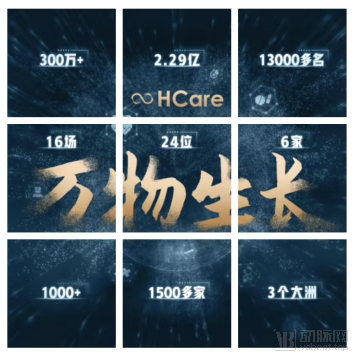
The inaugural Hillhouse HCare Global Health Industry Summit garnered significant influence. More than 130 speakers from three continents delivered 40 high-quality academic and industry discussions across 16 thematic forums. Twenty-four Chinese and foreign academicians, scientists, and discipline leaders explored the future of medicine and life sciences, while six leading global companies on the frontlines of COVID-19 vaccine development revealed their latest R&D progress. The forum attracted over 1,000 medical and pharmaceutical enterprises, more than 1,500 investment institutions, and over 13,000 registered attendees. This prestigious, content-rich industry event generated 230 million topic views on UGC and live-streaming platforms over its five-day duration, reflecting public expectation and attention toward the health industry in the post-pandemic era.
This summit sounded the clarion call for integrated innovation among industry, academia, research, and clinical practice within the broader health sector. Leading experts and emerging talents in life sciences from China and abroad, alongside researchers and frontline clinicians, engaged in theoretical and practical discussions on clinical research and translation, the application of new drugs and technologies, and trends in disease treatment. Cutting-edge technological breakthroughs, including progress in the development of COVID-19 vaccines and therapeutic antibodies, as well as the latest research on SARS-CoV-2 biomarkers, were disclosed for the first time at this summit. Reflecting on this comprehensive gathering of the health industry, we have identified the following major trends in medicine and industrial development.
I. The Vaccine Industry Attracts the Most Attention
Held against the backdrop of the global COVID-19 pandemic, the summit naturally placed COVID-19 vaccines at the center of attention. At the main forum, Academician Wang Xiaodong and Professor Zhang Wenhong both addressed vaccine-related topics, delivering many memorable insights. Yi Nuoqing, Co-Chief Investment Officer and Partner at Hillhouse, presented an overview of global COVID-19 vaccine development progress. The sub-forum on “COVID-19 Therapeutic Antibodies and Vaccines” featured distinguished speakers including Xie Xiaoliang, Director of the Beijing Advanced Innovation Center for Genomics at Peking University; Yu Xuefeng, Chairman of CanSino Biologics; Feng Hui, Chief Operating Officer of Shanghai Junshi Biosciences; Liang Guo, Chairman of Clover Biopharmaceuticals; and Ying Bo, Chairman of Suzhou Abogen Biosciences. At this summit, these leading Chinese researchers and founders in the field of vaccines and antibodies delivered professional presentations and shared their expertise, fully showcasing the “Chinese strength” in COVID-19 vaccine R&D. Throughout the event, COVID-19 vaccines accounted for the largest proportion of discussions, featured the most prominent corporate representatives among speakers, and attracted the highest level of audience interest. Speakers provided horizontal comparisons of global and Chinese vaccine R&D capabilities, as well as vertical analyses of technological pathways and progress in vaccine development. Through a series of engaging topics and intense discussions, attention to COVID-19 vaccines reached a new peak.
II. Focus on Rare Disease Treatments to Resonate with Patients
Whether it was imatinib (Gleevec) featured in the tear-jerking film *Dying to Survive* a few years ago, or nusinersen sodium injection, the highly publicized “million-dollar-per-dose” miracle drug for spinal muscular atrophy that has recently drawn significant attention, the treatment of rare diseases—particularly the exorbitant costs involved—has remained a focal point of public concern. Data show that there are nearly 20 million patients with rare diseases in China. In addition to diagnostic challenges, these patients face substantial difficulties in accessing and affording necessary medications.
The “Orphan Drug R&D Innovation and Market Access” sub-forum at this summit focused on the various challenges faced by rare disease patients in China, as well as the latest developments among global pharmaceutical companies engaged in rare disease drug research and development. Panelists called for leveraging the platform of the Chinese Alliance for Rare Diseases to facilitate the implementation of national rare disease policies, improve the diagnosis and treatment standards for rare diseases in China, act as a liaison for orphan drug companies to voice their concerns, and provide patient data references to support drug R&D efforts by domestic orphan drug enterprises. Professor Zhang Shuyang, Party Secretary of Peking Union Medical College Hospital, advocated for the establishment of a broader systemic platform for rare disease treatment, featuring multidisciplinary consultations and long-term follow-up care plans for patients. The sub-forum resonated strongly with the public, with one registered attendee commenting in the forum’s discussion section: “Finally, we are seeing discussions on orphan drugs at a top-tier domestic summit.”
III. Clinical Application and Commercialization of Cell Therapy in China Are Accelerating Comprehensively
Cell therapy is one of the most promising research areas in recent years. It is widely believed within the industry that China is on the verge of launching cell therapy products, marking the eve of their commercialization in the country. Currently, cell-based immunotherapy products from companies such as Fosun Kite and WuXi Junovo have had their marketing applications accepted, drawing significant attention. The sub-forum on “Frontiers and Advances in Cell Therapy Products” invited founders of leading global cellular immunotherapy companies Lyell Immunopharma and Allogene Therapeutics, Fan Xiaohu, co-founder of Legend Biotech, a renowned Chinese publicly listed cell therapy company, as well as clinical experts Zhou Jianfeng and Pan Jing. Together, they discussed the most cutting-edge technical challenges and R&D progress in cellular immunotherapy. The rapid development of the cell therapy field, coupled with the recognition and adoption of CAR-T therapy by top oncology experts in China, will greatly accelerate the commercialization of cell therapies in the country.
IV. Gene Therapy Drugs May Enter the Chinese Market with Price Reductions
Gene therapy offers the potential for a one-time, lifelong treatment, representing a significant breakthrough for patients and their families. However, the high cost of gene therapies has barred many individuals with genetic disorders and rare diseases from accessing these treatments. In December 2017, Luxturna, the first ophthalmic gene therapy approved by the U.S. Food and Drug Administration (FDA), was priced at $850,000. Subsequently, Zolgensma, a gene therapy approved for the treatment of spinal muscular atrophy (SMA), was priced at $2.1 million, becoming the most expensive drug in history.
Gene therapy drugs are priced high abroad partly due to the enormous early-stage R&D costs, and partly because their indications primarily target patients with rare diseases, making it difficult to achieve large-scale manufacturing. At the sub-forum on “Opportunities and Challenges in Gene Therapy,” the founders of two global leading gene therapy companies, Beam Therapeutics and RegenxBio, engaged in discussions with Chinese gene therapy firms Belief BioMed Co., Ltd. and Edigene Inc. on the opportunities and challenges of commercializing gene therapies. They conducted in-depth exchanges particularly on pricing, market access, and the patient population with rare diseases. In the future, products from Beam Therapeutics and RegenxBio are expected to enter the Chinese market at prices affordable to Chinese patients with relevant rare diseases.
V. The Number of Approved RNA and mRNA Therapies May Grow Exponentially
Over the past decade, multiple novel RNA interference (RNAi) therapeutics have been approved based on RNA therapy platforms. During the pandemic, the development of COVID-19 vaccines utilizing mRNA technology has been at the forefront of innovation. The milestone achievements of Moderna’s first mRNA vaccine have brought this therapeutic modality into the spotlight. Whether for treatment or prevention, RNA therapies represent a new frontier in medicine with vast potential for growth. Furthermore, at the sub-forum titled “RNA and mRNA Therapies: Expanding from Rare Diseases to Broad Indications,” Moderna’s founder predicted that the number of newly approved RNA-based drugs will experience exponential growth over the next decade.
VI. It is Imperative to Establish an Emergency Medical Research System
Following the outbreak of the COVID-19 pandemic, the scientific and technological community responded proactively to the call by forming joint research task forces, providing robust scientific and technological support for winning the battle against epidemic prevention and control. However, the response to this outbreak also exposed shortcomings and deficiencies: first, capabilities in epidemic monitoring, early warning, and early detection need improvement; second, the research and development process for therapeutic drugs and vaccines needs to be accelerated. At the sub-forum on “Basic Scientific Research on SARS-CoV-2 and the Establishment of an Emergency Medical Research System,” participating experts reached a consensus that it is necessary to establish an emergency medical research system in the future. This system should integrate basic research, key technology development, clinical diagnosis and treatment, and the translation and implementation of outcomes, thereby forming a closed loop for building public health emergency capacity and enhancing the ability to respond to sudden public health emergencies.
VII. Accelerated Pace of Domestic Innovation in Cardiovascular Interventional Therapy
Cardiovascular diseases are among the leading causes of morbidity and mortality both globally and in China. With the aging of China’s population, the incidence of cardiovascular diseases continues to rise. As a constantly evolving technology and therapeutic approach, cardiovascular intervention commands substantial market demand. After decades of clinical practice and research and development, China’s cardiovascular intervention sector is undergoing a historical transition from comprehensive learning to full-scale innovation, and from following and running parallel to continuously surpassing global standards. At the Cardiovascular Intervention Innovation Development Forum, experts in coronary intervention, structural heart disease, and cardiac rhythm management concurred that product and technological innovation serve as the primary driving force behind the development of China’s cardiovascular intervention industry, while the improvement of clinical diagnosis, treatment, and disease management systems provides richer application scenarios for such innovations. In the future, domestic cardiovascular intervention enterprises that closely align with clinical needs and remain committed to independent research and development and continuous innovation will encounter accelerated opportunities for growth.
VIII. Telemedicine Gains Widespread Global Recognition
Driven by the pandemic, the application of online consultation models has been significantly expanded. At the Mayo Clinic, telemedicine has been integrated into patient management service systems; for instance, patient education and tumor genomic sequencing can both be conducted remotely. Furthermore, AI-assisted diagnosis has become a topic of great interest among medical experts. Some experts even believe that the application of AI can enhance the capabilities of young laboratory physicians, enabling them to match the competence and experience of senior chief physicians. Additionally, during the pandemic, internet hospitals have provided services such as prescription issuance and medication delivery for patients with chronic diseases, gaining gradual recognition from physicians and acceptance by the public. Nevertheless, patient safety remains the primary concern for medical experts regarding telemedicine. Experts emphasize that institutions providing telemedicine services must have specialized teams to effectively ensure patient safety and must also deliver accessible healthcare services.
In addition to the aforementioned key areas of focus, this year’s HCare Summit also facilitated stimulating exchanges among leading global medical experts in fields such as hematologic oncology treatment, breast cancer therapy, innovative practices in clinical research, prevention and control of respiratory diseases with population health management, and healthcare big data and artificial intelligence. Cutting-edge applications in healthcare—including innovations in therapeutic approaches, patient management, and AI-driven diagnostics—were comprehensively showcased at this year’s HCare Summit.
Relive the HCare Summit—The Highlights Continue: https://hillhousecare.com/home