

China's 250 Million Hair Loss Sufferers Fuel Billion-Dollar Hair Transplant Industry
It is difficult to say which came first in stimulating today’s young people: anxiety over hair loss or advertisements for hair transplantation.
But with less hair, the street scenery will inevitably lack foil perms and big waves. Whether it’s bob cuts and airy bangs, or buzz cuts, crew cuts, layered shags, and shoulder-length hair, they all become an embarrassment for some young people when there is “no hair to style.”
According to the 2019 survey on hair loss released by the National Health Commission, the number of people suffering from hair loss in China has risen sharply in recent years, exceeding 250 million. This means that one in every six people experiences hair loss, with approximately 163 million men and 88 million women affected. Among them, 63.1% of the hair loss population in China is under the age of 35, and a receding hairline has become a common phenomenon among those born in the 1980s and 1990s.
Robust market demand has driven strong consumer spending. According to data from Alibaba’s “Fun White Paper on Hair Loss Solutions,” among consumers purchasing hair transplant and hair care products on Alibaba’s retail platforms, those born in the 1990s accounted for 36.1% of spending, while those born in the 1980s accounted for 38.5%. Together, these two cohorts represent the majority of consumers and have become the “main force” in the “Hair Loss Rescue Team.”
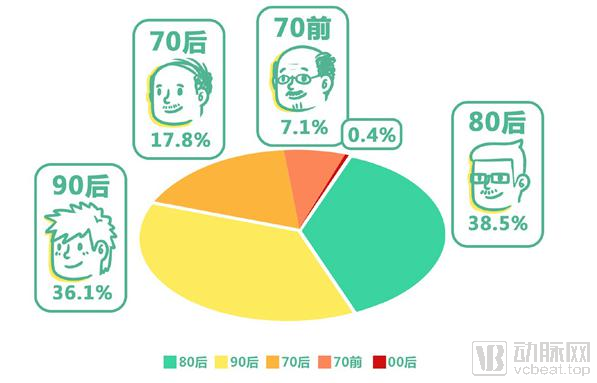
Image source: “AliHealth: Fun White Paper on Saving Hair Loss”
It is evident that hair loss, a “major concern atop one’s head,” is troubling and affecting an increasing number of young people. Consequently, hair transplantation has become a preferred option for many young and middle-aged individuals. In line with this trend, hair transplant clinics and related products have emerged, leading to explosive growth in China’s hair transplantation industry. According to data from iiMedia Research, the market size of China’s hair transplantation industry was approximately RMB 5.7 billion in 2016 and grew to around RMB 16.3 billion by 2019, representing an increase of approximately 186%. The market size is projected to surpass RMB 20 billion by the end of 2020.
In the hair transplant industry, where “the less hair people have, the bigger the market becomes,” what are the available hair transplantation techniques? Who are the leading players? What are the core profit drivers? And in which direction is the industry headed? To address these questions, VCBeat has synthesized insights from interviews with companies deeply entrenched in the hair transplant sector, investors who have long focused on this field, and relevant experts and scholars.
“Bald”ness Comes Suddenly.
Many young people have not yet fully enjoyed the days of thick, lush hair before they notice their hairlines involuntarily “retreating” toward the back of their heads. Anxiety and unease weigh heavily on every young person experiencing hair loss, mirrored by an environment saturated with advertisements for hair care, hair growth treatments, and hair transplants, constantly displayed and broadcast across public buses, office buildings, elevators, information feeds, and short-video platforms.
In fact, hair shedding occurs in everyone and is often a normal phenomenon. “Our hair grows in cycles,” Dr. Li Mei, a standing committee member of the China Hair Transplant Association, told VCBeat. Hair undergoes a growth phase lasting 2 to 6 years, followed by a catagen (regressive) phase of about three weeks, and finally enters a telogen (resting) phase that lasts approximately three months, after which it re-enters the growth phase, repeating this cycle. Therefore, some natural hair loss occurs in daily life, with a daily shed of around 50 hairs, generally not exceeding 100; this range is considered normal. Notably, hair growth peaks in March each year and reaches its lowest point in September.
What circumstances should raise concern? Specifically, when there is persistent excessive hair shedding (more than 100 hairs per day), it is advisable to consider seeking medical attention. Internationally, hair loss is generally classified into seven grades. The grading criteria and symptoms differ between male and female pattern hair loss.
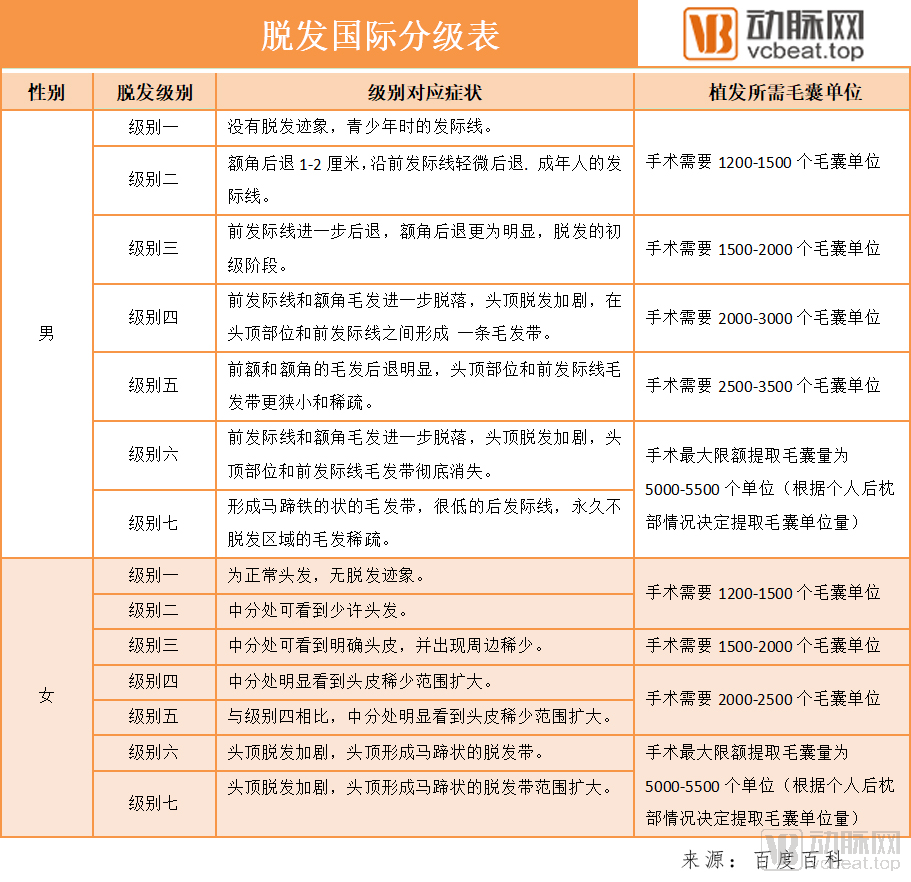
There are roughly seven factors contributing to hair loss: first, hereditary hair loss, which is currently the most prevalent cause; second, unhealthy lifestyle habits, such as smoking, staying up late, and excessive alcohol consumption; third, endocrine and metabolic disorders; fourth, neuropsychiatric factors, including chronic anxiety, grief, and mental stress; fifth, picky eating habits; sixth, work-related stress; and seventh, certain medications.
Currently, there are four main approaches to treating hair loss: first, adjusting one’s physical condition; second, alleviating symptoms through dietary supplements; third, pharmacological treatment; and fourth, hair transplantation surgery. “In the early stages of hair loss, the condition can often be improved and reversed through medication and lifestyle adjustments. Hair transplantation is typically considered a last resort,” stated Dr. Li Mei. She noted that there are currently two primary techniques for hair transplantation.
One method is FUT (Follicular Unit Transplantation), a technique in which a strip of scalp is surgically removed from the occipital region, after which individual follicular units are dissected and transplanted into the balding area. The other method is FUE (Follicular Unit Extraction), which involves using a specialized extraction device to harvest individual follicular units directly from the donor site before transplantation. In some cases, these two techniques are combined.
The advantage of the FUT technique lies in its ability to harvest all follicular units from the donor-dominant area, which are typically the thickest and most robust hairs located in the occipital region. This makes it an excellent option for men who prefer not to shave their heads and for women with long hair. However, due to limitations in scalp laxity, the number of grafts harvested is generally limited to approximately 2,000–3,000 units, which is insufficient for patients requiring large-area hair transplantation. Postoperative reactions are also relatively more severe, including neuralgia and a sensation of scalp tightness, and a linear scar will remain in the occipital donor area.
FUE technology involves the scattered and uniform extraction of individual follicular units from the donor area, leaving no obvious scarring post-operatively. Slightly longer hair can effectively conceal the extraction sites. Experienced hair transplant surgeons can harvest up to approximately 5,000–6,000 grafts in a single session, making this an excellent option for patients with extensive hair loss and adequate donor resources. With technological advancements, non-shaven FUE techniques have also matured, allowing their application in smaller-scale hair transplant procedures. “The choice of technique should be determined based on the patient’s individual circumstances.”
Compared with drug therapy and physical condition regulation, hair transplant surgery has two obvious advantages.
First, the therapeutic effects are immediately visible. While pharmacological treatments and physiological conditioning often require a prolonged period for observation, with slow and uncertain outcomes, the results of hair transplantation surgery typically become apparent within six months to one year.
Second, it can precisely stimulate hair growth in balding areas. Since hair transplantation involves implanting healthy hair follicles into the balding regions, it achieves hair regrowth with greater precision.
It is precisely for this reason that hair transplantation has become an increasingly popular choice.
A video of a 25-year-old programmer being interviewed has gone viral online. When he told the reporter that his entire outfit cost RMB 40,000—with the shirt costing RMB 200, the pants RMB 80, and the shoes RMB 799, while the remainder was spent on hair transplantation—not only did it prompt many netizens to lament the high cost of hair transplants, but some also joked that each of a programmer’s scarce and precious hairs is so valuable it has its own name.
Where Does the Tens of Thousands of Yuan Spent on Hair Transplants Actually Go? This begins with the underlying principle of hair transplantation. Since each hair follicle on the human scalp is independent and capable of normal growth, healthy follicles can be harvested from other parts of the body and transplanted to balding areas to address hair loss. Consequently, most hair transplant procedures on the market are priced based on the number of follicular units implanted.
According to publicly available data, the current price for hair transplantation starts at RMB 10 per follicular unit. While this may seem affordable, most procedures require the extraction of thousands of follicular units, resulting in a total cost of tens of thousands of yuan per surgery.
High Average Transaction Value, High Profit Margins? Profitability Varies Slightly Among Hair Transplant Providers. In an interview with the media, Xu Feng, founder of Hao Toufa (Good Hair), stated that public hospital hair transplant departments boast the highest profit margins, ranging from approximately 60% to 70%; private hospitals follow, with margins around 35% to 40%; while large chain institutions lag behind, with profit margins of only about 20%. This significant disparity is primarily driven by differences in the number of clinic locations and marketing costs.
For hair transplant clinics, where do the primary costs lie? In terms of labor costs, a single patient typically requires the transplantation of thousands of follicular units. The entire surgical procedure demands close coordination among multiple medical staff members and can take anywhere from four to five hours to over ten hours. This means that even at maximum capacity, a surgeon can perform no more than two procedures per day. Consequently, physician productivity is relatively limited. Furthermore, completing a single hair transplant surgery requires a team of four to five individuals.
From the perspective of infrastructure costs, expenditures on rent and equipment also constitute a significant expense. Constrained by the high average transaction value per customer, hair transplant clinics are primarily located in first- and second-tier cities. These facilities typically occupy thousands of square meters, resulting in substantial rental costs. Furthermore, medical equipment generally costs tens of thousands to even hundreds of thousands of yuan, leading to high overall infrastructure costs.
In terms of customer acquisition costs, as traffic becomes increasingly expensive, customer acquisition channels have also diversified. In addition to offline advertising, online marketing has become a choice for many institutions. The head of a large domestic chain hair transplant institution told VCBeat that the industry's average comprehensive customer acquisition cost is over 2,000 yuan per person.
Industry insiders revealed that marketing expenses account for approximately 30% to 35%, labor costs range from 25% to 30%, infrastructure expenditures such as rent and equipment constitute around 15%, and other expenses make up roughly 15% to 25%.
Overall, for hair transplant institutions, marketing expenses and labor costs for medical staff are the top two cost expenditures.
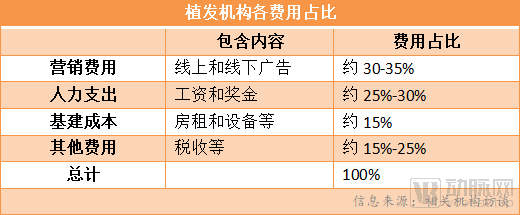
As can be seen from the above, hair transplant institutions are heavily reliant on marketing. This stems from the fact that hair transplantation is a low-frequency procedure, resulting in low patient repurchase rates—often nearly zero—and consequently, very high customer acquisition costs. Furthermore, as hair transplant clinics are asset-intensive operations, they require substantial support in terms of capital, manpower, and technology, leading to high operational expenses.
The confluence of multiple factors has made the hair transplant industry prone to intense price wars, thereby eroding corporate profits and even triggering cutthroat competition. This leads to a decline in medical quality and sparks a crisis of patient trust, ultimately creating a vicious cycle that hinders the industry’s development.
Industry insiders told VCBeat that there is a significant price disparity in hair transplantation equipment; even devices solely for hair extraction can range from a few thousand to several hundred thousand yuan. Consequently, as profit margins continue to shrink, some hair transplantation clinics may cut costs by compromising on essential hardware such as equipment. Ultimately, it is the patients and the industry as a whole that suffer.
Is hair transplantation still a good business?
According to a set of semi-public industry data, approximately 500,000 hair transplant procedures were performed nationwide in China in 2018, with total procedure costs exceeding RMB 10 billion. These figures suggest that the growth potential of the hair transplant industry remains substantial. The key challenge lies in achieving industry-wide consensus on effectively addressing patients’ concerns about hair loss and thinning, while ensuring a high-quality medical experience throughout the hair transplant process. On this foundation, the primary consideration for the industry is how to expand the overall market size and achieve greater market growth.
“Given the hair transplant industry’s high labor and marketing costs, it is well-suited for chain operations,” Guo Yixin, Vice President of Haoyue Capital, told VCBeat. Hair transplant procedures are relatively easy to standardize, making chain expansion an effective strategy to amortize marketing expenses, while bulk purchasing helps reduce equipment costs.
Moreover, as the learning curve for hair transplant procedures is lower compared to other medical aesthetic treatments, the scalability of human resources is greater. It is precisely for this reason that chain hair transplant clinics have attracted significant interest from investors. Conversely, the hair transplant industry’s robust cash flow holds a natural appeal for VC/PE firms.
“Institutions and capital empower each other,” said Guo Yixin.
Currently, the hair transplant industry in China is primarily composed of four types of players: first, the hair transplant departments of public hospitals, such as Shanghai Changzheng Hospital and Southwest Hospital; second, the hair transplant departments of private medical aesthetic and plastic surgery institutions, represented by Yimeier and Xiduo; third, private non-chain hair transplant clinics, represented by Hengbo; and fourth, national private chain hair transplant institutions, represented by Biliansheng, Xinsheng Hair Transplant, Yonghe Hair Transplant, and Damai.
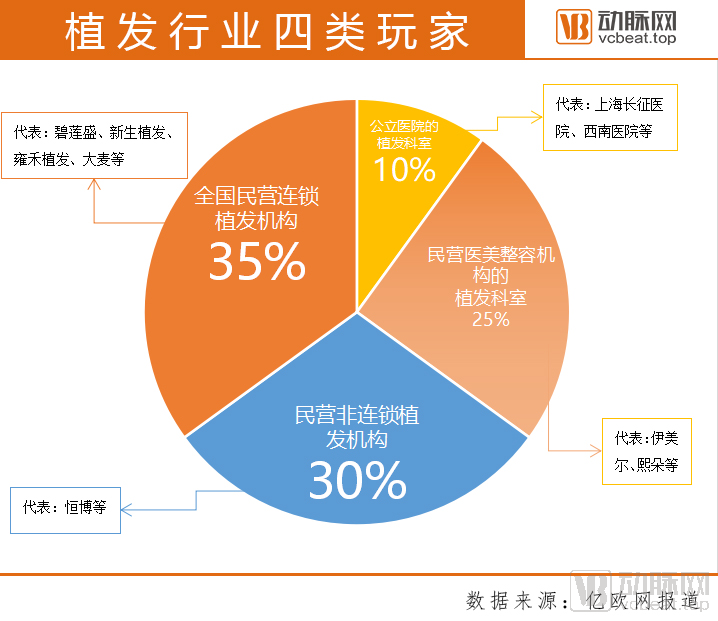
According to a report by Iyiou.com, large chain hair transplant institutions, including Biliansheng, Yonghe Hair Transplant, Damai, and Xinsheng Hair Transplant, collectively account for approximately 35% of China’s hair transplant market share. Local non-chain specialized hair transplant clinics, due to their vast numbers, hold more than 30% of the market share. The hair transplant departments of comprehensive medical aesthetic institutions account for approximately 25% of the market share, while those in public hospitals make up the remaining 10%.
In fact, the hair transplant industry has been developing in China for more than two decades. It only began to attract widespread public attention and discussion in 2017, when “China surpassed Brazil to become the world’s second-largest medical aesthetics market.” Public records show that Biliansheng and Yonghe Hair Transplant both secured major financing rounds exceeding RMB 100 million starting from that year.
Since then, the hair transplant industry, buoyed by capital infusion, has seen frequent competitive “battles,” with advertisements saturating streets and alleys, ushering in a major market reshuffle. Small and medium-sized hair transplant clinics are in a precarious position, while large-scale institutions are continuously transforming through strategic upgrades, technology adoption, and iterative marketing approaches.
On the surface, the “battle” is raging; beneath it lies the “law of the jungle” that the hair transplant industry cannot evade: the strong grow stronger. Although public hospital hair transplant departments benefit from the “public” endorsement, their physicians hold proper qualifications, and medical quality is assured, they attract few patients due to marketing prohibitions and relatively poor overall service. Consequently, capital remains hesitant to enter this space, resulting in limited competitive pressure on the broader market.
Examining the other three types, regional non-chain specialized hair transplant institutions have low entry barriers and thus operate with flexibility; however, they suffer from inconsistent medical service quality, low safety assurance, and poor patient trust. The hair transplant departments within comprehensive medical aesthetics institutions have relatively abundant physician resources, but as these are not specialized hair transplant providers, they create a less professional impression among patients (compared to the first impression of specialized hair transplant institutions) and charge higher prices. National private chain hair transplant institutions offer higher safety assurance and better service attitudes, but they face high entry barriers, require large-scale investment, and have long payback periods, thereby necessitating substantial capital injection.
Driven by these factors, privately owned national hair transplant chains, bolstered by capital investment, have begun to exert significant influence, continuously expanding their market presence and increasing their market share, thereby gradually emerging as industry leaders. To date, Biliansheng has established specialized hair transplant hospitals in 32 major cities, including Beijing, Shanghai, Guangzhou, Shenzhen, and Chongqing; Yonghe Hair Transplant has opened more than 40 directly operated chain institutions across over 20 provinces and municipalities nationwide; Xinsheng Hair Transplant has set up hair restoration bases in more than 30 cities and formed transnational strategic alliances with renowned hair transplant institutions in Belgium, South Korea, Singapore, and other countries; while Damai has opened branch clinics in 20 cities.
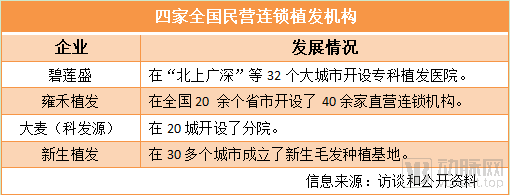
Throughout their development, the four hair transplant institutions have each demonstrated their own unique strengths.
Biliansheng adopts a steady and pragmatic, technology-driven market strategy. In its store expansion strategy, it employs a “one city, one store” direct-operated chain model, upholding the belief that user word-of-mouth is the best brand endorsement. By dedicating resources and efforts to meeting user needs and leveraging a standardized, regulated, and integrity-based service operation system, Biliansheng continuously strengthens its core competitiveness in the market.
Yonghe Hair Transplant has established the “Quality Standard System for R&D of Hair Transplantation Technology and Technical Services,” which successfully obtained certification from the International Organization for Standardization (ISO). This standard system provides extremely detailed specifications for preoperative assessments, hairstyle design, surgical procedures, and postoperative recovery. In terms of treatment, Yonghe Hair Transplant adopts a “Transparent Medical Care” approach: outside the operating room, patients’ relatives can watch a live broadcast of the entire procedure on a screen. Upon completion of the surgery, the video is immediately burned onto a disc and handed to the patient, ensuring absolute privacy throughout the process.
To establish a complete closed-loop system for hair loss prevention and regrowth, and to consolidate its core competitiveness, Xinsheng Hair Transplant proposed and established the “Comprehensive Hair Care Management System” in 2015. By leveraging various hair care devices and products, it has created comprehensive hair care and scalp health management services, thereby shifting its positioning from a standalone hair transplant hospital to an institution providing integrated “hair transplantation, hair nurturing, and hair care” services.
Daimai’s strategic focus is on internationalization; to this end, it changed its former name, Kefayuan, to Daimai to facilitate recognition by overseas customers. Starting last year, Daimai plans to establish more than 20 new Daimai micro-needle hair transplantation clinics abroad within three years and collaborate with over ten leading research institutions and organizations worldwide.
For China’s hair transplant industry, in addition to the attempts and breakthroughs made by leading domestic clinics, are there any valuable overseas experiences worth drawing on?
Bosley, a U.S.-based hair transplant institution, was founded in 1974. With 46 years of technological and brand accumulation, it has performed over 300,000 hair transplant surgeries and operates 75 clinics. Currently, it is the largest hair transplant chain brand in the United States and is widely recognized as a leader in providing hair loss solutions and medical hair transplant services.

Image source: Bosley Group official website
To help individuals psychologically accept hair transplantation and shorten their decision-making time, Bosley provides patients with a free copy of The Complete Guide to Hair Restoration. This guide addresses key concerns of hair loss sufferers, including the underlying mechanisms of hair loss and available hair restoration solutions. Notably, it features authentic before-and-after photos of Bosley patients, enabling readers to identify hair loss patterns similar to their own and visualize potential outcomes, thereby reinforcing their psychological expectations.
Medical quality is the top priority. The Bosley Group boasts the finest surgeons in the field of hair transplantation, many of whom have over a decade of experience in the hair restoration industry. They have undergone rigorous training, mastered Bosley’s proprietary techniques, and received numerous awards and honors for their outstanding performance.
In addition to enhancing medical quality in areas such as physician expertise, hair follicle survival rates, and postoperative recovery, Bosley places significant emphasis on providing patients with aesthetically designed hair transplant plans. This requires the hair transplant institution to demonstrate comprehensive judgment and practical proficiency in evaluating various factors, including the patient’s age, facial structure, current hairline, and hair quality.
In terms of marketing, the Bosley Group allocates more funds to creating a comfortable office environment rather than making substantial marketing investments. As a result, Bosley’s clinics do not resemble cold, sterile operating rooms but instead appear as art centers dedicated to aesthetic design for patients. Furthermore, patients can watch television during their procedures to help them relax.
In terms of brand building, Bosley Group places significant emphasis on public welfare initiatives, such as its ongoing community engagement through Good Works to support donations to the Breast Cancer Research Foundation (BCRF), which has, to some extent, enhanced brand favorability.
Overall, Bosley’s business strategy relies on leveraging extensive experience to build a trusted brand, providing comprehensive solutions, employing cutting-edge technology and skilled physicians in the field of hair transplantation, and prioritizing customer experience.
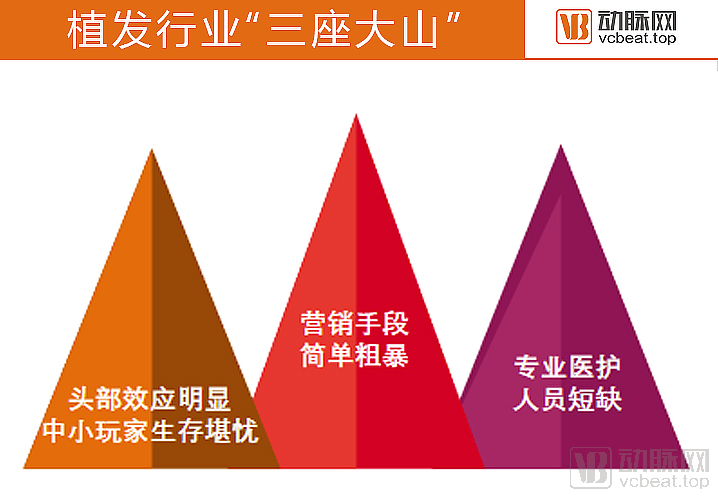
Behind the hair transplant industry’s “rapid ascent” lies the continuous emergence and demise of numerous small and medium-sized clinics, as well as the journey of leading enterprises toward scaling and brand building. In this process, the industry still faces “three major hurdles” to overcome.
The First Major Challenge: A Shortage of Qualified Medical Professionals. Currently, the competency level of practitioners in the hair transplantation industry varies significantly, with a scarcity of truly specialized professionals. News reports occasionally emerge about doctors at hair transplant clinics assuming clinical duties after only short-term training, which has adversely affected the industry’s reputation.
The second major obstacle is the overly simplistic and crude marketing tactics. To attract patients for hair transplant procedures, hair transplant clinics currently rely primarily on hard advertising in high-traffic channels. Marketing practices such as exaggerating treatment efficacy and highlighting “low prices” have prompted widespread imitation by other companies, leaving the industry’s ecosystem in a passive and unfavorable position.
The third major challenge is the pronounced "winner-takes-all" effect, which jeopardizes the survival of small and medium-sized players. Leveraging their scale advantages in resources, capital, and talent, leading players possess the capacity to continuously expand their market boundaries. For small and medium-sized hair transplant clinics as well as late entrants, the shrinking market pie has compressed their share of profits. In an effort to increase market share, these smaller clinics are forced into price wars.
How to Address the Above Issues? Two Major Trends Emerging in the Industry May Offer Solutions: One Is Branding, and the Other Is Industrial Extension.
First, leading hair transplant institutions have been in development for over a decade, accumulating substantial industry experience and gradually establishing their own brands with high user recognition. However, based on this existing brand awareness, these leading institutions have also correspondingly developed their own distinct customer segments.
For new entrants or small and medium-sized players, the key to survival under the dominance of industry giants lies in how they position their brands, establish differentiated perceptions, and offer distinctive services. Once hair transplant institutions have gradually built their core competitive advantages, seeking capital support to scale up and strengthen their market position becomes a natural next step.
Second, since hair transplantation is a low-frequency procedure, continuous customer acquisition through marketing efforts is required, forcing hair transplant clinics to expend significant resources on expanding their customer base. Consequently, how to re-engage existing customers has become a critical issue for these institutions to address. Currently, leading hair transplant chains are, to varying degrees, attempting to stimulate spending among existing customers by extending into other business lines, thereby enlarging their overall profit pool.
As people place greater emphasis on health and physical appearance, the hair transplant industry will continue to experience growth. It is important to note, however, that the industry should evolve in a more positive direction, consistently delivering higher-quality experiences and better outcomes for patients.
After all, for the vast majority of people, even if they no longer have their youthful appearance, they still hope to regain their youthful hair volume through hair transplantation.
Special Acknowledgements:
Dr. Li Mei, Standing Committee Member of the Chinese Hair Transplant Association
Daimai Micro-Needle Hair Transplant · Beijing Headquarters: Director Li Shijun
Dr. Chen Fanfan, Shanghai Reborn Hair Transplant
Ding Jun, Brand Director of Biliansheng Medical Group
Xinsheng Hair Transplant PR Ji Yanbin
Guo Yixin, Vice President of Haoyue Capital
(The above list is in no particular order.)