

HCare Global Health Industry Summit Unveils Latest Advances in COVID-19 Vaccine Development and Files IPO Prospectus
On August 8, the main forum of the Hillhouse HCare Global Health Industry Summit officially commenced. Mr. Yi Nuoqing, Co-Chief Investment Officer and Partner at Hillhouse, stated that HCare will become an intellectual property (IP) brand for the broader health industry.
At this forum, Academician Wang Chen, Vice President of the Chinese Academy of Engineering and President of the Chinese Academy of Medical Sciences & Peking Union Medical College; Academician Wang Xiaodong, Director of the National Institute of Biological Sciences, Beijing, and Founder of BeiGene; Professor Zhang Wenhong, Director of the Department of Infectious Diseases at Huashan Hospital Affiliated to Fudan University; Mr. G. Anton Decker, President of Mayo Clinic International; and Mr. Yi Nuoqing, Co-Chief Investment Officer and Partner at Hillhouse Capital, joined representatives from industry, academia, research, and clinical practice for a premier dialogue on the future development prospects of the health industry in the post-pandemic era.
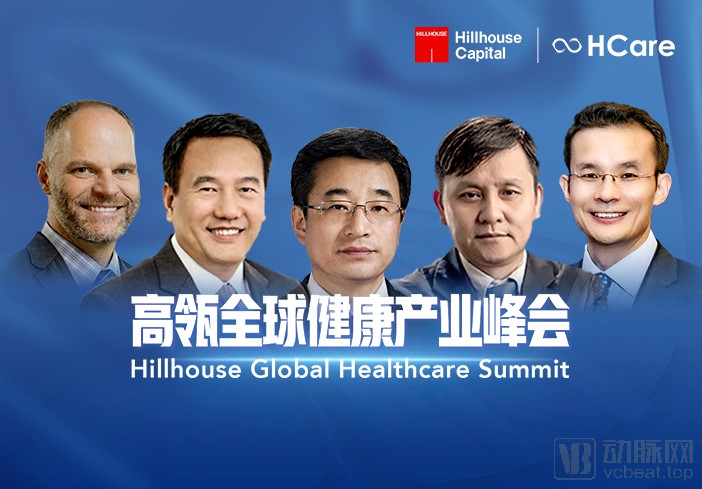
(From left to right: G. Anton Decker, Wang Xiaodong, Wang Chen, Zhang Wenhong, Yi Nuoqing)
In 2020, as the COVID-19 pandemic raged across the globe, the value of the healthcare and wellness industry came into sharp focus. How can we accelerate biotechnological innovation, enhance healthcare standards, and drive the rapid development of the broader health and wellness sector? Against this backdrop, the Hillhouse HCare Global Health Summit was launched.
The successful hosting of this prestigious event is inextricably linked to Hillhouse’s years of strategic deployment and deep cultivation in the global healthcare industry. The latest statistics show that Hillhouse has essentially achieved full-industry-chain coverage worldwide, spanning biopharmaceuticals, medical devices, high-end hospitals, and pharmaceutical retail. It has invested in more than 160 companies, including over 100 Chinese enterprises, with total investment exceeding RMB 120 billion and the combined market capitalization of its portfolio companies surpassing RMB 2.5 trillion.
As a leading figure in China’s respiratory medicine community, Academician Wang Chen expressed confidence in the future development of the healthcare and health industries in his keynote address at the summit.
“This epidemic has given us a deeper understanding that healthcare is a mainstream social undertaking concerning people’s well-being, economic development, and social stability and security. In future economic development models, compared with consumption growth in basic necessities such as clothing, food, housing, and transportation, the health-related industries have enormous room for growth and can rightly be called ‘the primary industry of the future,’” stated Academician Wang Chen.
The pandemic has not halted cross-border exchanges and cooperation in the health industry. Via transoceanic video conference, G. Anton Decker, President of Mayo Clinic International, stated that under current circumstances, it is even more critical to strengthen global collaboration among medical practice, education, research, and industry.
“Our researchers, including virologists, microbiologists, infectious disease specialists, and critical care physicians, gather diverse information from around the world every day to conduct scientific research on the novel coronavirus. In responding to the COVID-19 pandemic, we need global cooperation.”
In fact, the outbreak of the COVID-19 pandemic has objectively accelerated the deep integration among industry, academia, research, and healthcare. “The vibrant landscape of the health industry today resembles the eve of the information technology boom. A increasingly strong coupling effect is emerging across the upstream and downstream sectors. By fostering close collaboration among industry, academia, research, and healthcare to build an integrated innovation ecosystem, we can significantly reduce innovation costs across the entire industry, accelerate the iterative development of drugs and medical devices, and create substantial incremental value.” As the organizer of the HCare Summit, Yi Nuoqing, Co-Chief Investment Officer and Partner at Hillhouse Capital, expressed his expectations for the global integration of medicine, industry, academia, and research.
“This is precisely the original intention behind Hillhouse’s hosting of the HCare Global Health Industry Summit. ‘Just as Google has its I/O Conference and Microsoft has its Build Conference in the information technology sector, the global health industry now has the HCare Summit. “HCare” will serve as the event’s permanent intellectual property (IP), becoming a recognizable hallmark for partners in the global health industry and a clarion call for integrated innovation in the broader health sector,’ stated Yi Nuoqing.”
As a premier event focusing on the healthcare industry, the COVID-19 pandemic is an unavoidable topic.
Academician Wang Chen stated that the COVID-19 pandemic will not subside quickly, and future risks remain substantial. “The continuous evolution and mutation of different viral strains lead to dynamic changes in their transmissibility and pathogenicity. Coupled with varying social interventions, such as isolation measures, and technological interventions, such as vaccines, encountered by each strain during transmission, the ‘fate’ of each viral strain and the outbreaks it causes can differ significantly. This makes forecasting epidemic trends extremely difficult, rendering precise prediction nearly impossible.”
Regarding the public’s concern over “whether the epidemic will resurge in the autumn and winter,” Professor Zhang Wenhong believes that the so-called second wave of the epidemic in autumn and winter is marked by the end of the first wave. As the first wave has not yet ended globally, the concept of a “second wave” remains a false premise at present. He also emphasized that “thanks to a relatively comprehensive epidemic control strategy system, China has passed its worst moment.”
Attendees also expressed a shared optimism that humanity will ultimately triumph over the virus. “From a scientific perspective, looking back over the past three decades, humans have essentially conquered three major viruses: hepatitis B, HIV, and hepatitis C. The capacity of scientific research, coupled with the heightened societal attention to COVID-19, will undoubtedly enable scientists to develop vaccines and identify highly effective treatments,” stated Academician Wang Xiaodong.
Given that specific therapeutic drugs for COVID-19 are unlikely to emerge in the short term, vaccines have become the optimal solution. As a key segment of the main forum, Yi Nuoqing, who has conducted in-depth research on the pharmaceutical and healthcare industry for many years, also shared Hillhouse’s insights into the global progress of COVID-19 vaccine development.
He outlined the five major technological approaches to COVID-19 vaccine development—namely, inactivated vaccines, adenovirus vector vaccines, recombinant protein vaccines, nucleic acid vaccines (including mRNA and DNA vaccines), and live attenuated vaccines—and presented the latest progress for each approach using representative companies as examples.
Among them, Moderna, the U.S. biopharmaceutical company that was the first globally to enter Phase III clinical trials for its mRNA vaccine; Suzhou Abogen Biosciences (Abogen), the Chinese company with the most advanced domestic progress in this field; CanSino Biologics, a representative enterprise for adenovirus vector vaccines; and Clover Biopharmaceuticals, a representative enterprise for recombinant protein vaccines, all participated in the HCare Global Health Industry Summit. They presented their respective R&D progress at the “Subforum on Therapeutic Antibodies and Vaccines for COVID-19.”
Public information indicates that, leveraging its long-standing commitment to the biopharmaceutical innovation industry, Hillhouse has invested in numerous cutting-edge enterprises engaged in COVID-19 vaccine research and development over the years. In addition to Moderna and Clover Biopharmaceuticals, Junshi Biosciences—which co-developed SARS-CoV-2 neutralizing antibodies with the Institute of Microbiology of the Chinese Academy of Sciences—will also participate in the “Subforum on Therapeutic Antibodies and Vaccines for COVID-19.”
It is worth noting that the National Center for Respiratory Medicine was just established prior to the forum. As the director of the center, Academician Wang Chen is held in high expectation. He also stated at the forum that the establishment of the center is an important measure to promote the development of national respiratory disciplines. The center will improve the prevention and treatment of respiratory diseases, including COVID-19, by developing respiratory disciplines.
As the premier global summit in the healthcare industry, the integration of medical research and industrial development is the highlight of this year’s event.
“Clinicians, researchers, and industry practitioners should foster cross-sector integration to create a powerful symphony,” stated Academician Wang Chen.
Zhang Wenhong also believes that many clinical issues require innovation and cross-industry integration to be resolved, spanning from upstream basic research to clinical studies and ultimately to product development.
“For a considerable period in the future, there will be significant expectations placed on the health industry to address a substantial number of diseases. We also hope to see more scientists like Academician Wang Xiaodong transition from the front end of medical care and scientific research to the back end, designing products based on clinical needs. Furthermore, we look forward to the National Respiratory Medicine Center, led by Academician Wang Chen, integrating with the entire clinical network to empower all scientists and industries,” stated Zhang Wenhong.
In addition to the vertical integration spanning the healthcare delivery, research, and industrial sectors, horizontal collaboration among healthcare institutions, among research entities, and among industry players is equally critical.
To bridge the gap within the global healthcare industry and facilitate cross-sector horizontal exchange within specific fields, this HCare Summit featured one main forum and 15 thematic sub-forums. More than 130 speakers from Asia, the Americas, and Europe delivered 16 live broadcasts and 40 lectures. Additionally, the summit attracted over 600 corporate executives, representatives from more than 1,000 medical and pharmaceutical companies, over 1,500 investment institutions, and more than 13,000 registered attendees.
Over the next three days, attendees from global industry and healthcare sectors will engage in dialogue and exchange on the most cutting-edge topics in the global healthcare industry, including advances in the development of COVID-19 vaccines and therapeutic antibodies, frontiers and progress in cell therapy, innovation in orphan drug development and market access, innovative practices in clinical research, opportunities and challenges in gene therapy, the expansion of RNA and mRNA therapies from rare diseases to broader indications, and the clinical application of cardiovascular interventional devices and medical technologies.
“We aim to harness the power of our platform to attend to the dreams, needs, and aspirations of every scientist, physician, patient, and entrepreneur in the health sector, while fostering a thriving global health industry ecosystem where all elements flourish,” said Yi Nuoqing.