

Tengchen Bio Raises Tens of Millions in Funding Within Two Years, Leveraging DNA Methylation to Pioneer Early-Stage Cancer Screening and Diagnosis
“Current Status and Trends of Cancer in China,” released by the National Cancer Center, indicates that cancer is one of the leading causes of death among residents in China. China accounts for 22% and 27% of the global cancer incidence and mortality rates, respectively. Approximately 10,000 people are newly diagnosed with cancer each day in China; 70% of patients are already at an intermediate or advanced stage at initial diagnosis, resulting in poor prognosis and low survival rates.
Screening and early diagnosis and treatment are globally recognized as effective measures to reduce cancer incidence and mortality, and innovation in detection technologies within this field is key to addressing the challenge.
Nanjing Tengchen Biotechnology Co., Ltd. (hereinafter referred to as “Tengchen Biotech”), founded in 2018, is a high-tech biotechnology enterprise dedicated to developing world-leading next-generation in vitro diagnostic technologies and product portfolios for oncology. Centered on its proprietary intellectual property, Tengchen Biotech focuses on technological translation and clinical applications, boasting nearly a decade of expertise in nucleic acid mass spectrometry detection and support from tens of thousands of clinical cases in the global field of early screening and diagnosis of tumors via DNA methylation. The company’s early screening and diagnostic products featureFeatures include low sample blood volume requirement (only 2 mL needed), quick and convenient operation, and high testing throughput (up to 100,000 tests per year).
Recently, Tengchen Biotechnology has established its presence in the Nanjing Jiangbei New Area, constructing a new R&D and production laboratory spanning 1,600 square meters. Following this establishment, the company will further enhance its technological R&D and innovation capabilities, enrich its accumulation of big data from clinical cases, and optimize its intellectual property layout, thereby accelerating the clinical application of related products such as in vitro diagnostic kits for oncology.
Dr. Yang Rongxi, founder of Nanjing Tengchen Biotechnology, previously served as an independent Principal Investigator (PI) at the German Cancer Research Center and Heidelberg University Hospital. In 2016, her research achievements were honored with the Breast Cancer Research Contribution Award by the renowned Claudia von Schilling Foundation, a distinction awarded annually to only one researcher each from Germany, Austria, and Switzerland.
Dr. Yang Rongxi earned her bachelor’s degree from the College of Life Sciences at Beijing Normal University, with a longstanding aspiration to pursue cancer-related research. After two years of study at the Shanghai Institutes for Biological Sciences, Chinese Academy of Sciences, Dr. Yang received a fully funded doctoral offer from the German Cancer Research Center. Driven by her ideals in clinical research and translational medicine, she chose not to join a then-highly popular Nobel Prize-winning laboratory group. Instead, she turned her focus to molecular epidemiology, using human samples to investigate individual differences at the molecular level.
Dr. Yang Rongxi’s moment in the spotlight thus began. During her postdoctoral fellowship, she conducted research on early screening and diagnosis of cancer, focusing on molecular markers for breast cancer. She successfully developed multiple molecular markers for the early diagnosis of breast cancer and, with the assistance of the Patent Management Office at Heidelberg University Medical Faculty, achieved the commercialization of these patented scientific achievements by founding MammaScreen, a startup dedicated to the early diagnosis of breast cancer. The project received nearly €1 million in support from the eXist fund, a major national-level entrepreneurship initiative in Germany backed by the German Federal Ministry for Economic Affairs, making her the only Chinese scientist to receive this award in the past 15 years.
From the unhesitating “I will do it” at the moment of deciding to embark on entrepreneurship, through the dramatic twists and turns that led to the dissolution of MammaScreen under pressure from the senior leadership of Heidelberg University Medical School, Dr. Yang Rongxi returned to China to start anew. She single-handedly founded Nanjing Tengchen Biotechnology Co., Ltd., steadfastly adhering to her vision of serving the cause of early screening and diagnosis of cancer.
Dr. Yang Rongxi garnered significant interest from multiple venture capital firms and secured several term sheets during the early stages of Nanjing Tengchen Biotechnology Co., Ltd., owing to the high market potential of peripheral blood DNA methylation in early cancer screening and diagnosis, as well as her empathetic strategic approach. In May 2018, the company completed its angel round of financing with Legend Star and Bohe Fund, rapidly assembling teams for scientific research and corporate management, establishing collaborations with several leading domestic hospitals, accumulating clinical patient samples, and building a library of tumor-related DNA methylation markers. The second round of financing did not take long to materialize; just a year and a half later, Nanjing Tengchen Biotechnology completed an equity financing round with Tianhui Sumin Investment, further advancing the establishment of its 100,000-class cleanroom laboratory in the Jiangbei New Area of Nanjing.
Currently, Tengchen Biotechnology has launched products for differentiating benign from malignant pulmonary nodules and for early lung cancer screening, conducting clinical studies on approximately 2,000 cases. The product for differentiating benign from malignant pulmonary nodules achieves a sensitivity of 85%–95% for Stage I lung cancer at 95% specificity. The early lung cancer screening product achieves a sensitivity of 80% for Stage I lung cancer at 90% specificity.
To achieve early screening and diagnosis of tumors, it is necessary to address challenges from three aspects: scientific technology, detection methods, and market operations.
From a scientific perspective,There are numerous tumor targets; selecting a stable and reliable molecular biomarker as the criterion for distinguishing tumor cells from normal cells requires extensive research based on clinical trial data.
In terms of detection methods,An accurate and stable detection platform is the foundation for ensuring high precision in early cancer screening and diagnosis across various scenarios.
From a market operations perspective,Excessively high costs of early screening and diagnostic products will limit their appeal to patients and clinicians in the market.
For differential detection of tumors, various traditional medical methods are currently available; however, these approaches often fail to accurately determine whether a tumor is in its early stages. Furthermore, diagnostic outcomes using traditional methods heavily rely on physicians’ clinical experience, exacerbating the challenges of early cancer screening and diagnosis in regions with relatively lower levels of healthcare. In response, Nanjing Tengchen Biotechnology Co., Ltd. has targeted biomarkers present in the blood of cancer patientsAbnormal DNA Methylation, combining stability, reliability, high throughput, and the capability for accurate quantitative analysisNucleic Acid Mass Spectrometry Instrument Platform, reduce the cost per test, and launch a series of products for early cancer screening and diagnosis, such as those for differentiating benign from malignant pulmonary nodules, early lung cancer screening, differentiating benign from malignant breast nodules, and early breast cancer screening.
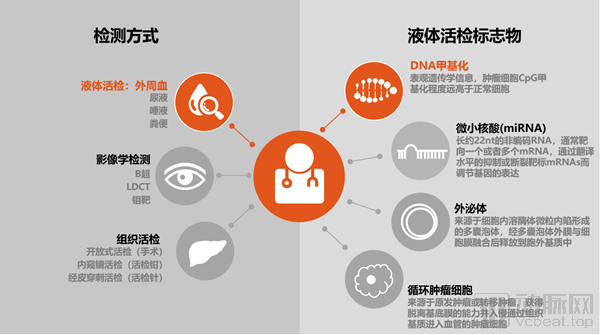
Tumor Detection Methods
In the human genome, approximately 3%–6% of cytosine (C) residues are covalently bonded to methyl groups at the C5 position of CpG dinucleotides under the action of DNA methyltransferases. CpG dinucleotides often exist in dense clusters of 300–3,000 base pairs (bp) known as CpG islands, which are typically located near the transcription start sites of genes and play a role in regulating gene expression.
When DNA is methylated, it inhibits the binding of transcription factors to DNA, leading to gene silencing and a corresponding decrease in protein levels. In cancer cells, which differ significantly from normal cells, the promoter regions of tumor suppressor genes are typically highly methylated. This methylation switches off tumor suppressor genes, thereby allowing cancer cells to grow unchecked. Therefore, detecting DNA methylation levels in patients' peripheral blood can provide insights into tumor growth, enabling early screening and diagnosis of cancer.
The identification of molecular biomarkers consequently defines the direction for associated analytical and detection methods. A variety of nucleic acid analysis and detection platforms are available, such as sequencing, DNA methylation arrays, methylation-specific PCR, quantitative real-time PCR, and nucleic acid mass spectrometry platforms. Among these, the nucleic acid mass spectrometry platform determines the degree of DNA methylation in samples by detecting the mass-to-charge ratio of ionized samples, offering advantages such as rapidity, accuracy, stability, high throughput, and quantitative methylation detection.
Following treatment steps including bisulfite conversion, PCR amplification, in vitro transcription into RNA, and cleavage by uracil-specific endonuclease, methylated cytosine (5mC) is converted to guanine (G), while unmethylated cytosine (C) is converted to adenine (A). Due to the 16-Dalton difference in molecular weight between A and G, the genomic DNA exhibits a detectable mass shift in mass spectrometry before and after processing. Furthermore, since the degree of genomic DNA methylation is linearly and positively correlated with the number of G conversions, this assay enables quantitative determination of the methylation level in sample genomic DNA.
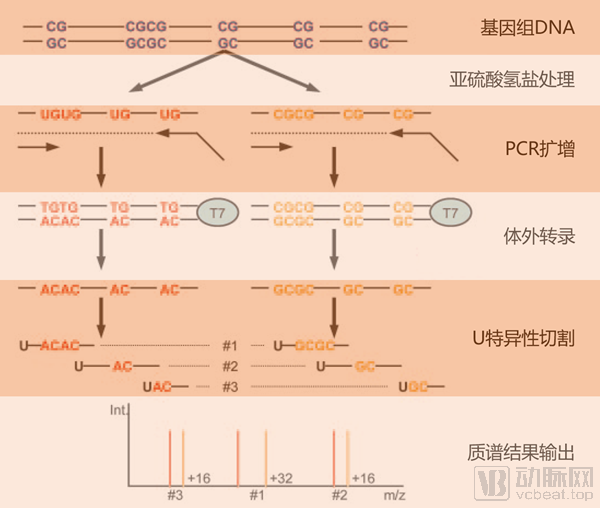
Schematic Diagram of DNA Methylation Mass Spectrometry Detection (Source:Proc. Natl. Acad. Sci. U. S. A., 2005, 102, 15785.)
Furthermore, the mass spectrometry detection platform performs measurements based on the physical parameter of mass-to-charge ratio. Compared with enzymatic reactions, it has lower requirements for environmental conditions and operational procedures, delivers stable results, and enables high-throughput genomic DNA detection. This makes it more suitable for genomic DNA methylation detection across a wide range of scenarios, thereby facilitating cost control and market promotion.
Tengchen Biotechnology is well aware that a large and stable pool of clinical samples is just as critical as robust and reliable technology. Each of the hundreds of potential hypermethylation sites must undergo rigorous clinical validation to ensure its accuracy and reliability.Through collaborations with multiple benchmark hospitals in China, the company’s R&D department has established a clinical specimen bank comprising nearly 10,000 cases and compiled clinical data from over 2,000 lung cancer cases. It will be the first to launch products for differentiating benign from malignant pulmonary nodules, as well as products for early lung cancer screening.
Currently, among adult patients visiting respiratory medicine and thoracic surgery outpatient clinics at multiple hospitals across China, nearly one-third are found to have pulmonary nodules. Physicians often cannot determine whether these nodules are benign or malignant based solely on conventional imaging; additional diagnostic methods, such as tissue biopsy, are required for accurate assessment.
However, because the lungs are not in a static state, conventional tissue biopsy is technically challenging, demands high operational proficiency from physicians, and yields diagnostic results that are constrained by the level of medical expertise available. In contrast, peripheral blood DNA methylation testing, designed for outpatient use, can provide simple, rapid, and accurate differentiation between benign and malignant pulmonary nodules using only 2 mL of routine blood draw. This approach facilitates broad clinical application and holds significant market potential. This is also why numerous leading hospitals are actively pursuing collaborations with Nanjing Tengchen Biotechnology Co., Ltd.
According to research reports, lung cancer is one of the three most prevalent cancers in the general population, while breast cancer ranks among the top three most common cancers in women. Therefore, Tengchen Biotechnology will prioritize the development of original early screening and diagnostic products for lung and breast cancers. By leveraging these early cancer diagnostic products to penetrate the domestic market, the company aims to gradually increase the market share of its early cancer screening products. It will continuously update and iterate its product series based on market demand and patient population characteristics, establishing a solid foothold in the early cancer screening and diagnosis market through robust original research achievements.
Among these, the differentiation of benign and malignant pulmonary nodules and breast nodules falls under the early cancer diagnosis product pipeline. The early cancer screening product pipeline will launch products for early screening of lung cancer and breast cancer.
Despite the severe onset of the COVID-19 pandemic in early 2020, Tengchen Biotechnology’s original plan to establish operations in Nanjing Jiangbei New Area remained on track. The construction of its 1,600-square-meter medical laboratory was completed on schedule, and product development progressed as planned. Looking ahead, Tengchen Biotechnology will continue to advance in team expansion, intellectual property layout, and the clinical application of its products for early screening and diagnosis of tumors. Regarding employee management and professional growth, Dr. Yang Rongxi expressed strong interest in attracting high-level talent with expertise in corporate management and operations, medical project management, quality control, and IVD (In Vitro Diagnostic) registration.

Beijing Chaoshan Capital Investment Management Co., Ltd. operates “Jian Yi Hui” (founded in 2011), China’s most active investor community, positioning itself as a service-oriented platform company leveraging this investor network. Its shareholders include renowned angel investor Wu Shichun, Jia Hongbo, former Secretary-General of the Asset Management Association of China, Wang Zhimin, Chairman of Baodao Optical, and Jiu Wan, one of China’s pioneer angel investors. Through various activities organized by Jian Yi Hui, the company identifies high-potential ventures for early-stage investment or services, and has appointed Professor Sun Liying, former Team Leader of the U.S. FDA Review Division, as its Chief Medical Officer and project evaluator.
As of June 1, 2020, Jianyi Hui had organized more than 300 related events, assisted over 50 enterprises in securing financing, and built a pipeline of more than 300 high-quality companies post-Series A (primarily distributed across healthcare, cloud computing, big data, Internet of Things, artificial intelligence, and high-end equipment manufacturing), while establishing collaborative ties with nearly 20 local governments. Currently implemented and profitable business lines include co-investment funds for projects, financial advisory services, and government relocation advisory services.