

Tailingtuo Biotech Files IPO Prospectus: Pioneering COPD Therapy Leveraging Extracellular Vesicles with Nobel Foundation Endorsement
“Unfortunately, biomedical engineers have tirelessly focused on the development of synthetic nanoparticles, while overlooking the optimal drug delivery system refined by natural evolution over billions of years: natural exosomes,” noted Professor Philip, an immunologist at Yale University.
As early as 1986, exosomes were discovered in the supernatant of sheep red blood cell cultures. With advancing research, scientists have gradually foundExosomes not only exhibit high stability and are readily taken up by cells, but the cell-specific proteins, lipids, and nucleic acids they encapsulate also enable them to function as signaling molecules that transmit information to other cells.In many physiological and pathological processes,Exosomes also play important roles such as antigen presentation in immunity and the delivery of nucleic acids including mRNA and microRNA.
The natural advantages of exosomes in the application of biopharmaceuticals demonstrate their significant commercial potential.
In 2017, Liu Guanhong, founder of Trelento, recognized the promising applications of exosomes/extracellular vesicles (EVs) in biopharmaceutical R&D and decided to pivot from basic medical services. Together with Dr. Takahiro Ochiya, co-founder and Chief Scientist of Trelento, he embarked on joint research into exosomes as next-generation therapeutics derived from stem cell therapy. LeveragingExtracellular Vesicles Secreted by Human Mesenchymal Stem Cells (MSC-EVs): Development of China’s First Biologic Drug for Chronic Obstructive Pulmonary Disease (COPD), Aiming to Address the Current Lack of Effective Therapies
According to a Markets and Markets research report, the global market for exosome research products is projected to achieve a compound annual growth rate (CAGR) of 23.8%, expanding from a market size of $91 million in 2019 to $264 million in 2024.The availability of government funding for life sciences research, a favorable regulatory environment, and the growing attention paid to exosomes in research and diagnostics are also continuing to drive the growth of the exosome market.
A Review of Global Investment and Financing Activities in June: Exosomes Begin to Attract the Attention of Biotech Investors. Major pharmaceutical companies, such as Takeda Pharmaceutical, Sarepta Therapeutics, and Eli Lilly, have started to position themselves in exosome-based therapies and collaborate with leading cell therapy companies, with transaction amounts reaching billions of US dollars.
Unlike abroad, there are currently no exosome products on the market in China. With the release of the “Catalogue of Key Industries for Intellectual Property Support (2018 Edition)” by the China National Intellectual Property Administration, which explicitly lists stem cells and regenerative medicine, immunotherapy, and cell therapy as key industries prioritized for national development and urgent intellectual property support, along with the continuous introduction of other favorable policies, the field of cell therapy has begun to attract increasing attention, making the commercial application of exosomes promising in the future.
As the first company in China to leverage extracellular vesicle (EV) technology for the development of biologics targeting chronic obstructive pulmonary disease (COPD), Telingtuo’s exploratory pathway and R&D achievements warrant in-depth analysis.
Chronic Obstructive Pulmonary Disease (COPD) is an inflammatory lung disease caused by long-term inhalation of or exposure to harmful substances, primarily tobacco smoke. This inflammation can lead to symptoms such as coughing, excessive sputum production, and even narrowing of the bronchi, thereby reducing airflow in the lungs.Furthermore, if the grape-like clusters of small sacs located deep within the bronchial branches—the alveoli—are destroyed and progress to a state of emphysema, the functions of oxygen uptake and carbon dioxide elimination will also be impaired.
This disease is prevalent among middle-aged and elderly individuals with a history of smoking, and the majority of patients remain undiagnosed and untreated. According to WHO statistics, COPD was projected to become the third leading cause of death worldwide by 2020.COPD has gradually become a major chronic disease on par with hypertension and diabetes.
However,Currently, drugs developed for COPD both domestically and internationally are mainly focused on symptomatic relief, with no effective curative treatments available. Telintuo aims to utilize the comprehensive cellular disease information contained in extracellular vesicles (EVs) for the early diagnosis of COPD. Furthermore, it leverages the anti-inflammatory, immunomodulatory, and anti-fibrotic properties of EV-enriched cellular components, such as non-coding RNAs and proteins, to treat COPD.
Since chronic obstructive diseases create a local microenvironment of chronic inflammation at the lesion site, and exosomes secreted by stem cells exhibit natural homing affinity toward such inflammatory microenvironments, they can autonomously accumulate at the lesion site, demonstrating excellent targeting specificity.
Meanwhile, exosomes themselves are not immunogenic,Can be directly absorbed by cells, without the need for additional absorption-enhancing excipients.
Furthermore, numerous studies have confirmed that in exosomes secreted by stem cellsIt contains a variety of cytokines that activate cellular stemness potential and promote cellular self-repair. After being absorbed by damaged cells, these exosomes facilitate the repair and proliferation of cells at the lesion site, ultimately clearing abnormal extracellular matrix deposition (such as collagen fiber deposition in pulmonary fibrosis lesions) and eliminating the microenvironment of chronic inflammation, thereby exerting therapeutic effects on the disease.
VCBeat compared conventional stem cell therapy with stem cell-derived exosome therapy across three dimensions—therapeutic efficacy, target tissue homing capability, and rejection reactions—and found that exosome therapy demonstrates superior efficacy.
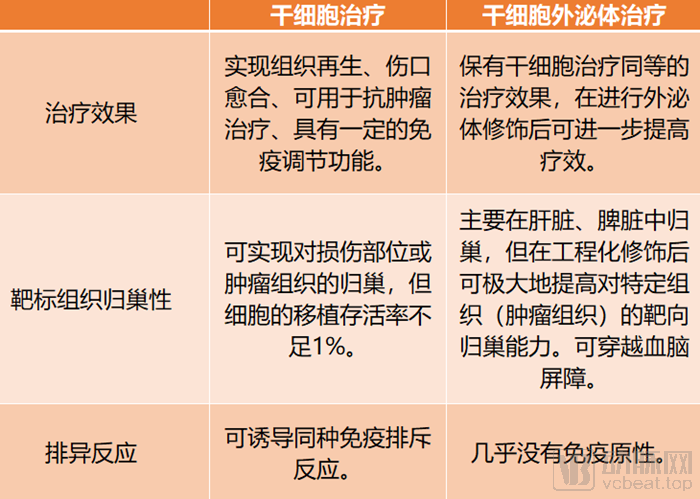
Comparison Diagram: Stem Cell Therapy vs. Stem Cell-Derived Exosome Therapy
To address the current challenges in the clinical translation of exosomes, Telintuo has achieved three major breakthroughs:
1. In addition to traditional mesenchymal stem cells, TelinetoBased on the characteristics of Chinese patients and the features and advantages of donor cell sources, attempts are being made to utilize various other categories of stem cells to obtain exosomes.
2.Collaborated with Japanese counterparts and research institutions (National Cancer Center, Tokyo Medical University) to develop and optimize exosome isolation and purification technologies, and has conducted extensive clinical studies in Japan on related drugs.
3.Collaborate with domestic hospitals and universities to accelerate research on the efficacy and safety evaluation of exosome-based drugs.
Liu Guanhong told VCBeat that Telintuo is currently focusing on the R&D of extracellular vesicle biologics, while also advancing other pipeline products with more visually apparent therapeutic effects, such as treatments for hair loss and graying hair.
To facilitate greater exchange with peers, Liu Guanhong participated in the Fosun Star Future Entrepreneurship Camp. He noted that the camp provided an opportunity for him to engage in discussions with more young professionals, which would inspire new ideas for future research and development. Meanwhile, it also brought to light the previously underexplored applications of extracellular vesicles in biopharmaceuticals, with the aim of continuously improving their development.
“I am like a colorist in the medical community; my fearlessness, born of ignorance, has given me the courage to continuously introduce new experiments here,” Liu Guanhong told VCBeat.
Liu Guanhong likens himself to a colorist imbued with the “fearlessness of ignorance,” a self-perception rooted in the multidisciplinary perspective afforded by his cross-disciplinary background. This broad outlook enables him to view the medical field from a more macroscopic vantage point, integrating innovative ideas from diverse domains and thereby giving rise to more groundbreaking research.
An opportunity arose for him to participate as a founding investor in the Shanghai International Medical Center, where he has served as a supervisor to this day. His involvement in hospital management has afforded him profound insights into the medical community, which in turn provided a direct pathway for the subsequent research on Telitacicept.
Direct management of hospitals enables Terlingto to engage in the most authentic communication with physicians at the earliest opportunity, thereby gaining insights into industry needs, physician requirements, and what truly benefits patients in disease treatment.This not only reduces the time costs associated with communicating with physicians during drug development, but also helps overcome the dilemma in pharmaceutical research where a drug gains only “self-validation” without securing recognition from the industry and the market.
In 2017, Liu Guanhong and Professor Takahiro Ochida co-founded Telingtuo Biotechnology (Shanghai) Co., Ltd.
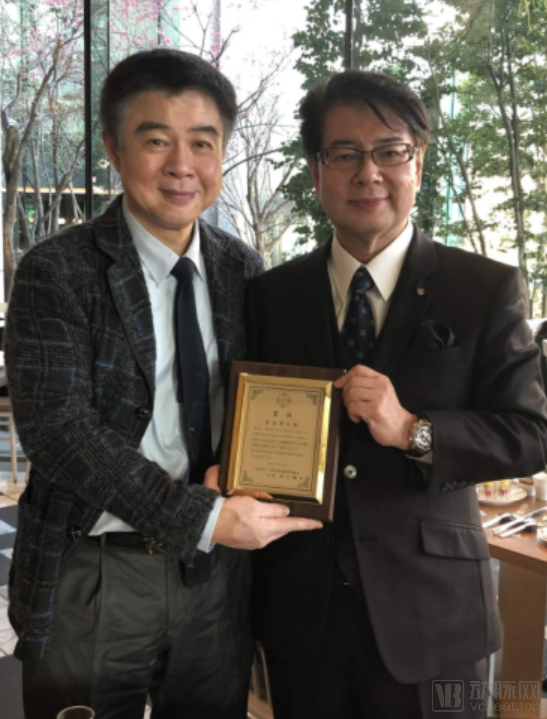
Professor Luo Gu Receives Japan’s Most Prestigious Academic Honor in Cancer Research: The Princess Takamatsu Cancer Research Fund Academic Award
Photo of Liu Guanhong with Professor Luogu
Liu Guanhong describes Professor Takahiro Ochiya with the term “craftsman spirit.” Professor Ochiya possesses profound academic and research expertise in the fields of molecular cell biology, gene therapy, and regenerative medicine.
As a leading academic authority in the field of cell therapy research, Professor Takahiro Ochiya serves as Director of the Division of Molecular and Cellular Medicine, National Cancer Center Research Institute; Professor of the Department of Molecular Cell Therapy, Institute of Medical Science, Tokyo Medical University; Visiting Professor at the Faculty of Science and Engineering, Waseda University; Visiting Professor at the School of Life Science and Technology, Tokyo Institute of Technology; Member of the Academic Committee of the Japanese Cancer Association; President of the Japanese Society for Extracellular Vesicles (JSEV); and Editorial Board Member of the internationally renowned journal Journal of Extracellular Vesicles.
Professor Takahiro Ochiya’s laboratory ranks second globally in cancer research and possesses the most advanced core technologies in Japan and worldwide. It is within this environment that groundbreaking findings such as “extracellular vesicles (EVs)” and “microRNA” have emerged, making this research setting a vital resource for Tivdak’s related clinical trials in Japan.
Currently, Telinuo is conducting animal toxicity and safety studies both domestically and internationally. By collaborating with clinical trial filing hospitals for stem cell therapy in China, it is applying for an Investigational New Drug (IND) application for a novel stem cell drug to accelerate its financing efforts.
Fosun Star Future Research Institute is an incubation and investment platform focused on the big health sector, established by Star Future Capital in reliance on Fosun and Fosun Pharma. Adopting a “community + incubation + investment” model, it explores frontier innovation fields, focuses on entrepreneurial talent, and secures early-stage investments in future unicorns.
In 2020, the Big Health Entrepreneurship Camp launched its second cohort, targeting entrepreneurs in the medical and healthcare sector as well as aspiring innovators. It invited top-tier global mentors and introduced six core incubation modules, offering entrepreneurship courses with the most robust industrial background and practical experience in China.
Students interested in the Fosun Future Entrepreneurship Camp can add the author on WeChat.