

Zap Surgical Systems Files for IPO Following $81M Funding Round to Commercialize ZAP-X® Radiosurgery Platform

Zap Surgical Systems
ZAP-X Radiosurgery Platform Designer and Manufacturer
Recently, VCBeat (WeChat ID: vcbeat) learned thatZap Surgical Systems Announces Completion of $81 Million Equity Financing RoundThis funding round was led by Primavera Capital Group, with participation from GT Healthcare Capital Partners, Chow Tai Fook Enterprises, Shanghai Bay Capital, Foxconn Technology Group, Varian Medical Systems, and Hogi Medical.
The funds raised in this round of financing will be used for the commercialization of the company’s product, the ZAP-X® system. This product received FDA approval in September 2017 and has been exempted from clinical trials in many countries and regions worldwide. It is reported that Zap Surgical Systems has raised over $160 million in total since its inception.
In 1895, German physicist W.K. Röntgen accidentally discovered X-rays while studying cathode rays. In the early days following this discovery, it became a fashion trend for women to have X-ray images taken, and many shoe stores were equipped with novel X-ray shoe-fitting machines. X-rays were soon applied in the medical field as well; however, researchers were unaware that radiation posed a threat to their lives.
In the garden of St. Georg Hospital in Hamburg, Germany, stands a monument dedicated to X-rays, inscribed with numerous names. These individuals tragically lost their lives while conducting research on X-rays. Their deaths gradually raised awareness of the threats that X-ray exposure poses to human health and life.
Nowadays, to mitigate the harmful effects of radiation on people, researchers have developed various medical devices to ensure their safety. However, workers still cannot operate in such environments for extended periods, as radiation from the equipment persists.
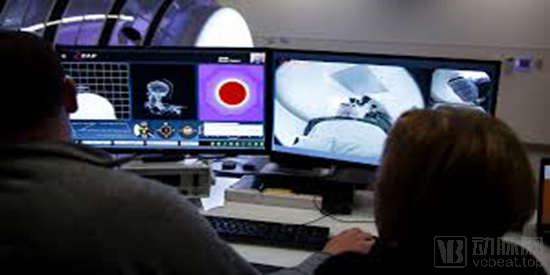
In 2014, Zap Surgical Systems was founded in California, United States. As a company dedicated to the research and development of medical devices in the field of radiosurgery, Zap Surgical Systems is committed to developing next-generation radiosurgical equipment for non-invasive tumor ablation. The company’s ZAP-X® system integrates self-shielding radiation technology with a high-dose-rate linear accelerator, thereby simplifying the treatment process for brain and head and neck tumors.
The establishment of Zap Surgical Systems is closely tied to the experience of its founder. John Adler is the Founder and CEO of Zap Surgical Systems, as well as a Professor of Neurosurgery and Radiation Oncology at Stanford University. Dr. Adler earned his M.D. from Harvard Medical School. In 2018, he was awarded the Cushing Medal by the American Association of Neurological Surgeons (AANS) for his outstanding contributions to the field of neurosurgery.
Adler’s entrepreneurial journey began with a collaboration with Swedish physician Lars Leksell. The “Gamma Knife” developed by Leksell, one of the common stereotactic radiosurgery devices, precisely directs radiation beams to accurately reach the lesion sites in patients’ brains. By securing bolts to the exterior of the patient’s skull to finely adjust the direction of the radiation beams, this approach ensures that surrounding healthy brain tissue remains undamaged.
Adler has unique insights into how to better treat brain and neck tumors in patients. Adler participated in the design of a product prototype, which later became known as the "CyberKnife – Frameless Stereotactic Radiosurgery System." Subsequently, he founded a company (Accuray), and during his tenure, this product was commercialized and applied to patient care.
But Adler did not stop there. He said, “CyberKnife is a breakthrough therapy. It is an effective, non-invasive treatment for brain tumors, but its substantial acquisition and radiation shielding costs limit the potential for widespread adoption. Consequently, high-cost stereotactic radiosurgery equipment is primarily concentrated in large urban hospitals.”
Adler believes that the barriers preventing patients from accessing stereotactic radiosurgery equipment are the production costs and complexity of the devices,To facilitate the widespread adoption of radiosurgical equipment, Adler focused on developing another therapeutic device—the ZAP-X®.

John Adler, Founder and CEO

ZAP-X® is a dedicated, self-contained, and self-shielded radiosurgery device used to eradicate benign and malignant lesions in the intracranial and cervical spine regions (sometimes extending to C7).
The linear accelerator resembles a large gyroscope, mounted within a yoke assembly equipped with radiation shielding. Each yoke rotates precisely around a common isocenter. The imaging system rotates around the patient’s head, providing precise three-dimensional localization (length, width, and depth) of the lesion. Prior to and during radiotherapy, correlations between images formed by non-coplanar X-rays are used to determine the position of the patient’s cancerous cells relative to the machine’s isocenter.
This mechanical configuration enables linear beams to perform cross-fire irradiation of cancer cells. The therapeutic beams achieve precise positioning through the rotation of the two aforementioned independent linear accelerators and the precise movement of the treatment couch. Most components required for beam generation, such as the radiofrequency power supply, waveguide system, electronics for triggering the beam, and critical radiation shielding, are mounted on or integrated into the patient’s treatment unit.
The device’s radiation shielding relies on a shielding assembly mounted on a steel frame, which consists of a rotating housing and pneumatic doors. During treatment, the patient lies on a movable treatment table that extends freely under the physician’s control.
Overall, ZAP-X® offers the following advantages:
1. Radiation self-shielding function.Conventional radiosurgery systems require expensive and complex radiation shielding to mitigate the harmful effects of radiation on the body. The ZAP-X® system can deliver medical services in virtually any location, including satellite facilities, physician offices, and other non-surgical settings.
2. High-dose-rate linear accelerator.ZAP-X® utilizes state-of-the-art linear accelerator technology, offering multiple non-coplanar beam paths without the need for additional radiation sources.
3. Safety.The most critical aspect in radiology is the control of radiation dose, and ZAP-X® provides a dose verification system. Through this system, physicians can monitor the radiation dose delivered during treatment in real time.
4. Reduce costs.ZAP-X® reduces the need for radiation shielding through its self-shielding technology, thereby significantly lowering medical costs. Additionally, it is not constrained by location, enabling healthcare services to reach a broader patient population.
To validate the safety of the ZAP-X® system and to provide researchers with a more comprehensive understanding of its specific details, Zap Surgical Systems collaborated with relevant researchers to conduct studies on the ZAP-X®.

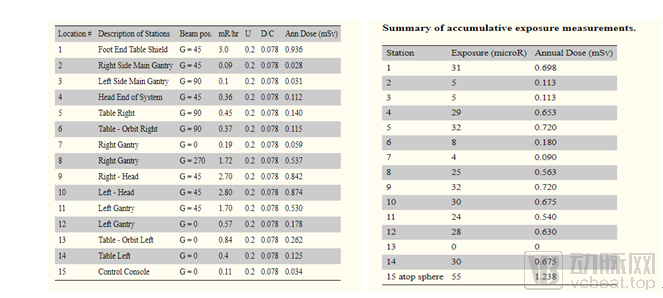
According to one of the trials, the maximum predicted annual dose is 0.936 mSv. The NCRP (National Council on Radiation Protection and Measurements in the United States) provides recommendations for maximum radiation doses: the maximum annual effective dose for a member of the general public is 1.0 mSv, while the maximum annual occupational dose limit for healthcare workers is 50 mSv.Trials have demonstrated that the annual cumulative dose for medical personnel using ZAP-X® was reduced to 0.85 mSv.
Following the publication of research and trial reports by multiple peers, the safety of the ZAP-X® system has been validated. While conducting trials, Zap Surgical Systems is also planning to seek partners to commercialize its product.
In 2019, the ZAP-X® system was made available to the Barrow Brain and Spine Institute, the world’s largest facility dedicated to the treatment and research of neurological disorders, which has consistently been ranked among the top neurosurgical training centers in the United States.
In 2020, the First Medical Center of the Chinese PLA General Hospital partnered with Zap Surgical Systems to introduce Asia’s first ZAP-X® stereotactic radiosurgery system for brain and head/neck tumors/lesions, successfully completing the region’s inaugural patient treatment.
Previously, ZAP-X® conducted a clinical trial to obtain approval from China’s National Medical Products Administration (NMPA). This clinical trial treated 55 patients and evaluated their overall safety and treatment efficacy. Currently, the ZAP-X® device has received approval from the Center for Medical Device Evaluation (CMDE) of the NMPA. With this approval, the ZAP-X platform is expected to achieve widespread clinical application rapidly following the success of the clinical trials.
Several months ago, the “Survey on the Basic Status of Radiotherapy Personnel and Equipment in Mainland China in 2019” was published in the journal China Oncology. The survey showed that a total of 1,463 institutions in mainland China provided radiotherapy services in 2018; however, the national density of radiotherapy equipment (1.5 units per million population) remained below the World Health Organization’s recommendation (2–4 units per million population) and far lower than the level of 6–12 units per million population observed in developed countries and regions.
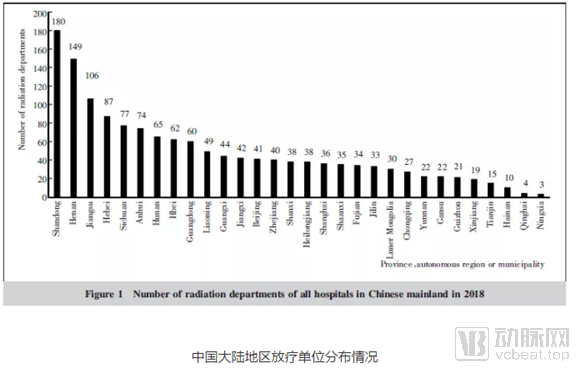
It is understood that radiotherapy centers capable of delivering advanced radiation therapy technologies are predominantly concentrated in tertiary Grade A hospitals and specialized oncology hospitals. Most prefecture-level or county-level hospitals either lack radiotherapy centers entirely or operate with outdated technologies.
Unequal distribution of high-quality radiotherapy resources, shortages of radiotherapy equipment, and outdated radiotherapy technologies have resulted in nearly 60% of Chinese patients who should receive radiotherapy failing to obtain timely and effective treatment, directly impacting the overall five-year survival rate of cancer patients in China.
With the liberalization of policies governing the allocation of large-scale medical equipment and the effective supplementation of social capital, the number of radiotherapy facilities and devices is expected to continue increasing, thereby addressing the issue of patients’ inability to receive timely medical care.
Currently, many medical device companies have developed equipment for precision radiotherapy, and some have even integrated medical imaging with AI technology. It is foreseeable that precision radiotherapy will be widely adopted in the future, and radiation will no longer pose a threat to the lives of healthcare professionals and patients.