

Vertos Medical Files for IPO Following $106M Raised to Advance Minimally Invasive Spine Procedure mild® for Lumbar Spinal Stenosis

Vertos Medical
Developer of Minimally Invasive Treatments for Lumbar Spinal Stenosis (LSS)
As the old saying goes, "The child wishes to care for their parents, but they are no longer there." As parents age, their physical functions, immunity, and other aspects decline significantly, to the point where they can no longer travel the world with their children. They may even pass away just when their children are finally able to provide them with protection and support.
Lumbar Spinal Stenosis (LSS) is one of the most common conditions affecting middle-aged and elderly individuals. Clinically, it is primarily characterized by neurogenic intermittent claudication and weakness or discomfort in the buttocks, thighs, and calves. These symptoms limit the patient’s ability to walk for prolonged periods and necessitate spinal flexion to alleviate pain.
“I want to play with my grandchildren,” said a patient with lumbar spinal stenosis. He reported that pain caused by the condition had forced him to reduce his daily activities by 50%.
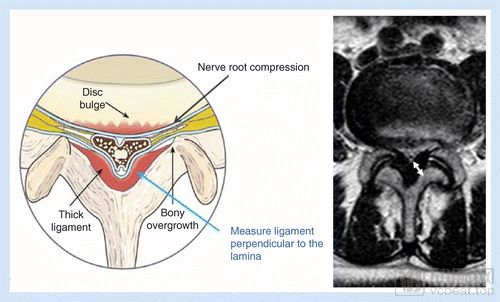
Spinal Cross-Section Showing Ligamentum Flavum Hypertrophy
Currently, the standard treatments for lumbar spinal stenosis are medication or surgery. Post-surgery, patients require a recovery period of up to six to eight months. Medication offers only symptomatic relief rather than addressing the underlying cause; it can alleviate pain in the short term but does not provide a cure. Both approaches result in either a prolonged rehabilitation period or an increased financial burden.
Deeply Rooted in Radiology for Years, Founding a Company Targeting Lumbar Spinal Stenosis
According to data from the U.S. Census Bureau,Seven million Americans aged 40 to 65 suffer from lumbar spinal stenosis.In response to this market demand, Vertos Medical developed a minimally invasive surgical instrument kit for lumbar spinal stenosis—mild®.
The mild® procedure requires only a tiny incision, through which a minimally invasive, safe, and effective surgery for lumbar spinal stenosis can be performed under fluoroscopic guidance. When surgeons use this device system, the procedure does not require general anesthesia, implants, or sutures.
In 2005, Vertos Medical was founded in Los Angeles, United States. As a healthcare company, it is dedicated to the development and sale of medical devices for treating common spinal conditions. Lumbar spinal stenosis is diagnosed through imaging examinations. The two founders of Vertos Medical, Don Schomer and Dave Solsberg, have decades of extensive experience in the field of radiology. Their years of study and professional experience have significantly contributed to the establishment of the company as well as the research, development, and commercialization of its products.
Don Schomer spent 11 years studying at the University of Houston, UT Health San Antonio, and Rice University. He earned bachelor’s degrees in Biology, Physics, and Biomedical Engineering from the University of Houston, a Doctor of Medicine (M.D.) degree from UT Health San Antonio, and a Master of Business Administration (MBA) degree from Rice University. Additionally, Dr. Schomer completed two years of training in neuroradiology at Stanford University Medical Center.
In addition, during his studies, Don Schomer completed a one-year internship as a surgical resident at the University of Texas Health Science Center, after which he worked in the Department of Radiology at the same hospital for four years. Don Schomer served as an Associate Professor at the University of Texas.

Vertos MedicalCo-founder Don Schomer
Dave Solsberg earned his M.D. from the University of Saskatchewan, pursued training in radiology and neurosurgery at the University of Toronto, and subsequently subspecialized in neuroradiology at the University of California, San Francisco (UCSF).
Dave Solsberg worked at Neuroradiologist for 10 years. As a healthcare services company, Neuroradiologist specialized in the field of medical imaging, providing patients with detailed physical examination reports. Subsequently, Dave Solsberg co-founded Vertos Medical with Don Schomer.

Vertos Medical Co-Founder Dave Solsberg
Single Financing Round Exceeds 100 Million: R&D of Surgical Instruments to Shorten Patient Recovery Time
Vertos Medical has completed a total of 11 rounds of financing,It has cumulatively raised $106.3 million (approximately RMB 742 million). Among these, three individual financing rounds reached RMB 100 million each, with the largest single round approaching RMB 200 million.What features of Vertos Medical’s mild® product have earned it investor favor?
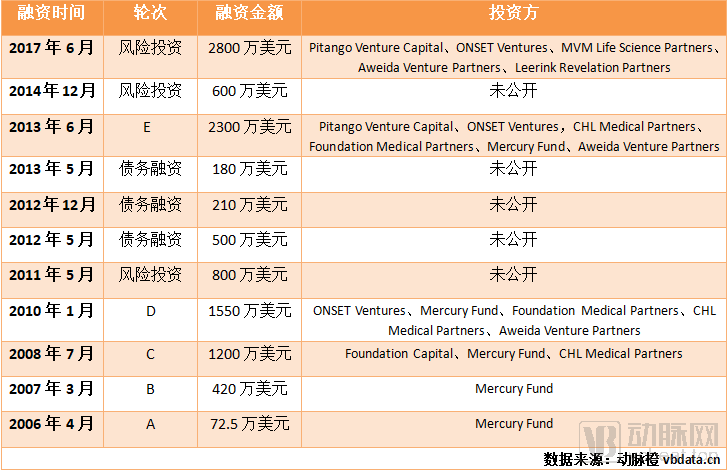
Vertos Medical’s product advantages lie in the following aspects:
1. Minimally invasive.The procedure requires only a tiny incision.
2. Short recovery time. Patients who have undergone surgery are often able to move freely after 24 hours;
3. Alleviate the financial burden on patients.Traditional pharmacological and surgical treatments impose a certain financial burden on patients. The mild® procedure not only shortens the recovery period but also alleviates this economic burden, while fundamentally addressing the root cause of lumbar spinal stenosis.
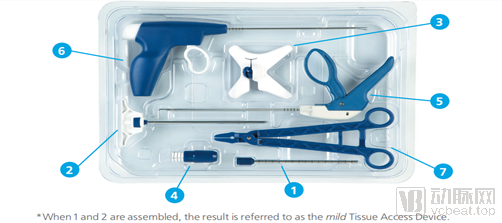
Vertos Medical's mild® product
Note: ① Mild portal vein; ② Trocar and handle; ③ Portal vein stabilizer; ④ Depth guide; ⑤ Bone carving rongeur; ⑥ Soft tissue shaper; ⑦ Surgical forceps
The mild portal vein serves as a cannula. The trocar, bone carving rongeur, and tissue shaver can access the surgical site through the cannula. The cannula is 15.9 cm in length, with marked gradations every 1 cm. This allows for accurate determination of the depth of trocar insertion into the patient’s skin, thereby avoiding unnecessary injury to the patient.
The portal vein stabilizer is used to control the slight angle formed between the portal vein and the patient's skin. Precise control of the surgical angle allows for faster cutting and removal procedures at the target site. In addition to angle control, depth must also be strictly regulated. Depth guides (in 5 mm increments) can be used to adjust the insertion depth of bone carving burs and tissue sculptors at the patient’s spine.
The bone carving rongeur consists of two parts: a handle and a trigger. The tip can be connected to a trocar and the bone carving rongeur. During use, the trigger is pressed to advance the trocar for cutting the bone. The trocar is then removed, and the bone rongeur is used to extract the cut bone fragments. During the advancement of the trocar, the portal vein stabilizer must be fixed, specifically when the trocar just contacts the lumbar vertebrae.
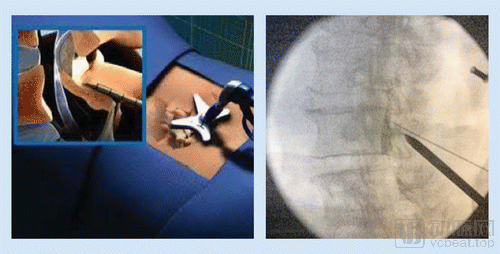
Portal Vein Stabilizer-Stabilized Trocar
Tissue ShaverThe tissue shaver is primarily used for the removal and cutting of soft tissue. It consists of two main components: a handle and a finger trigger. Its tip is designed with a geometry that facilitates the cutting of tissue structures, making it particularly suitable for the resection of the ligamentum flavum. Once the target tissue is identified, advance the cutting tube forward and press the trigger to activate the cutting mechanism, enabling remote tissue resection at the tip. Upon completion of the cutting procedure, the resected tissue can be removed along with the device during withdrawal.
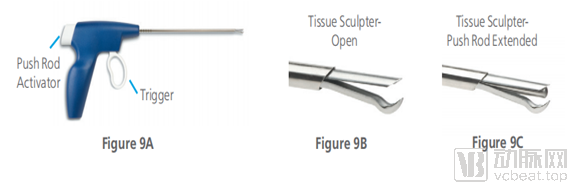
Soft Tissue Sculptor
Launch 12 clinical trial projects, with a maximum duration of two years
To verify the safety and efficacy of this product, Vertos Medical conducted multiple clinical trials. To date,The company has completed 12 clinical trials.
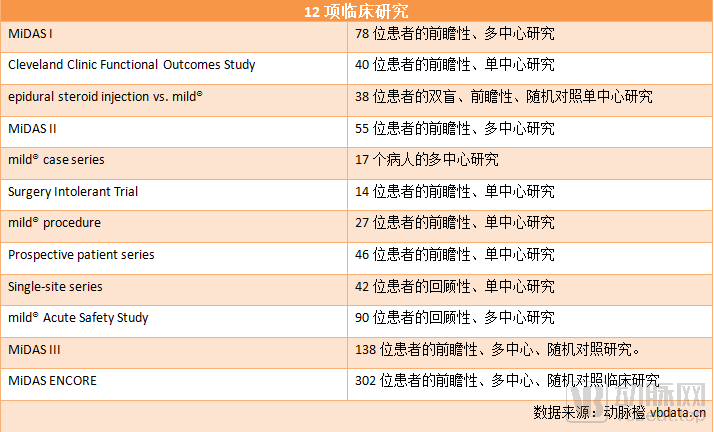
In September 2018, Vertos Medical completed a two-year trial. This study was approved by the Centers for Medicare & Medicaid Services (CMS).The company published the trial results in Regional Anesthesia & Pain Medicine, the official journal of the American Society of Regional Anesthesia and Pain Medicine.
The trial results showed that no patients experienced spinal instability or minor fractures during the study, and all outcome measures indicated significant improvements in patient health. The successful conduct of the clinical trial fully demonstrated the safety and efficacy of this surgical instrument. Compared with other more invasive spinal surgery devices, this instrument also reduced the incidence of complications to a certain extent.
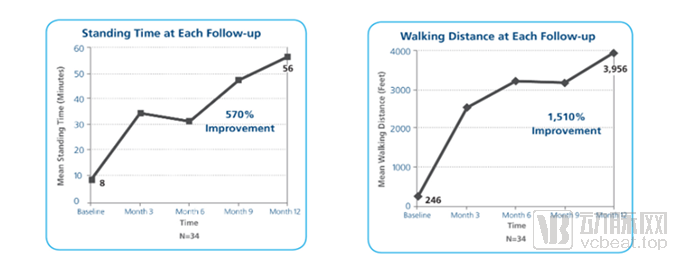
Test Results (Image sourced from the company's official website)
Furthermore, to help patients learn more about lumbar spinal stenosis, Vertos Medical provides a patient case-sharing platform on its official website, where patients can browse similar experiences shared by others to understand the treatment outcomes achievable with the mild® procedure.
The mild® procedure has specific eligibility criteria for patients. It is first necessary to confirm that the patient’s lower back, back, and leg pain are caused by lumbar spinal stenosis, and then imaging must verify lateral spinal stenosis with a ligamentum flavum (LF) thickness ≥2.5 mm. Based on these criteria, Vertos Medical provides a self-assessment questionnaire to enable patients to preliminarily evaluate their condition and determine whether further imaging studies are warranted.
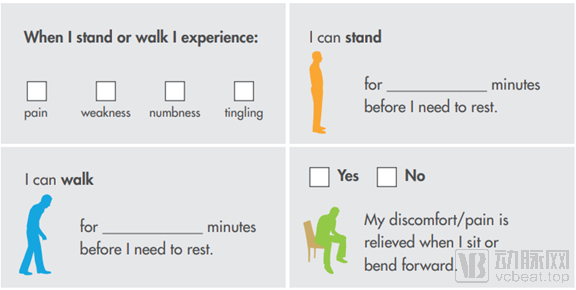
Screenshot of the Patient Self-Assessment Form
Insights for Chinese Enterprises from Vertos Medical, Inc.
The following insights can be drawn from various aspects of Vertos Medical:
1. Clinical Trials;Vertos Medical has conducted multiple prospective, multicenter clinical trials, with the majority of trial results available in official press releases. This approach enables patients to access specific trial data, thereby enhancing confidence in the product among both patients and physicians.
2. Patient Information Exchange;Vertos Medical’s patient information-sharing platform serves as a valuable model for Chinese companies to emulate. When individuals are diagnosed with a disease, they often seek comprehensive information about their condition; information published on official websites carries greater credibility than that found on other platforms.
The emergence of the concept of minimally invasive medicine represents an advancement in the medical field, driven by a holistic approach to treatment. Minimally invasive surgery places greater emphasis on improving and facilitating recovery in various aspects, including patients’ psychological well-being, physiological status (particularly pain management), and quality of life. This approach maximizes patient-centered care and alleviates suffering. Today, minimally invasive surgical techniques are no longer limited to endoscopic procedures; they have been widely adopted across diverse specialties, including spinal surgery, orthopedics, oncology, and other surgical fields.
With the advancement of technology, people have become increasingly aware of the importance of health and have higher expectations for treatment outcomes. Factors such as the times, technology, and society are all driving the development of minimally invasive surgery, and the current level of minimally invasive surgery has basically met the various needs of patients.