

China's Pharmaceutical Market Faces Rare Contraction in 2020 as Innovative Drugs Emerge as Key Growth Driver
On August 13, the 2020 Xipu Conference, themed “Sun Chasers’ Perseverance in Action—Ushering in a New Era of Full Life-Cycle Health Management,” grandly opened in Boao, Hainan.
On the opening day, a series of intellectual feasts unfolded in rapid succession, featuring macro-environmental analysis, policy interpretation, comprehensive market insights, release of key data, compelling speeches and reports, and dynamic forum exchanges. The pharmaceutical retail market, capital market, and innovative drug market drew significant attention, sending clear signals such as the growing prominence of community pharmacy value, a surge in investments in the broader health industry, and accelerated commercialization of innovative drugs.
According to the latest data on the medication market released by Zhongkang CMH, in 2019, the total size of China’s pharmaceutical market (excluding crude herbal materials, traditional Chinese medicine decoction pieces, and formula granules) reached RMB 1.82 trillion, representing an 8.9% year-on-year increase from 2018, with the growth rate rebounding compared to the previous year.
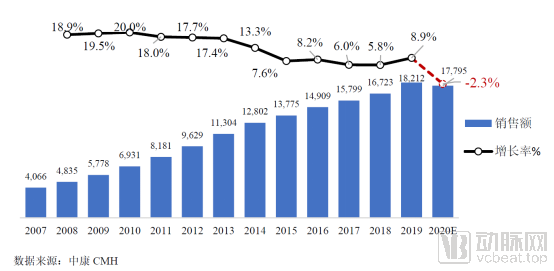 Figure 1: Omnichannel Market Size of China's Pharmaceutical Market (RMB 100 million)
Affected by the pandemic, the terminal pharmaceutical market experienced a significant decline in the first quarter of 2020. For the full year of 2020, China’s pharmaceutical market size is estimated at approximately RMB 1.78 trillion, representing a 2.3% decrease from 2019 and marking a rare instance of negative growth.
By channel, in 2019, the tiered hospital market accounted for 68.9% of the total pharmaceutical market, while retail pharmacies accounted for 18.8%.
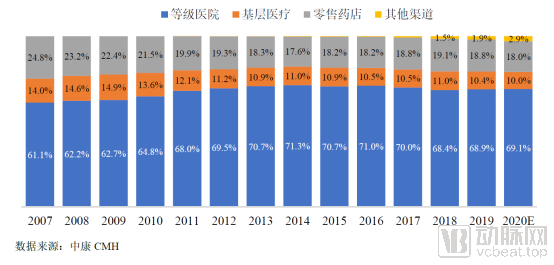 Figure 2: Omnichannel Market Share of the National Pharmaceutical Market
In the retail market, the overall size of retail terminals continued to expand, reaching RMB 455.5 billion in 2019, with a year-on-year growth of 4.7%, indicating a slight slowdown in the growth rate.
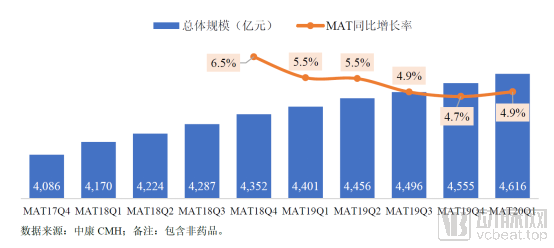 Figure 3: Scale and Growth Rate of China’s Retail Pharmacy Terminal (MAT: Rolling Annual Data)
As a vital component of the broader health industry ecosystem, community pharmacies serve as natural venues for health education and play a crucial role in lifecycle health management.
Amid the pandemic, community pharmacies have played an increasingly prominent role as the most numerous and accessible outlets for pharmaceutical supplies. Driven by sales of epidemic-related medications, personal protective equipment, and disinfection products, the retail pharmacy terminal market reached RMB 461.6 billion in MAT Q1 2020, representing a year-on-year increase of 4.9%.
As healthcare reform policies such as the dynamic adjustment of the national reimbursement drug list, the separation of prescribing from dispensing, and the national volume-based procurement are gradually implemented, the importance of the pharmaceutical retail market will continue to rise.
The health and wellness industry is a foundational and strategic sector critical to national welfare and the people's livelihood. Aligned with the demands of human progress and contemporary development, it has garnered significant favor among investors.
According to statistics, stocks related to the big health industry currently account for approximately 13% of the global stock market capitalization. Particularly in developed countries, the big health industry has become a powerful driver of overall national economic growth.
The “Outline of the ‘Healthy China 2030’ Plan” proposes that by 2020, the total scale of China’s health service industry will exceed RMB 8 trillion, and reach RMB 16 trillion by 2030.
Following the pandemic, which served as a nationwide health education campaign, demand in the big health industry has undergone significant upgrading. The sector has emerged as a new growth pole, prompting major cities to compete in building big health industrial clusters and sparking a new wave of investment in the industry.
The Capital Summit at this year’s Xipu Conference also indirectly reflects the investment boom in the big health industry. Not only did attendance reach a record high, but the combined market capitalization of listed company participants also hit an all-time high, accounting for approximately half of the total market value of the pharmaceutical sector on China’s A-share market.
Data shows that the pharmaceutical and healthcare sector has consistently been a focal point of China’s capital market—in 2019, it accounted for 10.79% of the total stock market capitalization, ranking second among all industries.
It is easy to foresee that with the advent of a new era of whole-life-cycle health management, investment in the high-growth “big health” industry is poised for an explosive surge.
In the ecosystem of the health industry, innovative drugs can be described as the crown jewel, representing a high-potential incremental market that is becoming a new growth engine for the sector.
In recent years, benefiting from the reform of China’s drug review and approval system, the number of innovative drugs approved in China has increased significantly, and the approval time has been substantially shortened, ushering in a period of rapid development for innovative drugs in China.
Recently, the "2019 Annual Drug Review Report" released by the National Medical Products Administration (NMPA) showed that in 2019, the Center for Drug Evaluation (CDE) accepted a total of 700 registration applications for Class 1 innovative drugs (covering 319 varieties), representing a 20.8% increase in the number of varieties compared to 2018.
Regarding approval status, in 2019, the Center for Drug Evaluation (CDE) approved 10 Class 1 innovative drugs for marketing and approved 58 imported original research drugs (including new indications).
Driven by numerous favorable policies, not only is the market launch of innovative drugs accelerating, but their commercialization process is also gaining momentum. Commercialization capabilities for innovative drugs are becoming increasingly critical in future market competition. Whether in national reimbursement drug list (NRDL) negotiations, channel selection, or academic promotion, all are facing new changes brought about by new rules of the game.
National Reimbursement Drug List (NRDL) negotiations have become a mandatory step in the commercialization of innovative drugs. In recent years, an increasing number of innovative drugs have been included in the NRDL through negotiations. During last year’s NRDL adjustment, 70 new drugs were added to the National Reimbursement Drug List via negotiations. The successfully negotiated drugs were predominantly newly launched agents with high clinical value, sending a clear signal of support for pharmaceutical innovation.
Furthermore, the increasing maturity of Direct-to-Patient (DTP) pharmacies has provided a new channel for the commercialization of innovative drugs. Compared with the series of market access hurdles required for innovative drugs to enter the hospital market—such as tender procurement, hospital formulary listing, and physician prescribing—the time-efficiency advantage of DTP pharmacies is evident, attracting a growing number of innovative pharmaceutical companies to participate.
Meanwhile, commercial health insurance, as an important supplement to the payment side, is also rising rapidly. Data from the China Banking and Insurance Regulatory Commission (CBIRC) shows that in 2019, the original premium income of health insurance was RMB 706.6 billion, a year-on-year increase of 29.70%. In the first half of this year, the premium income of health insurance reached RMB 400.3 billion, a year-on-year increase of 16.5%, continuing to maintain high growth. As an important supplement to medical insurance, commercial health insurance can promote the coordinated development of medical insurance, the pharmaceutical industry, and medical services, helping to accelerate the commercialization of innovative drugs and benefit a wide range of patients.
As the China Health Industry Ecosystem Conference, the Xipu Conference annually provides forward-looking industry forecasts and analyses of market hotspots. Current indicators suggest that building a full-lifecycle health management model is the optimal pathway for the health industry to elevate its development dimension and achieve supply-side optimization.
About the Westlake Conference:
China Health Ecology Organization (CHEO), officially known as the China Health Industry (International) Ecological Conference, is hosted by Zhongkang Information and held annually in August in Boao, Hainan.
The 2020 Westlake Conference, themed “Perseverance of the Sun Chasers: Ushering in a New Era of Full-Life-Cycle Health Management,” centered on five core value pillars—“Collaboration, Innovation, Technology, R&D, and Capital.” It featured six flagship summits: the Pharmaceutical Industry Collaboration and Development Summit, the Health Industry Capital Summit, the Innovative Drug Development Summit, the Health Technology R&D Sharing Conference, the New Marketing Forum, and the Roundtable on Full-Life-Cycle Health Protection. Concurrently, the conference hosted more than 50 parallel forums and high-level business events, along with five major industry-wide activities.
This year’s Xipu Conference will host over 50,000 representatives from various sectors of the health industry, including 6,000 official delegates. These delegates represent government agencies; more than 300 domestic and international capital institutions; over 1,000 leading domestic and international brand manufacturers (covering innovative drugs, generic drugs, proprietary Chinese medicines, Chinese herbal decoction pieces, health supplements, and medical devices); more than 1,800 mainstream commercial retail enterprises; over 100 new technology companies; more than 50 innovative R&D firms; over 300 experts (including academicians from the Chinese Academy of Sciences and the Chinese Academy of Engineering, scientists, clinical experts, and industry research specialists); more than 30 commercial insurance institutions; over 200 private healthcare service providers; and more than 50 major media outlets from within and outside the industry.
As China’s prestigious health industry conference, the Xipu Conference centers on the core themes of “Collaboration, Innovation, Technology, R&D, and Capital.” It brings together leading institutions across the health sector—including pharmaceuticals, commerce, investment, research and development, technology, healthcare, health services, and finance and insurance—to establish a global health industry summit that provides “decision-making” and “connectivity” support for the development of the health industry.
The Westlake Pharmaceutical Conference (Xipu Hui) integrates forward-thinking ideas and information exchange, strategic cooperation and communication, high-end industry image display, and cross-sector integration. Upholding the Xipu spirit of “Responsibility and Commitment,” it advocates mainstream values in China’s health industry and leads industrial innovation and transformation.