

Sight Diagnostics Files for IPO: AI-Powered Blood Analysis Platform Enables 19-Parameter Testing from Two Drops of Fingerstick Blood

Sight Diagnostics
Developer of Nursing Blood Diagnostic Equipment
Recently, Sight Diagnostics, a developer of blood analysis equipment, announced the completion of a $71 million Series D financing round. Investors in this round included Koch Disruptive Technologies, OurCrowd, and Longliv Ventures. The primary purpose of this financing is to drive the development of the company’s products in the U.S. market.
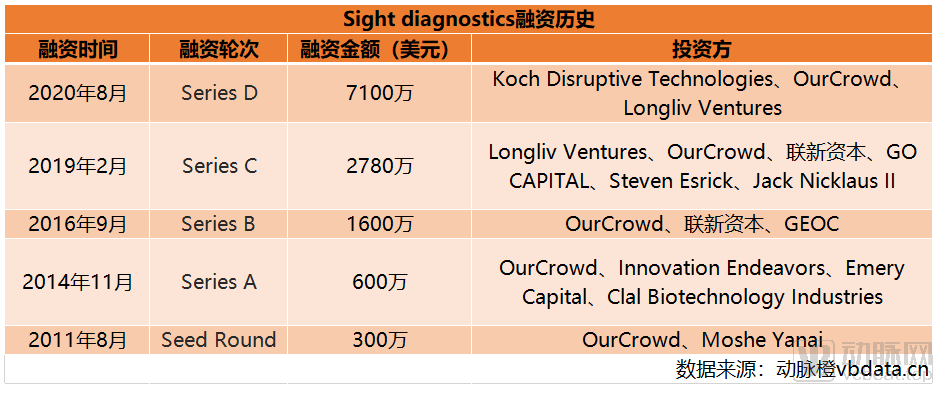
Sight Diagnostics was founded in 2011 by Daniel Levner and Yossi Pollak, with its headquarters located in Tel Aviv, Israel. Since its inception, Sight Diagnostics has been dedicated to the research and development of convenient and accurate blood analyzers.
Dr. Daniel Levner was a scientist at the Wyss Institute for Biologically Inspired Engineering at Harvard University, holding a B.S. in Electrical Engineering and an M.S. in Aeronautics and Astronautics from Stanford University, as well as a Ph.D. in Engineering Science from the University of Toronto. Dr. Daniel Levner currently serves as Chairman of the Scientific Advisory Board at Sight Diagnostics.
Yossi Pollak is the CEO of Sight Diagnostics and holds an MBA from INSEAD, the business school in France. During his studies at INSEAD, he won first place in a business competition; the project he entered for this competition provided the inspiration for the later founding of Sight Diagnostics.
It is understood that blood tests conducted in advanced laboratories are currently expensive and involve long waiting times for results. In the United States, for example, a comprehensive blood panel can cost anywhere from $100 to $1,500. In some developing countries, prices are even higher due to a lack of necessary equipment.
Hematology AnalysisHematology analysis is a technique that examines substances such as red blood cells and white blood cells through detection. Variations in complete blood count (CBC) results can reveal numerous disease states, playing a crucial role in the diagnosis and treatment of diseases.
Dr. Daniel Levner stated, “Complete blood count analysis is one of the most common tests worldwide, but current technologies struggle to rapidly deliver comprehensive diagnostic results.” Sight Diagnostics aims to simplify blood testing as much as possible, enabling general practitioners and smaller clinics to perform blood tests directly without relying on hospital laboratories or outsourced testing facilities.
In 2014, Sight Diagnostics launched its first blood diagnostic product—the Parasight microscopic malaria diagnostic device, which can simultaneously test blood samples from up to thirty individuals.
Parasight operates by combining digital fluorescence microscopy with computer vision algorithms. Since its development, Sight Diagnostics has published three journal articles detailing the clinical trial results of Parasight. As of 2019, Parasight had been used in 600,000 malaria tests across 25 countries.
The computer vision algorithms used in the Parasight product provided the technical foundation for the subsequent development of Sight OLO.
Sight OLO is an AI-powered blood analysis device developed by Sight Diagnostics. In terms of appearance, the Sight OLO is about the size of an oven, but its functionality is remarkably powerful.
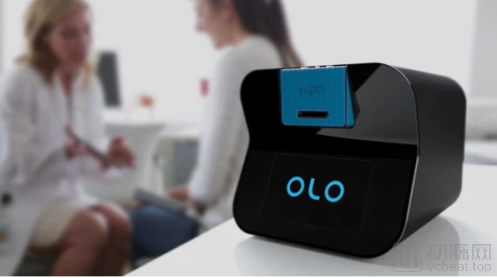
Sight OLO works by first digitizing blood samples into microscopic images, then analyzing the images using computer vision algorithms and AI technology to finally obtain a complete blood count (CBC). The entire process takes only ten minutes.
If a physician chooses to use the Sight OLO for patient blood analysis, only two drops of blood collected from the patient’s finger are required to obtain results for 19 parameters. Upon initial use of the Sight OLO, the device’s display will show arrows providing operational guidance. Regardless of whether staff members have prior hands-on experience, they can successfully complete the blood test by following these instructions.
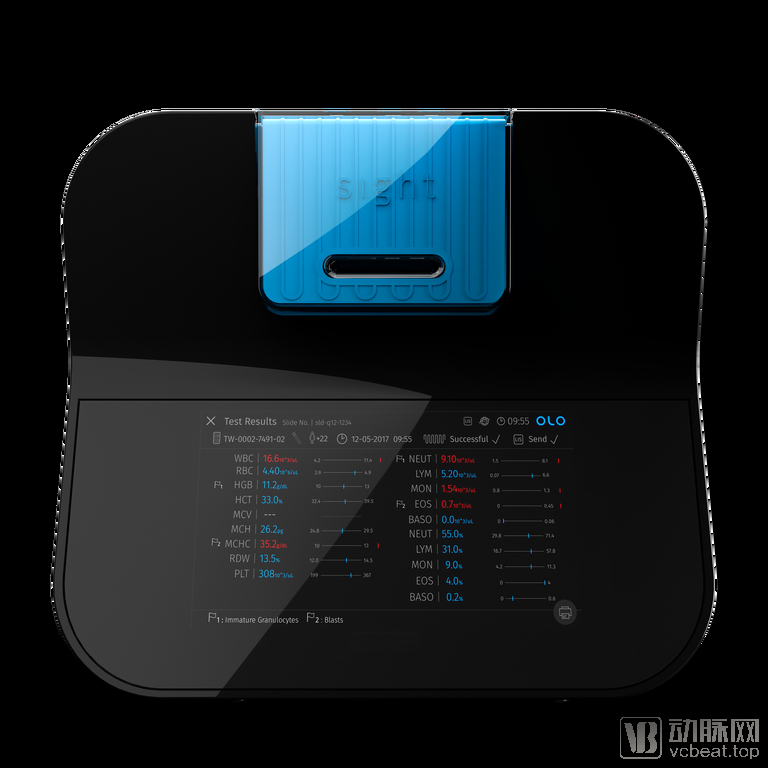
To validate the effectiveness and accuracy of Sight OLO, Sight Diagnostics conducted a clinical trial at Shaare Zedek Medical Center in Israel in early 2018. The study enrolled 287 volunteers and primarily compared blood test results obtained from the Sight OLO and the Sysmex XN series hematology analyzers.
Test results demonstrated that the Sight OLO is capable of reliably analyzing 19 parameters. Subsequently, Sight Diagnostics submitted an application for CE marking based on these trial outcomes. In July 2018, Sight Diagnostics announced that the Sight OLO had received CE certification.
After securing approval to enter the European market, Sight Diagnostics turned its attention to the United States. In 2019, Sight Diagnostics conducted clinical trials at NewYork-Presbyterian/Columbia University Irving Medical Center and Boston Children’s Hospital. That December, Sight Diagnostics announced that Sight OLO had received FDA 510(k) clearance, enabling its distribution to hospitals and medical laboratories across the United States.
Sight OLO integrates innovations in physics, optics, sample preparation, and AI-based computer vision algorithms. This breakthrough earned Sight Diagnostics a spot on Fast Company’s list of the World’s Most Innovative Companies of 2019.
Sight OLO delivers performance comparable to existing hematology analyzers, and its compact size allows it to be deployed beyond the central laboratory. This has had a significant impact on departments such as the emergency department, neonatal intensive care unit (NICU), and oncology.
To help society respond to the current COVID-19 pandemic, Sight Diagnostics has established a partnership with Sheba Medical Center in Tel Aviv. Typically, when medical centers conduct COVID-19 testing on suspected cases, they must first collect blood samples from patients at the hospital and then send these samples to a testing center. Under normal circumstances, it takes several hours for the testing center to receive the samples.
Through its partnership with Sight Diagnostics, Sheba Medical Center can conduct blood tests using the Sight OLO at pre-established testing sites, significantly improving the efficiency of COVID-19 testing. Moreover, this approach further minimizes contact between patients suspected of having COVID-19 and others.
Sight Diagnostics has filed 20 patents to date, of which 8 have been granted.
It is reported that Sight Diagnostics has established partnerships with multiple healthcare service providers and distributors, including major pharmaceutical companies such as Pfizer. Sight Diagnostics plans to deploy over 1,000 Sight OLO units in the coming years and also intends to develop a cloud-based remote scanning service.
Amid the broader push toward smart healthcare, the intelligent and networked transformation of medical devices is accelerating. Hematology analyzers are essential equipment in hospital clinical laboratories, used to analyze human blood cell parameters. Driven by rapid advancements in computer technology in recent years, as well as ever-rising medical testing standards and substantial market demand, hematology analyzers have embarked on a path of refined and intelligent upgrading.
Currently, with technological advancements, hematology analysis is gradually shifting from three-part differential to five-part differential. Given that many clinical laboratories in primary healthcare institutions face constraints such as limited space and a high density of instruments, miniaturization will be the development direction for five-part differential hematology analyzers.
The hematology analyzer market is a relatively mature segment within China’s IVD industry, where domestic brands have achieved notable success in import substitution. In addition to established players such as Mindray, emerging domestic brands like Dymind and Rayto have risen to prominence in recent years, contributing to the sector’s robust growth.
As point-of-care testing (POCT) products, immediate blood cell analysis devices significantly reduce requirements in terms of testing time, location, and operational complexity. For such devices, the most critical aspects are ensuring robust quality control and managing testing costs, which also constitute the primary challenges in their research and development.