

President Wen Jian of the Internet Hospital Branch, Chinese Research Hospital Association: The Internet Healthcare Industry Is Growing Stronger
From August 21 to 23, 2020, the “2020 First China Internet Hospital Conference,” hosted by the Internet Hospital Branch of the Chinese Research Hospital Association, will be held in Zhuhai. Since the beginning of this year, internet hospitals have experienced rapid growth catalyzed by the pandemic. The conference will feature two days of in-depth discussions on hot topics such as the development of internet healthcare in the post-pandemic era, medical insurance and commercial insurance payment models, artificial intelligence, medical big data, and information security.
What opportunities and challenges does the internet hospital industry currently face? In what areas will the Branch Committee promote industry development? On the eve of the inaugural China Internet Hospital Conference, VCBeat interviewed Wen Jian, President of the Internet Hospital Branch of the Chinese Research Hospital Association, to address these questions.

Wen Jian, President of the Internet Hospital Branch of the Chinese Research Hospital Association
VCBeat: The Internet Hospital Branch of the Chinese Research Hospital Association was established in July 2019. Over the past year or so, what phased achievements has the branch made in facilitating industry development?
Wen Jian:Since its establishment over a year ago, the Branch has achieved significant progress in several key areas under the leadership of the Research-Oriented Hospital Association and with substantial support from its council member units and all sectors of society.
First, it has served as an assistant and think tank to the government. Since its establishment, the Branch has directly participated in the feasibility studies for national internet healthcare pilot projects undertaken by certain local governments. These studies have been well received and adopted.
Experts within the sub-branch have also directly participated in the formulation of policies related to internet healthcare, including national, provincial, and municipal policies. Meanwhile, they have completed the feasibility study task assigned by the Research Hospital Association on constructing a national internet healthcare system.
Second, we have served as a bridge and link. We meticulously planned the annual academic conference and organized the China Internet Hospital Conference, with the primary objective of establishing a dedicated, national-level academic and technical exchange platform for internet hospitals, thereby providing healthcare professionals in the internet medical sector with their own forum for communication.
For instance, at this annual conference, we plan to host more than ten sub-forums, covering a broader scope than academic or industry events that focus solely on internet-based diagnosis and treatment, telemedicine, and related topics. In other words, we aim to promote the development of internet hospitals across these ten-plus areas. Going forward, we intend to hold the annual conference at least once a year, along with several demonstration meetings, seminars, and other activities.
In addition, we also participated in academic activities jointly organized by other media outlets or institutions.
Third, we actively participated in the epidemic response efforts and played a significant backbone role. Many hospital presidents within the branch personally led teams to provide aid to Hubei Province and fought on the front lines of the pandemic, demonstrating strong leadership.
Furthermore, all council members actively responded to our initiative to deepen internet medical services in response to the epidemic and took swift action. In this process, we also organized clinical experts to support certain internet medical platforms with scarce expert resources, helping them manage the surge in consultations and online inquiries following the outbreak.
Meanwhile, among the council members, frontline medical personnel and those working in support roles have transcended geographical barriers to conduct remote consultations for complex and critical cases, ensuring that patients receive timely, high-quality care.
Fourth, we have strengthened our internal capacity building and fulfilled our roles as leaders and stewards. For instance, the Branch has established more than 20 research groups and a Youth Committee, thereby enhancing its organizational structure. We hold regular executive and discussion meetings to address key issues and priorities related to the Branch’s development. Four national-level continuing medical education programs were applied for and approved. Meanwhile, the Branch’s official WeChat account has been launched to promptly disseminate the latest information on internet hospital developments to members and the public, and an academic exchange website platform is currently under construction.
Over the past year, the Secretariat of the Branch has served its council member units and all council members, helping them resolve more than 200 specific issues, which has been well received.
VCBeat: The First China Internet Hospital Conference features more than 10 sub-forums, covering a wide range of specialized fields. What is the rationale behind establishing these sub-forums, and how will they support the industry?
Wen Jian:We are developing the China Internet Hospital Conference as a flagship brand event, positioning it as a key platform and hub for industry exchange within the internet hospital sector. The primary objective of this year’s conference is to strengthen brand building.
The conference features more than 10 sub-forums, covering topics such as the management, quality, and safety of internet hospitals, and involving multiple clinical and medical technology specialties. Thus, all aspects and stages of internet hospital development can be discussed at the conference.
Meanwhile, the defining characteristic that distinguishes the Research-Oriented Hospital Association from other associations is its focus on research. We are committed to conducting research, developing guidelines, and establishing standards. Furthermore, through media interviews and reporting, we aim to thoroughly identify industry highlights and pain points, thereby providing corresponding opinions and recommendations to government authorities to foster industry growth.
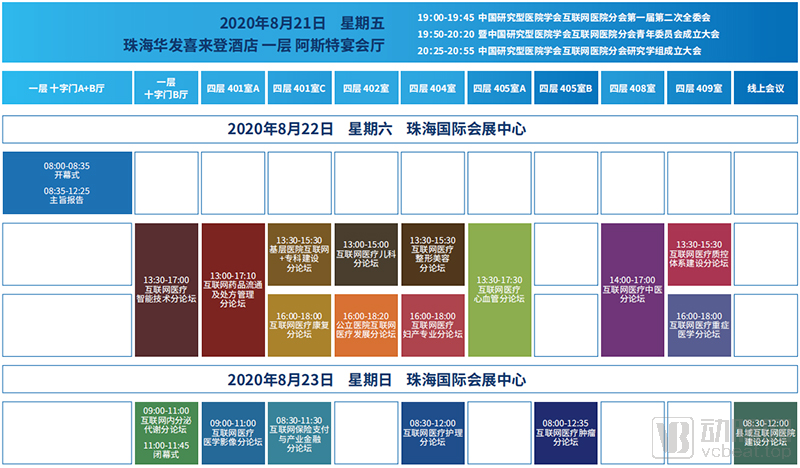
Sub-Forum Setup of the First China Internet Hospital Conference
VCBeat: What development opportunities do you think internet hospitals have gained since the outbreak of the epidemic?
Wen Jian:Following the test of the pandemic, society has reached a consensus on the critical role of internet-based healthcare, and trust in such services is growing. It is believed that people’s proactive adoption of internet-based healthcare will further increase from now on.
Meanwhile, policies related to the development of internet-based healthcare have been further clarified. The timely issuance of multiple documents by the National Health Commission and the National Healthcare Security Administration, coupled with policy support from governments at all levels during this period, has created a favorable regulatory environment for the sustained growth of internet hospitals.
The enthusiasm of medical institutions for developing internet hospitals has also been mobilized. Both public and private hospitals have recognized the promising prospects of internet hospitals and gained a profound understanding of their responsibilities. During the pandemic, medical institutions actively launched various online services, making significant contributions to epidemic prevention and control and serving as a second front in the fight against the outbreak.
It is also worth emphasizing that the influence of internet healthcare continues to grow. Before the pandemic, at the end of last year, there were approximately 300 internet hospitals across China; now, there are more than 500. The increase in internet hospitals signifies a growing number of professionals engaged in the research, deliberation, and practice of internet healthcare, which holds substantial value for driving the overall development of the industry.
VCBeat: What challenges does internet healthcare still face?
Wen Jian:As internet healthcare has evolved to its current stage, many existing issues remain unresolved. The challenges brought about by the pandemic largely overlap with those that have persisted historically. There are five prominent areas requiring urgent attention from both the government and the industry:
First, how to manage and operate internet hospitals to ensure standardized and orderly internet-based medical services. Currently, access standards for internet hospitals have been established, and some medical institutions or enterprises have obtained internet hospital licenses. However, a unified standard system still needs to be developed for standardized management and operational practices.
Second, how to achieve information interconnectivity and eliminate information silos. If the development of internet hospitals is not properly guided, it may lead to more information silos and a more pronounced phenomenon of “information chimneys.” Addressing the issue of information interconnectivity is difficult to accomplish through a single company or medical institution; government departments need to assume greater responsibility in this process. Information interconnectivity helps the industry further achieve intelligence, high efficiency, and low cost.
Third, how to promote the sustainable development of health insurance payments. Health insurance payment is one of the important conditions for the healthy development of the internet healthcare industry. During the pandemic, it was clarified that internet healthcare services can be included in health insurance coverage. However, it is still necessary to consider the allocation of health insurance quotas based on the different values of entity hospital-based internet hospitals and platform-based internet hospitals within the medical system, in order to achieve a win-win outcome of ensuring the sound operation of health insurance funds and promoting the sustained growth of the internet healthcare industry.
Fourth, how to promote the decentralization of resources through macro-level regulation. The original intention behind the national development of internet-based healthcare was to leverage the internet to facilitate the downward flow of high-quality medical resources, enabling patients to access specialist care close to home. However, at the current stage, it is difficult to claim that grassroots populations, particularly those in rural areas, have a strong sense of tangible benefit from internet-based healthcare services. Whether there are 300 or 500 internet hospitals, these initiatives remain largely irrelevant to them.
Therefore, this is a key issue that the industry needs to address: channeling more high-quality medical resources to primary care settings to effectively meet the demand for efficient healthcare delivery at the grassroots level.
Fifth, how to implement industry self-discipline and avoid vicious competition. In recent years, with the development of medical alliances and medical communities, patient flow has gradually become standardized and orderly; however, competition among healthcare institutions persists, including competition between public and private hospitals, as well as among private hospitals.
As the number of internet hospitals continues to grow, competition for patients intensifies, necessitating industry self-regulation and adherence to medical ethics and professional conduct to ensure standardized and orderly competition.
VCBeat: How do you think the relationship between the quantity and quality of internet hospitals should be balanced?
Wen Jian:There are tens of thousands of hospitals across China, yet only a few hundred have been approved as internet hospitals. From this perspective, the number is not substantial. This also reflects the determination and prudent approach of health administrative departments at all levels to enforce strict oversight. The development of internet hospitals is guided by national policy documents, allowing each province to appropriately raise entry thresholds and refine admission criteria based on local conditions.
"As an emerging industry in its nascent stage, I believe it is essential to moderate the pace of growth during this phase, gradually exploring the relationship between quantity and quality while ensuring quality standards are met."
Going forward, the Internet Hospital Branch of the Chinese Research Hospital Association will continue to organize efforts to enhance the technical proficiency of internet healthcare practitioners, promote vibrant academic activities, and drive the healthy development of the industry.