

Dobi Medical Files IPO Prospectus: Pioneering Dynamic Optical Targeted Imaging for Breast Cancer Detection 6–8 Years Earlier
The "2019 China Health and Family Planning Statistical Yearbook" indicates that in 2018, the crude mortality rate of breast cancer among urban female residents in China was 9.23 per 100,000, while the crude mortality rate among rural female residents was 6.99 per 100,000. According to the latest report released by the National Cancer Center in 2019, there were 304,000 new cases of breast cancer in China in 2015.
Data indicate that the incidence and mortality rates of breast cancer among women in China are relatively low on a global scale. However, due to the country’s large population base, the absolute number of new breast cancer cases and deaths ranks among the highest worldwide. Furthermore, limited cancer prevention awareness among Chinese women, coupled with insufficient coverage and standardization of early screening programs, has resulted in an early diagnosis rate of less than 30%. In contrast, early diagnosis rates in developed countries such as those in Europe and the United States exceed 80%.
How to Improve the Early Screening Rate for Breast Cancer? In addition to increasing the number of breast cancer screening sites to enhance population accessibility, advanced technologies must be adopted to improve the detection rate of early-stage breast cancer. Dobi Medical is precisely such a company dedicated to promoting advanced technologies for the early detection of breast cancer—By employing a painless, non-invasive, and radiation-free dynamic optical imaging technology targeted at breast tumor vasculature, breast cancer can be detected 6–8 years earlier than with traditional methods (mammography and ultrasound).
After earning master’s degrees from the Graduate University of Chinese Academy of Sciences (in Electrical Engineering and Computer Science) and the University of Connecticut (in Biomedical Engineering), Zhang Guowang, Chairman and Chief Scientist of Dobi Medical, obtained his Ph.D. in Radiological Sciences and Technology from the Massachusetts Institute of Technology and subsequently conducted postdoctoral research in optical imaging and healthcare informatics.During the research phase, Dr. Zhang Guowang keenly recognized that nuclear magnetic resonance (NMR) technology was unlikely to achieve further breakthroughs, and that optical imaging would emerge as a focal point of R&D in the 21st century.
Thus, Dr. Zhang Guowang gradually entered the field of optical imaging starting in 1998. As early as his doctoral studies, he founded Boston Instruments, focusing on magnetic resonance imaging (MRI) and optical imaging. He subsequently served for an extended period as Vice President of the Asia-Pacific region at Dobi Medical International in the United States.Until 2012, Dr. Zhang Guowang founded Dobi Global, Inc., and gradually completed the acquisition of intellectual property rights from Dobi Medical International, USA.
Dr. Zhang Guowang still remembers clearly that after acquiring the international intellectual property rights of Dobi Medical from the United States, the question before him was: which market should be prioritized? The U.S. market, the European market, or the Chinese market? At that time, relevant departments in Ningbo, Zhejiang Province, were conducting investment promotion activities at the Massachusetts Institute of Technology. Upon learning that his project had completed preliminary methodological research, product development, and market access preparations, with only the product promotion phase remaining for this original high-end medical device, they decisively extended an olive branch to him.
The favorable policies offered by Ningbo, along with its vast market potential, ultimately convinced him to return to China.In late 2013, Dr. Zhang Guowang established Ningbo Dobi Medical Technology Co., Ltd. in China, designating Cixi, Ningbo as the production base for DOBI’s intelligent early-detection products. Over the next three to four years, the company gradually established its production lines, refined its manufacturing system, and completed product registration. By the end of 2017, Dobi Medical had set up its marketing and R&D center in Hangzhou to attract top-tier talent and strategize for product promotion.
Dobi Medical currently has a team of over 80 employees. Its core R&D team includes nine full-time PhDs and four project consultants, while more than 20 members of its technology and engineering teams hold master’s degrees. Leveraging its clinic network, Dobi Medical has also established its own physician team and a large group of specialized breast care experts, laying a solid foundation for the company’s development.
Dr. Zhang Guowang stated,The high mortality rate of breast cancer is due to the fact that most patients miss the golden window for diagnosis and treatment.Conventional diagnostic methods, such as ultrasound, mammography, and biopsy, rely on morphological imaging to assess malignant features, including spiculation and changes in shape. Morphological imaging typically requires tumors to be at least 1.5–2 cm in size; below this threshold, observation becomes challenging. Furthermore, as women age, many develop breast nodules and other conditions, making it difficult for physicians to identify life-threatening tumors within the breast tissue.
The shortage of sonographers has also led to difficulties in breast cancer screening at the primary care level.In screening programs, up to 95% of the population may be asymptomatic, making such screening highly inefficient given the scarcity of physician resources. Image acquisition and interpretation are also subject to considerable subjective bias (ultrasound, in particular, suffers from limitations related to operator dependence and real-time variability), ultimately hindering the achievement of early detection, early diagnosis, and early treatment.
Early detection methods, such as genetic testing, identify individuals with gene mutations but not the actual patients who require treatment due to tissue changes.Furthermore, contrast-enhanced MRI and PET-CT employ targeted functional imaging. Although these modalities can detect neovascularization, they require the administration of contrast agents; for instance, PET-CT scans necessitate the injection of radiotracers such as 18F-FDG. Consequently, patients are subjected to substantial financial burdens and potential adverse effects from the reagents.
Ningbo Dobi Medical Technology Co., Ltd. employs tumor vasculature-targeted functional imaging, eliminating the need for contrast agent injection.Its technology is based on the theory of tumor neoangiogenesis, near-infrared diffuse computed tomography, and dynamic pressure pulse localization techniques to locate newly formed tumor blood vessels and assess blood oxygen levels and metabolic rates.This technology enables the detection of early-stage tumors measuring 2–20 mm (via intelligent imaging and intelligent image interpretation), allowing for the identification of malignant breast lesions 6–8 years earlier than traditional imaging methods (such as X-ray and ultrasound).
Dobi Medical’s diagnostic imaging equipment has achieved intelligent image acquisition. Currently, its R&D focus is on intelligent image interpretation, providing conclusions on whether patients have malignant breast lesions. To obtain more accurate conclusions,Dobi Medical has adjusted its models and algorithms to account for differences in breast characteristics among various ethnic groups.
Dr. Zhang Guowang stated that the primary differences between breast tissue in women from Europe and the United States versus China lie in breast size and mammographic density. For targeted functional imaging, density is not a concern; rather, the challenge stems from variations in size. The baseline breast sizes differ between Western and Chinese populations, necessitating algorithm adjustments. Prior to these adjustments, Dobi Medical had already obtained the Class III medical device registration certificate in China. Nevertheless, the company opted to conduct Phase I clinical trials post-launch to achieve superior detection performance.
Dobi Medical provided two sets of data for illustration. One set of data was derived from a U.S. clinical comparative study involving 617 patients with breast tumors ranging in size from 1.7 mm to 2.3 cm. This study compared ultrasound with dynamic optical imaging technology, with results validated by in vivo biopsy. The findings demonstrated that the technology adopted by Dobi Medical achieved a sensitivity of 98% and a specificity of 87%, whereas ultrasound yielded a sensitivity of 74% and a specificity of 70%. These results substantiate the practical utility of the technology.
In the Phase I post-market testing conducted in China, the results showed that the sensitivity and specificity of the technology adopted by Dobi Medical were 90% and 80%, respectively. These findings were consistent with the ultrasound test results from Grade A tertiary hospitals.The test results essentially reached the level of physicians at tertiary hospitals, such as Shanghai Cancer Center and Tianjin Cancer Hospital.
Given that tertiary hospitals are accustomed to ultrasound equipment and primarily admit patients with mid-to-late stage breast cancer, Dobi Medical has focused more of its efforts on primary care hospitals.Dobi Medical’s pursuit of early screening and diagnosis for breast cancer has led it to target 70,000 township hospitals, community clinics, and health examination centers, as well as 30,000 district- and county-level hospitals that currently have virtually no breast cancer patients.
Currently, its first-generation diagnostic product, ComfortScan, has obtained the Class III medical device registration certificate, with a single test taking less than five minutes. The product is primarily targeted at Grade A tertiary hospitals, with a selling price of RMB 2–2.5 million. To date, 15 units have been deployed in hospitals affiliated with breast cancer medical consortia, and an additional 20–30 units have been cumulatively installed in district, county, and township health centers participating in Zhejiang’s pilot program for comprehensive coverage of “DOBI Intelligent Early Screening” for breast cancer (one of the two major cancers) across all districts and counties. The company also offers equipment leasing services.
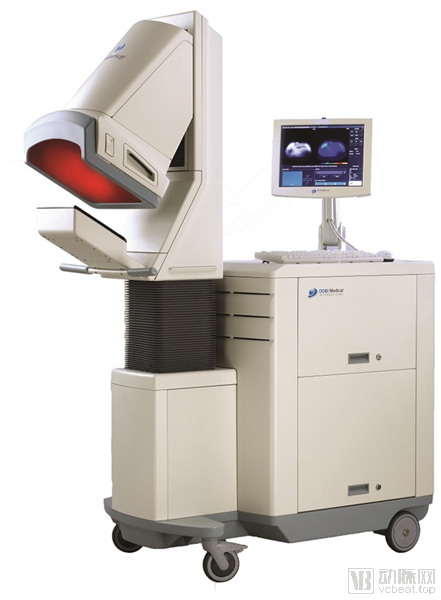
Dobi Medical's First-Generation Diagnostic Product: ComfortScan
The second-generation screening product, ComfortCluster, offers superior cost-effectiveness. This generation is primarily targeted at township and community clinics under the jurisdiction of county- and district-level Health and Family Planning Commissions. The prototype has been shipped to the Hangzhou Market R&D Center, where safety testing and regulatory submission for Class II medical device certification with the National Medical Products Administration (NMPA) are currently underway.The device is not offered for sale; instead, it provides intelligent imaging acquisition, intelligent image interpretation, and intelligent (stratified) diagnosis through a product-as-a-service fee model.Dobi Medical stated that its product line is demand-driven, and it has also developed relevant equipment and prototypes for the international market.
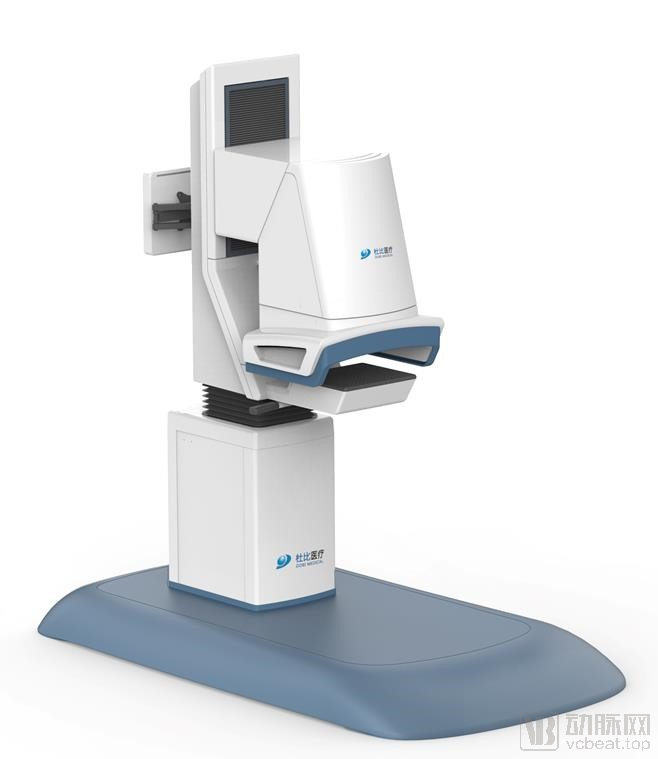
Dobi Medical's Second-Generation Screening Device: ComfortCluster
Dobi Medical is also expanding into the wearable device sector. Currently, Dobi Medical’s wearable devices have completed conceptual design, with nearly 20 related patents filed. Once funding is secured, the company will be able to complete product design, engineering prototypes, and product prototype development within two years.
To better promote its market presence, Dobi Medical is actively deploying pilot programs for intelligent early screening, aiming to secure inclusion in the guidelines for cervical and breast cancer screening to facilitate rapid growth and capture market share. Starting in June, it conducted breast cancer screenings for approximately 20,000 individuals in Cixi and Xiaoshan. Meanwhile, Dobi Medical is relocating its Hangzhou Xinbei Clinic to the Xiaoshan Information Port.Dr. Zhang Guowang stated that, through his own clinic, he could assist Ningbo Dobi Medical Technology Co., Ltd. in market development and clinical research, as well as facilitate compliant and lawful limited-scale product applications.
Dobi Medical is currently conducting its Series A+ funding round, with a planned raise of 50 million yuan.. The financing will be primarily used for marketing promotion and product expansion. On one hand, it will fund the Phase II clinical trials for the intelligent (graded) diagnostic product; on the other hand, it will strengthen marketing efforts, such as in provinces including Zhejiang, Guizhou, and Guangxi.Currently, it is establishing a “one district, one county” full-coverage pilot model in 3 to 5 provinces, followed by province-wide comprehensive breast cancer screening in the demonstration provinces.
For Dobi Medical, the age range for comprehensive screening among eligible women can be 25–74 years, covering a population of approximately 500 million. Based on an average cost of RMB 100 per person, the corresponding market size amounts to RMB 50 billion. By leveraging its integrated business chain encompassing early screening, early diagnosis, and early treatment, Dobi Medical can capture this market share and achieve rapid growth.
Furthermore,Dobi Medical has also attempted to build a (breast) blockchain platform by leveraging big data, intelligent diagnostics, and cloud computing, expanding upon its traditional equipment sales model as a new business and product service offering., thereby achieving unique evidentiary storage of relevant medical data. Through blockchain smart contracts, functionalities such as compensated authorized use of medical data are enabled.
Dr. Zhang Guowang pointed out that early screening, early diagnosis, and early treatment are the only effective measures to reduce breast cancer mortality. Although individual awareness of cancer prevention has improved with government investment, corresponding screening habits have not yet been fully established. From the perspective of overall medical cost control, the government still needs to carry out targeted promotion and education. The mission of Dobi Medical is to apply the new “DOBI Intelligent Early Detection” technology to facilitate early screening, early diagnosis, and early treatment.New Business Models and Products (Placement and Leasing) for Breast Medical Consortiums: Screening Service Model, filling the vast market gap in early screening at township and community clinics and pioneering the emerging market for early diagnosis at district and county hospitals, bringing hope to women in China and around the world...