

How So-Young Is Reinvigorating the Aesthetic Medicine Industry in the Post-Pandemic Era
2020: How Will the Medical Aesthetics Industry Navigate Its Path to Recovery?
Against the backdrop of an upgraded philosophy of refined living and increasingly prominent consumer demand for aesthetic enhancement, the growing emphasis on physical appearance has given rise to substantial spending power driven by beauty standards. As a technological means to help beauty-conscious individuals repair, reshape, and contour their facial features and body parts, medical aesthetics has gradually gained widespread acceptance. Over the past decade, China’s medical aesthetics market has undergone historical phases characterized by tentative beginnings and intense market consolidation. From the disorderly, unchecked growth prevalent between 2010 and 2016 to the stringent regulatory crackdowns marked by turbulent upheavals during 2017–2018, the industry is now steadily improving, driven by accelerating demand release and standardized development.
According to iResearch statistics, in 2019, the market size of China's medical aesthetics industry reached RMB 176.9 billion, with a growth rate of 22.2% and a user base of up to 13.672 million. The medical aesthetics market has demonstrated significant potential.
In 2020, the outbreak of the COVID-19 pandemic delivered a severe blow to the rapidly growing medical aesthetics market. According to the latest data on China’s medical aesthetics services market released by the internationally renowned research firm Frost & Sullivan (hereinafter referred to as “Sullivan”), the industry’s growth rate in 2020 was projected to be only 5.7% due to the impact of the pandemic, significantly lower than the 18% industry growth rate recorded in 2019.
The industry is mired in its darkest hour. How can medical aesthetic institutions “survive and thrive”? On August 13, at the 2020 MedWOS International Medical Aesthetics Conference in Hangzhou, Jin Xing, CEO of So-Young Technology (NASDAQ: SY), the first Chinese internet medical aesthetics company to go public, and Liu Rong, Vice President, gave an exclusive interview to VCBeat, sharing New Oxygen’s fresh strategic approaches to navigating the pandemic—packed with valuable insights.
“Strengthen internal capabilities, accumulate momentum, and invest in constants.” Jin Xing emphasized at the Meivos Conference that this is the core business strategy adopted by New Oxygen Technology in response to the pandemic.
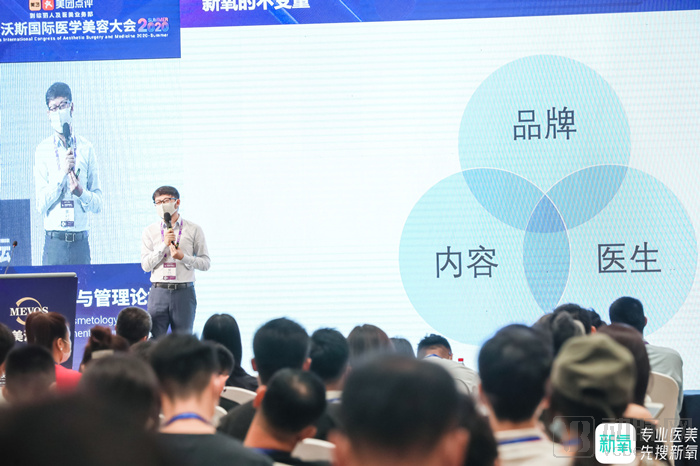
Jin Xing, CEO of So-Young Technology
During the pandemic, the SoYoung app maintained a steady and rapid growth in monthly active users (MAU). According to data from QuestMobile, a mobile big data platform, the SoYoung app’s MAU reached a record high of 9.66 million during the most severe period of the pandemic in Q1 this year.
The industry has experienced significant volatility due to the pandemic. As a platform, achieving record-high traffic while maintaining previous performance is, in Jin Xing’s view, inseparable from So-Young’s strong empowerment and sustained investment across three key dimensions: brand value, content, and physicians.
In the medical aesthetics industry, most institutions prioritize marketing while neglecting brand building. In fact, a strong brand serves as the “source code” that enables consumers to make rapid purchasing decisions.
As a leader in the internet-based medical aesthetics platform sector, New Oxygen invested in brand value by partnering with this summer’s hottest variety show, Sisters Who Make Waves, achieving over 10 billion impressions. The company also integrated its brand and secured high-intensity exposure through popular programs such as the celebrity family reality shows Happy Camp and Mother-in-Law and Mom, as well as hit TV dramas I Will Find You a Better Home and Nothing But Thirty. Furthermore, leveraging the momentum of popular online variety shows, New Oxygen launched the China Anti-Aging Festival category-wide promotion and upgraded the content ecosystem of its New Oxygen Experience Officer community to effectively capture and stabilize brand traffic.
In terms of content, in addition to signing celebrity experience officers to join the platform and launching registration for Wanda Group employee experience officers, New Oxygen has also introduced the New Oxygen Account Creator Incentive Program. This initiative encourages aesthetic medicine influencers with content creation capabilities to produce more content on the platform, thereby facilitating more effective promotion for the aesthetic medicine industry.
Meanwhile, New Oxygen has allocated over RMB 100 million in subsidies to incentivize users to generate content by writing diaries. Notably, on So-Young’s hard-core science popularization platform, the So-Young Medical Aesthetics Laboratory—launched promptly to capitalize on this momentum—a post and video reviewing the highly popular Thermage procedure have garnered more than 10.8 million views within just 10 days.
On the Investment Doctor platform, SoYoung has launched video consultations and a “Double Hundred” physician IP development initiative, introducing the “SoYoung Emerald Physician List” to steer the medical aesthetics industry back to its medical roots. Evaluated across 101 dimensions—including technical expertise and aesthetic judgment—and subjected to 14 layers of review and assessment, the SoYoung Emerald Physician List will become the first true “whitelist of medical aesthetics physicians” in China’s medical aesthetics industry.
“The platform’s performance is closely tied to industry development. For New Oxygen, the core strategy this year is to strengthen internal capabilities by increasing investment in brand building, content, and physician resources,” Jin Xing emphasized in an exclusive interview.
Amid the COVID-19 pandemic, the medical aesthetics market in first-tier cities was less affected, while second-tier and lower-tier cities suffered greater impacts. “The incremental market has shrunk significantly, requiring institutions to place greater emphasis on tapping into the existing customer base,” said Liu Rong, Vice President of So-Young Technology. She noted that, in addition to investing in brands, content, and physicians, So-Young will support institutional development through C2B (consumer-to-business) reverse customization.
At the MedWorld Conference, Liu Rong disclosed for the first time to the outside world recommendations for medical aesthetics institution categories generated by New Oxygen's big data.
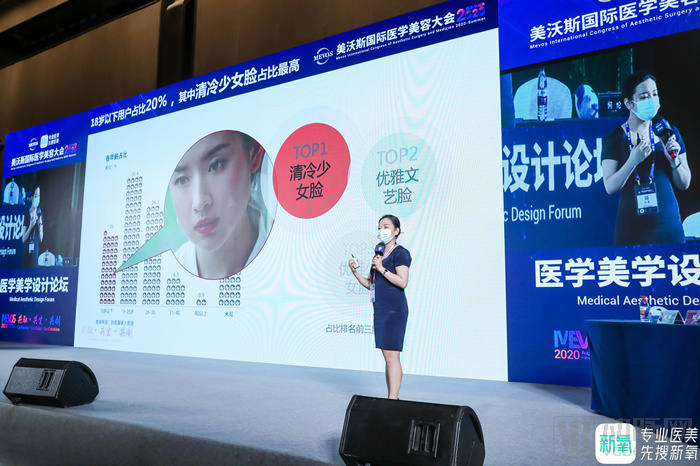
Liu Rong, Vice President of New Oxygen Technology
She candidly stated that the growth trend exhibited by the skin care market is encouraging. According to user profile analysis from SoYoung Magic Mirror, in 2019, a total of 10 million users on the SoYoung platform utilized SoYoung Magic Mirror 120 million times, with women accounting for as high as 75% of these users, and 36.12% of them using the “simulated plastic surgery” feature.
In simulation-based plastic surgery, the use of simulated skin projects accounts for the highest proportion, followed by contouring. As an entry-level medical aesthetic procedure, injections are helping propel China to become a global leader in medical aesthetics consumption. Beyond appearance-related anxiety, the number of individuals concerned about body image is also growing. Currently, the preference for slenderness remains mainstream, with liposuction being the most popular body surgical procedure in China. Meanwhile, driven by the trend of “middle-aged young women” beginning anti-aging regimens, spending on “early anti-aging” has surged by 92.64%. Liu Rong points out that “early anti-aging” treatments may become mainstream consumer offerings within the next decade.
In the era of the “beauty economy,” it is particularly crucial for institutions to accurately grasp current aesthetic trends to drive their development.
“In fact, the slowdown in the growth rate of the medical aesthetics industry this year is not only due to the objective impact of the pandemic, but also cannot rule out the erosion caused by illegal medical aesthetic practices. Cracking down on illegal medical aesthetics and leading the industry toward compliance has always been So-Young’s steadfast strategy,” said Liu Rong.
According to iResearch, in 2019, there were approximately 13,000 medical aesthetic institutions in China with proper qualifications, while the number of illegally operated medical aesthetic clinics exceeded 80,000. Legitimate medical aesthetic institutions accounted for only 14% of the industry. Among these legitimate institutions, 15% still engaged in out-of-scope operations. Furthermore, as indicated by the "White Paper on Insights into China's Medical Aesthetics Industry (2020)," medical aesthetic accidents frequently occur in unlicensed practices. In China, an average of approximately 100,000 people suffer disabilities or injuries annually due to illegal medical aesthetic procedures. The majority of consumers find it extremely difficult to file complaints or seek legal recourse, facing significant challenges in protecting their rights.
To promote “industry purification,” SoYoung Technology and the Chinese Association of Plastics and Aesthetics jointly launched a self-regulatory initiative for China’s medical aesthetics industry at the beginning of this year, establishing an observer mechanism to engage multiple stakeholders in self-discipline oversight.
Liu Rong introduced that since the launch of self-regulatory initiatives in the medical aesthetics industry, the New Oxygen platform has conducted self-inspections and audits, blocking 58 problematic institutions, addressing 14,685 instances of physicians suspected of non-compliant or out-of-scope practice, handling 12,099 cases involving allegedly non-compliant or illegal medical aesthetic products, and removing a total of 29,729 pieces of non-compliant content (including content related to black and gray market activities and violations of platform rules, across formats such as diaries, comments, and videos).
In fact, prior to this, New Oxygen had been continuously investing in industry rectification efforts. For instance, it was selected as one of the first members of the “Quality Consumption Leader Organizations” by Heimao Complaints, and launched a public welfare medical aesthetics assistance project in collaboration with the Chinese Association of Plastics and Aesthetics (CAPA), with an initial investment of RMB 10 million to aid victims of accidents involving illegal medical aesthetic practices, among others.
“Medical aesthetics is defined as a branch of consumer healthcare, but I believe it is not merely consumption; it remains fundamentally medical.” In conclusion, Jin Xing emphasized to us that So-Young will continue its efforts to reinforce the “medical” attributes of medical aesthetics, contributing to the positive development of the industry.