

Bellen Group CEO Liu Bo: Success Has No Ceiling — Stay Hungry to Build a Great Enterprise
Editor’s Note: In 2007, Liu Bo and five of his classmates started from scratch to found Bellen Group (Beijing Liuhe Ningyuan Pharmaceutical Technology Co., Ltd.). Over the past 13 years, the company has evolved from simple catalog molecule synthesis into a one-stop CRO+CDMO service platform for small-molecule new drug development. This journey has witnessed both the group’s expansion and internationalization as a local CRO enterprise, as well as the enduring friendship among the “band of brothers.” It is well known that founding a business with classmates can be a double-edged sword—success or failure often hinges on these personal relationships. How has Bellen Group ensured that no member of its founding “band of brothers” fell behind, while continuously attracting new talent and cultivating a unique corporate culture? Furthermore, how has the company leveraged this culture to drive itself toward ever-higher goals? Here, Liu Bo, Founder and CEO of Bellen Group and a researcher in the fourth cohort of the Legend Capital Enterprise Development Institute, shares his entrepreneurial journey and management insights.
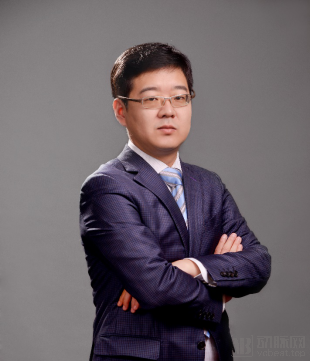
Liu Bo, Founder and CEO of Bellen Chemistry
In 2007, at the farewell dinner for organic chemistry majors at Tsinghua University, several brothers who were usually talkative and jovial fell unusually silent in the face of imminent parting. They kept their heads down, drinking in gloomy silence, while the oppressive atmosphere became almost suffocating. Perhaps spurred by alcohol, or perhaps driven by the camaraderie forged through years of day-to-day companionship, a gamble on fate with an unpredictable future began right there.
The idea of starting a business had been lingering in Liu Bo’s mind for quite some time. Embarking on this venture meant giving up the opportunity to pursue a postdoctoral fellowship overseas, as well as forsaking what many would consider more desirable career paths, such as joining state-owned enterprises, multinational corporations, or even becoming a civil servant. Summoning his courage, Liu Bo voiced his thoughts. “Let’s do it together!” someone immediately responded, and the tension in the air instantly eased. With a smile, Liu Bo remarked, “Perhaps alcohol emboldens the timid. At that moment, I made the most difficult decision of whether or not to start a business.”
“My personality isn’t well-suited for traditional employment.” Liu Bo never lasted more than seven days in his internships at state-owned enterprises or during his temporary postings with local governments. While still a student, he took on a part-time job at a pharmaceutical intermediates company, where he helped establish an R&D center and design products. The income enabled him to purchase both a house and a car, leading Liu Bo to feel that “starting a small business shouldn’t be too difficult.”
“Being able to steer one’s own life is a step up from working a regular job, and integrating one’s expertise with one’s career was initially as simple as that.” Although the specifics of execution had yet to be worked out, the team remained highly optimistic about the future, grounded in their mutual understanding and trust built over time, believing that “it’s bound to turn out well.” As the venture was founded by six brothers, they named the company “Bellen Chemistry” (Liuhe Ningyuan)—signifying six individuals coming together to pursue an endeavor characterized by tranquility and far-reaching vision. Liu Bo commissioned an artist to create a painting for their office, depicting six wolves, each with its distinct posture and expression, strikingly reminiscent of the six brothers.
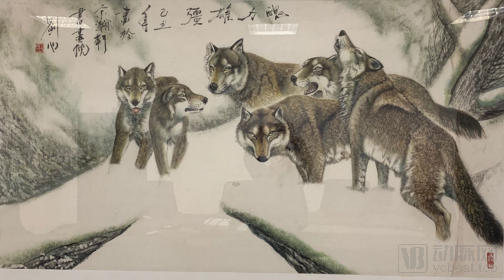
This painting has always hung in Liu Bo’s office.
With no capital, no social resources, and no experience, they had to rely solely on their professional expertise. After discussion, the six of them pooled 500,000 yuan, secured a spot at a startup incubator in the Zhongguancun Biomedical Science Park, rented a modest laboratory, and got to work. Today, the “Band of Brothers” has stayed together for thirteen years, with not a single member leaving the team. Liu Bo still vividly recalls the early days of their entrepreneurial journey.
The long-term, complex, capital-intensive, and high-risk nature of pharmaceutical R&D has accelerated the development of specialized division of labor in the field of new drug discovery. From 2004 to 2014, driven by industry policies and the rapid expansion of the pharmaceutical market, an average of more than 30 new CRO companies were established annually in China. Statistics show that in 2007, there were over 300 institutions of various sizes engaged in CRO services domestically.
In such a competitive landscape, it is easy to imagine the difficulties an obscure startup team faces in acquiring clients. “In this industry, startup teams like ours are virtually nonexistent. Others either come from pharmaceutical companies with built-in resources or have accumulated clients through R&D services. We rely entirely on finding orders online by ourselves, and basically no one pays us any attention,” said Liu Bo.
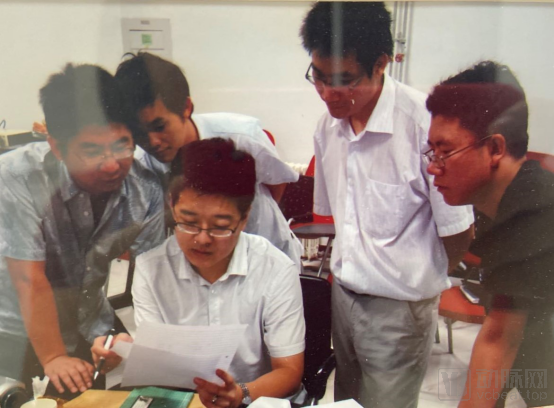
"In the early stages of the startup, Liu Bo and several founding partners often spent long hours in the lab discussing issues."
“Isn’t the essence of chemistry to create new structures?” Liu Bo took a different approach. The team of “Tsinghua top students” designed a series of novel compounds not available on the market, based on their expertise, and posted them online. As expected, foreign pharmaceutical companies proactively called to inquire after seeing them. With products delivered and relationships gradually established, Liu Bo began to cautiously explore further opportunities, suggesting, “We can provide more comprehensive services.”
To expand his market reach, Liu Bo persistently lobbied clients for opportunities. “Back then, when foreign pharmaceutical companies visited China, they only went to large enterprises that had already signed long-term strategic cooperation agreements. So I would say to them, ‘We’ve been working together for so long; could we perhaps have dinner together, or could you spare some time for me to show you around?’”
For large corporations, adding a new supplier entails additional responsibility and risk; any issues that arise can also damage the individual’s professional reputation. “We have only one chance. During such a brief engagement, we must convince the client that we are a trustworthy group and the most execution-driven team.” Liu Bo went to the National Library of China to gather all stories related to the Summer Palace, the Forbidden City, and the Great Wall, translating them into English. Based on his understanding of the clients’ ages, styles, and preferences gained through prior interactions, he designed customized tour itineraries. The day before the clients’ arrival, he would always walk the entire route from the hotel to the attractions in advance, timing each segment and observing the terrain in detail—so thoroughly that if a client needed to use the restroom, he could immediately identify the nearest one and estimate the walking time. “In the first few years of our startup, I visited the Summer Palace more than 90 times and the Forbidden City over 60 times,” said Liu Bo.
“We don’t have any unique advantages to impress others; we can only strive relentlessly to win over clients. For instance, if a large company is awarded one kilogram for a project, could we be allocated 200 grams as a trial? If we consistently deliver faster and better results than competitors, client trust will gradually be established.” Liu Bo charged ahead on the front lines to secure orders, while his colleagues in the back worked day and night in the laboratory, ensuring timely delivery and excellent quality. More importantly, they were able to tackle some of the “tough nuts” that others struggled with.
A long-standing client remarked, “The Bellen team is highly focused, proactively devises solutions to challenges, and is always willing to listen to customer needs and suggestions. We once had a particularly difficult project for which we engaged three CROs simultaneously. Although Bellen was the least experienced among them, it was unexpectedly the only one that successfully delivered.” Many long-term clients have been impressed by their determination and capability in tackling tough problems. Another client recalled, “At the time, we already had an established CRO partner. However, when we encountered a particularly challenging project that our incumbent CRO could not handle, Liu Bo presented a proposal, and we decided to give Bellen a try. They not only succeeded but also far exceeded expectations in several key steps with low yields.” In this way, Liuhe has gradually accumulated its core base of loyal clients.
Liu Bo recalled that around 2014, the company was already generating nearly RMB 100 million in annual revenue, with several key clients being quite stable. The co-founders had all achieved their initial “modest goals,” settling down and purchasing properties in Beijing, bringing their parents from their hometowns to live nearby, and enjoying a comfortable life. At that time, investors approached him, but Liu Bo gave it no consideration whatsoever: “Only fools take out loans, and those who seek equity financing are even bigger fools.”
“There’s nothing at the company that requires our concern; we just need to drop by every day.” Achieving their goals so quickly left the “Band of Brothers” feeling somewhat adrift. After a drinking session, Xing Lixin, Liu Bo’s close friend, suddenly asked him, “Are we living too comfortably?” Liu Bo had long shared this sentiment. In fact, he had found the past two years of “easy living” deeply troubling, constantly questioning himself: What kind of life do I truly want to lead?
At a trade show, Liu Bo joined several well-known CRO companies in discussions with a major pharmaceutical firm. The conversation was lively at first, but when it was Liu Bo’s turn to introduce Bellen, the counterpart admitted they had never heard of it. “Unwilling to accept this and refusing to give up, are we destined to remain an obscure company?” Liu Bo finally made up his mind: entrepreneurship is like sailing against the current—advance or retreat. “It’s time to test our strength.” His idea received unanimous support from the “Brotherhood.” Rather than mere agreement, it seemed they had long been awaiting this decision, reigniting the team’s passion and fervor.
Long-standing clients from years of collaboration also hoped that Bellen would take the next step toward deeper cooperation, leveraging familiar personnel and processes to ensure quality assurance. However, during a site visit, the clients were surprised to find that Bellen’s laboratory still featured concrete workbenches. “We trust your team, but these hardware conditions would never pass an audit. You have one year to upgrade the facilities; only then can we continue our partnership.” It was at this moment that Liu Bo clearly realized he needed to accelerate progress to keep pace with his clients’ expectations. As soon as the clients departed, Liu Bo immediately had the concrete workbenches in the laboratory demolished. Within six months, the company constructed a new laboratory that successfully passed inspection. Since then, all annual profits, after distributing dividends to employees, have been reinvested into upgrading hardware infrastructure. After visiting the facility, a foreign client remarked, “Many of the equipment items here are top-of-the-line—something even many large multinational corporations fail to achieve.”
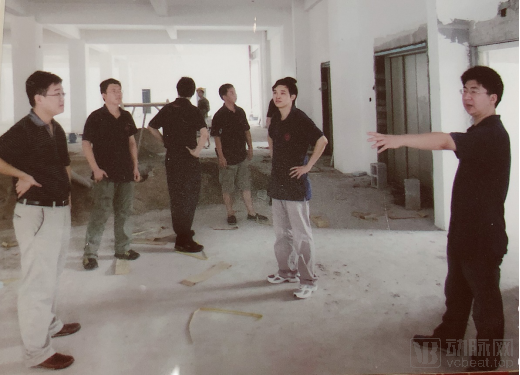
Laboratory in Shunyi, Beijing, is under preparation and construction
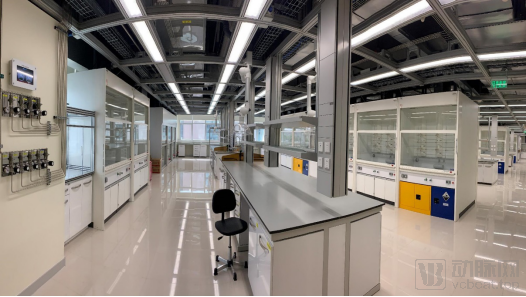
The Laboratory After Completion
As pharmaceutical companies expand, their demand for professional services is also extending. Clients expect Bellen Chemistry to extend its offerings from CRO to CDMO. If CRO addresses the phase of “going from zero to one,” then the focus of CMO/CDMO lies in “scaling from one to N.” To excel in this area requires a mature technical team that leverages advanced equipment to establish a drug process development technology platform, along with supply capabilities compliant with quality control and current Good Manufacturing Practices (cGMP). This is an intellectual-intensive, capital-heavy business. Liu Bo realized that relying on the existing team and profits was far from sufficient. Two top priorities lay before him: talent acquisition and fundraising.
Han Bo is a top-tier technical expert in China. If he were to join, he could break through Bellen Chemistry’s technical bottlenecks in pilot-scale amplification. At the time, other companies also approached Han Bo with lucrative offers, but they were unsuccessful. During his collaboration with Novartis, Liu Bo had multiple interactions with Han Bo. He felt that he and Han Bo shared certain traits: both are highly motivated, thrive on challenges, and become even more passionate when facing difficult tasks.
“I told Han Bo at the time, ‘You love mountain climbing so much—isn’t it because you want to prove yourself through it? Then do you have the courage to come here and build China’s best R&D platform from the ground up? This would be far more meaningful than your mountain climbing!’” These words struck a chord with Han Bo. In his first two years at Bellen, Han Bo did not take a single day off; he even set aside his former passion for mountaineering. He led his team in working overtime, often sleeping in the laboratory when it got too late. “Working at Bellen was exhilarating because I couldn’t see my limits. I came to regard it as my home.”
Ma Qiang was Liu Bo’s graduate school classmate. The two spent nearly every day together on campus, so Ma knew Liu Bo’s character well: “He would never let his friends suffer a loss.” After graduation, Ma joined Novartis, where he accumulated extensive experience in production and factory management. Liu Bo recalls that although Ma rose to an executive position at Novartis over the years, he never asked him for help with business matters, and they rarely discussed Liu Bo’s company during their gatherings. In the summer of 2016, Liu Bo met with Ma in Beijing and mentioned that he was building a factory in Shandong. By September, after the company had completed its financing round, Liu formally extended an invitation: “Brother, you’re exactly the person I’m missing—come help me out!” Ma said he would discuss it with his wife, but then went silent. When he next contacted Liu, he had already decided to relocate his entire family from Suzhou to Shandong.
Although Ma Qiang was thriving in his role at Novartis and earning a higher income, he made the decision with little hesitation. In fact, just three days after receiving Liu Bo’s invitation, he sold his house in Suzhou, “without considering any fallback.” With full trust in Liu Bo, a broad platform to leverage his expertise, and the addition of Han Bo to the team, Ma Qiang is highly confident in their ability to succeed.
Years of tacit understanding and shared operational philosophy enabled Ma Qiang to quickly integrate into Bellen Chemistry, where he played a pivotal role in the construction and management of its Shandong facility. The Phase I project in Yantai reached full capacity shortly after commencing operations in mid-2017, and the Phase II project was officially launched in September 2019.
Currently, the company has successfully extended its business from CRO to CDMO. It operates an early-stage R&D laboratory in Beijing, a process development center in Shanghai, and a production base covering nearly 100 mu in Yantai, Shandong Province. Additionally, it has established marketing and sales centers in France, Canada, the United States, the United Kingdom, and Japan, thereby completing its group-wide and global layout.
Meanwhile, significant progress has also been made in financing. Once the decision was made to leverage capital to accelerate the company’s development, Liu Bo acted decisively. Since initiating the fundraising process, the company has achieved remarkable success, securing RMB 50 million in Series A financing in 2016, RMB 250 million in Series B financing in 2017, hundreds of millions of yuan in Series C financing in 2018, and hundreds of millions of yuan in Series D financing in 2020. Such rapid progress is rare in the industry.
Why Has Bellen Chemistry Garnered Favor from So Many Mainstream Investment Institutions?Wang Junfeng, Managing Director at Legend Capital, an investor in the company’s three rounds of financing, stated: “The small-molecule new drug CRO sector is highly competitive. As a latecomer striving to break through, a company must outperform its peers in service, technology, and quality to seize opportunities. Bellen Chemistry’s progress to date fully demonstrates its capabilities. Even more remarkably, the company was founded by a close-knit team of ‘brothers-in-arms.’ The founding team has remained highly stable over the years, while continuously attracting senior talent from multinational corporations. This stability and expansion of the talent pool serve as a crucial guarantee for consistently delivering high-quality services to clients. Furthermore, the corporate culture, which emphasizes execution and a spirit of perseverance, enables the company to constantly surpass itself and pursue higher goals. With the efforts of such a team that ‘harbors grand ambitions and is committed to fulfilling its mission,’ Bellen Chemistry holds great promise to become a highly influential provider of chemical synthesis services for small-molecule new drug R&D in China and even globally.”
The company now has nearly 600 employees. How can the culture that naturally emerged during the close-knit collaboration of the early startup phase—characterized by “brotherhood,” “high execution,” and “customer-centricity”—remain authentic and intact amidst rapid headcount growth and the integration of teams from diverse backgrounds?
Liu Bo views this as a progressive, multi-layered process: First, the top leader must prioritize impartiality and lead by example, placing corporate interests above personal gain. This principle should guide all actions, whether in profit distribution, decision-making, or daily conduct. Second, the leader’s mindset, speech, and behavioral habits gradually influence the core management team, fostering alignment. As this core team leads their respective units, they pass down these philosophies, styles, and behavioral norms to the next level of management. Third, during periods of rapid personnel expansion, best practices are distilled from observed behaviors into formal policies, thereby extending their influence and regulatory effect across a broader scope.
For instance, regarding profit-sharing, Liu Bo has always firmly believed in the principle that “dispersing wealth gathers people, while hoarding wealth scatters them.” Whether through equity incentives or dividends, he strives to ensure that everyone’s contributions are rewarded fairly, even exceeding expectations. This mindset is conveyed to the core leadership team through both words and actions. Additionally, Liu Bo grants the management team sufficient authority, allowing team leaders to flexibly and autonomously reward employees with outstanding performance.
In Liu Bo’s view, culture is the fundamental guarantee for the survival and development of Bellen Chemistry Co., Ltd. Therefore, cultural assessment has been made an important criterion for talent selection, and the “Entrepreneurial Partner Program” was launched against this backdrop.
At Bellen Chemistry, talent development is structured into four tiers.
Bronze Tier,Comply with company rules and regulations, and possess basic professional qualities and work capabilities;
Silver Tier,Respect corporate culture, implement business philosophy, and possess strong professional ethics and work competence. Such talents are placed on probation and have the potential to advance into management positions;
Golden Tier,Candidates who align with the corporate culture and business philosophy, and demonstrate strong integrity, professional ethics, execution capability, and professional competence, may be considered as potential entrepreneurial partners;
Honor of Kings,Embodying an ownership spirit that treats the company as home, aligning with core values, committing to long-term joint efforts through shared joys and hardships, and possessing the ideal and firm willingness to grow alongside the company over the long term, thereby becoming a formal founding partner.
“At our company, employees with superior technical skills may receive salary increases, but they are not necessarily promoted to management positions. There is no distinction in the performance evaluation for management roles between those who score 60 and those who score 90 in professional expertise.” Liu Bo found that this approach enables new hires to quickly grasp the corporate culture and integrate more smoothly.
“Entrepreneurship is the fastest way to foster personal growth.” Having traversed a thirteen-year entrepreneurial journey, Liu Bo feels that he has changed significantly, gradually learning to handle heavy responsibilities with ease. Originally an impatient person, he has not been seen losing his temper by employees who have joined in recent years. Yet some things remain entirely unchanged, such as his deep value for personal relationships.
In the early days of his startup, whenever employees worked overtime on weekends, Liu Bo would always stay at the office with them, whether he had other commitments or not. He would treat the team to meals and drinks, patting his colleagues on the shoulder and saying, “Thank you for your hard work.” “Now that the company has grown in size, I can no longer do this personally, but every team leader manages their squad in the same spirit.” With each project bonus distribution, team leads would set aside a specific “drinking fund,” allowing everyone to relieve stress and strengthen bonds over laughter and conversation.
Emphasizing emotional connections appears to be an innate trait of Liu Bo. This holds true in his relationships with family, friends, employees, and even his hometown. Driven by a deep affection for his roots, Liu Bo chose to locate the company’s manufacturing facilities in his hometown of Zhaoyuan and facilitated the introduction of medical enterprises such as ImmuneOnco Biopharmaceuticals to the industrial park. In early 2018, the Zhaoyuan Biopharmaceutical Industrial Park emerged from nothing, rising rapidly from the ground. “Because of one individual, a team was brought in, which in turn drove the development of an entire industry.” This statement summarizes the local government’s assessment of Ningyuan Pharmaceutical’s establishment in Zhaoyuan.
“The only thing that saddens me is when a brother falls behind; there’s nothing else I can’t overcome. This may well be the greatest wealth entrepreneurship has brought me.” Liu Bo is not worried about the challenges that may lie ahead: “Stumbles are inevitable; as long as you can get back up, you’re lucky.”
Looking to the future, he outlined specific and resolute goals: “We aim to become the leading player in the niche sector of new drug services, build the enterprise with the strongest standalone operational capabilities, and secure market influence and pricing power.”
“What comes after that?”
“We hope that whenever any of our employees steps out, they will be immediately recognized as a member of Bellen, without the need for any introduction.”
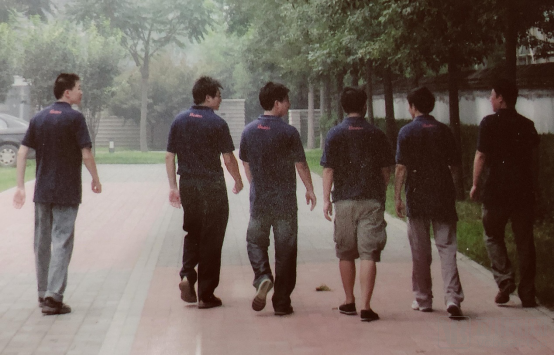
In the early days of their startup, the six brothers were at the Shunyi Park.
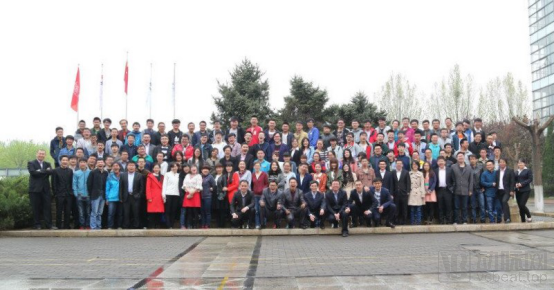
2020 Group Photo of the Shunyi Team
In Liu Bo’s view, the greatest challenge to achieving this goal comes from within—how to ensure that the executive team, including himself, does not lose its hunger and maintains a strong desire for success. “Success has no upper limit; we must never treat a阶段性 target as the hallmark of success. Once you surpass it, forget it immediately and set your sights on the next goal. Only by doing so can we pass on our fighting spirit and hunger to the next level, extending it to every individual. Without this, we cannot become a great company.”

Bellen (Ningyuan) Group was founded in 2010 by six individual investors. The company specializes in contract research and development (CRO) and contract development and manufacturing organization (CDMO) services for the chemical synthesis of high-end pharmaceutical intermediates, aiming to build a globally leading one-stop platform for the chemical synthesis of small-molecule new drug R&D. After years of accumulation, the company’s business has expanded from CRO to CDMO. It operates an early-stage R&D laboratory in Beijing, a process R&D center in Shanghai, and a production base covering nearly 100 mu in Yantai, Shandong Province. Additionally, it has established marketing and sales centers in France, Canada, the United States, the United Kingdom, and Japan, completing its group-based and global layout. The company’s R&D services cover the entire value chain, including candidate molecule development, process development, industrialization, and commercial-scale contract manufacturing, forming a professional one-stop service platform. Leveraging strong innovative technical capabilities, an international team with a global vision, advanced management concepts and awareness, comprehensive quality management and EHS (Environment, Health, and Safety) systems, and over a decade of experience in new drug R&D services, Bellen continues to provide high-quality services to renowned global pharmaceutical companies and drug R&D institutions, gradually establishing comprehensive strategic partnerships with an increasing number of clients. Legend Capital invested in the company three times—in 2017, 2018, and 2020—to support its development.