

Vantagen Biotech Files IPO Prospectus Amid Exponential Growth in China's Birth Defects Prevention Market

we health Biomedical
High-Tech Gene Testing Service Provider
Birth defects are the leading cause of early miscarriage, stillbirth, perinatal mortality, infant and toddler mortality, and congenital disabilities.
In 2012, the Ministry of Health released the “Report on the Prevention and Control of Birth Defects in China (2012),” which stated that approximately 900,000 new cases of birth defects occur annually, with an incidence rate of around 5.6%. Among these, about 250,000 cases involve clinically apparent birth defects visible at birth.
80% of birth defects are caused by genetic factors. Genetic disorders are classified into chromosomal disorders, monogenic disorders, polygenic disorders, and mitochondrial disorders. Among these, the overall incidence of chromosomal disorders is approximately 0.6%, whereas monogenic disorders encompass a greater variety of conditions and have a higher overall incidence.
Polygenic and mitochondrial genetic diseases are difficult to control due to their complex pathogenic mechanisms, and their onset is often associated with postnatal behaviors, making prenatal prevention challenging.
Chromosomal genetic disorders are now subject to robust testing mechanisms, driven by national policies, and have been largely brought under control. For instance, most chromosomal abnormalities (aneuploidies), such as Trisomy 21, Trisomy 18, and Trisomy 13 (Down syndrome, Edwards syndrome, and Patau syndrome, respectively), which can result in live births, are generally detectable through prenatal screening methods.
Given the wide variety of monogenic disorders, clinical screening has largely focused on common individual conditions such as deafness and thalassemia, lacking integrated multi-disease screening approaches.
Shanghai Weihansi Biomedical Technology Co., Ltd. (hereinafter referred to as “Weihansi Biomedical”) was established in 2016 and is a comprehensive service provider for genetic testing. The company’s business coversScreening for birth defect prevention and control, auxiliary diagnosis of genetic diseases, diagnosis of infertility and assisted reproduction, kinship testing, and research services in the field of genetic diseasesand other fields.
Gao Pengfei, founder of We Health Biomedical, is among the earliest practitioners in China’s NGS market and the specialized field of third-party clinical cytogenetics and molecular genetics. With a background in biotechnology, he possesses extensive experience in sales and management.
When discussing the reasons for founding We Health Biomedical, Gao Pengfei stated, “The historical conditions for establishing We Health Biomedical were ripe, as the era of applying biotechnology and genetic testing technologies had arrived. Under these circumstances, we aim to leverage our company’s technology to assist more families affected by genetic disorders, thereby contributing our value toward reducing the rate of birth defects and the number of patients with genetic diseases in China.”
The core technical team at We Health Biomedical is predominantly composed of Ph.D. holders in Genetics from Fudan University. The Genetics program at Fudan University, founded by Professor Tan Jiazhen, the pioneer of Chinese genetics, ranks first among such programs in China. The remaining technical staff also boast extensive experience in the genetic testing industry. After four years of collaboration and refinement, the team has become highly cohesive and effective, ready to deliver successful outcomes.
We Health Biomedical recognizes that technology and quality are the foundation for survival and growth in the rapidly evolving genetic testing industry. Its highly skilled and professional core technical team ensures that We Health Biomedical maintains a leading position in China in research and development, bioinformatics analysis, report interpretation, and genetic counseling, thereby guaranteeing high-level R&D capabilities and technical service quality.
we health Biomedical remains committed to its vision of ensuring that every family has a healthy child, staying true to its original aspiration and striving relentlessly toward this goal.
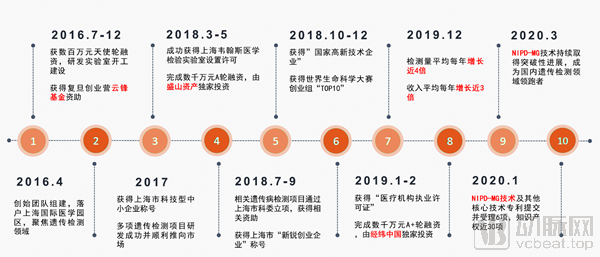
Development History of We Health Biomedical
In 1997, Professor Dennis Lo of The Chinese University of Hong Kong discovered the presence of cell-free fetal DNA (cffDNA) in maternal blood, thereby overcoming the limitations of traditional Down syndrome screening. With the continuous advancement and updating of gene sequencing technologies, the sensitivity and specificity of DNA sequencing have steadily improved, while the limit of detection has been progressively lowered. These developments have established the technical foundation for non-invasive prenatal testing (NIPT) and non-invasive prenatal diagnosis (NIPD), which involve detecting fetal DNA abnormalities using maternal peripheral venous blood.
Genetic testing originated with first-generation Sanger sequencing technology, which outputs DNA sequence information via optical signals. The subsequent development of microarray technology and the emergence of next-generation sequencing (NGS) formally transitioned genetic testing from research laboratories to the commercial market. Compared to first-generation methods, NGS has significantly improved efficiency while reducing costs. Furthermore, liquid biopsy has transformed the latest genetic testing technologies into accessible commercial products, enabling the acquisition of genetic sequence information through non-invasive samples such as blood and saliva.
The maturation of genetic testing technologies has ushered in a new era of applications in human health, with NIPT/NIPT-PLUS, cancer susceptibility gene testing, early cancer screening and diagnosis, genetic disorders, assisted reproduction, pathogenic microorganisms, and direct-to-consumer (DTC) genetic testing largely entering the commercialization stage.
In the field of genetic testing and diagnosis for hereditary diseases, current applications of genetic screening are primarily focused on chromosomal disorders, including NIPT/NIPT-PLUS, PGT-A in assisted reproduction, and testing of miscarriage tissues. However, the application for monogenic diseases remains relatively limited, mainly serving as an adjunctive diagnostic tool. Most tests currently target genetic conditions in children and adults, while large-scale implementation of monogenic disease testing and diagnosis for newborns, as well as during preconception and prenatal periods, has not yet been achieved.
We Health Biomedical is committed to the application of single-gene inherited diseases in all stages of birth defect prevention and control, genetic disease screening, and diagnosis, mainly manifested inPreconception Carrier Screening for Recessive Genetic Disorders、Non-Invasive Prenatal Diagnosis and Screening for Monogenic Diseases (NIPD-MG)、Newborn Genetic ScreeningandPreimplantation Genetic Diagnosis for Monogenic Disorders (Monogenic Disorder Prevention)and other directions.
Compared with traditional serological screening (Down syndrome screening), NIPT has significantly improved specificity and sensitivity for detecting T21, T18, and T13. However, in certain specific situations, such as dizygotic twin pregnancies or overweight pregnant women, false-negative results may occur due to low fetal chromosomal content or high maternal chromosomal content. Therefore, the diagnostic results still require comprehensive analysis by physicians in conjunction with the individual clinical circumstances of the pregnant woman.
NIPD refers to the technology for non-invasive prenatal diagnosis of monogenic genetic disorders. Given the persistently high annual birth rate of infants with monogenic genetic disorders and the limited availability of amniocentesis, NIPD is poised for extensive application in the future.
To this end, we health Biomedical has filed seven related patents and established a genetic testing technology platform to provide comprehensive eugenics solutions for single-gene genetic disorders across the three stages of pre-conception, pregnancy, and postpartum.
We Health Biomedical focuses on eugenics and expands its business into genetic testing. In the field of genetic disease detection, the company currently provides genetic assistance testing for monogenic diseases covering more than 10 types of systemic genetic disease maps.
Meanwhile, the company also collaborates with multiple domestic universities led by Fudan University, focusing on providing scientific research services related to human genetics, such as chromosomal structural variations and random X-chromosome inactivation.
Since its inception, We Health Biomedical has achieved an average annual sample volume growth of nearly fourfold and revenue growth of nearly threefold. During the first half of 2020, amidst the pandemic, the company maintained a strong momentum of significant performance growth. To date, We Health Biomedical has completed multiple rounds of financing from renowned institutions, including Shengshan Asset Management and Matrix Partners China.
Currently, We Health Biomedical has established multi-channel, multi-platform collaborations with over 200 renowned institutions, including leading universities headed by Fudan University, top-tier domestic obstetrics and gynecology hospitals such as the Red House Hospital (Obstetrics and Gynecology Hospital of Fudan University) and the International Peace Maternity and Child Health Hospital, as well as premier general hospitals like Zhongshan Hospital, Ruijin Hospital, Huashan Hospital, and Xinhua Hospital.
Regarding future plans for We Health Biomedical, Mr. Gao stated that the company will continue to increase its R&D investment to break through more technical barriers and maintain the advancement of its core technologies.
Meanwhile, the company will further expand its market reach and deepen academic collaborations with top-tier medical institutions and experts. We Health Biomedical will continue to increase its investment in areas where it has already established a competitive edge, such as auxiliary diagnosis of monogenic genetic disorders and genetic testing of products of conception, thereby driving sales growth and enhancing performance.
Looking ahead, We Health Biomedical anticipates further capital infusion and the recruitment of elite sales and sales management talent to accelerate breakthroughs in core technologies and product R&D, thereby speeding up market promotion. The company is committed to actively engaging in complementary, mutually supportive, and synergistic development across various sectors of the broader health industry with an open mindset, contributing more significantly to improving the overall health standards of the national population.