

Zhiyun MedTech Files IPO Prospectus: Pioneering Digital Pharma Marketing from Grassroots Healthcare
As the “4+7” volume-based procurement program continues to advance and expand, regulatory oversight grows increasingly stringent, and profit margins for pharmaceuticals are steadily compressed, adjusting cost structures and further controlling costs have become key to the marketing transformation of pharmaceutical companies.
Digital remote multi-channel visits align precisely with pharmaceutical companies’ need to control costs.
Policy trends have created an overall favorable environment for the digital marketing of prescription drugs, while the sudden outbreak of the pandemic has further accelerated the pace of digital transformation. The urgent demand from pharmaceutical companies for remote detailing services, coupled with their strong desire for advanced digital systems, drove rapid business growth for Qingyun Technology in the first half of 2020.
Luis, the founder of Qingyun Technology, has a background in clinical medicine. He previously served as a physician at Shanghai Renji Hospital and managed marketing and sales at multinational pharmaceutical companies, where he participated in multiple successful digital marketing initiatives in the pharmaceutical industry.
Extensive industry research and rich work experience have shaped who he is today, also helping him drive the rapid development of Qingyun Technology.
How Did Luis Rise to Prominence? With the pharmaceutical digital marketing market poised for rapid growth and intense competition, how did he lead Qingyun Tech to stand out and help pharmaceutical companies achieve digital transformation and upgrading of their marketing models? VCBeat conducted an exclusive interview with Luis, founder of Qingyun Tech.
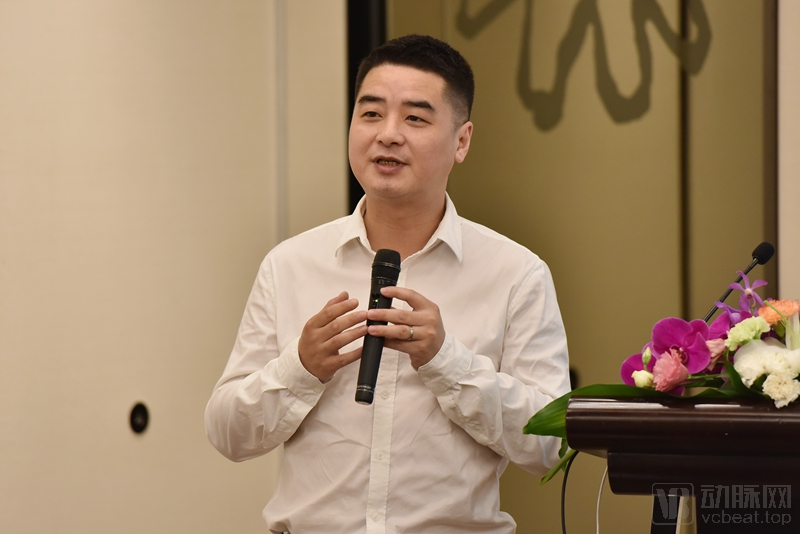
Luis, Founder of Qingyun Technology
Expected Value
In the interview, Luis repeatedly mentioned"Expected Value"This term. Over the more than 20 years from his university graduation to the initial success of his entrepreneurial venture, Luis underwent multiple identity transitions, all for the sole purpose of continuously meeting his own expectations.
In 1992, Luis, who had consistently excelled academically, was admitted directly to Shanghai Second Medical University to major in Clinical Medicine. Recalling that period, Luis noted that he had few specific considerations when choosing his field of study as a teenager; he was simply preparing for a stable career.
After graduation, Luis naturally joined a hospital as a physician in the Department of Otorhinolaryngology. “However, after starting work at the hospital, he found that the job did not meet his expectations.” At that time, otorhinolaryngology was not a key department in hospitals, offering limited professional growth opportunities, while involving heavy workloads and low income.
As China’s market economy rapidly develops, more opportunities are emerging, and Luis is eager to step beyond the hospital setting into a broader world.
Ultimately, Luis set his sights on multinational pharmaceutical companies. Joining such firms meant access to larger platforms and broader career development opportunities. Subsequently, he held sales and marketing roles at Pfizer and Roche, respectively.
In the 21st century, with the continuous development of mobile internet technology, digital marketing in the pharmaceutical industry had already begun to take root. Luis admitted that he had participated in online academic conferences, “but at the time, I believed that digital marketing was merely a supplement to offline marketing and would not become mainstream, so I did not pay much attention to it.”
By 2013, the outbreak of the GSK scandal had completely reversed Luis’s perspective,“Traditional pharmaceutical marketing models have inherent bottlenecks and obstacles, and pharmaceutical marketing will ultimately return to its essence of providing genuine medical services to physicians,”“The industry must recognize the power of digital pharmaceutical marketing.” While posing significant challenges to traditional pharmaceutical marketing models, it also breeds new market opportunities.
Following the GSK incident, Luis began to focus on understanding the digital promotion models for prescription drugs, studying industry dynamics, and exploring which tasks could be shifted from offline to online channels. He started implementing remote detailing in his daily work and investigated physicians’ behavioral preferences regarding remote interactions, including details such as timing, frequency, and content.
In 2016, Luis left the pharmaceutical industry to join a digital marketing firm specializing in healthcare, where he began hands-on work with pharmaceutical digital marketing projects. His very first project was a resounding success, driving drug sales growth beyond expectations. This achievement gave Luis the confidence to found Qingyun Technology, aiming to make significant strides in the pharmaceutical digital marketing sector.
Self-Growth
To outsiders, Luis’s educational and professional background does not fit the typical profile of a successful entrepreneur. However, Luis believes that every experience has been closely tied to his personal growth, each exerting a distinct influence on the founding and management of Qingyun Technology.
Luis categorizes the positive impacts of his past experiences into three aspects.
Product Introduction.Luis has held every position in the pharmaceutical industry, with product acquisition leaving a particularly strong impression on him. This role involves securing suitable products for market sales agency, thereby generating excess returns for the company.
Luis believes that the selection of a product’s marketing model is influenced by multiple factors, including the policy environment, product life cycle, and team marketing characteristics; therefore, not all products are suitable for digital marketing approaches. For instance, pharmaceuticals with a large target physician base, low prescription bottlenecks, and a need for long-term patient use are well-suited for remote multichannel detailing.
Luis once declined a request for the digital promotion of an oncology product. “At that time, market research revealed intense competition for this product; target hospitals were already thoroughly covered by competitors’ offline sales teams, with established kickback arrangements in place.” Under such circumstances, the effectiveness of remote detailing was minimal.
System Setup.Physicians and pharmaceutical companies are key players in the digital marketing of pharmaceuticals. Having served as a physician and managed marketing and sales operations at pharmaceutical firms, Luis possesses an in-depth understanding of primary-care physicians’ stages of conceptual adoption, academic needs, and communication preferences.
“Starting from the actual business scenarios of digital representatives, our independently developed remote engagement system enables more personalized, multi-channel remote interactions with physicians. ‘Systems must serve business needs; they should not be developed based on metaphysical abstractions or mere speculation. Business practice is the true core of system optimization.’”
Organizational Management.Qingyun Technology’s departmental structure strictly follows the standard configuration of multinational pharmaceutical companies, with the distinction that its sales team has been transformed into multi-channel marketing specialists, i.e., online medical representatives.
The advantage of this approach lies in its ability to rapidly replicate and implement proven traditional marketing management practices, thereby maximizing managerial efficiency. Meanwhile, for a large number of multinational clients, Qingyun Technology’s operational model is highly comprehensible, ensuring exceptionally smooth inter-departmental coordination.
Past experiences continue to shape Luis today. In addition to the positive influences mentioned above, negative impacts are inevitably present as well.
Luis remarked that, perhaps due to his medical background, he lacked a spirit of adventure. “As a physician, whether prescribing medication or performing surgery, one must be cautious and conservative.” However, he was well aware that this trait is ill-suited for entrepreneurs. “In many cases,A spirit of adventure determines whether one can seize opportunities and expand rapidly, which is also an essential trait for entrepreneurs.”
Another critical capability entrepreneurs must possess is the ability to rapidly adjust and adapt. Having undergone multiple identity transitions, Luis has long been accustomed to this skill, constantly adjusting and compensating for his lack of adventurous spirit.
Luis, who describes himself as lacking a spirit of adventure, made a bold decision when collaborating with the company’s first pharmaceutical partner: adopting a performance-based payment model. For a startup, this was a make-or-break test. Fortunately, the outcome was highly satisfactory, with results exceeding expectations. This pharmaceutical company has now become a key strategic partner of the firm.
Entry and Breakthrough
Today, Qingyun Technology has emerged as a leading player in China’s digital pharmaceutical marketing industry. It has independently developed an SCRM operating system for remote multi-channel visits, a QA/QC quality monitoring system, an AI-powered intelligent voice system, and a physician profiling and field representative support system. The company has accumulated successful project experience across multiple therapeutic areas, including chronic diseases, vaccines, respiratory conditions, pediatrics, and oncology.
Luis believes that the secret to Qingyun Technology's temporary lead lies inAccurate Market Entryand# Rapid Breakout。
Deciding to start a business is guided by the times and also by one’s personality. “Personality determines whether to do it, while the market determines when to do it.”
Every market opportunity has a window period; entering too early, when the market is immature, often leads to lack of favor, while entering too late means missing the opportunity.Luis noted that some companies had already attempted digital pharmaceutical marketing in 2012, but he believed that mobile communication (especially WeChat) was still in its infancy at the time, and formats such as video and图文 (image-text content) were not yet mainstream; the market was simply not ready.
It was not until 2017, with profound changes in the policy and market environments and the full maturation of technology that drove widespread adoption of mobile internet, that Luis decisively moved forward to establish Qingyun Technology.
It was precisely by accurately seizing the right entry timing that Qingyun Technology achieved rapid growth after its establishment, maintaining a “half-step ahead” pace.
Besides timing the entry, the ability to break out quickly is also key.
At its inception, Qingyun Technology positioned itself as a “pioneer in multi-channel marketing solutions for primary care hospitals.” “Core urban hospitals are already saturated with offline pharmaceutical sales representatives, making it difficult for digital marketing to achieve breakthroughs.Grassroots hospitals are numerous and geographically dispersed, resulting in high costs and low returns for offline representative engagement; this setting allows for rapid validation of digital marketing effectiveness.“Therefore, primary hospitals became the main battleground for Qingyun Technology to rapidly break through and capture the market in its early stages.”
By leveraging precise market entry and rapid breakthrough strategies, Qingyun Technology has reached over 38,000 primary healthcare institutions and accumulated 10 million data points on the online behavior of primary care physicians. In core hospitals, the company has also achieved remarkable results, collaborating with more than 30 brands from 18 pharmaceutical companies on remote, multi-channel precision marketing initiatives.
Industry Influence
Previously, Luis sought to meet expectations through continuous growth in his personal career development and income; now, this standard has shifted to the company’s influence and contributions to the industry.
“If the maximum expected value is 100, Luis believes that Qingyun Technology has only achieved a score of 60.”
“Although we have successfully launched our remote visit service and system, I remain dissatisfied with the company’s current development. We have only taken the first step, and the value and impact we bring to the industry are still far from sufficient.”
Luis stated that the development path of China’s pharmaceutical digital marketing industry can draw reference from the pharmaceutical markets and consumer goods industries in Europe and the United States. “With the continuous advancement of national policies and the evolving healthcare landscape, remote multi-channel promotion will become the mainstream approach in pharmaceutical digital marketing.”
In such an environment,Remote multi-channel visits centered on technology and data will be highly sought after by the market,The pharmaceutical digital marketing industry holds great promise.
Amid a favorable macroeconomic trend,Luis aims to lead the company to become an industry leader in digital marketing for pharmaceuticals., upgrading Qingyun Technology from a digital marketing company focused on remote multi-channel visits to a data platform company.
By accumulating extensive physician data, we provide pharmaceutical companies with intelligent, personalized remote multi-channel engagement solutions. We also empower distributor partners to leverage their remote engagement SCRM systems for precise, efficient, and cost-effective pharmaceutical marketing and promotion, adapting to market transformations. This enables primary care physicians to access diagnostic and treatment information in real time, delivering high-quality medicines and medical services to patients in China.