

China's First Digital Pathology Diagnosis Ranking Unveiled, Highlighting Top Players Across Three Key Segments
On June 13, 2020, the Digital Pathology Industry-Academia-Research Symposium, co-hosted by Alibaba Cloud Tianchi and Intel, was held in Hangzhou. More than twenty guests from medical institutions and the industry engaged in in-depth discussions on the clinical needs of pathology AI and its future development trends.
As the concluding segment of the seminar, VCBeat Research Institute released China’s first “Digital Pathology Diagnosis Ranking.” It is understood that the “Digital Pathology Diagnosis Ranking” comprises three sub-lists covering whole slide imaging systems and equipment, companies providing AI-assisted pathological diagnosis, and third-party pathology centers. Initiated by Intel in collaboration with Alibaba Cloud Tianchi, and compiled using data on pathology enterprises from the VCBeat database, the ranking aims to evaluate the achievements of digital transformation among companies across different segments of the pathology industry chain.
The ranking was compiled over a three-month period by integrating data from the VCBeat database, corporate research, and other public sources. The process comprised four stages: corporate research, establishment of evaluation models, expert scoring, and verification of corporate information.
Pathological diagnosis has long been regarded as the “gold standard” for the diagnosis, classification, and subtyping of major diseases. By examining cellular morphology, tissue architecture, and staining characteristics of suspected lesions under a microscope, pathological diagnosis provides the most clinically accurate assessment of tumors.
At the beginning of each year, the National Cancer Center releases national cancer statistics from three years prior. Based on data from 2011 to 2015, the compound annual growth rate (CAGR) of new cancer cases in China was 4.92%, creating a pathological diagnosis market worth over RMB 20 billion. Furthermore, with the nationwide implementation of the national "Two-Cancer" screening program, the primary screening rates for cervical cancer and breast cancer are projected to rise from 25% to approximately 80%. Calculated based on the recommendation that all women aged 30 and above undergo cervical cancer screening, the corresponding market for pathological examinations will exceed RMB 40 billion.
However, due to the low level of automation in case diagnosis, coupled with the high workload and low income of pathologists, the imbalance between supply and demand in traditional pathological diagnosis is particularly evident. Data shows that in 2018, there were only 9,660 licensed pathologists and assistant licensed physicians nationwide in China, far below the estimated requirement of approximately 80,000 doctors based on a ratio of 1–2 doctors per 100 hospital beds.
In recent years, artificial intelligence (AI) technology has begun to be applied in histopathology and cytopathology. Research teams both in China and abroad have successfully achieved diagnostic recognition for multiple diseases in the imaging field through “AI + pathology,” with some accuracies exceeding 90%. Among these, cervical cancer screening is the most mature area for AI applications in pathology. At present, pathological AI is transitioning from data accumulation to algorithm refinement, serving as part of a comprehensive solution for digital pathology departments, thereby making whole-slide pathology more efficient.
Based on a macro-level understanding of the current digital pathology industry in China, VCBeat believes that digital transformation has become a key development trend for digital pathology companies. As a continuous and incremental process, enterprise digital transformation involves stages such as achieving data acquisition, storage, and distribution through IT governance, establishing data-driven business systems, and enabling data-driven management decision-making.
In the preparation of the "Digital Pathology Diagnosis Ranking," VCBeat began by examining the digital transformation stages of digital pathology companies from a micro perspective. The study involved surveys of 33 whole-slide imaging system and equipment manufacturers, 25 companies specializing in AI-assisted pathological diagnosis, 19 third-party pathology centers, 10 university professors, 5 directors of pathology departments at medical institutions, and 5 professional investment firms. Based on this research, VCBeat defined the connotations, weight distributions, and scoring thresholds for digital transformation stages within a multi-dimensional evaluation index system.
Based on online surveys, telephone interviews, and in-depth interviews covering corporate product structure, product sales, digital investment, IT architecture, and the depth of data’s impact on business operations, VCBeat has developed a quantitative assessment model for digital pathology diagnosis, comprising four primary indicators and 13 secondary indicators. In light of the distinct attributes of companies featured in the three sub-rankings—whole-slide imaging systems and equipment vendors, AI-assisted pathology diagnosis enterprises, and third-party pathology centers—VCBeat assigned differentiated weights to the primary and secondary indicators. Experts from enterprises, universities, and investment institutions were invited to conduct blind scoring, which, combined with objective data, determined the final scores for each indicator.
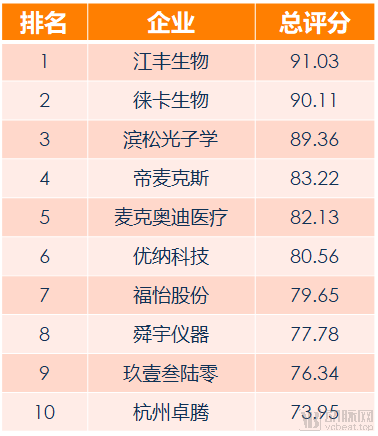
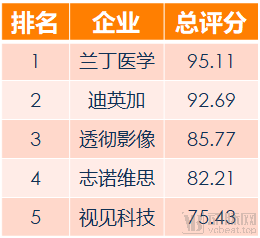
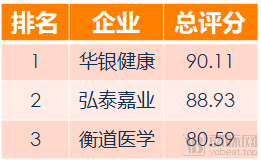
By reviewing the rankings of the top three digital pathology diagnosis companies, VCBeat has identified several trends in the current development of digital pathology diagnosis in China:
First,Digital pathology has transformed the medium of pathological slides, but it has not significantly improved efficiency; cloud computing-based remote consultations have greatly enhanced the diagnostic capabilities of primary care pathology.
Second,The influence of domestically produced whole-slide digital pathology systems is steadily increasing. Collaboration between in-hospital and out-of-hospital settings, along with the extensive network of primary healthcare institutions served by third-party medical laboratories, is unlocking substantial market potential.
Third,The application of artificial intelligence in pathological diagnosis is still in its early stages; algorithmic refinement driven by the accumulation of massive standardized datasets will significantly enhance the efficiency of pathological diagnosis.
Fourth,Independent pathology diagnostic centers trace upstream to optimize data processing and analytical capabilities, significantly alleviating the burden of in-hospital pathological diagnosis.