

Jingsan Medical: Two Decades of Innovation in AI-Powered Cardio-Cerebrovascular Imaging for Precision Prevention
Myocardial infarction and cerebral infarction, well-known as the leading causes of death in humans. According to the "China Cardiovascular Disease Report 2017," cardiovascular disease deaths account for more than 40% of all resident disease-related deaths in China, ranking first.ThisThe primary lesion of the disease is atherosclerotic plaque. In China, approximately one-third of middle-aged and older adults over the age of 40 have carotid artery plaques, while an even greater number of patients have plaques in the intracranial and coronary arteries.
Cardiovascular and cerebrovascular diseases take years to develop, yet they can strike in an instant.
For patients with cardiovascular and cerebrovascular diseases, the pre-clinical phase of disease progression is critical for preventing deterioration. During this phase, diagnostic assessments can be used to evaluate lesion risk, determine the extent of plaque pathology, and enable continuous monitoring, thereby facilitating appropriate preventive interventions to reduce the incidence of cardiovascular and cerebrovascular events.
However, assessing plaque stability has long been a global challenge:
First, traditional medicine regards stenosis of the heart and cerebrovascular vessels as a key pathogenic factor in disease, while overlooking the screening direction of atherosclerotic plaque rupture.
Secondly, cardiovascular and cerebrovascular diseases develop insidiously, making it extremely difficult for patients to detect their onset. Consequently, by the time symptoms manifest, patients often miss the optimal window for treatment.
Third, current clinical methods for assessing plaque stability are often insufficiently precise. For instance, carotid artery ultrasound can only provide a rough estimate of the degree of vascular stenosis.
Dr. Teng Zhongzhao, Founder and Chief Scientist of Jingsan Technology, leveraged his 22 years of research on cardiovascular and cerebrovascular diseases to keenly identify pain points in screening and pinpoint entry points for early detection and prevention. Together with co-founder Shen Yiling, he established Jingsan Technology, which focuses on assessing the risk of vascular plaque rupture.
Jingsan Technology conducts refined analysis, processing, and reconstruction of cerebrovascular and cardiovascular images using medical imaging modalities such as MRI and CT. It has built the Aladdin Smart Healthcare Platform, which covers stability assessment of plaques in the head, neck, and heart, and integrates hemodynamics to establish a biomechanical research service platform. This enhances the accuracy of plaque stability assessment and provides new solutions for the auxiliary diagnosis and precise prevention of cerebrovascular and cardiovascular diseases.
Steady and Sure: Building a Multidimensional Smart Platform Powered by Hemodynamics
“What is my true value to society?” This is the question Shen Yiling, founder of Jingsan Technology, has continually asked herself throughout her career. Although Shen joined Procter & Gamble’s European headquarters after graduating from the University of Cambridge, she still aspires to bring different possibilities to society and life.
The familial medical atmosphere, her long-term engagement with radiologists and neurologists, and this powerful drive converged to prompt her decisive move. Upon learning that Dr. Teng Zhongzhao had accelerated the assessment of plaque stability to within 20 minutes while boosting diagnostic accuracy by more than 20-fold in clinical settings, she resolutely abandoned her stable life to join Dr. Teng in commercializing the “Vascular Plaque Rupture Risk Assessment” technology.
In 1998, Dr. Teng began integrating vascular imaging with hemodynamic analysis to assess the stability of atherosclerotic plaques and aneurysms. His dual doctoral background in fluid mechanics from Fudan University and radiology from the University of Cambridge has provided him with a broader perspective for formulating treatment strategies for cardiovascular diseases.
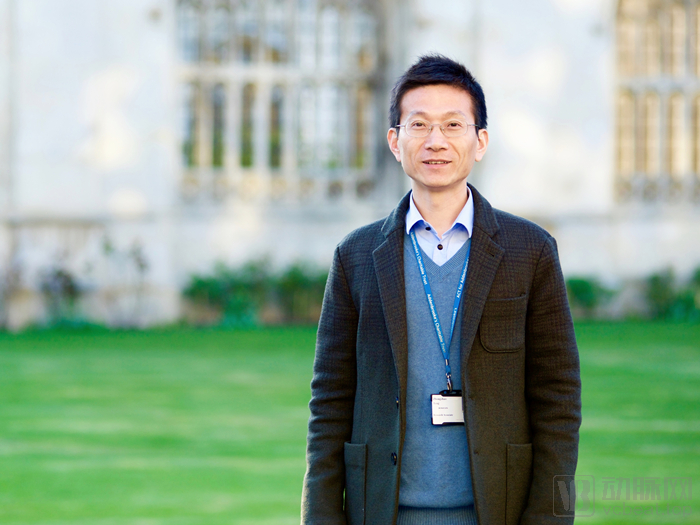
Dr. Teng Zhongzhao, Founder of Jingsan Technology
Based on clinical studies with 2- to 5-year follow-up of nearly 3,000 patients over the past decade, Dr. Teng and his team discovered that hemodynamic factors, such as blood pressure and blood flow, exert compressive forces on atherosclerotic plaques. This compression leads to smooth muscle cell migration, apoptosis, or proliferation, as well as rupture of intraplaque neovessels. At the macroscopic level, these processes can result in fibrous cap disruption, thereby rendering the plaque unstable.
Dr. Teng believes that, in addition to assessing plaque structure and size, degree of stenosis, and inflammation, evaluating the magnitude of mechanical stress can improve the accuracy of plaque stability assessment by 3–4 fold. A comprehensive evaluation of plaque stability based on “lesion morphology, composition, inflammation, and mechanical loading” can further increase the accuracy of plaque screening by 20–30 fold.
The critical significance of hemodynamic analysis in assessing plaque stability and preventing stroke and myocardial infarction has motivated Dr. Teng to incorporate mechanical analysis into the prediction of plaque or aneurysm rupture risk, thereby improving the accuracy of screening results and establishing the Aladdin Smart Healthcare Platform integrated with mechanical analysis technology.
This platform not only provides dual coverage for CT and MRI image analysis but also incorporates four dimensions of auxiliary diagnostic technologies: quantitative and qualitative analysis of head and neck MR plaques and aneurysms, intelligent one-click fully automated reporting for coronary CTA, fully automated analysis of brain volume across 96 regions, and hemodynamic research services provided by Jingsan Technology.
The MRI Plaque Intelligent Analysis Platform not only enables the analysis of bilateral/unilateral carotid artery plaques, intracranial arterial plaques, and intracranial aneurysms, but alsoAnalysis can be completed in just a few simple steps, including automatic identification of the lumen and vessel wall, intelligent labeling of plaque components, and provision of biomechanical analysis. It generates 3D visualizations and structured reports, and establishes the largest plaque annotation database.。
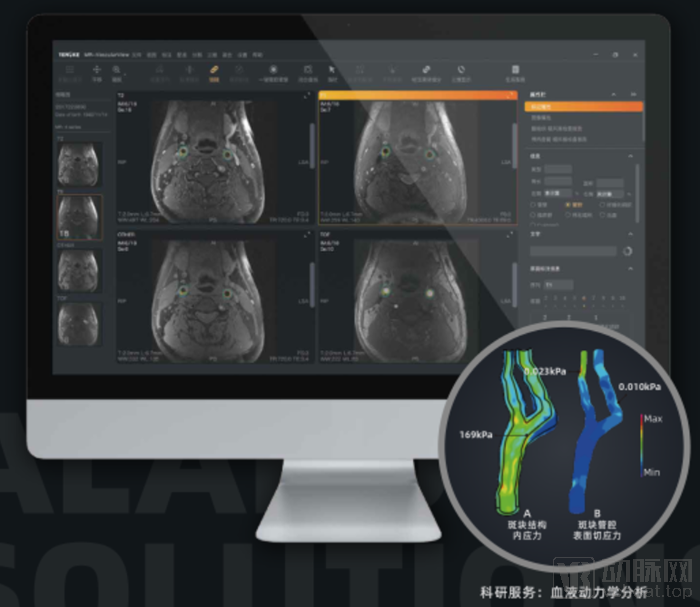
Intelligent MRI Plaque Analysis Platform
The report’s analytical dimensions include vascular stenosis degree, vascular morphology, and quantitative parameters of plaque components, as well as hemodynamic analysis output parameters in research mode. The product offers strong compatibility, supporting mainstream MRI equipment from various manufacturers with field strengths of 1.5T and above, and seamlessly integrates with PACS systems.
This intelligent platform performs AI-driven vascular extraction and analysis of coronary CTA, simplifying the cumbersome post-processing of coronary arteries into a one-click generation of structured reports. The report encompasses multidimensional information, including analysis of anomalous origins, automatic extraction of coronary artery metrics, vessel naming, stenosis quantification, and plaque characterization.
In addition, the platform enables automatic fusion of OCT and IVUS images and processes DSA imagery. Meanwhile, it provides hemodynamic research services, offering quantitative analysis of pressure gradient distribution (FFR), wall shear stress (WSS) and related parameters, as well as vessel structural stress (VSS).
In response to the challenge that traditional imaging analysis data is difficult to utilize for scientific research, Jingsan Technology leverages its in-house R&D team and cloud-based research platform to provide professional, resource-sharing, and multi-center collaborative clinical research services to academic institutions and healthcare organizations.
This platform originated from a brain segmentation algorithm published in 2003 by the Medical Imaging Technology Director at Jingsan Technology. The analysis platform can automatically segment more than 96 brain regions—including gray matter, white matter, cerebrospinal fluid, cerebellum, and hippocampus—based on sequential head MRI data. By registering the data with standard brain templates for healthy Chinese individuals across all age groups, it identifies abnormal indicators and conducts risk assessments for related neurological disorders.
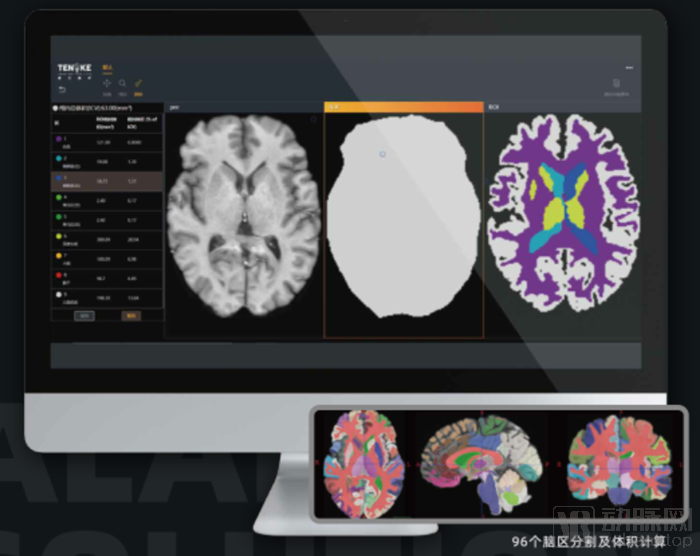
Brain Volume - 96-Region Intelligent Analysis Platform
Furthermore, given the propensity of vascular diseases to induce neuropathies, this technology can also serve as a research tool for quantitative analysis of whole-brain structure.
From 0 to 1: Focusing on Product Innovation and Clinical Validation
“Dedication to scientific research and the team’s professionalism will continuously empower product innovation,” Shen Yiling, founder of Jingsan Technology, told VCBeat. This is a major reason why Jingsan Technology has established R&D centers in both Nanjing and Cambridge, UK. Jiangsu Province’s abundant educational resources can provide Jingsan Technology with more talent, while Cambridge offers cutting-edge research resources and a more focused research environment for the company’s studies.
Shen Yiling told VCBeat that the team at Jingsan Technology has a lean structure but demonstrates a strong spirit of dedication to product research and development.
Excluding Dr. Teng Zhongzhao, JingSan Technology’s Cambridge-based algorithm and research team is composed of senior image processing scientists, including former Facebook deep learning engineers. The team’s extensive experience in medical imaging, machine learning, and hemodynamics research has provided the critical support enabling JingSan Technology to overcome technical challenges in assessing the risk of vascular plaque rupture.This team of approximately 20 members has successfully developed four products and obtained clinical registration certificates.
“Scientific research barriers serve as our stepping stone and are a key factor enabling the company to achieve strong cash flow in the initial stage,” said Shen Yiling. “For instance, our prominent advantage in hemodynamic analysis has garnered hospital support during the product implementation phase.”
Following the pandemic, Jingsan Technology began establishing benchmark hospitals and seed hospitals in several key provinces. Leveraging its research strengths, the company adopted a “research + product” model to facilitate product adoption in leading hospitals and forge deep collaborative partnerships with them.Currently, Jingsan Technology has established collaborations with multiple leading hospitals.
At the current stage,Jingsan Technology is achieving scaled product deployment by establishing its own distribution channels, while continuously developing products to build a comprehensive AI platform for the entire care continuum of cardiovascular and cerebrovascular diseases.
“The medical AI imaging industry is currently in a consolidation phase, with outstanding companies gradually emerging in the cardiovascular and cerebrovascular fields. However, the accumulation of scientific research, product innovation, and channel models will be the decisive factors determining whether products can be successfully implemented and whether enterprises can achieve sustainable development. At its core, AI imaging belongs to the healthcare sector, which is a serious field that requires steady and meticulous progress at every step,” said Shen Yiling.
This is also why JingSan Technology did not choose to leverage “internet marketing” to establish distribution channels and facilitate product commercialization during the initial 0-to-1 phase. Instead, it opted to provide rigorous clinical validation for its products through evidence-based and precision medicine approaches, thereby penetrating the market by establishing benchmark hospitals.
Currently, Jingsan Technology has completed deployment at benchmark hospitals and product validation within these institutions, and is accelerating its fundraising efforts.