

Lunit Partners with GE Healthcare to Launch AI-Powered Thoracic Care Suite
In August 2020, Lunit (hereinafter referred to as “Lunit”), a medical artificial intelligence company, announced that it had signed a cooperation agreement with GE Healthcare, the world’s largest medical imaging equipment manufacturer, in June of this year. As the first step in their partnership, GE Healthcare will launch a chest auxiliary diagnostic software powered by Lunit’s AI technology, called the “GE Thoracic Care Suite.” This marks the first global product jointly developed and launched by a major medical imaging equipment giant and a medical AI startup, a rare collaboration in the industry.
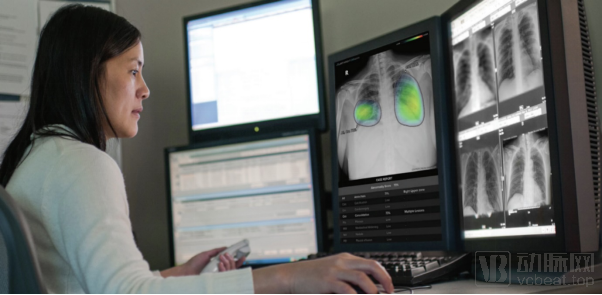
▲ Radiologists using the Thoracic Care Suite, jointly launched by Lunying and GE
Lunying is a startup equipped with world-class artificial intelligence technologies, specializing in the development of medical software to assist in tumor diagnosis and treatment. By leveraging advanced AI to process medical imaging data, the company helps physicians make precise clinical decisions regarding diagnosis and therapy.
Lunit’s latest collaborative product with GE Healthcare features Lunit INSIGHT CXR, an AI-powered chest X-ray auxiliary diagnosis system, which will be integrated into GE Healthcare’s X-ray equipment or PACS. Following the partnership agreement signed with Fujifilm in 2019, this new collaboration with GE Healthcare further accelerates Lunit’s global market expansion.
Leveraging deep learning-based AI technology, Lunit has developed the Lunit INSIGHT product series, which includes Lunit INSIGHT CXR for AI-powered analysis of chest X-rays, Lunit INSIGHT MMG for AI-powered analysis of mammography, and Lunit SCOPE for identification and quantitative analysis of histopathological slides. Among these, Lunit INSIGHT CXR and Lunit INSIGHT MMG, an AI-assisted diagnostic software for mammography, have completed medical device registration in South Korea and Europe and are currently deployed in over 130 healthcare institutions worldwide.
Currently, Lunying has published multiple medical papers in world-renowned academic journals, including *Radiology*, *Clinical Infectious Diseases*, *The Lancet Digital Health*, and *JAMA Network Open*. Its medical AI R&D capabilities and expertise have gained recognition within the medical community.

▲ In 2019, at the Radiological Society of North America (RSNA) annual meeting held in Chicago, USA, VCBeat introduced its products to radiologists.
Lunit SCOPE is an AI-powered solution that analyzes pathological images to predict responses to immune checkpoint inhibitors. Research has validated that Lunit SCOPE can predict patient response by analyzing histopathological images, enabling cancer tissue identification and quantitative analysis. This includes assessing tumor-infiltrating lymphocyte (TIL) density within the tumor stroma, stromal TIL density, tumor-stroma ratio (TSR), and classifying tissues based on immunophenotypes, thereby improving patient survival rates. Related research findings on Lunit SCOPE have been presented at prestigious medical conferences such as AACR and ASCO for two consecutive years. Lun Imaging is exploring collaboration opportunities with major global pharmaceutical companies, leveraging artificial intelligence in healthcare to achieve tangible and meaningful progress in the fight against cancer.
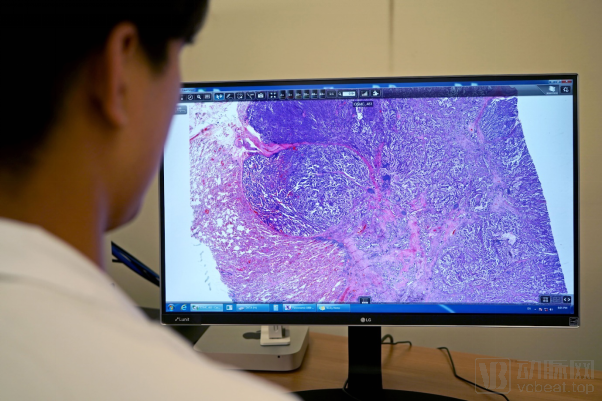
▲ Researchers at VBInsight using the Lunit SCOPE pathological slide analysis software
Mr. Xu Fanshi, General Manager of Lunying, stated, “We are delighted to partner with GE Healthcare, the world’s largest medical imaging equipment company. Lunying’s vision is to integrate artificial intelligence into new diagnostic and therapeutic approaches and standards, thereby empowering more physicians worldwide to save more patients. This collaboration with GE Healthcare marks a new beginning for Lunying. Looking ahead, we are committed to exploring the application potential of medical AI technologies with more partners across diverse fields.”
In 2020, Lunying was selected by CB Insights as one of the Global Digital Health 150. It was the only company in Asia to be included for two consecutive years in the field of AI-based medical imaging and screening diagnostics.
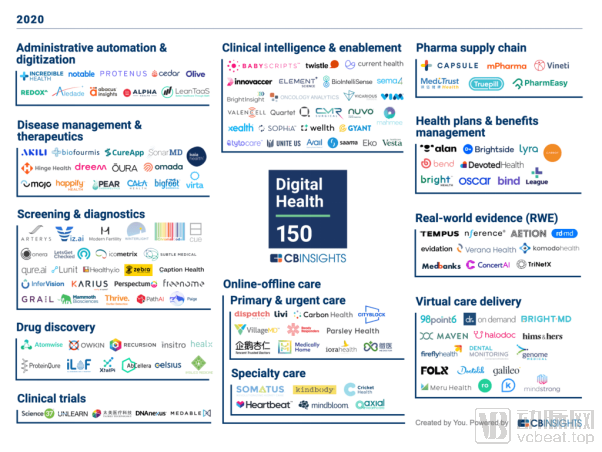
Currently, Lunit has established subsidiaries in Europe and the United States, and set up a branch in Shanghai this July. Lunit’s two AI-assisted diagnostic software products, Lunit INSIGHT CXR and MMG, are being trialed for research purposes at Grade 3A hospitals such as Fudan University Shanghai Cancer Center and Jinshan Hospital, with their accuracy and ease of use receiving positive feedback from physicians. Lunit’s products have currently been submitted for NMPA registration. It is understood that Lunit plans to go public in South Korea next year.