

BeiGene's Suzhou Industrial Base Commences Commercial Production with Capacity of 100 Million Capsules and Tablets Annually

BeOne
Developer of Molecular Targeted and Immune Anti-Tumor Drugs
Recently, VCBeat (WeChat Official Account: vcbeat) learned that BeOne Medicines’ Suzhou manufacturing facility, completed in 2017, has officially commenced commercial production. Located in the Suzhou BioBAY Industrial Park, the facility was constructed in compliance with multiple international GMP standards, including those of China, the European Union, and the United States. Its designed annual capacity ranges from 50 to 120 batches, with a maximum production capability of up to 100 million capsules and tablets. To date, the cumulative total investment in the factory has exceeded RMB 1.4 billion.
It is reported that this industrialization base is primarily responsible for the clinical and commercial production of small-molecule drugs, process development, and the clinical-scale production of large-molecule drugs.
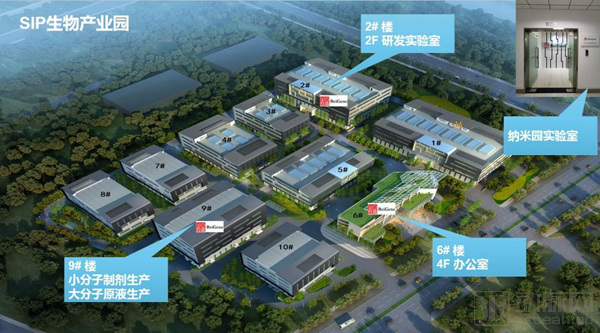
Schematic Diagram of BeOne Medicines’ Suzhou Industrialization Base
Dr. Wang Zhiwei, Senior Vice President, Head of Chemistry R&D, and General Manager of the Suzhou Manufacturing Base at BeOne Medicines, stated that the core business of the Suzhou Manufacturing Base primarily includes pharmaceutical research, production operations, and the BeOne Medicines Suzhou Research Institute.
The pharmaceutical research will focus on three areas: route design and process optimization of the active pharmaceutical ingredient (API), development and technology transfer of formulation studies, and development and validation of analytical methods.
Production Operations is primarily responsible for the commercial supply of innovative small-molecule drugs and the clinical supply of innovative biologics, while also establishing supporting departments such as QA/QC teams, finance, and procurement.
BeOne Medicines Suzhou Research Institute is dedicated to research in three key areas: process development, novel advanced formulations, and translational medicine. Examples include the continuous optimization of small-molecule synthesis routes centered on green chemistry, research on combination formulations, and the establishment of industry-academia-research collaborations.
“Our Suzhou site serves as BeOne Medicines’ global manufacturing hub for small-molecule drugs. As such, the BeOne Medicines Suzhou Industrial Base will be deeply involved in and drive forward all technology transfers, industrial-scale production, and subsequent regulatory approvals and market launches of the company’s small-molecule pipeline,” said Dr. Du Zhengming, Senior Vice President and Chief Director of Chemical Manufacturing and Controls at BeOne Medicines.
Pharmaceutical development is never an easy endeavor; every stage, from drug design and R&D to preclinical/clinical studies and finally to manufacturing and supply, demands meticulous attention.
BeOne Medicines’ Suzhou manufacturing facility is benchmarked against international standards, with its quality management system fully compliant with Good Manufacturing Practice (GMP) requirements in China, the United States, and the European Union. The facility enables end-to-end control of production processes and 24/7 real-time monitoring. It has obtained a Drug Manufacturing License from China, passed two Qualified Person (QP) audits by the European Union (a core component of the EU GMP framework), and successfully undergone on-site inspections by China’s National Medical Products Administration (NMPA) and the U.S. Food and Drug Administration (FDA).
According to reports, the production base employs a systematic quality control framework to achieve comprehensive control over the entire manufacturing process. The production system design incorporates unidirectional personnel and material flows, along with dedicated entry/exit corridors, to effectively prevent cross-contamination. Furthermore, Building Management System (BMS) and Environmental Monitoring System (EMS) controls have been established to enable fully automated, real-time regulation of the production environment, supplemented by online monitoring technologies for the real-time acquisition of critical process parameters throughout the manufacturing process.
Furthermore, the Suzhou industrialization base incorporates energy-saving and environmentally friendly design principles, implementing modules such as a constant-pressure chilled water supply system, fully enclosed material transfer with sealed containment, and steam condensate recovery. These measures maximize the prevention of chemical pollution to the environment during production and minimize occupational health risks to personnel. Dr. Du Zhengming stated that since the facility’s completion, it has maintained a record of zero regulatory penalties and zero cases of occupational diseases.
Meanwhile, BeOne Medicines has established an independent team of over 200 members at its Suzhou industrial base. The core team features a nearly 80% proportion of individuals with master’s or doctoral degrees, including more than ten PhD holders and several senior executives with extensive management experience at large, renowned pharmaceutical companies.
From oncology to autoimmune disease therapeutics, from small-molecule drug design to PROTAC proteolysis-targeting chimeras, and from monoclonal antibodies to bispecific antibodies and antibody-drug conjugates, BeOne Medicines has leveraged its robust R&D engine over the past decade to continuously expand its horizons and build cutting-edge technology platforms.
Currently, BeOne Medicines has established a robust early-stage R&D pipeline, comprising more than 25 products in clinical development and over 10 preclinical candidates.

BeOne Medicines Product Pipeline
Specifically, the Suzhou industrialization base is currently primarily responsible for the commercial manufacturing of Brukinsa (zanubrutinib capsules), a marketed BTK inhibitor. It will also undertake the production and supply of pamiparib, a PARP inhibitor independently developed by the company, following its regulatory approval for marketing in China. In addition, the Suzhou industrialization base will be responsible for formulation development and clinical supply of large-molecule biologics.
Bruton’s tyrosine kinase (BTK) is located upstream in the B-cell receptor (BCR) signaling pathway, facilitating signal amplification between the B-cell receptor and the nucleus, thereby promoting B-cell proliferation, survival, and migration. Therefore, BTK inhibition can aid in the treatment of B-cell malignancies, such as relapsed/refractory mantle cell lymphoma (MCL).
Brukinsa (zanubrutinib) is a BTK small-molecule inhibitor independently developed by BeOne Medicines for the treatment of various B-cell malignancies. It achieves complete and irreversible inhibition of BTK through covalent binding, resulting in sustained and thorough suppression of BTK activity. According to Dr. Wang Zhiwei, one of the principal inventors of zanubrutinib, clinical trials have demonstrated that zanubrutinib achieves a complete response rate of 77.9% in patients with relapsed or refractory mantle cell lymphoma, while exhibiting a favorable safety profile, with only 3.5% of patients discontinuing treatment due to treatment-related adverse events.
It is reported that zanubrutinib has been approved for marketing in the United States and China, and has been included as a recommended regimen in the clinical guidelines of the Chinese Society of Clinical Oncology (CSCO) and the U.S. National Comprehensive Cancer Network (NCCN). Furthermore, marketing applications for zanubrutinib have been submitted in multiple other countries worldwide, including Israel, Europe, and Australia.
Zanubrutinib was approved by the National Medical Products Administration on June 3, 2020, and the first batch of commercial products became available nationwide on June 15, setting a new record in China for the shortest time from approval to commercial availability for a novel oncology drug.
Pamiparib is an investigational small-molecule inhibitor of PARP1 and PARP2 independently developed by BeOne Medicines. Multiple clinical trials are currently underway, including studies in China evaluating pamiparib as monotherapy for maintenance treatment in platinum-sensitive ovarian cancer and for the treatment of ovarian cancer with germline BRCA mutations.
According to Dr. Wang Lai: First, pamiparib exhibits high specificity, selectively inhibiting only PARP1 and PARP2, which play roles in DNA repair, without affecting other targets; second, the drug demonstrates potent inhibitory activity; third, pamiparib has favorable oral bioavailability, allowing it to achieve comparable clinical efficacy at low doses; fourth, pamiparib shows good blood-brain barrier permeability, enabling it to exert therapeutic effects on primary brain tumors or brain metastases.
BeOne Medicines is currently conducting global clinical development of pamiparib as a monotherapy and in combination with tislelizumab for the treatment of various solid malignant tumors. The New Drug Application (NDA) for pamiparib in China has been accepted by the National Medical Products Administration (NMPA) and included in the priority review program, with approval expected next year, positioning it to compete in the domestic PARP inhibitor market.