

Shengqu Games Files Prospectus for IPO Amid Strategic Expansion into Brain Science and AI
In recent years, frontier sciences such as brain science, brain-computer interfaces, and hybrid intelligence have become key priorities for future development in many countries, with artificial intelligence serving as the core driving force leading the next generation of strategic technologies and industrial transformation.
On August 20, the “Legend Innovation Research Center,” jointly established by Zhejiang University and Shengqu Games, was officially inaugurated. Addressing why Shengqu Games is steering its corporate flagship toward the “human brain,” Wang Ji, Chairman of Shengqu Games, stated that the company pins its future on frontier technologies in its third decade. He emphasized that breakthroughs in brain science will give rise to enterprises of Google’s caliber, and that commercializing and industrializing research outcomes in this field will enable the company to maintain a leading position amidst the new wave of industrial transformation.
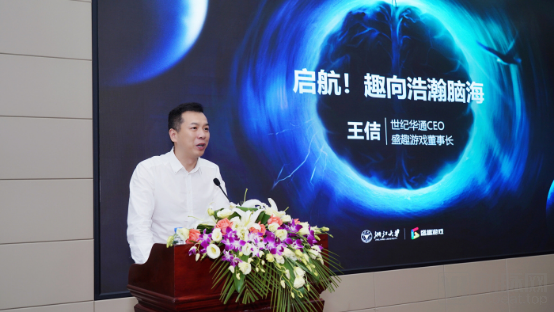
Figure 1. Wang Ji, Chairman of Shengqu Games
The Stanford report “Artificial Intelligence and Life in 2030” posits that human–machine intelligence collaboration is one of the major trends of the future. Meanwhile, brain science aimed at elucidating the neural mechanisms underlying cognitive functions has garnered significant attention from governments worldwide. China’s brain research has reached a critical juncture where it can seize the opportunity to attain international leadership. Deciphering human consciousness and the operational modes of the human brain will catalyze qualitative leaps in artificial intelligence. Furthermore, the boundaries between artificial intelligence and fields such as cloud computing and big data are expected to blur, fostering more integrated and synergistic development.
At the inauguration ceremony of the Legend Innovation Research Center at Zhejiang University, Wang Ji stated in his address that Shengqu Games is the first Chinese gaming enterprise to focus on brain science and commit to investing in frontier scientific research. He described games as an effective digital tool for understanding and studying consciousness. “In the future, game development will undoubtedly be empowered by brain science, engaging with neurotransmitters such as dopamine, neurotrophic factors, and serotonin. We hope to chart a path of cutting-edge development through our participation in the interdisciplinary exploration of the human brain and computers.” At the dawn of its new decade, Shengqu Games is deepening its technological foundation with the vision of a technology-driven company by seeking the “source code” of ultimate happiness.
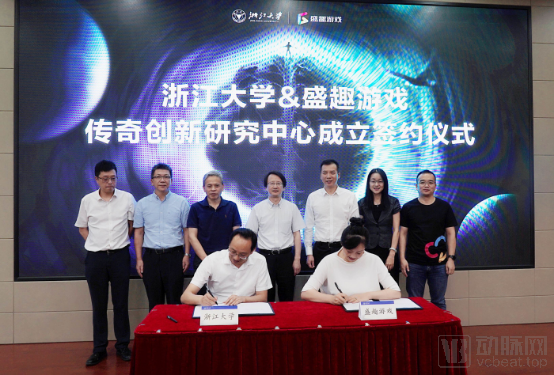
Figure 2. Zhejiang University and Shengqu Games Officially Sign Agreement to Jointly Establish the Zhejiang University Legend Innovation Research Center
As a world-class university, Zhejiang University is currently at the forefront globally in multiple fields, including brain-computer interaction, artificial intelligence, and brain science. Wang Ji believes that jointly establishing the Legend Center represents a sustainable development path. First, Zhejiang University’s long-term exploration in scientific research is well-supported by ample talent and faculty resources. Second, building on years of accumulated expertise, the university can attract top-tier domestic and international talents, ensuring a continuous influx of intellectual capital. Third, as an enterprise, Shengqu Games serves as a catalyst from the initiation of research projects to their industrialization, thereby promoting the marketization and commercialization of research outcomes. Xie Fei, CEO of Shengqu Games, similarly stated that the Legend Center integrates the entire industry chain—from scientific research and technology integration to user application—accelerating breakthroughs in brain science research.
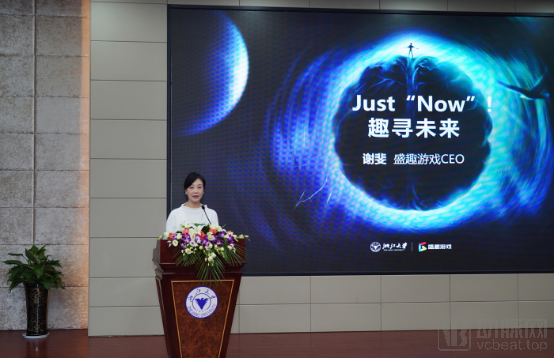
Figure 3 Xie Fei, CEO of Shengqu Games
As the first gaming enterprise in China to establish a Brain Science Research Center, Shengqu Games places its development hopes on cutting-edge technology. Wang Ji emphasized that Shengqu Games is not merely a gaming company; its true vision is to become an enterprise grounded in technological prowess. Over the past 20 years since its inception, every upgrade in internet technology has brought new development opportunities, making the company a “lucky beneficiary” of the times. Today, Shengqu Games continues to seize the opportunities presented by mobile internet, 5G cloud gaming, and big data as part of the “new infrastructure,” having made comprehensive strategic arrangements.
From “Borrowing the East Wind” to “Creating the East Wind,” Shengqu Games has turned its attention to frontier fields such as brain science and human–machine integrated intelligence. In an interview with the media, Wang Ji stated that through investments in cutting-edge scientific domains, the company aims to establish a new growth pole beyond its core gaming business. The joint establishment of the Chuanqi Innovation Research Center with Zhejiang University places the company on the “butterfly’s wings,” enabling it to take off as one of the earliest passengers, learn fundamental principles, experiment with interdisciplinary integration, and promote the translation of research into new products. This technology-driven development approach will lead the new era of intelligence, allowing the enterprise to achieve 10- to 20-fold growth in the future through long-term planning and investment.
Countries and regions such as the United States, the European Union, Japan, Australia, and South Korea have successively launched brain science research initiatives. China’s draft outline for its 13th Five-Year Plan has already listed brain science and brain-inspired research among national major science and technology projects. This June, EndeavorRx, a game developed by Akili Interactive, received prescription drug approval from the U.S. Food and Drug Administration (FDA). Primarily intended for the treatment of attention-deficit/hyperactivity disorder (ADHD) in children, this milestone demonstrates that games as “prescription drugs” are no longer mere fantasy. In China, such “digital therapeutics” are also drawing nearer. Wang Ji expressed hope that Legend Innovation Research Center would secure the first domestic approval for a digital therapeutic, thereby further demonstrating the social value of gaming.
This year, Shengqu Games has expanded its industrial layout not only by exerting force in future emerging fields such as cloud gaming and new infrastructure—for example, participating in the construction of Tencent’s Yangtze River Delta AI Supercomputing Center—but also through its investments in artificial intelligence and brain science, which demonstrate its commitment to “technology-empowered culture” and its continuous efforts to cultivate new drivers and growth points. It remains to be seen what research achievements on the human brain and brain-computer integration the Future Legend Innovation Research Center will deliver, warranting continued attention.