

From Offline to Online: The Professional Transformation of Internet Hospital Doctors

PINGAN GOOD DOCTOR
Internet Medical Health Platform
Stepping into an office area within Zhangjiang Hi-Tech Park, one finds a quiet environment where only the occasional clatter of keyboards and hushed conversations break the silence. Few would associate this tranquil atmosphere with the bustling, high-tension environment of a hospital.
Lu Wei, a TCM Physician at the Qingdao Internet Hospital of PINGAN GOOD DOCTOR, Discusses the “Inspection, Listening and Smelling, Inquiry, and Pulse-taking” in Online Traditional Chinese Medicine Practice
But this is merely the surface; beneath it, network cables stretching into the distance carry undercurrents of intense activity. Internet physicians, clad in white coats and appearing emotionally detached, are no less burdened than their counterparts in brick-and-mortar hospitals. They too must confront countless life-and-death emergencies, which can be even more harrowing due to the inherent uncertainties of network connectivity.
The white-coated professionals who connect with the 300 million users behind PINGAN GOOD DOCTOR via keyboard, providing them with 24/7 online medical consultations and medication purchasing services, face a high barrier to entry.
They were once medical professionals at renowned Chinese tertiary hospitals, such as the 301 Hospital and the Obstetrics and Gynecology Hospital of Fudan University in Shanghai, but have since shifted their battlefield from traditional hospital settings to the seemingly calm online realm. The high level of convenience brought by the internet has led to a rapidly growing cohort of online “white-clad angels.” As of June 2020, PINGAN GOOD DOCTOR’s in-house medical team had exceeded 1,800 members.
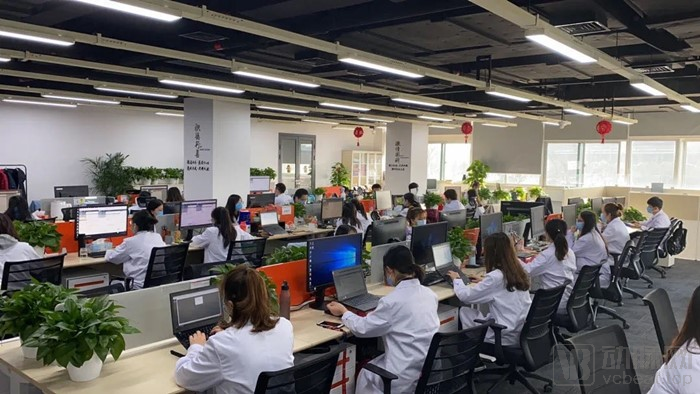
PINGAN GOOD DOCTOR's In-House Medical Team Is Conducting Online Consultations
“Treating disease” is not a simple term. For patients, it is the path to health; for physicians, it is a vital way of showing respect for life.
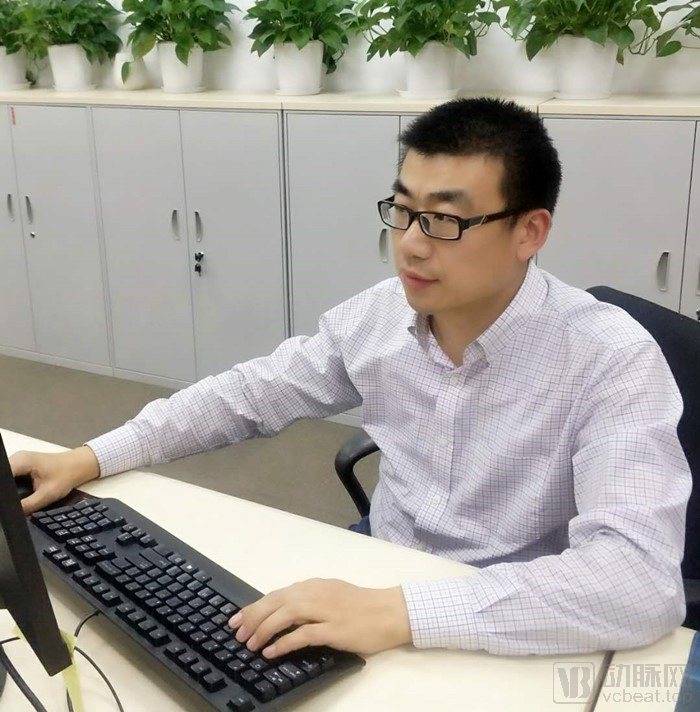
In 2017, Liu Qingjun became one of the first full-time physicians at Qingdao Internet Hospital.
“Always maintain reverence for life and take responsibility for every patient.” This is the “strict mandate” Liu Qingjun has imposed on himself since choosing to pursue a career as a physician.
After completing his M.D. degree, Liu Qingjun joined a top-tier Grade 3A hospital in China, where he has been engaged in clinical practice and research on digestive system diseases. Meanwhile, Liu Qingjun has continuously kept abreast of the latest advances in medical technology, presided over two projects funded by the National Natural Science Foundation of China, and published more than 20 core academic papers based on his medical insights and research findings.
Throughout this process, Liu Qingjun has maintained a keen eye for innovation and consistently put it into practice. This is reflected not only in his medical research but also in his rapid understanding, acceptance, and active participation in internet hospitals.
In 2017, Ping An Qingdao Internet Hospital, the first internet hospital in Qingdao, opened its doors and extended a sincere invitation to Liu Qingjun. After brief consideration, Liu chose to embark on the path of an “online angel in white,” becoming one of the hospital’s first full-time physicians. “At that time, I believed that internet healthcare could serve more patients,” Liu replied when asked about his original motivation for joining.
Now, three years later, he has become the Director of the Gastroenterology Department at the hospital, seeing over 100 patients per day on average. Since joining the internet hospital, his total number of consultations has far exceeded the cumulative total from his previous offline practice, fulfilling his original aspiration to dedicate himself to internet-based healthcare.
Liu Qingjun stated that one of the distinctions between online consultations and traditional departmental consultations lies in whether physicians can genuinely understand patients’ needs without face-to-face interactions, which poses a significant test to their clinical expertise. “An excellent physician at an internet hospital must establish a strong trust-based relationship with the patient prior to consultation, thereby enabling a thorough understanding of the details of the condition, identifying patient needs, and addressing their concerns.” When asked about the differences between consultations at internet hospitals and those at traditional hospitals, Liu Qingjun shared his perspective.
To illustrate this point, he also shared a harrowing case from the recent past. Speaking of this patient, Liu Qingjun still feels a lingering sense of dread. “I am truly relieved that he took my advice to heart. If he had not undergone surgery that night, I would have regretted it for the rest of my life!”
It was a day in early 2020 when a help window from a 30-year-old male patient popped up on Liu Qingjun’s screen.
“Hello, may I ask where you are feeling uncomfortable?” Liu Qingjun responded politely as usual.
“Hello, Doctor. I am experiencing unbearable abdominal pain. Previously, I was diagnosed with gastritis at a community clinic, and my symptoms improved after medication. However, the abdominal pain has recurred, and this time it feels more severe than before. Could you please prescribe some medication for me?” The patient briefly described their condition.
“All right, please don’t worry. Apart from the worsening pain, are you experiencing any other symptoms? For instance, do you have a fever, or has the location of the pain changed?” Liu Qingjun paused briefly, searching his mind for answers.
“I have a slight fever, but it’s nothing serious. It’s hard to pinpoint the exact location of the pain; it felt like it was in my stomach before, but now I’m also experiencing pain in my lower abdomen.”
Given the patient’s poor response to previous medications, Liu Qingjun believed that this was not a case of ordinary gastritis. With recurring symptoms, shifting pain locations, and accompanying fever... Based on his professional intuition and years of clinical experience, Liu Qingjun quickly reached a conclusion. “Hello, I suspect you are most likely suffering from acute appendicitis. You must go to the hospital for examination and surgery as soon as possible!”
“Impossible! I definitely don’t have this condition! Just hurry up and prescribe some painkillers or something!” Surprisingly, the patient firmly rejected Liu Qingjun’s diagnostic assessment and repeatedly insisted that only a prescription was needed.
The patient’s stance was so resolute that the conversation was on the verge of reaching an impasse; yet, leaving the matter unaddressed could potentially put the patient at risk. What should be done? Perhaps it was anxiety and fear surrounding the unknown disease that subconsciously triggered the patient’s resistance? Liu Qingjun changed tactics, deciding to alleviate the patient’s panic through health education.
“Please don’t worry. Appendicitis is not a serious condition; it is a common disease. It can be treated at any accredited hospital, and with timely intervention, the cure rate is very high. Additionally, it is covered by medical insurance, so your out-of-pocket expenses after reimbursement will be quite low.”
Upon hearing this, the patient’s tone became considerably calmer. Once the patient’s emotions had stabilized slightly, Liu Qingjun provided a detailed analysis of the etiology and disease course, then outlined the hospital’s examination and treatment procedures. Finally, the patient agreed to undergo in-person examinations at the hospital.
However, it remained uncertain whether the patient actually sought medical attention at a hospital or obtained prescriptions elsewhere. Although acute appendicitis is not considered a major illness, its rapid onset means that missing the optimal treatment window can still be life-threatening. The moment the patient went offline, Liu Qingjun began to regret not having obtained their contact information for further follow-up on their treatment. He couldn’t help but feel concerned about the patient’s condition.
This concern persisted into the next day, when the patient specifically logged on to thank Liu Qingjun. He stated that the hospital’s test results were entirely consistent with Liu Qingjun’s initial assessment, the surgery was highly successful, and he had received timely treatment. At that moment, the heavy burden weighing on Liu Qingjun’s mind was finally lifted.
“Online consultations require physicians to assess patients’ conditions through careful observation and inquiry, which demands extensive clinical experience and a high level of medical expertise.” Liu Qingjun emphasized that patient cooperation is also crucial in this process, making the establishment of mutual trust between physicians and patients a prerequisite for smooth and effective diagnosis and treatment.
This is merely one small case among the many users served by Liu Qingjun over her three years as an “online angel in white,” and it also serves as a microcosm of the numerous cases handled by the PINGAN GOOD DOCTOR medical team. It is commendable that they provide professional medical consultation services to more than 300 million users of PINGAN GOOD DOCTOR through the characters they type on their keyboards.
Another story of an “online angel in white” at PINGAN GOOD DOCTOR also moved us. In August 2020, Lu Wei, an attending physician in the Department of Traditional Chinese Medicine at Qingdao Internet Hospital, marked his first anniversary with the company.
Before becoming a full-time physician at an internet hospital, Lu Wei worked in the Department of Traditional Chinese Medicine (TCM) at a local Grade 3A hospital, primarily handling outpatient and inpatient care. He adapted quickly to the shift from offline to online practice, and has developed his own insights into how TCM should be practiced in the digital realm. “TCM emphasizes the four diagnostic methods: inspection, auscultation and olfaction, inquiry, and palpation. In the online setting, TCM physicians place greater emphasis on inspection and inquiry. This requires us to have substantial knowledge reserves and solid foundational skills, enabling us to identify patients’ conditions based on limited images and videos.”
The first patient of the day was an office worker who had been working overtime for five consecutive days. The patient had been feeling unwell for several days but chose to consult a doctor online, fearing that visiting a hospital would be too time-consuming.
“After considering that registering for an in-person hospital visit would take an entire day, the patient followed a colleague’s advice and opted for an online consultation. Based on his preliminary description of symptoms, the PINGAN GOOD DOCTOR system triaged him to my clinic.” Lu Wei stated that this patient’s journey is representative of the common experience shared by many who seek help from internet hospitals.
Based on his consultation with the patient, Lu Wei discovered that the condition was far more severe than initially anticipated due to the delay in seeking medical attention. “The patient’s prolonged busyness led to a deficiency of Zheng Qi (vital energy). While he appeared energetic externally, his internal health had already been significantly compromised. Consecutive days of overtime work left him physically and mentally exhausted. Upon seeing the substantial pile of urgent documents awaiting resolution, he experienced an acute onset of ‘internal fire’ (excessive heat), manifesting as dry and sore throat. Moreover, the symptoms did not alleviate after brief rest; instead, they worsened to the point where even swallowing water became difficult.”
After reviewing the tongue and facial images uploaded by the patient, Lu Wei further gained a preliminary understanding of the patient’s physical condition through verbal communication. “During the consultation, I focused more on offering encouragement and reassurance, helping him develop a correct understanding of his health status and take it seriously. Following the consultation, targeted medication was prescribed, and thanks to PINGAN GOOD DOCTOR’s logistics network, the medicine was delivered to the patient within an hour.”
A few days later, the patient returned to Lu Wei for a follow-up visit. The results were favorable, and the patient’s symptoms had alleviated. After the consultation, Lu Wei stretched, feeling a sense of relief. At that moment, a system notification popped up, indicating a new message. Lu Wei clicked the mouse to open it. It was a positive review from this very patient: “Many people are too busy with work and end up delaying treatment. In such cases, the convenience of internet hospitals truly stands out. Thank you, Dr. Lu, for your patient explanations, which have given me a clear understanding of my health condition.”
“The public’s acceptance of internet healthcare is, in fact, a gradual process driven by social development. Where there is demand, there is a market; meeting the public’s needs is the cornerstone of internet development. Currently, while internet healthcare still has its shortcomings, its benefits are evident to all. As ‘online’ physicians, we have indeed helped alleviate the difficulties, high costs, and inconveniences associated with seeking medical care for a segment of the population,” said Lu Wei.
Tang Guobing, Director of the Department at Qingdao Internet Hospital, also shared his perspective. “Online consultations allow patients to consult renowned specialists without leaving home, reducing the economic and time costs associated with seeking medical care. As physicians, we can enhance our service capabilities and standards through online learning and AI-assisted diagnosis, while also conducting medication monitoring and post-consultation management for patients. Overall, I believe that the high compatibility of internet-based healthcare has not only strengthened interaction between doctors and patients but also transformed the traditional healthcare model, which previously offered only single, episodic, and unscheduled diagnostic and treatment services.”
“Although the users who engaged in online consultations during the early stages of the pandemic included a segment driven by panic and irrationality, overall—particularly evident from the growth in actual demands such as prescription services—the pandemic still facilitated user accumulation and habit formation. Meanwhile, most internet healthcare platforms have opened their consultation interfaces to third-party entities in sectors such as news and information, lifestyle and entertainment, and online social networking, thereby accelerating the penetration of internet healthcare into various scenarios.” Based on his personal experience, Tang Guobing believes that internet healthcare will achieve greater development after the pandemic, leveraging its prominent advantages demonstrated during this period.
Liu Qingjun, Lu Wei, Tang Guobing… The efforts of more and more “online angels” from PINGAN GOOD DOCTOR are continuously changing people’s perception of internet healthcare, as a brand-new era approaches.
“Transitioning from traditional hospitals to the corporate sector, what changes are the work environment and format; what remains unchanged is the compassionate heart of a healer and the sense of pride that arises after treating patients and saving lives.” Lu Wei’s account echoes the sentiments of all “online angels in white,” simple yet deeply moving.