

First China Internet Hospital Conference Successfully Held in Zhuhai
August 22–23, the First China Internet Hospital Conference, hosted by the Internet Hospital Branch of the Chinese Research Hospital Association and organized by Zhuhai People's Hospital, was successfully held in Zhuhai.
Themed “Integration and Synergy for a Win-Win Future,” the conference featured in-depth and lively discussions on various aspects of internet hospital development. Attendees included policymakers, leaders from industry societies and associations, hospital administrators, and internet healthcare practitioners. Prior to the main conference, the Second Plenary Session of the First Committee of the Branch was held, during which the Young Professionals Committee and 21 research study groups were established. Looking ahead, the Internet Hospital Branch of the Chinese Research Hospital Association will focus on multidimensional issues related to internet hospital management and disciplinary development, establishing standards and norms to promote the scientific and orderly advancement of the industry.
The Promising Future of Internet Healthcare
In recent years, driven by the dual forces of national policies and technological advancements, the "Internet + Healthcare" sector has flourished. In the face of this year’s sudden pandemic outbreak, the advantages of the "Internet + Healthcare" model have been fully demonstrated.
In his address to the conference, Qin Yinhe, former Deputy Minister of the General Logistics Department and Honorary President of the Chinese Association of Research Hospitals, stated that “Internet Plus Healthcare” is a major initiative for implementing the “Healthy China” development strategy, an important platform for advancing the implementation of national healthcare reform policies, a key vehicle for addressing the difficulties and high costs of accessing medical care, and a crucial means of enhancing people’s health and well-being. Qin Yinhe pointed out that the Internet Hospital Branch of the Chinese Association of Research Hospitals should strive in five areas—generating ideas, establishing standards, producing outcomes, cultivating talent, and sharing experience—to rapidly develop a new model characterized by integration, inclusiveness, quality, and intelligence.
Jin Xiaotao, former Deputy Director of the National Health and Family Planning Commission and President of the Chinese Society for Health Information and Big Data in Healthcare, also expressed optimism about the future of “Internet + Healthcare.” “Internet-based healthcare is inevitably a vital innovative tool and a crucial supporting safeguard for promoting and meeting the public’s needs for life and health,” said Jin. He noted that, as an emerging development, internet-based healthcare will drive the reform of China’s health and medical sectors with a highly significant and clearly defined direction.
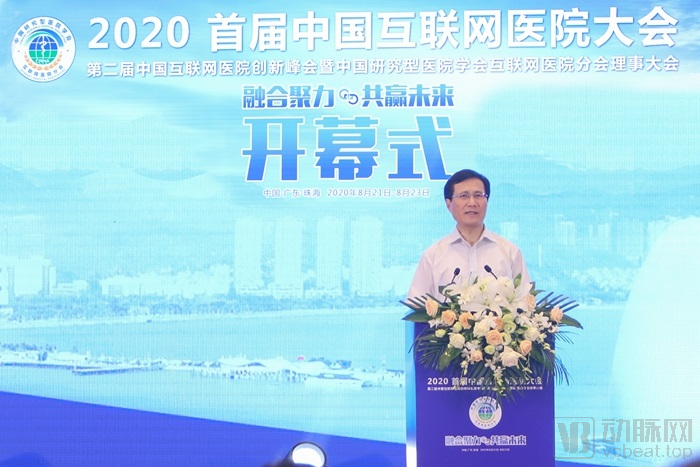
Jin Xiaotao, Former Deputy Director of the National Health and Family Planning Commission and President of the Chinese Society for Health Informatics and Medical Big Data
In recent years, relevant national authorities have continuously introduced policies to promote and standardize the development of “Internet + Healthcare.” At the main forum, Wang Fei, Deputy Director of the Medical Resources Division under the Bureau of Medical Administration and Hospital Management of the National Health Commission, noted that during the pandemic, various regions actively advanced the development of internet-based medical services and internet hospitals, continually enriching the scope of online services and alleviating pressure on offline clinical care. Internet hospitals have become an integral component of the healthcare service system. Regarding future work plans, efforts will focus on establishing national internet healthcare centers by region, refining regulatory standards for internet-based medical services, formulating guidance documents for such services, continuously optimizing appointment-based diagnosis and treatment systems and processes, and improving the top-level design of smart hospitals.
Wen Jian, President of the Internet Hospital Branch of the Chinese Research Hospital Association, stated that the branch strives to serve as the “national team” and “locomotive” in supporting and driving industry development. Adhering to the principles of “service, coordination, self-discipline, rights protection, and supervision,” the branch aims to support and standardize industry growth, explore and optimize internet-based diagnosis and treatment protocols and clinical pathways, promote the establishment of a nationwide shared platform for internet hospitals, streamline medical service processes, improve service closed-loop management, strengthen self-education, management, and oversight, and foster the healthy development of the industry.
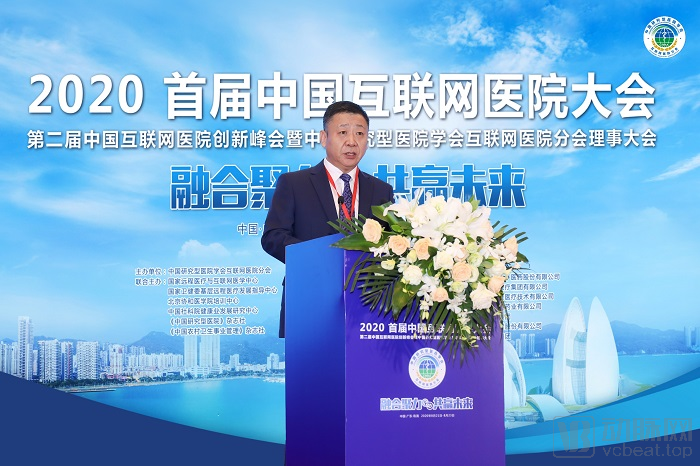
Wen Jian, President of the Internet Hospital Branch of the Chinese Research Hospital Association
Quality Control Remains a Key Industry Focus
Regarding internet healthcare quality control, a key focus of the industry, Wen Jian stated that as the first national secondary academic organization dedicated to internet hospitals, the Internet Hospital Branch of the Chinese Research Hospital Association must firmly establish a concept of safe development and consistently uphold safety baselines. It is essential to integrate medical safety, information security, medication safety, and cybersecurity throughout the entire process of diagnosis, treatment, pharmaceutical distribution, and data management, thereby fostering a secure ecosystem for internet healthcare.
Qin Mingwei, Vice President of the Internet Hospital Branch of the Chinese Research Hospital Association and Director of the Telemedicine Center at Peking Union Medical College Hospital, Chinese Academy of Medical Sciences, believes that as an extension of the core medical functions of offline hospitals, “Internet + Healthcare” must prioritize the delivery of high-quality and compassionate medical services. However, quality control in “Internet + Healthcare” remains in an exploratory phase. Qin suggests that quality control efforts should be strengthened through institutional development, management frameworks, process reengineering, and the establishment of indicator systems.

Qin Mingwei, Vice President of the Internet Hospital Branch of the Chinese Research Hospital Association and Director of the Telemedicine Center at Peking Union Medical College Hospital, Chinese Academy of Medical Sciences
Lu Qingjun, Executive Vice President of the Internet Hospital Branch of the Chinese Research Hospital Association and Director of the Office of the National Health Commission’s Telemedicine Management and Training Center at China-Japan Friendship Hospital, stated that internet hospitals are a new type of medical institution whose essence is “hospital.” The regulation of internet hospitals must comply with China’s management and governance system for medical institutions.

Lu Qingjun, Executive Vice President of the Internet Hospital Branch of the Chinese Research Hospital Association, and Director of the Office of the National Health Commission’s Telemedicine Management and Training Center at China-Japan Friendship Hospital
Building a Healthy Industry Ecosystem
According to Wen Jian, the Internet Hospital Branch of the Chinese Research Hospital Association was officially established in Hainan on July 20, 2019. The branch’s membership comprises renowned academicians from China, presidents of large Grade A tertiary hospitals, and leaders of internet hospital, telemedicine, and pharmaceutical e-commerce enterprises, as well as experts and scholars in the fields of healthcare management, clinical medicine, information technology, hospital legal affairs, and medical insurance. Covering all sectors of the internet hospital industry and extending its reach across major regions throughout China, the branch boasts broad representativeness and influence.
From Wen Jian’s perspective, although the pandemic accelerated the development of internet hospitals, the same unresolved issues have persisted throughout the pre-pandemic, pandemic, and post-pandemic phases during actual implementation. First, there is no unified standard for the operational management of internet hospitals. Second, information silos are widespread, making interoperability difficult to achieve. Third, medical insurance reimbursement policies remain unclear, undermining the sustainability of platform-based internet hospital models. Fourth, internet hospitals are overly concentrated in large tertiary hospitals, hindering the downward distribution of high-quality medical resources. Fifth, vicious competition exists, creating an urgent need to establish standards and maintain industry self-discipline.
“As a secondary branch under the Chinese Research Hospital Association, the Internet Hospital Branch had clear objectives from its inception: to conduct research, develop guidelines, and establish standards,” said Wen Jian. He noted that over the past year since its establishment, the branch has served as an assistant and think tank to the government, acted as a bridge and link, continuously strengthened its own capacity building, actively participated in epidemic prevention and control efforts, and played a key backbone role. Moving forward, it will conduct in-depth research on policies and regulations related to internet hospitals, thereby fostering a healthy and orderly academic ecosystem for internet-based healthcare.
As the organizer of this event, Zhuhai People’s Hospital is a construction unit for high-level hospitals in Guangdong Province and one of the first hospitals to go online on the Guangdong Provincial Internet Hospital Service Supervision Platform. Cui Min from Zhuhai People’s Hospital stated that “Internet + Healthcare” is an irreversible major trend in the industry. To achieve the enhancement and transformation of the existing healthcare system through internet hospitals, concerted efforts across the entire industry are still required.
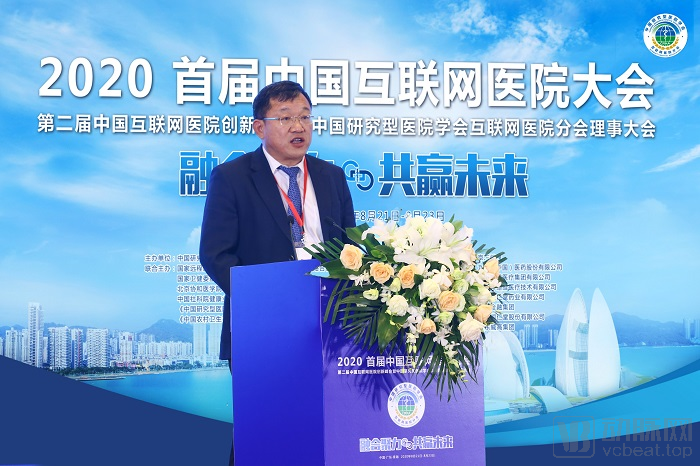
Cui Min, Vice President of Zhuhai People's Hospital
At the conference, the Internet Hospital Branch of the Chinese Research Hospital Association and the People’s Daily Health Client jointly launched the “China Tour of Internet Healthcare” project, which will select 10 internet healthcare companies for research, promotion, and publicity over the next year.

Launch Ceremony of the Internet Healthcare China Tour
During the conference, sub-forums were also held on topics including intelligent technologies for internet healthcare, online pharmaceutical distribution and prescription management, internet insurance payments and industrial finance, as well as cardiovascular diseases, obstetrics and gynecology, oncology, pediatrics, and endocrinology. These sessions attracted widespread attention and acclaim from society.