

Six Years of Refinement: How XieZhuo Medical Cracked the Code of Chain Clinic Success
For China’s clinic industry, 2017 was a vibrant year. In May 2017, the State Council held an executive meeting that affirmed support for and encouragement of non-governmental entities in establishing general practice clinics, while promoting the cross-provincial and cross-municipal chain operations of capable privately run outpatient departments.
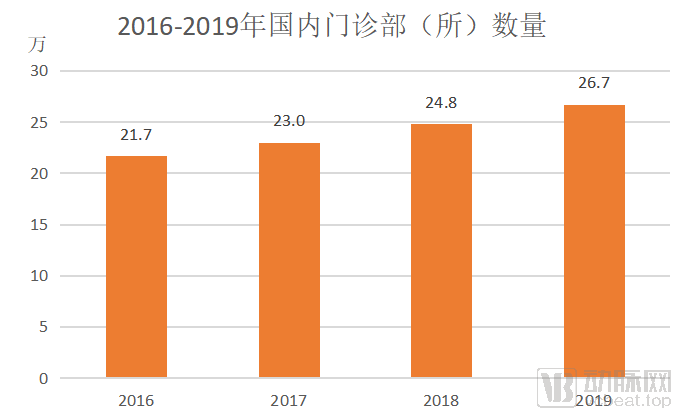
Driven by policy support and capital investment, private clinics have demonstrated stronger vitality. Data released by the National Bureau of Statistics shows that the number of outpatient departments (clinics) in China maintained steady growth from 2016 to 2019.
As the gatekeepers of residents’ health, primary healthcare institutions provide diagnosis and treatment services for common diseases, frequently occurring illnesses, and chronic conditions, while also bearing the responsibility of improving residents’ physical fitness and preventing diseases. In recent years, relevant policies have consistently promoted the enhancement of service capabilities at primary healthcare institutions and guided the downward allocation of high-quality medical resources.
Currently, primary care clinics in China are numerous and fragmented, suffering from a lack of standardized management, which makes it difficult for individual clinics to scale up. In contrast, the pharmacy sector, similar to clinics, has seen rapid development in recent years, giving rise to a large number of well-known chain pharmacies with cross-provincial and nationwide presence.
In this context, an increasing number of primary healthcare practitioners are adopting chain operation models for their clinics, with Xiezhuo Medical being one such example.
“Simple” Solutions for Clinic Chain Expansion
“I firmly believe that innovation and disruption in healthcare services lie at the grassroots level!”
Xiezhuo Medical is a chain of clinics providing primary care services to community residents. Established in July 2015 and headquartered in Chengdu, Xiezhuo Medical has consistently aimed to build a new type of professional clinic chain platform.
When asked why he chose to establish a chain of clinics, Huang Xianjin, founder of Xiezhuo Medical, stated that he had already accumulated over ten years of clinic management experience prior to founding the company. He possessed a strong understanding of the medical service needs of community residents, and the most frequent challenge encountered during operations was the attrition of medical and nursing staff.
Primary care clinics can facilitate the downward distribution of high-quality medical resources, alleviate pressure on hospitals, and address the difficulty of accessing medical care. In Huang Xianjin’s view, the advantages of sole proprietors opening clinics include low entry barriers, simplified procedures, and flexible operational models, but their revenue models remain singular.
Without the backing of a brand, medical staff lacked a sense of belonging to the clinic, resulting in severe talent attrition and making it difficult for the clinic to recruit high-quality healthcare professionals. Huang Xianjin admitted that during the most challenging period, he could see neither hope for the future nor a clear direction.
In late 2012, Huang Xianjin decided to pursue an MBA at Sichuan University. During his studies, he engaged in extensive discussions with faculty and classmates, realizing that the path of operating a clinic was indeed correct, and that previous issues had largely stemmed from deficiencies in management and operations. Ultimately, Huang Xianjin clarified that branded chain clinics represented the future direction for development.
Thus, in 2013, Huang Xianjin officially began exploring a clinic chain model suited to his needs.
In China in 2013, chain clinics were arguably an emerging topic. Those running chains lacked medical expertise, while medical professionals lacked knowledge of chain operations and management. Many also remained uncertain about the appropriate scale for chain clinics.
To identify the clinic standards best suited for market development and chain expansion, Huang Xianjin separately explored the management and operations of three types of clinics: outpatient departments, large clinics, and small clinics. Ultimately, he discovered thatFor chain-style operations, large-scale, multi-specialty clinics are difficult to replicate quickly, making it even harder to reduce clinic costs.。
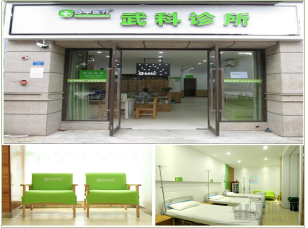
After years of refinement, Xiezhuo Medical’s Chain Standardization Specification Version 3.0 was implemented in 2017, with clinic sizes controlled at approximately 100 square meters. The investment per single clinic ranges from RMB 300,000 to RMB 600,000 to facilitate rapid replication and expansion. To date, Xiezhuo Medical has opened five standardized general practice clinics, cumulatively serving over 500,000 patients.
Pricing-Based Consultations: Solving the Patient Acquisition Challenge
Having resolved the challenges associated with the chain operation model, the next urgent priority is customer acquisition. As part of the private healthcare sector, clinics should place greater emphasis on medical services compared to public hospitals and adopt a product-oriented mindset in their operational development.
In terms of site selection, each clinic primarily serves a catchment area of 5,000 to 10,000 residents. As chain clinics targeting community patients focus their disease profile on common illnesses and chronic disease management, Xiezhuo Medical positions itself as a general practice clinic, while also providing primary care, health management, and referral services.
Huang Xianjin stated that, as a customer-centric healthcare service provider, Xiezhuo Medical regards patients’ pain points in seeking medical care as the entry point for clinic operations.
For the general public, the primary concerns are treatment efficacy and medical costs. In response, Xiezhuo Medical has launchedPricing-Based Consultation Model to Achieve Standardized Fees. Through transparent pricing for medical consultations, patients can clearly understand the fee structure and treatment process before receiving care, ensuring informed and transparent consumption.
To enhance customer stickiness, Xiezhuo Medical has also launched an online management system and membership services, enabling online appointment registration, scheduling of family doctor services, and waiver of consultation fees for physician referrals within the membership network.
As a new type of clinic, Xiezhuo Medical will innovate in both its service and business models compared to traditional clinics. However, despite these changes, the core principle remains unchanged: a steadfast commitment to developing primary healthcare. Huang Xianjin stated that the innovation required for clinics should be incremental rather than driven by short-term gains. It is essential to allow patients time to adapt, with the highest priority being the fundamental duty of providing effective medical diagnosis and treatment.
Not Just a Doctor, But a Partner
For community clinics, a strong reputation and positive doctor-patient relationships are indispensable to their development, both of which hinge on the pivotal role of physicians.
When selecting physicians, Xiezhuo Medical places significant emphasis not only on their professional skills and experience but also on whether their values align with the company’s philosophy. Healthcare is not an industry solely dedicated to generating substantial profits; only by maintaining a genuine passion for the field and acting with sincerity can physicians achieve meaningful accomplishments.
Currently, high-quality physician resources are relatively scarce within China’s primary healthcare system, making it increasingly important to strengthen the stickiness between clinics and physicians.Currently, Xiezhuo Medical operates under a partnership system, with the manager of each clinic serving as a partner of Xiezhuo Medical.. This system not only enhances the operational motivation of individual clinics but also establishes a reasonable accountability mechanism for the company, thereby improving the management and operational efficiency of the clinics.
To prevent the loss of top-tier medical and nursing talent, Xiezhuo Medical has established a reasonable compensation system and incentive mechanism. Meanwhile, the company regularly organizes training for doctors and nurses, with content primarily focusing on professional knowledge and management and operational skills.
Generally, the development logic of single-site clinics largely revolves around profitability, whereas chain clinics place greater emphasis on brand building and the creation of standardized model clinics. In Huang Xianjin’s view, chain clinics often fail to generate profits in their early stages due to immature business models and inadequate management systems.Once the clinic’s sample model is finalized, the clinic can achieve rapid replication and expansion., the issue of profitability will naturally be resolved.
In the future, leveraging its corporate brand, Xiezhuo Medical will further integrate a variety of health diagnosis and treatment, health management, and nursing services tailored to residents. Huang Xianjin stated that, conditions permitting, Xiezhuo Medical will continue to establish health management service institutions with a focus on communities.
To further shape the chain brand of community clinics,Xiezhuo Medical is currently actively seeking franchise partnerships., enabling the rapid replication of clinics. Meanwhile, Xiezhuo Medical isInitiate Pre-A Round Financing, with a planned fundraising amount of 5 million,Primarily focused on product development and team talent building.