

China's Internet Healthcare Policy Outlines Five Key Directions and Refined Regulatory Standards, as Highlighted at National Internet Hospital Conference
Internet hospitals have grown rapidly, catalyzed by the pandemic. As epidemic prevention and control measures become normalized, internet hospitals are entering a new stage of development. In this new phase, how should internet hospitals be developed? What policies and regulations require attention? Are there any exemplary cases worth learning from? And what are the future development trends?
From August 22 to 23, at the inaugural China Internet Hospital Conference, hosted by the Internet Hospital Branch of the Chinese Research Hospital Association and organized by Zhuhai People’s Hospital, attendees engaged in in-depth discussions on various aspects of internet hospital development. VCBeat has compiled insights on future trends in internet healthcare, policy directions, assurance of medical quality and therapeutic efficacy, and case studies of regional implementation.
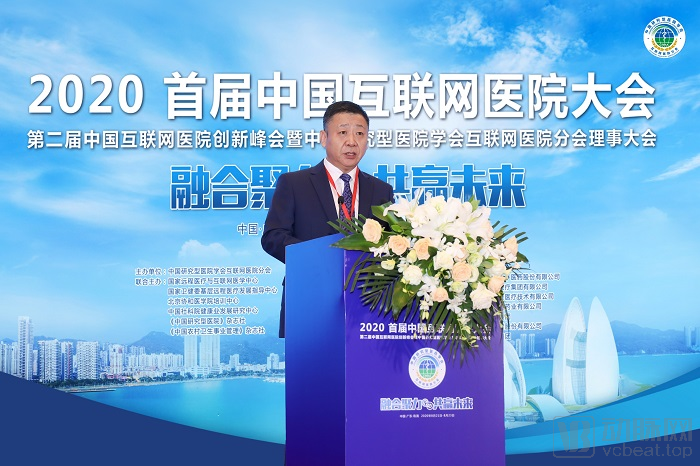
Wen Jian, President of the Internet Hospital Branch of the Chinese Association of Research Hospitals
During the conference,Wen Jian, President of the Internet Hospital Branch of the Chinese Research Hospital AssociationIn an interview with VCBeat, he offered predictions on the development trends of internet hospitals, identifying five key aspects:
The future internet hospital healthcare system will be characterized by public internet hospitals as the main body, with private internet hospitals serving as a supplement.
Under the supervision of government regulatory service platforms, through active exploration, internet healthcare may in the future develop into a full-chain service spanning from diagnosis and treatment to rehabilitation;
The development of internet hospitals will drive healthcare reform to a deeper level. As the number of internet hospitals increases, their service coverage will further extend to communities and households, truly realizing tiered diagnosis and treatment and the decentralization of medical resources.
During the development of internet hospitals, ongoing competition and integration will ultimately lead to the establishment of a new internet healthcare system characterized by smoother interoperability, more comprehensive disciplinary configurations, more distinct specialties, and broader service coverage.
The role of public hospitals will evolve from their current function as medical centers into comprehensive health and wellness systems that encompass pre-hospital preventive education, in-hospital diagnosis and treatment, and post-hospital rehabilitation and recuperative care.
Wen Jian stated,The Internet Hospital Branch of the Research-Oriented Society will continue to lead the internet healthcare industry in conducting academic research, promoting academic activities, and enhancing academic standards, with the aim of establishing the Branch as a home for internet healthcare professionals and an academic club for the internet healthcare industry.Specifically, the sub-branch will support industry development in the following areas:
Establish robust platforms for innovation, high-quality academic exchange, and resource conversion. Provide standardized guidance by organizing the development of standards, regulations, and diagnostic and treatment protocols for internet hospitals, gradually covering all aspects of their operations. Regulate medical practices and ensure healthcare quality through specialist consensus statements, clinical guidelines, standard operating procedures, and industry standards. Meanwhile, evaluate and designate a cohort of exemplary and trustworthy internet hospitals to serve as benchmarks for the sector.
Policies are the direct driving force behind promoting and regulating the internet healthcare industry. At the conference,Wang Fei, Deputy Director of the Medical Resources Division, Bureau of Medical Administration and Hospital Management, National Health CommissionThis paper introduces the policy direction for internet-based medical services.

Wang Fei, Deputy Director of the Medical Resources Division, Bureau of Medical Administration and Hospital Management, National Health Commission
Wang Fei pointed out that internet hospitals have become an important part of the medical service system. Currently, hospital administrators need to consider how traditional medical services should be integrated with online services and how to better leverage the capabilities of internet-based medical services to form an integrated online-offline service model. The development of the pandemic has led healthcare stakeholders to reach a consensus on the advancement of internet-based medical services. Relevant policies are further promoting the standardized development of internet healthcare and driving the deep integration of internet technology, big data technology, and artificial intelligence with medical services.
Drawing on the experience of internet-based medical consultation and smart hospital services during the pandemic, the General Office of the National Health Commission issued the “Notice on Further Improving the Appointment-Based Diagnosis and Treatment System and Strengthening Smart Hospital Construction” on May 21. Wang Fei provided an interpretation of this notice, pointing out thatThe next key priorities for the development of internet-based healthcare are to accelerate the establishment and improvement of the appointment-based diagnosis and treatment system, innovate and enhance smart hospital systems, and vigorously promote the development of online diagnosis and treatment services and internet hospitals.
In improving the appointment-based diagnosis and treatment system, we willFacilitating hospitals to achieve an appointment-based system,Establish a Patient Service Center and digitize its operations to reduce unnecessary in-person visits and minimize patients' dwell time within healthcare facilities.Meanwhile, the National Health Commission also encourages the online migration of lifestyle services related to medical consultations.
In advancing the development of smart hospitals, Wang Fei specifically highlighted the integrated construction of a tripartite system.Centered on electronic medical records (EMR), the system is designed to directly serve healthcare professionals by providing decision support for clinical diagnosis and treatment. It enables seamless interoperability among internal departmental information systems, thereby generating comprehensive hospital management big data. Leveraging this data, the system facilitates the identification and remediation of vulnerabilities in hospital management processes.At the same time, the system must also provide smart services to patients.
In promoting the development of internet-based medical consultations and internet hospitals,All regions shall accelerate the development of regulatory platforms for internet-based medical services to achieve oversight of internet hospital accreditation and online diagnosis and treatment activities.The National Health Commission has also required all medical institutions providing internet-based diagnosis and treatment services to improve their platform infrastructure, thereby delivering better services to patients.
Regarding policy support for promoting the development of internet-based medical consultations and internet hospitals, Wang Fei stated that the Bureau of Medical Administration and Hospital Management will primarily drive progress in five areas:
First, establish National Internet Healthcare Centers by region to fully leverage the radiating and driving capabilities of regional hubs, thereby further promoting the balanced development of internet healthcare services across different regions.
Second, refine regulatory standards for internet-based medical services, clarify regulatory content and methods, and evaluate the operational status and regulatory effectiveness of local internet medical service regulatory platforms.
Third, develop guidance documents for internet-based medical services, covering language standards, medical record documentation requirements, and privacy protection.
Fourth, continuously optimize the online appointment and consultation system and processes, and further strengthen outpatient appointment slot management.
Fifth, improve the top-level design of smart hospitals and issue documents on the hierarchical evaluation system for hospital smart management. Together with the "Graded Evaluation Methods and Standards for the Functional Application Level of Electronic Medical Record Systems (Trial)" and the "Hierarchical Evaluation Standard System for Hospital Smart Services (Trial)," these form a relatively comprehensive guidance system for smart hospital construction. This helps medical institutions build and improve their informatization in a targeted manner, ensuring that smart hospital development is both feasible and comparable. Meanwhile, the evaluation criteria will be adjusted in a timely manner according to technological advancements.
Lu Qingjun, Executive Vice President of the Internet Hospital Branch of the Chinese Research Hospital Association, and Director of the Office of the National Health Commission’s Telemedicine Management and Training Center at China-Japan Friendship Hospital, emphasizing the need to understand the development of internet hospitals from their root causes. He pointed out that,The essence of internet healthcare is an extension of physical medical care, expanding medical services from offline to online and promoting the improvement of medical service efficiency.

Lu Qingjun, Executive Vice President of the Internet Hospital Branch of the Chinese Research Hospital Association, and Director of the Office of the National Health Commission’s Telemedicine Management and Training Center at China-Japan Friendship Hospital
Lu Qingjun believes that there are some problems in the current internet medical market. For example, internet hospitals exceed the scope of practice of their affiliated physical medical institutions. In addition, compared to offline services, online diagnosis and treatment bring more safety risks to patients. How to ensure patient safety, improve medical quality, and truly perform the functions of offline physical medical institutions in internet healthcare are all worth exploring. Internet healthcare is essentially about improving the current medical environment through technological means and changing the situation where people go to large hospitals for treatment whenever they fall ill. Internet healthcare needs to further achieve grassroots prevention and primary care, reduce the incidence of serious illnesses among individuals, and effectively manage patients with chronic diseases.
In Lu Qingjun's view,Internet hospitals represent a new mechanism and platform for integrating high-quality medical resources. They rely on technological support, leveraging advanced communication and information technologies to transform paper-based medical records into digital, searchable, and storable data. To achieve full internet integration, the payment system must evolve to enable online reimbursement through medical insurance, among other capabilities. Meanwhile, security assessment and testing of the underlying technology are essential. The involvement of third-party operators can help revitalize and optimize internet-based medical resources.Lu Qingjun emphasized that how to effectively integrate technologies, ensuring their safe and efficient implementation in hospitals to help doctors and patients access convenient and high-quality medical services, still requires exploration by all parties.
Lu Qingjun stated that the ultimate goal of internet healthcare is to be patient-centered and improve the satisfaction of patients and their families with healthcare services. In the future,The Internet Hospital Association aims to establish innovative mechanisms and models through telemedicine and internet hospitals, integrating high-quality resources from National Medical Centers, National Regional Medical Centers, and specialized medical consortia. By aligning with paired assistance and health-focused poverty alleviation initiatives, the Association seeks to extend its value reach, enabling regional medical institutions to leverage the specialized expertise of premier hospitals. This approach addresses complex, specialized major diseases that cannot be managed locally and resolves the challenges faced by general practitioners in primary care settings when dealing with specialized conditions.
Qin Mingwei, Vice President of the Internet Hospital Branch of the Chinese Research Hospital Association and Director of the Telemedicine Center at Peking Union Medical College HospitalIt was pointed out that for internet healthcare to achieve better development, further exploration is still needed in the area of quality control.

Qin Mingwei, Vice President of the Internet Hospital Branch of the Chinese Research Hospital Association and Director of the Telemedicine Center at Peking Union Medical College Hospital
Drawing on Peking Union Medical College Hospital’s experience in building its internet-based medical services, Qin Mingwei proposed thatQuality control development should be carried out in four aspects: institutional framework, management structure, process reengineering, and indicator system.In terms of institutional development, detailed policies and management specifications must be formulated for personnel management, equipment management, risk prevention, and other areas. Regarding the management framework, a multi-tiered organizational structure should be established, incorporating the Management Committee, competent departments, participating clinical departments, and participating physicians, with clearly defined responsibilities and division of labor. In terms of processes, online medical services should draw reference from offline practices to develop detailed workflows for internet-based diagnosis and treatment, covering all stages including pre-diagnosis, during-diagnosis, and post-diagnosis. With respect to performance indicators, overall operational improvement should be achieved through closed-loop management involving monitoring, early warning, analysis, evaluation, and feedback, by establishing monitoring indicators for pre-event, in-process, and post-event phases.
Qin Mingwei believes that quality control measures can be further expanded. For example, this includes the establishment of systems for informed consent, medical risk assessment and management, access protocols for physicians, pharmacists, and nurses, online electronic medical record management for internet-based diagnosis and treatment, and pharmacy management.In the quality control process, hospitals are required to undertake overall design that encompasses both patients and healthy individuals, integrating online and offline diagnosis and treatment workflows to establish an integrated healthcare journey covering the entire patient lifecycle.
Wang Heyao, Chairman of the "Lean Diagnosis and Treatment Expert Committee" at the National Telemedicine and Internet Medicine CenterIt is believed that the most important indicator reflecting internet medical services is therapeutic efficacy.

Wang Heyao, Chairman of the "Lean Diagnosis and Treatment Expert Committee" at the National Telemedicine and Internet Medicine Center
Wang Heyao pointed out that among the patient population visiting hospitals,Inpatients, under the 24-hour supervision of medical staff, tend to experience more significant therapeutic effects. However, the much larger non-inpatient population, lacking effective medical care, often struggles to have their conditions controlled. This frequently leads to constant hospital transfers and medication changes, resulting in substantial ineffective diagnosis and treatment, and ultimately imposing an excessive burden on the medical insurance system.
To this end, the society to which Wang Heyao belongs has established the Precision Medicine Clinical Alliance. Within the alliance, 387 hospitals have implemented a unified gene sequencing system and standardized principles for precision treatment. These affiliated hospitals have provided interventions for over 2 million patients.The Lean Diagnosis and Treatment Expert Committee further guides physicians in selecting treatment regimens and enables real-time online tracking of patients’ latest conditions by publishing the Outline of Precision Medicine Pharmacotherapy and implementing a lean reporting system. Through online consultations, patients can receive care guidance at home and benefit from improved therapeutic interventions, thereby helping chronic disease patients on lifelong medication achieve target control levels.
Wang Heyao stated that the Lean Healthcare System,"Exploring a strategy of efficacy-based evaluation, rather than the traditional process-oriented assessment approach.", with the aim of achieving safer, more cost-effective, and more efficacious treatment outcomes, thereby enhancing patients’ sense of gain in healthcare.
Since the beginning of this year, internet healthcare in Shanghai has accelerated its development, with a number of renowned hospitals launching online hospital platforms and integrating them with medical insurance payment systems. At the conference,Xu Su, Deputy Director of the Shanghai Municipal Office of Healthcare ReformIntroduction to the Development Experience of Internet Healthcare.
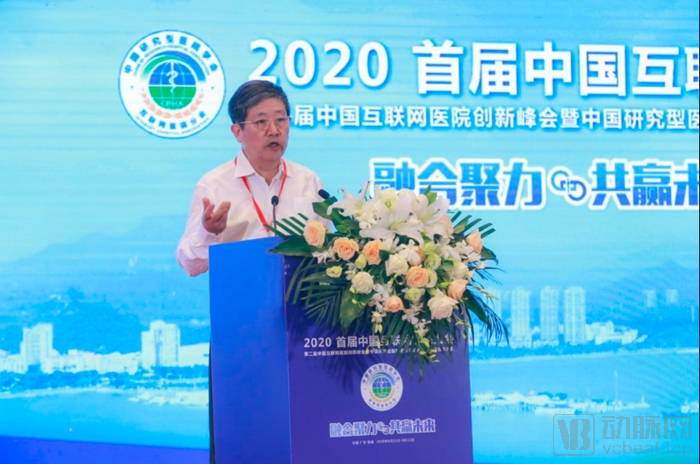
Xu Su, Deputy Director of the Shanghai Municipal Healthcare Reform Office
Xu Su pointed out that during the 1.0 and 2.0 eras of internet healthcare, the industry had not yet penetrated the essence of medical care. In the 3.0 era, with the integration of health insurance payments and online card-reading payment systems, healthcare has gradually shifted from offline to online, forming an integrated model encompassing pharmaceuticals, healthcare services, insurance, and elderly care. Currently, Shanghai is gradually stepping into the 4.0 era of internet healthcare, and will throughMDT Multidisciplinary Consultation Model: Enabling a Many-to-One Physician-Patient Approach to Amplify High-Quality Resources.
Drawing on Shanghai’s experience, Xu Su stated that building an internet healthcare ecosystem requires a two-pronged approach.The primary task is to establish a new model of “Internet + Health Management,” leveraging the internet to empower health management services. Grounded in the principles of early detection, early intervention, and early treatment, this model integrates advanced technologies such as modern biomedicine and genomics with innovative business models. The goal is to deliver high-quality, systematic, convenient, cost-effective, and personalized interactive health management throughout the entire life cycle, empowering users to take charge of their own health.Currently, Shanghai’s Health Cloud serves 20 million users, enabling health management, disease prevention, and medical care and wellness services on its platform. Health Cloud has also achieved integration of an internet-based diagnosis and treatment platform, a public health platform, and a telemedicine resource platform, along with the collection of offline health data.
Secondly, Shanghai is currently promoting the application of internet technologies in community settings. In developing community-based internet applications, Shanghai has placed family doctors at the core, leveraged contracted service relationships as the connecting link, driven mechanism innovation through “Internet + Health,” and utilized technologies such as cloud platforms, big data, the Internet of Things (IoT), and the internet to integrate medical resources across online and offline channels as well as within and outside hospitals, thereby fully meeting users’ health needs.Family doctors can manage the health of every individual in the community via the Internet, which further solidifies their role as health gatekeepers.
Shanghai has also issued guidelines for the standardized development of internet hospitals, along with standardized interface specifications for internet hospital regulatory platforms. These measures cover various aspects, including medical processes, healthcare management, and hospital economic operations. Furthermore, Shanghai is gradually integrating internet-based solutions into hospital management processes, thereby enhancing the precision and effectiveness of hospital administration.
Next, Shanghai will further liberalize policies related to internet healthcare, fostering the development of a health ecosystem and driving new transformations. For instance, in terms of medical models, there will be a shift from passive patient treatment to active patient participation. Regarding treatment paradigms, the focus will transition from the biomedical model to the digital medicine model. In terms of safeguards, emphasis will move from industrial centralization to the centralization of information and data, gradually achieving tiered diagnosis and treatment within internet healthcare.
On Internet Healthcare,Qin Yinhe, former Deputy Minister of the General Logistics Department and Honorary President of the Chinese Research Hospital AssociationIt is pointed out that,“Internet Plus” healthcare is a major initiative for implementing the “Healthy China” development strategy, an important platform for advancing the implementation of national healthcare reform policies, a key vehicle for addressing the difficulties and high costs of accessing medical care, and a crucial lever for enhancing the health and well-being of the population.Jin Xiaotao, Former Deputy Director of the National Health and Family Planning Commission and President of the Chinese Society for Health Informatics and Medical Big Dataalso stated,Internet healthcare will boost the reform of China’s health and healthcare sector as well as its pharmaceutical and medical industries.
The internet healthcare industry is still in its nascent stage. In the course of its development, in addition to guidance and regulation by government authorities and exploratory practices by medical institutions and enterprises, industry associations and societies can also play a pivotal role in connectivity, standardization, and leadership. VCBeat will continue to closely monitor key developments in the industry.