

Deepwise Medical Expands AI Reach via Cloud to Empower Medical Consortiums

DeepWise
Developer of Artificial Intelligence Medical Imaging Diagnosis System
We often say that the true value of AI lies in empowering grassroots healthcare, and this statement holds true. However, for AI companies, how to reach the grassroots level is a question worthy of deep consideration.
So, is there a model that allows primary healthcare institutions to enjoy high-quality medical services while enabling AI companies to find a reasonable access model? Cloud platforms may be one of the solutions.
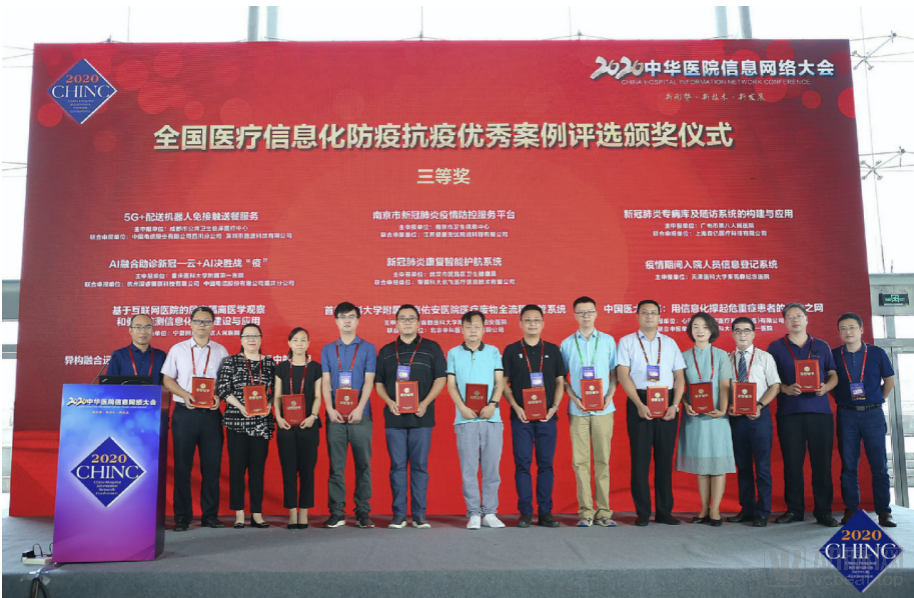
At the recently concluded 2020 CHINC, the project “AI-Integrated Diagnostic Assistance for COVID-19: Cloud + AI Winning the Battle Against the Epidemic,” jointly completed by the First Affiliated Hospital of Chongqing Medical University, China Telecom, and DeepWise, stood out among hundreds of projects nationwide and was awarded the Third Prize in the “National Excellence Case Selection for Healthcare Informatics in Epidemic Prevention and Control.” Its core innovation simultaneously addressed the two aforementioned challenges.
By leveraging a cloud platform built in partnership with leading Grade A tertiary hospitals, and empowered by China Telecom’s massive device support along with 5G connectivity featuring low latency and high bandwidth, DeepWise is endlessly expanding the boundaries of AI capabilities...
As the name suggests, “AI Winning the Battle Against the Epidemic” originated during this year’s epidemic response. Past experience has shown that infectious disease outbreaks are inextricably linked to healthcare system overload during epidemics. However, constrained by the development of communication technologies and the limited availability of medical resources, we were previously unable to effectively intervene in this phenomenon.
Thus, by deploying cloud platforms on the cloud and integrating artificial intelligence within them, and by leveraging the already integrated medical consortium information platform, the Health Commission can achieve extensive coverage of regional disease control with minimal investment, thereby enabling AI-supported telemedicine.
Chen Liang, a supervisor technician at the First Affiliated Hospital of Chongqing Medical University, stated, “Through this approach, patients can complete examinations and diagnoses solely at qualified primary-care medical consortium institutions, eliminating the need to travel back and forth to large hospitals. This will effectively triage patients, reduce the workload of tertiary Grade A hospitals, and minimize infection risks associated with hospital visits. Furthermore, patients can receive imaging diagnostic information directly via their mobile phones, which will significantly advance the development of China’s proactive, prevention-oriented public health control system.”
This model appears simple at first glance, but in reality, it relies on multiple emerging technologies for its implementation.
First, the 5G private network technology provided by China Telecom addresses connectivity and high-speed data transmission within regional medical consortia. One of the technical bottlenecks that previously hindered the development of telemedicine was insufficient bandwidth and excessive latency during long-distance transmission, whereas next-generation communication technologies can deliver 1 million/km2massive communication capabilities, achieving transmission speeds of up to 10 Gbps and keeping latency within 10 ms, which makes remote video diagnosis and even future remote surgery possible.
Next is the AI capability provided by DeepWise. If a medical consortium merely centralizes workflows without providing adequate personnel to process them, it fails to address the most critical issue in the current healthcare system: the shortage of medical resources. DeepWise’s artificial intelligence can resolve this problem.
During the pandemic, DeepWise developed an AI-assisted diagnostic product for COVID-19 with high accuracy and sensitivity within just two weeks. The product was rapidly deployed in multiple hospitals in Wuhan, making significant contributions to epidemic control in the core affected areas. The current collaboration with the First Affiliated Hospital of Chongqing Medical University places greater emphasis on enhancing regional medical screening and prevention capabilities. Patients undergoing CT screening at primary healthcare facilities can have their images swiftly transmitted via a cloud platform to tertiary hospitals. With the assistance of DeepWise’s AI, physicians can confirm diagnostic results within minutes. Furthermore, the AI system can stratify patients based on their real-time conditions, provide triage recommendations, and facilitate intelligent follow-up, thereby maximizing the optimization of medical resource allocation.
Furthermore, the cloud platform developed by DeepWise addresses the significant capital investment challenges in healthcare infrastructure. This platform seamlessly integrates applications such as Cloud PACS, Cloud RIS, Cloud AI, and Cloud Film. It also features remote diagnosis and high-definition video-based imaging consultation capabilities, enabling remote collaborative diagnosis and treatment.
Meanwhile, physicians can access the platform with great convenience. Built on a B/S (Browser/Server) architecture, the platform eliminates the need for dedicated workstations; physicians can perform 3D image processing and applications anytime and anywhere via a web browser. In practice, specialist physicians can rapidly connect to the cloud PACS system using computers, tablets, or mobile phones at any time and from any location. This enables remote multidisciplinary team (MDT) consultations without the need to visit designated consultation rooms, significantly reducing time costs.
Without a cloud platform, empowering primary care with AI would require enterprises to gradually deploy AI workstations in every institution within a region, imposing financial burdens that few primary healthcare facilities can afford. Therefore, by migrating AI and medical imaging to the cloud, DeepWise has created a new shared space, breaking down temporal and spatial barriers to ensure that every primary healthcare facility can access and afford AI technology.
Overall, leveraging cloud computing, artificial intelligence, and 5G technologies, the First Affiliated Hospital of Chongqing Medical University, China Telecom, and DeepWise are reshaping the public health prevention and control system for primary care within medical consortia through technological transformation.
“AI’s Decisive Battle Against the Epidemic”: COVID-19 prevention and control is undoubtedly a strong start. In fact, as long as we can deploy sufficiently rich and effective applications in the cloud, this model will play an even more significant role in the diagnosis and treatment process.
Li Chaoyang, Senior Vice President of DeepWise, told VCBeat: “Our core objective is to help medical consortia build a universal AI platform, akin to a smartphone, on which hospitals can install various apps with different functions. In our vision, we aim to leverage this platform to truly empower primary care institutions with AI technology.”
Therefore, the cloud platform established by the Medical Consortium of the First Affiliated Hospital of Chongqing Medical University serves as a replicable and scalable model. We anticipate that this approach will be adopted by more medical consortia, leveraging technological innovation to resolve the "impossible trinity" of healthcare and empowering primary care institutions with enhanced medical capabilities.