

MileBot Secures Tens of Millions in Series A Funding Amid Surge in Medical Exoskeleton Market

Milebot
Medical Rehabilitation Robot R&D Developer
Shenzhen MileBot Robotics Co., Ltd. (hereinafter referred to as “MileBot”) recently announced the completion of its Series A financing round, raising tens of millions of yuan. This round was jointly invested by Zhuhai Keying Investment, Lenovo Capital, and Zhejiang Dening Industrial. Since its establishment in September 2016, MileBot has completed three rounds of financing. Previously, in April 2018, MileBot secured Pre-A financing led by Fenshare Investment, with participation from Lenovo Capital. Chen Gong, Co-founder and CEO of MileBot, stated that the proceeds from this round will be primarily used for continued investment in core technologies, product iteration and upgrades, market operations, and talent team development.
Shenzhen MileBot Robotics Co., Ltd. was founded in 2016 and is located in the Nanshan Science and Technology Park in Shenzhen. The company was co-founded by Dr. Chen Gong (CEO) and Dr. Ye Jing (CTO), both returnee scholars with doctoral degrees, along with Mr. Hu Feng (COO), a seasoned professional in the robotics industry. Specializing in the research and development of exoskeleton robots and human-computer interaction technologies, the company is dedicated to building an intelligent rehabilitation system. By leveraging technologies such as robotics, the Internet of Things (IoT), big data, and artificial intelligence (AI), it aims to enhance the efficiency and effectiveness of rehabilitative medical care.
Leveraging its globally pioneering human-robot interaction technology based on compliant actuators, MileBot has continuously advanced its R&D efforts, successively launching a range of medical exoskeleton robot products, including lower-limb rehabilitation exoskeleton robots, lower-limb ambulation assistance exoskeleton robots, and hand rehabilitation exoskeleton robots.
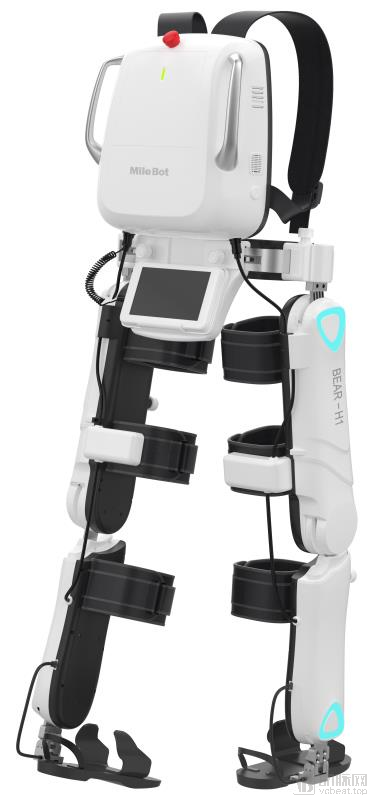
Lower Limb Rehabilitation Exoskeleton Robot BEAR-H1
Recently, the MileBot team has made a significant announcement with the launch of an ambulatory assistive robot designed for daily mobility scenarios. This device is intended to support individuals with insufficient hip strength in walking, thereby improving their health status and enhancing their quality of life.
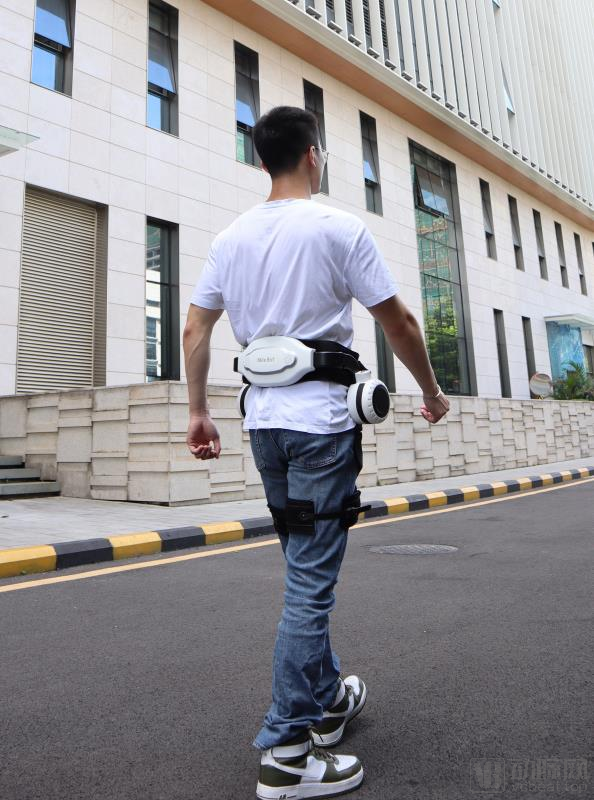
MAX-1 Walking Assistance Robot
In addition to product R&D, MileBot is also accelerating the development of its intelligent rehabilitation ecosystem. By researching, developing, and manufacturing various types of exoskeleton robots, the company ensures that robot-assisted rehabilitation training covers multiple dimensions. Leveraging big data and artificial intelligence, MileBot is gradually establishing a robotic evaluation system aligned with clinical assessments, ultimately achieving personalized, precise, and intelligent rehabilitation training.
According to Chen Gong, the users of MileBot’s robotic products are primarily elderly individuals with disabilities, mainly patients with neurological injuries resulting in motor impairments, such as those caused by stroke or spinal cord injury. In terms of sales channels, the company focuses on hospitals and rehabilitation centers. Currently, MileBot has established collaborative partnerships with numerous hospitals, universities, and research institutions.
MileBot’s core competitive advantages lie in its technology and pricing. The MileBot exoskeleton robot utilizes flexible actuators for power output, featuring an active training mode that delivers more precise force control, enhanced safety, and a superior human-robot interaction experience. Its performance metrics are comparable to those of similar products from companies in the United States, Japan, and other countries, while its price is significantly lower than that of foreign counterparts. Given the high technical barriers in the exoskeleton robotics industry, the MileBot team has attracted investor interest due to its accumulated technological expertise and experience.
From the perspective of market demand, the "China Stroke Prevention and Treatment Report 2018" points out that stroke diseases in China are experiencing explosive growth, characterized by rapid increases among low-income groups, significant gender and regional disparities, and a trend toward younger patients. Currently, there are over 20 million stroke patients in China, with an annual increase of more than 2 million individuals disabled due to traffic and work-related accidents. This has led to a surge in rehabilitation needs, while the number of rehabilitation therapists in China remains severely insufficient. At present, the application of exoskeleton robots in rehabilitation medicine is still limited, presenting a favorable opportunity for their development. The deployment of rehabilitation exoskeleton robots not only addresses the shortage of professional rehabilitation personnel but also facilitates more precise rehabilitation training, improves efficiency, ensures higher quality of care, and supports the intelligent development of the rehabilitation industry.
Chen Gong stated that the clinical trials for their lower-limb rehabilitation exoskeleton robot are nearing completion, with CFDA certification and market launch expected soon. However, he also pointed out that while exoskeleton technology is becoming increasingly mature, there remain many areas requiring continuous exploration, optimization, and improvement, as well as significant challenges to overcome. Currently, MileBot’s most urgent priority is to research, develop, and optimize its exoskeleton robots, accelerate the construction of an intelligent rehabilitation system, and rapidly advance market collaborations with rehabilitation markets and medical institutions, so that patients can benefit from higher-quality rehabilitation treatments at an earlier date.
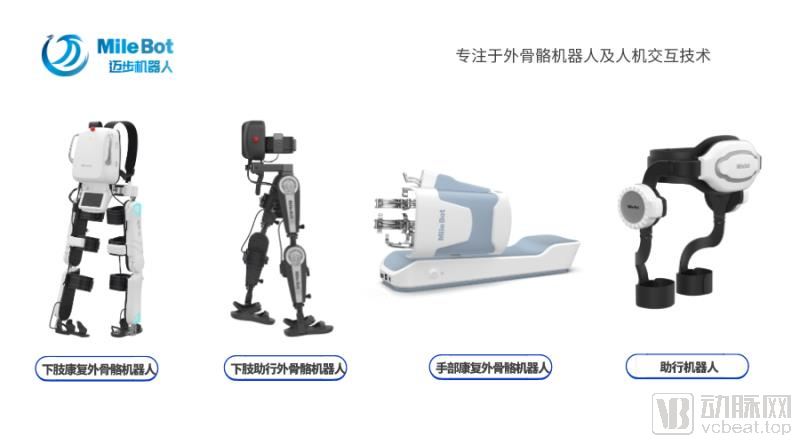
Investors expressed optimism about the domestic market and endorsed MileBot’s R&D philosophy and technology for exoskeletons. They noted that robot interaction technology based on flexible actuators holds the potential to empower other industries, which was a key factor in their decision to invest in MileBot.